Li Cunxin - Mao's Last Dancer
Здесь есть возможность читать онлайн «Li Cunxin - Mao's Last Dancer» весь текст электронной книги совершенно бесплатно (целиком полную версию без сокращений). В некоторых случаях можно слушать аудио, скачать через торрент в формате fb2 и присутствует краткое содержание. Жанр: Современная проза, на английском языке. Описание произведения, (предисловие) а так же отзывы посетителей доступны на портале библиотеки ЛибКат.
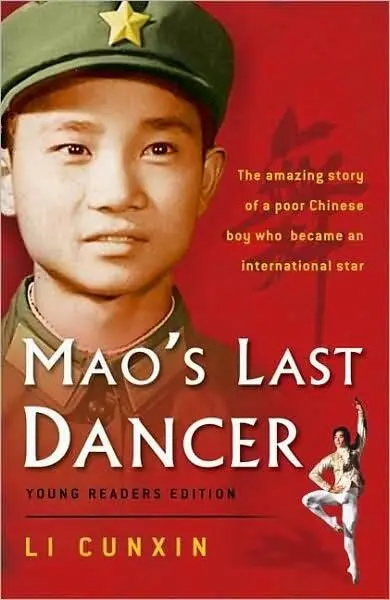
- Название:Mao's Last Dancer
- Автор:
- Жанр:
- Год:неизвестен
- ISBN:нет данных
- Рейтинг книги:3 / 5. Голосов: 1
-
Избранное:Добавить в избранное
- Отзывы:
-
Ваша оценка:
Mao's Last Dancer: краткое содержание, описание и аннотация
Предлагаем к чтению аннотацию, описание, краткое содержание или предисловие (зависит от того, что написал сам автор книги «Mao's Last Dancer»). Если вы не нашли необходимую информацию о книге — напишите в комментариях, мы постараемся отыскать её.
Mao's Last Dancer — читать онлайн бесплатно полную книгу (весь текст) целиком
Ниже представлен текст книги, разбитый по страницам. Система сохранения места последней прочитанной страницы, позволяет с удобством читать онлайн бесплатно книгу «Mao's Last Dancer», без необходимости каждый раз заново искать на чём Вы остановились. Поставьте закладку, и сможете в любой момент перейти на страницу, на которой закончили чтение.
Интервал:
Закладка:
It was midnight by the time we went to bed that night, way past my bedtime in Qingdao. I thought of my niang, my dia and my brothers, all sleeping together in their own beds, and I felt my homesickness begin to return. After the lights were turned off, I clutched onto my niang's precious quilt once again, covered my head with it, and sobbed myself to sleep.
9 The Caged Bird
Every morning was the same. It seemed that I had only just closed my eyes when I heard the ear-piercing scream of the five-thirty bell. I would drag myself to the washing room and pour freezing- cold water on my face to drive away my sleepiness. The jogging, the early-morning exercises and breakfast all happened while I was still half asleep. Only my cold cramped feet, the awkward ballet positions and the French names in Chen Lueng's class would wake me up.
Later that week we had our first Chinese folk dance lesson, with Teacher Chen Yuen. He was younger than the other teachers we'd had so far and wore a pair of spectacles. He seemed friendly, with a funny sense of humour, and he even told us jokes.
In Chen Yuen's class we got to dance much more freely. I particularly loved a Mongolian horse riders' dance we began to learn. But the best part of this class was the four musicians who sat at the front of the studio and played their traditional Chinese instruments. I thought they were beautiful. One played a "piba", which looked like a guitar but sounded hollow and sad. There was also an ancient-looking horn and an "erhu"-a two-string instrument which produced the most heart-wrenching sounds, and the "yanqin", a string instrument so beautiful and powerful that I thought there were twenty different instruments playing at once! I loved it. I loved the passion of their music. I had never heard anything like it. Their music made me want to dance: I could hear the clip-clop sound of the approaching horses; I could hear those Mongolian riders roaming the deserts, and I longed to be free like them.
That same day we had our first politics class too, and I was surprised to find that the campaign to denounce Lin Biao was still in full swing. The Gang of Four's theory was that shit attracts flies, and that Confucius was the shit and Lin Biao was the fly. So a "criticise Confucius" campaign was organised. We were to discuss why Lin Biao was attracted to Confucius and how dangerous this had been to Mao's political cause. Our teacher started our first lesson by telling us all about Confucius. He had already written down one of Confucius' sayings on the blackboard by the time we'd all sat down at our little wooden desks:
When the perfect order prevails, the world is like a home shared by all. Courageous, worthy and capable men are elected to public office and hold posts of gainful employment in society; peace and trust among all men are the maxims of living. All men love and respect their parents and children, as well as the parents and children of others. There is caring for the old and there are jobs for everyone. There is also nourishment and education for the children and a means of support for the widows or widowers, disabled and all that find themselves alone in the world. Everyone has an appropriate role to play in the family and society. A sense of sharing displaces the effects of selfishness and materialism, and a devotion to public duty leaves no room for idleness. Dishonesty and conniving for ill gain are unknown. Villains such as thieves and robbers do not exist. The door to everyone's home never needs to be locked or bolted, day or night. These are the characteristics of this ideal world, the world everyone shares equally.
"Now," our teacher began, "can any of you tell me the hidden evilness in this Confucius saying?"
No one spoke. I was puzzled by the teacher's question. I didn't understand all the words on the board, but there seemed nothing wrong with it to me. Confucius' society sounded beautiful, just like the ideal communist society.
Our teacher continued. "There are several key words that you must be able to detect. For example, `the perfect order`. Whose definition of the perfect order? The rulers`? The emperors`? This is a trap! Confucius wants the poor ordinary people to behave and follow the rules, which were set for them by the rulers, for the benefit of the rulers. Do you see this point?" the political leader asked.
We all nodded obediently.
"My second point: have you realised that Confucius only mentions men. Where are the women? In his mind women are not even worth mentioning! But Chairman Mao says, `Women are half of the sky!` And finally Confucius talks of villains, thieves and robbers. Who did he mean? Could he possibly mean the rulers and the emperors?"
We all shook our heads.
"No! He means the poor peasants and workers who cannot get enough to eat or clothes to wear. They have no choice but to steal. Now do you see these hidden, poisoned agendas?"
We nodded again wholeheartedly. I was amazed. I knew our teacher was right. Why hadn't I seen these hidden, poisoned agendas?
"Now can you see why this little fly, Lin Biao, was attracted to the Confucius pile of shit?"
"Yes!" we all shouted, and our politics teacher smiled triumphantly.
During that class, I heard some baby birds screeching loudly on the rooftop outside, so after the class was over I told Zhu Yaoping, who was fast becoming my best friend at the academy, and we climbed out a small window onto the steep rooftop four storeys high. There we found ten hungry little birds in a nest under a roof tile. They opened their mouths wide and screamed at us for food. Zhu Yaoping wasn't overly interested in them-he just wanted to get out onto the rooftop. But my heart poured out to the little birds and I gently put all of them in my pockets. I'd feed them some of my lunch and play with them for a while before I put them back.
Our next class was maths, the last class before lunch, so I put the birds in my desk. But in the middle of our lesson the birds started to screech-loudly. Very loudly. The teacher was furious when she saw the birds, and told me to get out of her class and report to the political head's office straightaway. I was terrified. I thought they would expel me for sure.
Director Wang looked at me with a stern expression when I arrived at his office. "Cunxin, what do you think you were doing? Do you want to kill yourself, to embarrass Madame Mao? This behaviour of yours will not be tolerated here. This is not your commune! You will study the relevant sections of Chairman Mao's Red Book and write a thorough self-criticism to read to your class."
"I have never written a self-criticism," I replied. "I don't know how."
He looked at me with a tinge of sympathy then. "You must write why you are wrong for climbing on the roof and promise you will never do it again. Make sure you use some of Chairman Mao's sayings as the basis for your reasoning. Say that you regret your actions and that this will never happen again."
I wasn't allowed to go back to my class, so Director Wang let me use his desk while he went to a meeting.
After many tries and some agonising soul-searching, I finally completed my first ever self-criticism:
My dear and respected teacher and classmates, I'm very sorry I climbed on the roof, and even more sorry for taking the poor baby birds out of their comfortable home. The reasons for my action were: One. I heard their screams and saw their widely opened hungry mouths, I felt sorry for them and afraid that their parents wouldn't come back and these baby birds might die. Two. I love birds and always have. But, after speaking to Director Wang, I realise that this is wrong and I should never do it again! Why? Because of the following reasons: One. I may slip and die and this would cause embarrassment for Madame Mao, because I'm her student. Two. Our great leader Chairman Mao said in his Red Book: "Study hard and improve upward every day." By thinking about and playing with the birds, I won't be able to concentrate on my studies like Chairman Mao wanted me to. Three. If I died because of trying to save the birds, I won't be able to serve in Chairman Mao's revolution any more. Four. Also my parents won't be able to ever see me again and my niang will die of sadness. Because of these four important reasons, I promise that I'll never do it again. If you ever catch me doing it again, I'm willing to let the thunder kill me! Chairman Mao's Faithful Student Li Cunxin
Читать дальшеИнтервал:
Закладка:
Похожие книги на «Mao's Last Dancer»
Представляем Вашему вниманию похожие книги на «Mao's Last Dancer» списком для выбора. Мы отобрали схожую по названию и смыслу литературу в надежде предоставить читателям больше вариантов отыскать новые, интересные, ещё непрочитанные произведения.


Обсуждение, отзывы о книге «Mao's Last Dancer» и просто собственные мнения читателей. Оставьте ваши комментарии, напишите, что Вы думаете о произведении, его смысле или главных героях. Укажите что конкретно понравилось, а что нет, и почему Вы так считаете.