Li Cunxin - Mao's Last Dancer
Здесь есть возможность читать онлайн «Li Cunxin - Mao's Last Dancer» весь текст электронной книги совершенно бесплатно (целиком полную версию без сокращений). В некоторых случаях можно слушать аудио, скачать через торрент в формате fb2 и присутствует краткое содержание. Жанр: Современная проза, на английском языке. Описание произведения, (предисловие) а так же отзывы посетителей доступны на портале библиотеки ЛибКат.
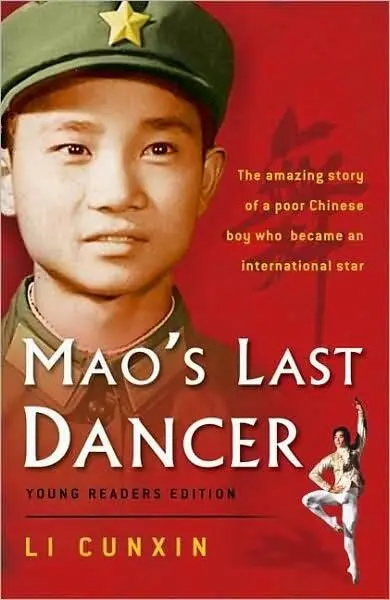
- Название:Mao's Last Dancer
- Автор:
- Жанр:
- Год:неизвестен
- ISBN:нет данных
- Рейтинг книги:3 / 5. Голосов: 1
-
Избранное:Добавить в избранное
- Отзывы:
-
Ваша оценка:
Mao's Last Dancer: краткое содержание, описание и аннотация
Предлагаем к чтению аннотацию, описание, краткое содержание или предисловие (зависит от того, что написал сам автор книги «Mao's Last Dancer»). Если вы не нашли необходимую информацию о книге — напишите в комментариях, мы постараемся отыскать её.
Mao's Last Dancer — читать онлайн бесплатно полную книгу (весь текст) целиком
Ниже представлен текст книги, разбитый по страницам. Система сохранения места последней прочитанной страницы, позволяет с удобством читать онлайн бесплатно книгу «Mao's Last Dancer», без необходимости каждый раз заново искать на чём Вы остановились. Поставьте закладку, и сможете в любой момент перейти на страницу, на которой закончили чтение.
Интервал:
Закладка:
I was pleased I'd thought of that last line: "Let the thunder kill me" was a swear word from our commune. But in truth I didn't really believe that playing with the birds would have caused any harm to Chairman Mao's revolution at all. In truth I felt humiliated. I'd never had to do this in my old school.
My self-criticism passed the test easily, and my teacher and classmates burst into laughter when I read that last line. I also had to stand outside our classroom for a whole hour afterwards. "Cunxin, have you fed the poor birds yet?" the boys teased as they walked past, and my face burned with humiliation. I hadn't meant what I'd written. I hadn't learnt anything about serving Chairman Mao. All it made me realise was just how much freedom I was being denied. I would never be able to play with my beloved birds again. Now I was a bird trapped in a cage where even my feet had to conform to the rules.
There were so many different classes to get used to in that first week. Despite the bird incident, I liked the maths class to begin with and I was quick to understand the new equations, but progress was slow and I lost interest quickly. I didn't understand the importance of maths to a ballet dancer and to cope with my boredom I began to daydream. I could hear the Beijing Opera students' voices coming from their studios and my heart wanted to leap out and join them instead. I thought about the Beijing Opera films I'd seen back in our commune, and I dreamed constantly about being a singer. I was often in trouble for not paying enough attention, especially in the ballet classes. My despair and lack of attention dominated my work. My teachers thought I was hopeless.
We also had our first acrobatics classes and Chinese classes in that first week. Acrobatics training was very strenuous. We had to do handstands against the wall, and exercises like bending backwards and lowering our hands to the floor, the ultimate aim being to grasp our ankles. Sometimes the teachers would order us to stay in this position until they allowed us to slowly bend back up to standing position. But the pain made our backs numb and we didn't know which muscles to use to help us get up again. The teachers also made us do a lot of quick backbends to the floor, ten or twenty at a time, non-stop. It's surprising that we were not permanently injured. But our teachers continued, relentlessly. "What you're doing now is merely the foundation work," they would say. "Eventually we'll teach you backflips, front and back somersaults, when your back muscles are stronger."
Chinese class was run by Teacher Shu Wing. He was calm most of the time, but occasionally he would burst into a rage because of our laziness or tardiness. He had elegant handwriting and I often lost myself just watching him write on the blackboard. Words leapt out of his white chalk in beautiful dancing movements. He also taught us poetry, his favourite subject. He would teach us some of Mao's simple poetry, but his real passion was for classical poetry. He would discuss each word in tremendous depth. Sometimes a single word represented a whole fable or event. His talent and knowledge were immense, and his class was one of my favourites. In his class we were told we had to learn Mandarin quickly, or we would be sent home.
Gradually, over the first few days, I began to make friends at the academy. Zhu Yaoping, Jiao Lishang and I were often in the same group of activities. We were the three smallest boys, and although we couldn't communicate well because of our different dialects, we managed in the end. Zhu Yaoping was the liveliest and naughtiest. I liked him. He made me laugh. At nights he slept on the bed next to mine, and he would often get up to tricks. In our first week there, one of the other boys ground his teeth so loudly in his sleep that it kept us awake and drove us all mad. Finally we were so fed up that we tied strings to his wrists and ankles and when we heard him grinding his teeth we'd pull the strings all at the same time. The poor boy. And another night, after we'd had beans for dinner, one of the boys from the older class started to fart. He said he could fart on demand, yes, truly, as many times as he was asked! We were rolling on the floor from laughter. Even one of the normally stern-faced political heads couldn't help laughing.
The first week at the academy slowly came to an end and for our first Sunday a trip to the famous Ming Tombs had been organised. The trip north to Shisan Ling took over two hours by bus and again I suffered from dreadful motion sickness. They had to stop the bus twice. I felt guilty and embarrassed creating such inconvenience.
I still enjoyed the Ming Tombs though. I had never seen so many pieces of jewellery! Colourful rare gemstones, gold and silver, the emperor's and empress's drinking goblets, swords, costumes and crowns. How rich Chinese history was! I was enormously impressed and extremely proud of China 's glorious past. China truly was the happiest and richest nation on the planet.
But even then I began to wonder. If China was such a rich country, why didn't my family have enough food to eat or enough money to buy clothes? I couldn't imagine what it would be like living in a poorer country like America. But of course I didn't blame Chairman Mao. It was Chinese imperial corruption, foreign invasion or Chiang Kaishek's Guomindang regime that were to blame. I was thankful to Chairman Mao, eternally thankful, that he had saved us. Only he would lead us to greater prosperity and happiness.
A week later another trip was organised, this time to the Summer Palace in north-west Beijing, but just the thought of the bus trip there and back was enough to make me feel sick, so I told one of the political heads that I didn't feel well and he gave me permission to stay behind.
I went exploring around the university grounds as soon as the buses had left. There was a small orchard on the south- east corner near the gate-mainly apple and peach trees. They were bare at this time of year, but I could just see some new shoots popping out of the branches: spring wasn't far away. Right next to the orchard was our four-storey studio building, and along the east side were the dormitories. To the north-east, I could see the low, flat-roofed single-storey buildings which were used by the two music academies. They looked just like tiny matchboxes.
To the north, however, there was an empty stretch of land. I was immediately drawn to it and as a curious peasant boy I soon found myself digging my fingers down into the still half-frozen soil to see if there was anything planted, but the soil seemed completely barren. The land was surrounded by a chest-high barbed-wire fence and I could see a row of young weeping willow trees just this side of it. On the other side was an irrigation channel.
I ran over to the willows and began to climb one. These trees triggered such sadness in me. I saw the long drippy leaves and thought of my own sad tears. I wondered if the trees suffered hardship and sadness too. I climbed up and sat quietly inside the long leaves. I thought of all the events which had taken place since I had left my family only two weeks ago.
I leant my head against the trunk and whispered my homesickness and loneliness into the trees. My tears flooded out. They fell down my face just like the leaves of the weeping willows. I sobbed freely. Nobody was there to see.
I felt better after my secret confession to the trees and I knew I would hide in them many times during my first year. I had found my refuge and I would treasure my time there. It became my own secret hiding place.
After a while I climbed down from the willows and wandered to the north-west part of the university grounds. There was a large pigsty there and a vegetable patch beside it. There was also a swimming pool, but it was empty at that time of year. I thought of the time I nearly drowned in the dam back home and the hairs on my neck stood on end. I prayed that the teachers wouldn't make us use this pool in summertime.
Читать дальшеИнтервал:
Закладка:
Похожие книги на «Mao's Last Dancer»
Представляем Вашему вниманию похожие книги на «Mao's Last Dancer» списком для выбора. Мы отобрали схожую по названию и смыслу литературу в надежде предоставить читателям больше вариантов отыскать новые, интересные, ещё непрочитанные произведения.





Обсуждение, отзывы о книге «Mao's Last Dancer» и просто собственные мнения читателей. Оставьте ваши комментарии, напишите, что Вы думаете о произведении, его смысле или главных героях. Укажите что конкретно понравилось, а что нет, и почему Вы так считаете.