Li Cunxin - Mao's Last Dancer
Здесь есть возможность читать онлайн «Li Cunxin - Mao's Last Dancer» весь текст электронной книги совершенно бесплатно (целиком полную версию без сокращений). В некоторых случаях можно слушать аудио, скачать через торрент в формате fb2 и присутствует краткое содержание. Жанр: Современная проза, на английском языке. Описание произведения, (предисловие) а так же отзывы посетителей доступны на портале библиотеки ЛибКат.
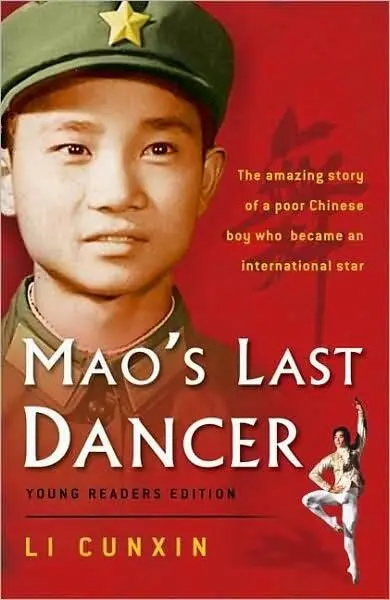
- Название:Mao's Last Dancer
- Автор:
- Жанр:
- Год:неизвестен
- ISBN:нет данных
- Рейтинг книги:3 / 5. Голосов: 1
-
Избранное:Добавить в избранное
- Отзывы:
-
Ваша оценка:
Mao's Last Dancer: краткое содержание, описание и аннотация
Предлагаем к чтению аннотацию, описание, краткое содержание или предисловие (зависит от того, что написал сам автор книги «Mao's Last Dancer»). Если вы не нашли необходимую информацию о книге — напишите в комментариях, мы постараемся отыскать её.
Mao's Last Dancer — читать онлайн бесплатно полную книгу (весь текст) целиком
Ниже представлен текст книги, разбитый по страницам. Система сохранения места последней прочитанной страницы, позволяет с удобством читать онлайн бесплатно книгу «Mao's Last Dancer», без необходимости каждый раз заново искать на чём Вы остановились. Поставьте закладку, и сможете в любой момент перейти на страницу, на которой закончили чтение.
Интервал:
Закладка:
Within the first month of our arrival in Beijing, we heard that the president of America, Richard Nixon, was to pay an historic visit to China. It was February 1972. People in Beijing were jubilant. The government's propaganda machine went into full swing and the Chinese media boasted of nothing else. This visit by Nixon was confirmation that Mao's communism had won the final battle against capitalism.
I didn't share this euphoria. I didn't care about Nixon. I was too homesick. But I did notice that the attacks on America 's evil capitalist values by the Chinese propaganda machines eased considerably while President Nixon was there.
The first few weeks and months of our dance training I found impossibly hard. I had no idea what I was doing. Nothing made sense, I couldn't do the exercises no matter how hard I tried, and I doubted myself constantly. My torn hamstrings from Teacher Gao's exercises were continually painful and I'd injured my back during the acrobatics classes too. I knew I was destined to fail -it was just a matter of time before they sent me home.
One day we were given some exciting news: Madame Mao was coming to our university in person, in just a few weeks time. Our academy was to prepare some dance exercises and a small group of students would be selected to perform for her.
I wasn't included. I was heartbroken. I had been so excited at the thought of performing for Madame Mao, and now it wouldn't be.
After Madame Mao watched the specially prepared performance, she said to the officials, "The dancing looked all right, but where are the guns? Where are the grenades? Where are the political meanings?" She wanted us to combine traditional ballet steps with some Peking Opera movements, so from that point on our teachers made major changes to our training syllabus. In the middle of a classical plié we had to stiffen our hands into Kung Fu gestures while we were doing port de bras, and we had to finish off with a death-like stare we called "brightening the presence". Our teachers took it all very seriously. We had to prepare these "model" ballets, a combination of Western and Chinese styles that were a monument to Madame Mao's obsession. In reality, it was political ideology gone mad. But our university strictly followed her instructions and policies. We became nothing more than Chairman Mao's political puppets.
I knew that some of our teachers were incensed by this approach, but they had to bury their integrity and their love for Western ballet in their hearts. If they didn't, they would risk being labelled counter-revolutionaries, and be sent to jail or the pig farms. It could cost them their lives.
They knew Madame Mao's approach could never work. In classical ballet training we had to turn our joints out, but with Beijing Opera movements we were required to do the opposite. Ballet steps needed fluidity and softness. Beijing Opera required sharp, strong gestures. But propaganda ensured we believed that the Chinese model ballets were the world's best. They were groundbreaking. They were "uniquely Chinese". Nobody dared to question this, and we continued to do what we were told.
We spent a lot of time at the academy studying Mao's theories. We were expected to memorise every word in his Red Book and relate them to our daily activities. In fact, we spent more time on Mao than we did on ballet and all other subjects combined. Often we were divided into small groups to discuss Chairman Mao's most recent ideas. We were taught to focus on the meaning of each word. Once a student even suggested that if we really understood the meaning of Mao's words, then we wouldn't need to eat. His golden words would replace our daily food. That student received high praise for his remarks from our political head. I just thought he was crazy-he'd never known starvation, that was clear.
We were encouraged to tell everyone about our impure thoughts. We were rewarded for reporting when a fellow student's behaviour wasn't in keeping with Chairman Mao's great political vision. We were even told once, by one of the political heads, that a brave and faithful young Red Guard loved Chairman Mao so much that he informed the police that his parents had Taiwan connections. Both parents were arrested, and their son was upheld as a national hero, Mao's model guard.
I too would have done anything for Chairman Mao. Anything, except tell on my parents. I loved my niang and my dia too much to betray them for my belief in Chairman Mao's revolution.
Madame Mao also wanted us to spend three weeks each year with the farmers, the workers or the soldiers. These were called the "Learning Three Classes" sessions. We had to live and work amongst the peasants or workers or soldiers and at the same time keep up our dance training. At the end of each "learning session" we had to put on a performance.
Our first three-week summer holiday was spent in one of these learning sessions, with the peasants in a nearby commune. How I welcomed the wheat and the cornfields, the smell of manure, the sound of the crickets! Even the raw earth was wonderful to see, but it all made me homesick too. I wanted to go back to my village and catch my beloved crickets and dragonflies again. I wanted both worlds: the good food of the academy and the freedom of my home.
I worked well in the fields, and I was surprised that my classmates from the city had little idea about how to work on the land. I truly believed Chairman Mao was right: if these kids didn't come to the commune and work with the peasants, they would have no idea where their food came from.
We continued to practise our ballet, acrobatics and Beijing Opera Movement every day while we were living with the peasants. We used wire poles and walls for our barre. The dirt ground was uneven and uncomfortable and the scratching sounds of our feet brushing through each movement were unbearable-like fingernails scraping down a piece of glass. Our ballet shoes wore out so quickly and they were always filthy with mud. We even had to do cartwheels and backflips in the fields. Sprained ankles were not uncommon.
We slept and ate at different peasants' homes during our stay, but by the third day so many students suffered stomach cramps and diarrhoea that the school officials had to quickly call in our own academy chef to cook for us. The male students, including me, were assigned to guard our kitchen supplies so nobody would steal them.
"Why would anyone steal our food?" I asked one of our political heads. "Aren't the peasants our role models?"
He thought for a moment. "We are not guarding against the peasants' stealing," he said. "We're guarding against the enemy's evil motives. They might try to poison us. It's the hidden things we must watch for. Do you understand?"
I didn't understand, but I nodded anyway. I saw his expression and knew this was the end of the discussion. I thought that surely by now all our enemies would have been wiped out in all of Mao's campaigns and revolutions.
The weather was still hot when we returned to our university. And shortly after, the dreaded visit to the swimming pool occurred.
"Students who can't swim, raise your hands!" the same political head who'd asked me to wash his sweat-stained shirt instructed. A few hands went up-mine was one of them. Almost all of the kids who couldn't swim came from Shanghai or Beijing. I was the only one from Qingdao who couldn't swim.
"A boy who comes from a city by the sea and can't swim?" the political head sniggered.
I felt the blood rush to my face. I wanted to go back to my dormitory. But I knew I couldn't, so I followed instructions and hesitantly took off my clothes.
"Where is your swimming suit?" the political head asked me. Everyone looked at my practice shorts.
"I don't have a swimming suit."
"Didn't I tell everyone to buy one yesterday?"
Читать дальшеИнтервал:
Закладка:
Похожие книги на «Mao's Last Dancer»
Представляем Вашему вниманию похожие книги на «Mao's Last Dancer» списком для выбора. Мы отобрали схожую по названию и смыслу литературу в надежде предоставить читателям больше вариантов отыскать новые, интересные, ещё непрочитанные произведения.



Обсуждение, отзывы о книге «Mao's Last Dancer» и просто собственные мнения читателей. Оставьте ваши комментарии, напишите, что Вы думаете о произведении, его смысле или главных героях. Укажите что конкретно понравилось, а что нет, и почему Вы так считаете.