Li Cunxin - Mao's Last Dancer
Здесь есть возможность читать онлайн «Li Cunxin - Mao's Last Dancer» весь текст электронной книги совершенно бесплатно (целиком полную версию без сокращений). В некоторых случаях можно слушать аудио, скачать через торрент в формате fb2 и присутствует краткое содержание. Жанр: Современная проза, на английском языке. Описание произведения, (предисловие) а так же отзывы посетителей доступны на портале библиотеки ЛибКат.
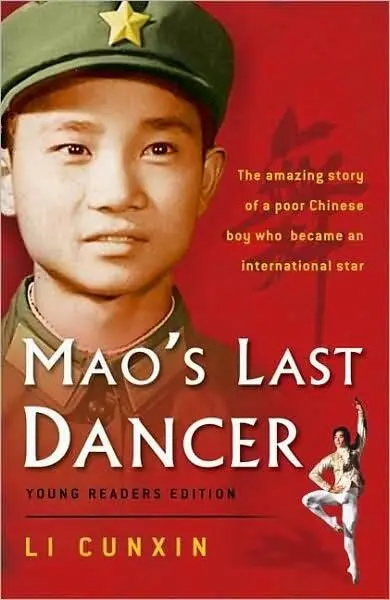
- Название:Mao's Last Dancer
- Автор:
- Жанр:
- Год:неизвестен
- ISBN:нет данных
- Рейтинг книги:3 / 5. Голосов: 1
-
Избранное:Добавить в избранное
- Отзывы:
-
Ваша оценка:
Mao's Last Dancer: краткое содержание, описание и аннотация
Предлагаем к чтению аннотацию, описание, краткое содержание или предисловие (зависит от того, что написал сам автор книги «Mao's Last Dancer»). Если вы не нашли необходимую информацию о книге — напишите в комментариях, мы постараемся отыскать её.
Mao's Last Dancer — читать онлайн бесплатно полную книгу (весь текст) целиком
Ниже представлен текст книги, разбитый по страницам. Система сохранения места последней прочитанной страницы, позволяет с удобством читать онлайн бесплатно книгу «Mao's Last Dancer», без необходимости каждый раз заново искать на чём Вы остановились. Поставьте закладку, и сможете в любой момент перейти на страницу, на которой закончили чтение.
Интервал:
Закладка:
I didn't answer. I didn't want to tell him that I couldn't afford one.
He gave me an annoyed look and shook his head. "Okay, everyone. Students who can swim can go now. Students who can't, follow me."
He took us to the shallow end of the pool and demonstrated the so-called "frog-style", or breaststroke. Following his instructions, I tried to swim but my body sank as soon as I started to circle my arms. I kept swallowing water. I looked across and saw my classmates swimming and diving like fish and wished I could be like them. The political leader spent all his time helping the girls. He never looked in the boys' direction once. I dipped my head under a couple of times and my nose filled with water. I wondered if I would ever learn to swim.
But by the end of that summer I did learn, even though I was still constantly afraid of the water. It was a couple of my classmates who eventually taught me.
That summer in Beijing was hot. We had no air-conditioning or fans, and when the heat became unbearable, we slept on the floor in the dance studio. Over twenty of us slept in there, and even with the studio's many windows, the body heat made it difficult to sleep. Mosquitoes would come out in the thousands and zoom around like little vampires. We slapped about frantically, trying to chase them away, and the slapping sounds could be heard throughout the night.
During the second half of our first year, the school added several new classes. One of them was Art Philosophy, Madame Mao's brainchild, the one we'd been told about on that first day, and surprisingly I liked it. It was designed to help us understand the relationship between the arts and politics. Chairman Mao's idea was that the arts should be important political tools.
Our teacher for Art Philosophy was a tall, talkative man. During class one day, he went into one of his little detours, talking about Mao as a brilliant political strategist. "The one political strategist I think was the best ever was Adolf Hitler! Like Chairman Mao, he seized on the psychological needs of an entire nation. He rallied millions of people to go to war for him. He made them believe it was all for their own good. Both Chairman Mao and he are master politicians, brilliant at understanding the peoples' psyche."
I, like most of my classmates, didn't have a clue who Hitler was. I thought he must have been a great communist, just like Chairman Mao.
Our teacher was brave to draw parallels like this, and often his true interests seemed to lie in areas other than the subject he was ordered to teach. He tried to show us how to look at a subject beyond the surface, beyond the obvious. One day he brought a plaster model of a man's head into our classroom. The surface of the model was as smooth as porcelain. He sat the model on his lecture table. "Raise your hand if you think the surface of the model is rough?"
What a stupid question, we all thought. It was obvious the surface was smooth. Nobody raised a hand.
"Now, raise your hand if you think the model has a smooth surface."
Everyone raised their hands. "I think you are all wrong or at best, you are only half right. I want you to look at it more closely and then tell me your answers."
This time there was a magnifying glass beside the model. We looked through it and were surprised to discover millions of tiny holes on the smooth surface of the head.
That class only lasted one and a half years. It was mysteriously dropped after that and I never saw Madame Mao's Art Philosophy teacher again. I once asked one of the political heads about him. "He is no longer needed at our academy," he answered bluntly. "He has been assigned a different job."
Throughout that first year at the Beijing Dance Academy, I was considered a laggard by most of my teachers. I laboured through the days with no aim, no self-confidence, and I couldn't keep up with the pace. It was too much for an eleven-year-old peasant boy. I felt that not a single teacher liked me. I wanted to shrink and run for cover. I longed for my parents' comfort and love, but here there was no one to go to for help. So I pulled myself further inwards, desperately trying to stay afloat, but constantly sinking.
We'd been at the academy for about nine months when our teachers organised another daytrip for us, this time to the Great Wall. Again, fear of motion sickness terrified me, but I wasn't going to miss this opportunity for anything.
It was a windy autumn day. We were given three hours to climb the wall. Its bulk and beauty stunned me. The size of the stones, its breathtaking height into the misty mountains, its endless snake- like meandering-it all made me gasp. I had seen pictures of the Great Wall before, but to actually stand on it, to look upon this incredible human miracle… I shook my head in disbelief. A fable that my niang had once told me immediately came to mind. It was about a poor young man, Wang Shileong, and his bride. Wang Shileong's name meant "ten thousand humans". It was said there was a section of the Great Wall that could never be built unless ten thousand bodies were buried as its foundation. Rumour had it that Wang Shileong's body alone could support that section. When the imperial soldiers buried him under the wall, his new bride stuck a knife through her heart and was buried there with him. I remembered my niang had said that this story portrayed a Chinese woman's determination to remain faithful to her man. "But this principle of faith also applies to a man," she'd said. "You are expected to be faithful to your woman with all your might until death eventually separates you. A girl's heart is pure and sincere. If you treasure her, she will love you unconditionally until the end. But you must never take a girl's love for granted."
I was touched by my niang's story and I admired the bride's strong will and faithfulness. "Wouldn't it be nice to see the Great Wall one day?" my second brother Cunyuan had said. Now, here I was, climbing on the ancient stone steps and wishing that my family could see it too.
The end of our first year at the academy was approaching and the end-of-year exams were coming up. Our possible grades were: excellent, very good, good, below good, above average, average, below average and… bad. Tension was high among the teachers as well as the students. It was judgement day for the teachers as well.
I wasn't worried about my academic classes because I knew I wasn't the worst there, but my dancing classes were another matter.
There were four dance-related exams that year: ballet, acrobatics, Chinese folk dance and Beijing Opera Movement. Acrobatics and Chinese folk dance were less of a worry, because the teachers were kinder and those classes were fun. But for my ballet and Beijing Opera Movement classes I was scared to death. We had to perform in front of academy officials, students from other classes, Chiu Ho and a panel of teachers who had pen and pad in hand.
There were over fifty students, teachers and officials already sitting by the mirrors in the front of the studio on the day of the Beijing Opera Movement exam. The sunlight shone through the windows and I could see the dust entwined in the beams of sunlight. We walked into the room in a line-and upon seeing the many pairs of eyes, I froze completely. My mouth went dry and my tongue felt swollen. It was as though all those eyes were focused on me, and me alone. I even heard the sound of my own breathing and felt the hairs rise on the back of my neck.
We were placed on the barre first and before the pianist struck the first note, I was already dripping with sweat. I panicked. I couldn't remember the dance combinations even though we'd been preparing them for four weeks. It wasn't so bad on the barre, because everyone did the same exercises at the same time and I could follow the others, but once we moved into the centre of the floor, the ten of us were broken up into three groups.
Читать дальшеИнтервал:
Закладка:
Похожие книги на «Mao's Last Dancer»
Представляем Вашему вниманию похожие книги на «Mao's Last Dancer» списком для выбора. Мы отобрали схожую по названию и смыслу литературу в надежде предоставить читателям больше вариантов отыскать новые, интересные, ещё непрочитанные произведения.






Обсуждение, отзывы о книге «Mao's Last Dancer» и просто собственные мнения читателей. Оставьте ваши комментарии, напишите, что Вы думаете о произведении, его смысле или главных героях. Укажите что конкретно понравилось, а что нет, и почему Вы так считаете.