Li Cunxin - Mao's Last Dancer
Здесь есть возможность читать онлайн «Li Cunxin - Mao's Last Dancer» весь текст электронной книги совершенно бесплатно (целиком полную версию без сокращений). В некоторых случаях можно слушать аудио, скачать через торрент в формате fb2 и присутствует краткое содержание. Жанр: Современная проза, на английском языке. Описание произведения, (предисловие) а так же отзывы посетителей доступны на портале библиотеки ЛибКат.
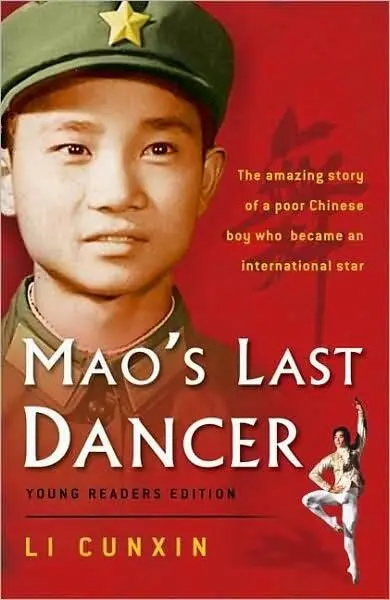
- Название:Mao's Last Dancer
- Автор:
- Жанр:
- Год:неизвестен
- ISBN:нет данных
- Рейтинг книги:3 / 5. Голосов: 1
-
Избранное:Добавить в избранное
- Отзывы:
-
Ваша оценка:
Mao's Last Dancer: краткое содержание, описание и аннотация
Предлагаем к чтению аннотацию, описание, краткое содержание или предисловие (зависит от того, что написал сам автор книги «Mao's Last Dancer»). Если вы не нашли необходимую информацию о книге — напишите в комментариях, мы постараемся отыскать её.
Mao's Last Dancer — читать онлайн бесплатно полную книгу (весь текст) целиком
Ниже представлен текст книги, разбитый по страницам. Система сохранения места последней прочитанной страницы, позволяет с удобством читать онлайн бесплатно книгу «Mao's Last Dancer», без необходимости каждый раз заново искать на чём Вы остановились. Поставьте закладку, и сможете в любой момент перейти на страницу, на которой закончили чтение.
Интервал:
Закладка:
I was trembling all over. My legs felt weak and I couldn't remember a single thing. I was in front now and I had no one to follow. I peeked at the mirror and I could see that others were following my mistakes. Teacher Gao Dakun looked at us with such anger, but he couldn't call names out because of all the people watching. As the exam went on I performed worse and worse as the dancing steps increased in difficulty. The agony lasted for over an hour. I wondered what other names Gao Dakun would call me after this!
I knew that exam had been disastrous. I was so distressed that I missed lunch and ran to my weeping willow trees. It was over two hours later that I went back to our dormitory. My confidence was shattered.
When I entered the room full of eyes again the following morning, I noticed our ballet teacher Chen Lueng was already standing by the piano looking very tense. My heart pumped faster. This exam was to be judged mainly on barre work-we spent over three- quarters of our class time on it-and with our thin vest and shorts, I felt every muscle, every technical fault would be exposed and magnified, even the scar on my arm. Each exercise seemed slower and more excruciating than in class. I didn't hear a single note of the music and before I'd even lifted my legs, I could already feel them cramping. Chen Lueng had screamed at us all year for holding onto the barre too tightly, and here I was, gripping onto it for dear life.
Finally the torture of those end-of-year exams was over. We waited for our grades, and I knew in my heart this was not something I should be looking forward to.
I was right. My highest grade was "below good" for maths and Chinese. The rest of my grades were "average", even for ballet, and my worst grade was "below average" for Teacher Gao's Beijing Opera Movement exam, which was no surprise to me at all. Nothing I did would ever please him.
I wasn't the worst student in my class, but with my poor results I was definitely near the bottom and I still felt wretched. We all knew each other's scores because our teachers read them out, loudly, in front of the entire class. My face flushed with each announcement of my low grades. Twenty-two pairs of eyes pierced me like needles. It summed up my miserable first year. I was convinced that soon Director Wang would call me into his office, tell me I was no good, and ask me to go home and never return.
11 The Pen
Our first year was finished. Soon I would see my family again. My beloved niang. The Chinese New Year holiday was coming up and the school gave us our food allowance for the month to buy our train tickets home.
Everyone was excited. The school bus even took us on a shopping trip to Beijing to buy presents for our families. I only bought one yuan worth of sweets though, and kept the rest, three whole yuan, to take back to my family. I knew three yuan would make an enormous difference to my dia and my niang, more difference than any number of gifts I could buy.
The last two days before going home seemed excruciatingly long. I counted every minute. I was terrified the whole time that I'd be called up by Director Wang about my poor grades, so I avoided our political heads at all times. But on the final day, just after lunch, I accidentally bumped right into the very person I'd been trying to avoid.
"Ni hao, Director Wang." My faced blushed. My heart thumped.
"Ni hao, Cunxin. Are you looking forward to seeing your family?"
I nodded, petrified. Here it comes, I thought.
"Have a safe trip!" he smiled at me and walked on.
What about my poor grades? What about expelling me? I was so relieved. I became excited beyond description. Now I could think only of seeing my parents and brothers and it made the final hours seem even longer.
On the way to the Beijing train station, my heart raced faster than the wheels of the bus. A political head and two teachers escorted us and again, the grandness of the station and the number of people rushing about amazed me.
We fought our way onto the train and settled in our seats. A siren sounded. The train slowly moved off. My heart was already in Qingdao with my family and the anticipation was unbearable. Thoughts of my parents, brothers, relatives and friends, memories of making firecrackers, images of New Year's Eve, the scent of incense, the flame of candles, the delicious taste of my niang's dumplings, the drinking games and my second uncle's singing-all rushed to my mind. Images lingered-fond memories, wonderful thoughts. Then suddenly I remembered my report card. I imagined the gossip, how humiliating it would be for my family. It would be the most reputation-damaging, face-losing event in the Li family's entire history! How could I explain such low grades? How could I tell my parents that I hated dancing? It was all too confusing and I told myself to worry about it later. I was tired from the exams anyway, and I fell into a deep sleep and didn't wake up until three stops before Qingdao Station.
It was still dark outside when we arrived but dawn wasn't far off. My second brother was going to meet me at Cangkou Station, one stop before Qingdao, because it was closer to our commune. I looked at the familiar countryside gradually emerging in the dawn light and my heart raced faster and faster.
As the train pulled into Cangkou Station I saw my second brother Cunyuan standing among a crowd of people under the dim light. I shot my head out of the train window. "Erga! Erga!" I called excitedly. "Second brother! Second brother!"
He saw me then, and started to run alongside the train. "It's so nice to see you! I waited for half an hour!" he shouted as he ran.
That image of Cunyuan running by the train was so joyful an image that it would remain with me, always.
My dia had walked to work that morning so Cunyuan could pick me up on Dia's bike. Our ride home together took nearly an hour. I sat on the back seat with my legs dangling on either side, my bag hanging over one shoulder, the early morning mist cold on my face.
"How are you?" Cunyuan asked as he pedalled.
"Fine, I'm happy to be home!" I replied.
"Tell me, what is Beijing like?" he asked anxiously.
I told him about the wide, paved streets and the grand buildings. I told him of the Great Wall, the Ming Tombs, the Forbidden City and of course glorious Tiananmen Square.
Cunyuan was utterly enthralled. He would occasionally interrupt with a question and ask for more details, so I told him about the polluted air, the vast number of vehicles, bikes and people, hundreds of thousands of people. When I told him about the food we had, he said, "You're making my mouth water! You are truly fortunate!" Then he was silent for a few minutes as though he needed time to imagine what eating such good food would be like.
"Did you meet Chairman and Madame Mao?" he asked eventually.
"Not Chairman Mao, but Madame Mao came to our school and spoke to us!" I replied.
"Oh, you are lucky, indeed, indeed!" he murmured.
I knew he was envious of the lifestyle I had in Beijing and would have loved to have had the same opportunities. So, trying to make him feel better, I told him about the blocked toilets, my dislike of some of the teachers and my dreadful homesickness.
He laughed at me for making such an issue about the toilets. "Surely they are better than our hole in the ground at home. That doesn't even have a roof over it!"
"I like our hole in the ground much better," I argued. "At least the foul smell can escape. Remember our grandfather's toilets in the city?" I asked.
"Not that bad?" he asked.
"Worse, much worse! More people pooing!" I replied, and he laughed. Then he asked, more seriously, "Why do you hate your teachers?"
"They are mean and some shout at us all the time," I replied.
"Have you ever heard of a saying that says bitter medicine isn't necessarily bad and sweet medicine isn't always good for you? Surely if you were good, they would have no reason to shout at you," he said.
Читать дальшеИнтервал:
Закладка:
Похожие книги на «Mao's Last Dancer»
Представляем Вашему вниманию похожие книги на «Mao's Last Dancer» списком для выбора. Мы отобрали схожую по названию и смыслу литературу в надежде предоставить читателям больше вариантов отыскать новые, интересные, ещё непрочитанные произведения.





Обсуждение, отзывы о книге «Mao's Last Dancer» и просто собственные мнения читателей. Оставьте ваши комментарии, напишите, что Вы думаете о произведении, его смысле или главных героях. Укажите что конкретно понравилось, а что нет, и почему Вы так считаете.