Arthur Hailey - Evening News
Здесь есть возможность читать онлайн «Arthur Hailey - Evening News» весь текст электронной книги совершенно бесплатно (целиком полную версию без сокращений). В некоторых случаях можно слушать аудио, скачать через торрент в формате fb2 и присутствует краткое содержание. Жанр: Современная проза, на английском языке. Описание произведения, (предисловие) а так же отзывы посетителей доступны на портале библиотеки ЛибКат.
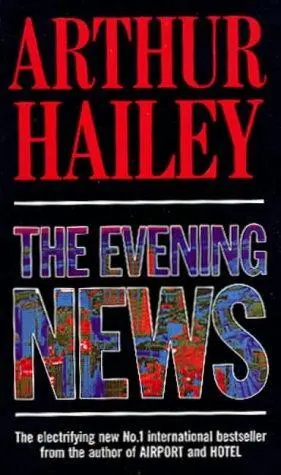
- Название:Evening News
- Автор:
- Жанр:
- Год:неизвестен
- ISBN:нет данных
- Рейтинг книги:3.5 / 5. Голосов: 2
-
Избранное:Добавить в избранное
- Отзывы:
-
Ваша оценка:
Evening News: краткое содержание, описание и аннотация
Предлагаем к чтению аннотацию, описание, краткое содержание или предисловие (зависит от того, что написал сам автор книги «Evening News»). Если вы не нашли необходимую информацию о книге — напишите в комментариях, мы постараемся отыскать её.
Evening News — читать онлайн бесплатно полную книгу (весь текст) целиком
Ниже представлен текст книги, разбитый по страницам. Система сохранения места последней прочитанной страницы, позволяет с удобством читать онлайн бесплатно книгу «Evening News», без необходимости каждый раз заново искать на чём Вы остановились. Поставьте закладку, и сможете в любой момент перейти на страницу, на которой закончили чтение.
Интервал:
Закладка:
The final member of the group was an American, his name for this operation, Baudelio. Miguel mistrusted Baudelio totally, yet this man's knowledge and skills were essential to the mission's chances of success.
* * *
Now, in Hackensack at the Colombian group's temporary operating center, thinking about the renegade American, Baudelio, Miguel felt a surge of frustration. It compounded his anger with Julio for the careless lapse into plain language during the telephoned report from outside the Sloane house in Larchmont. Still holding the telephone, disciplining himself to subdue personal feelings, Miguel considered his reply.
The surveillance report had referred to a man aged about seventy-five, who arrived at the Sloane house a few minutes earlier with a suitcase he had carried inside—in Julio's careless words, "like he plans to stay.”
Before leaving Bogoti, Miguel had received extensive intelligence, not all of which he had shared with the others under his command. Included in this dossier was the fact that Crawford Sloane had a father who fitted the description of the new arrival. Miguel reasoned: Well, if the old man had joined his son, expecting to see him for a while, it constituted a nuisance but nothing more. The father would almost certainly have to be killed later that day, but that presented no problem.
Depressing the telephone transmitter, Miguel ordered, "Take no action about the blue package. Report new billing only.” "New billing”meant: if the situation changes.
”Roger,” Julio acknowledged curtly.
Replacing the cellular phone, Miguel glanced at his watch. Almost 7:45 A.M. In two hours all seven members of his group would be in place and ready for action. Everything that would follow had been carefully planned, with problems anticipated, precautions taken. When the action started, some improvisation might be needed, but not much.
And there could be no postponement. Outside the United States, other movements, dovetailing with their own, were already in motion.
9
Angus Sloane gave a contented sigh, put down his coffee cup and patted his mouth and silver-gray mustache with a napkin.”I'll state positively,” he declared, "that no better breakfast has been served this morning in all of New York State.”
"And not one with higher cholesterol either,” his son said from behind an opened New York Times across the table.”Don't you know all those fried eggs are bad for your heart? How many was it you had? Three?”
"Who's counting?” Jessica said.”Besides, you can afford the eggs, Crawf. Angus, would you like another?”
"No thank you, my dear.” The old man, sprightly and cherubic—he had turned seventy-three a few weeks earliersmiled benevolently at Jessica.”Three eggs isn't many,” Nicky said.”I saw a late movie once about a Southern prison. Somebody in it ate fifty eggs.”
Crawford Sloane lowered the Times to say, "The movie you're speaking of was Cool Hand Luke. It starred Paul Newman and came out in 1967. I'm sure, though, that Newman didn't really eat those eggs. He's a fine actor who convinced you that he did.”
"There was a salesman here once from the Britannica,” Jessica said.”He wanted to sell us an encyclopedia. I told him we already had one, living in.”
"Can I help it,” her husband responded, "if some of the news I live with sticks to me? It's like fluff, though. You can never tell which bits will stay in memory and what will blow away.”
They were all seated in the bright and cheerful breakfast room, which adjoined the kitchen. Angus had arrived a half hour earlier, embracing his daughter-in-law and grandson warmly and shaking hands more formally with Crawford.
The constraint between father and son—sometimes translating to irritation on Crawford's part—had existed for a long time. Mainly it had to do with differing ideas and values. Angus had never come to terms with the easing in national and personal moral standards which had been accepted by most Americans from the 1960s onward. Angus ardently believed in "honor, duty and the flag"; further, that his fellow countrymen should still exhibit the uncompromising patriotism that existed during World War II— the high point of Angus's life, about which he reminisced ad infinitum. At the same time he was critical of many of the rationales that his own son, in his news-gathering activities, nowadays accepted as normal and progressive.
Crawford, on the other hand, was intolerant of his father's thinking which, as Crawford saw it, was rooted in antiquity and failed to take into account the greatly expanded knowledge on all fronts—notably scientific and philosophical—in the four plus decades since World War II. There was another factor, too —a conceit on Crawford's part (though he would not have used that word) that having attained the top of his professional tree, his own judgments about world affairs and the human condition were superior to most other people's.
Now, in the early hours of this day, it already appeared that the gap between Crawford and his father had not narrowed.
As Angus had explained on countless other occasions, and did so once again, all his life he had liked to arrive wherever he was going early in the morning. It was why he had flown from Florida to La Guardia yesterday, stayed overnight with an American Legion crony who lived near the airport, then, soon after dawn, came to Larchmont by bus and taxi.
While the familiar recital was proceeding, Crawford had raised his eyes to the ceiling. Jessica, smiling and nodding as if she had never heard the words before, had prepared for Angus his favorite bacon and eggs, and for herself and the other two served a more healthful homemade granola.
"About my heart and eggs,” Angus said—he sometimes took a few minutes to absorb a remark that had been made, and then returned to it—"I figure if my ticker's lasted this long, I shouldn't worry about that cholesterol stuff. Also, my heart and I have been in some tight spots and come through them. I could tell you about a few.”
Crawford Sloane lowered his newspaper enough to catch Jessica's eye and warn her with a glance: Change the subject quick, before he gets launched on reminiscences. Jessica gave the slightest of shrugs, conveying in body language: If that's what you want, do it yourself.
Folding the Times, Sloane said, "They have the casualty figures here from that crash at Dallas yesterday. It's pretty grim. I imagine we'll be doing follow-up stories through next week.”
"I saw that on your news last night,” Angus said.”It was done by that fellow Partridge. I like him. When he does those bits from overseas, especially about our military forces, he makes me feel proud to be American too. Not all your people do that, Crawford.”
"Unfortunately there's a joker in there, Dad,” Sloane said.”Harry Partridge isn't American. He's a Canadian. Also you'll have to do without him for a while. Today he starts a long vacation.” Then he asked curiously, "Who, of our people, doesn't make you feel proud?”
"Just about all the others. It's the way almost all you TV news folk have of denigrating everything, especially our own government, quarreling with authority, always trying to make the President look small. No one seems to be proud of anything anymore. Doesn't that ever bother you?”
When Sloane didn't answer, Jessica told him, sotto voce, "Your father answered your question. Now you should answer his.”
"Dad,” Sloane said, "you and I have been over this ground before, and I don't think we'll ever have a meeting of the minds. What you call 'denigrating everything' we in the news business think of as legitimate questioning, the public's right to know. It's become a function of news reporting to challenge the politicians and bureaucrats, to question whatever we're toldand a good thing too. The fact is, governments lie and cheatDemocrat, Republican, liberal, socialist, conservative. Once in office they all do it.
Читать дальшеИнтервал:
Закладка:
Похожие книги на «Evening News»
Представляем Вашему вниманию похожие книги на «Evening News» списком для выбора. Мы отобрали схожую по названию и смыслу литературу в надежде предоставить читателям больше вариантов отыскать новые, интересные, ещё непрочитанные произведения.




Обсуждение, отзывы о книге «Evening News» и просто собственные мнения читателей. Оставьте ваши комментарии, напишите, что Вы думаете о произведении, его смысле или главных героях. Укажите что конкретно понравилось, а что нет, и почему Вы так считаете.