Arthur Hailey - Evening News
Здесь есть возможность читать онлайн «Arthur Hailey - Evening News» весь текст электронной книги совершенно бесплатно (целиком полную версию без сокращений). В некоторых случаях можно слушать аудио, скачать через торрент в формате fb2 и присутствует краткое содержание. Жанр: Современная проза, на английском языке. Описание произведения, (предисловие) а так же отзывы посетителей доступны на портале библиотеки ЛибКат.
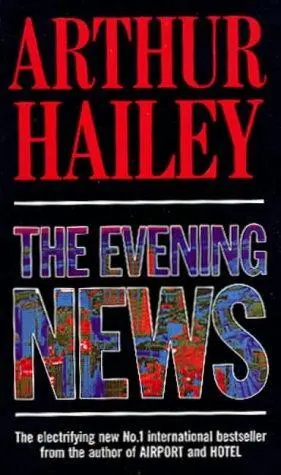
- Название:Evening News
- Автор:
- Жанр:
- Год:неизвестен
- ISBN:нет данных
- Рейтинг книги:3.5 / 5. Голосов: 2
-
Избранное:Добавить в избранное
- Отзывы:
-
Ваша оценка:
Evening News: краткое содержание, описание и аннотация
Предлагаем к чтению аннотацию, описание, краткое содержание или предисловие (зависит от того, что написал сам автор книги «Evening News»). Если вы не нашли необходимую информацию о книге — напишите в комментариях, мы постараемся отыскать её.
Evening News — читать онлайн бесплатно полную книгу (весь текст) целиком
Ниже представлен текст книги, разбитый по страницам. Система сохранения места последней прочитанной страницы, позволяет с удобством читать онлайн бесплатно книгу «Evening News», без необходимости каждый раз заново искать на чём Вы остановились. Поставьте закладку, и сможете в любой момент перейти на страницу, на которой закончили чтение.
Интервал:
Закладка:
Aware of her appraisal, Partridge asked, "Well, what's the verdict?”
Vivien shook her head in mock despair.”Just look at you! I send you off healthy and fit. Two and a half months later you come back looking tired, pale and underfed.”
"I know, Viv.” He grimaced.”It's the life I lead. There's too much pressure, lousy hours, junk food and booze.” Then, with a smile, "So here I am, a mess as usual. What can you do for me?”
She said, with a mixture of affection and firmness, "First I'll give you a good healthful breakfast. You can stay in bed—I'll bring it to you. For other meals you'll have nutritious things like fish and fowl, green vegetables, fresh fruit. Right after breakfast I'm going to trim your hair. Later, I'm taking you for a sauna and massage—I've already made the appointment.”
Partridge lay back and threw up his hands.”I love it!”
Vivien went on, "Tomorrow, I figured you'll want to see your old cronies at the CBC—you usually do. But in the evening I have tickets for an all—Mozart concert in Toronto at Roy Thomson Hall. You can let the music wash over you. I know you like that. Apart from all that, you'll rest or do whatever you wish.” She shrugged.”Maybe in between those other things you'll feel like making love. You tried last night but were too tired. You fell asleep.”
For a moment Partridge felt more gratitude for Vivien than he had ever felt before. She was rock-solid, a refuge. Late last night, when his flight finally arrived at Toronto Airport, she had been patiently waiting, then had brought him here.
He asked, "Don't you have to work?”
"I had some vacation due. I've arranged to take it, starting today. One of the other nurses will fill in for me.”
He told her, "Viv, you're one in a million.”
* * *
When Vivien had gone and he could hear her preparing breakfast, Partridge's thoughts returned to yesterday.
There had been that congratulatory call—they had paged him for it in the DFW terminal—from Crawford Sloane.
Crawf had sounded awkward, as he often was when they talked. There were times when Partridge wanted to say, "Look, Crawf, if you think I have any grudge against you—about Jessica or your job or anything, forget it! I haven't and I never did.” But he knew that kind of remark would strain their relationship even more, and probably Crawf would never believe it anyway.
In Vietnam, Partridge had known perfectly well that Sloane was taking only short air trips so he could hang around Saigon and get on CBA network news as often as possible. But Partridge hadn't cared then, and still didn't. He had his own priorities. One of them could even be called an addiction—the addiction to the sights and sounds of war.
War . . . the bloody bedlam of battle . . . the thunder and flame of big artillery, the whistle scream and awesome crump of falling bombs . . . the stentorian chatter of machine guns when you didn't know who was firing at whom or from where . . . the near-sensuous thrill of being under attack, despite fear that set you trembling . . . all of it fascinated Partridge, set his adrenaline flowing, his other juices running . . .
He discovered the feeling first in 'Nam, his initial war experience. It had been with him ever since. More than once he had told himself, Face it—you love it; then acknowledged, Yes, I do, and a stupid son of a bitch I am.
Stupid or not, he had never objected to being sent to wars by CBA. Partridge knew that among his colleagues he was referred to as a "bang-bang,” the slightly contemptuous name for a TV correspondent addicted to war—a worse addiction, it was sometimes said, than to heroin or cocaine and with a final ending almost as predictable
But they also knew at CBA News headquarters—which was what mattered most—that for that kind of news coverage, Harry Partridge was the best.
Therefore he had not been overly concerned when Sloane won the National Evening News anchor chair. Like every news correspondent, Partridge had had ideas about getting that top-of-the-pile appointment, but by the time it happened to Sloane, Partridge was enjoying himself so much it didn't matter.
Strangely, though, the question of the anchorman's job had come up recently and unexpectedly. Two weeks ago, during what Chuck Insen warned was "a delicate private conversation,” the executive producer confided to Partridge that there might be major changes soon in the National Evening News.”If that happens,” Insen had asked, "would you be interested in coming in from the cold and anchoring? You do it damn well.”
Partridge had been so surprised that he hadn't known how to respond. Then Insen had said, "You don't have to answer now. I just want you to think about it in case I come back to you later.”
Subsequently, through his own inside contacts, Partridge had learned of the ongoing power struggle between Chuck Insen and Crawford Sloane. But even if Insen won, which seemed unlikely, Partridge doubted if permanent anchoring was something he would want or could even endure. Especially, he told himself half mockingly, when in so many places of the world there was still the sound of gunfire to be heard and followed.
Inevitably, when thinking in a personal way about Crawford Sloane, there was always the memory of Jessica, though it was never more than memory because there was nothing between them now, not even occasional communication, and they seldom met socially—perhaps only once or twice a year. Nor had Partridge ever blamed Sloane for his loss of Jessica, having recognized that his own foolish judgment was the cause. When he could have married her, Partridge had decided not to, so Sloane simply stepped in, proving himself the wiser of the two, with a better sense of values at that time . . .
Vivien reappeared in the apartment bedroom, bringing breakfast in stages. It was, as she had promised, a healthful meal: freshly squeezed orange juice, thick hot porridge with brown sugar and milk, followed by poached eggs on whole wheat toast, strong black coffee, the beans freshly ground, and finally more toast and Alberta honey.
The thoughtfulness about the honey especially touched Partridge. It reminded him, as it was intended to, of his native province where he made his start in journalism on local radio. He remembered telling Vivien that he had worked for what was known as a 20/20 radio station; it meant that rock 'n' roll, the staple programming, was interrupted every twenty minutes by a few shouted news headlines ripped from the AP wire. A young Harry Partridge had done the shouting. He smiled at the recollection; it seemed a long time ago.
After breakfast, prowling around the apartment in pajamas, he observed, "This place is getting tacky. It needs repainting and new furniture.”
"I know,” Vivien acknowledged.”I've been after the building owners about repainting. But they say this apartment isn't due to have money spent on it.”
"Screw 'em! Do it without the owners. You find a painter and order whatever's needed. I'll leave enough money before I go.,,
"You're always generous about that,” she said; then added, "do you still have that wonderful arrangement where you don't pay income tax?”
He grinned.”Sure do.”
"To anybody, anywhere?”
"Not to anyone, and it's perfectly legal and honest. I don't file any income tax return, don't have to. Saves a lot of time and money.”
"I've never understood how you manage it.”
"I don't mind telling you,” he said, "though normally I don't talk about it. People who pay income tax get jealous; that's because misery likes company.”
The critical factor, he explained, was being a Canadian citizen, using a Canadian passport, and working overseas.
”What a lot of people don't realize is that the United States is the only major country in the world that taxes its citizens no matter where they live. Even when Americans reside outside the U.S., they still get taxed by Uncle Sam. Canada doesn't do that. Canadians who move out of the country aren't liable for Canadian taxes, and once the revenue service is satisfied you're gone, they've no further interest in you. The British are the same.”
Читать дальшеИнтервал:
Закладка:
Похожие книги на «Evening News»
Представляем Вашему вниманию похожие книги на «Evening News» списком для выбора. Мы отобрали схожую по названию и смыслу литературу в надежде предоставить читателям больше вариантов отыскать новые, интересные, ещё непрочитанные произведения.






Обсуждение, отзывы о книге «Evening News» и просто собственные мнения читателей. Оставьте ваши комментарии, напишите, что Вы думаете о произведении, его смысле или главных героях. Укажите что конкретно понравилось, а что нет, и почему Вы так считаете.