Arthur Hailey - Evening News
Здесь есть возможность читать онлайн «Arthur Hailey - Evening News» весь текст электронной книги совершенно бесплатно (целиком полную версию без сокращений). В некоторых случаях можно слушать аудио, скачать через торрент в формате fb2 и присутствует краткое содержание. Жанр: Современная проза, на английском языке. Описание произведения, (предисловие) а так же отзывы посетителей доступны на портале библиотеки ЛибКат.
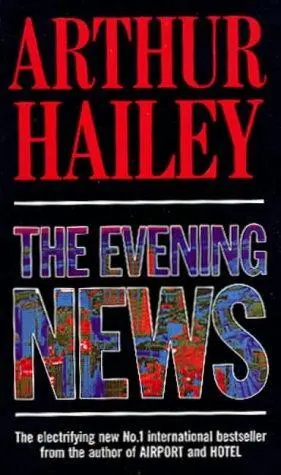
- Название:Evening News
- Автор:
- Жанр:
- Год:неизвестен
- ISBN:нет данных
- Рейтинг книги:3.5 / 5. Голосов: 2
-
Избранное:Добавить в избранное
- Отзывы:
-
Ваша оценка:
Evening News: краткое содержание, описание и аннотация
Предлагаем к чтению аннотацию, описание, краткое содержание или предисловие (зависит от того, что написал сам автор книги «Evening News»). Если вы не нашли необходимую информацию о книге — напишите в комментариях, мы постараемся отыскать её.
Evening News — читать онлайн бесплатно полную книгу (весь текст) целиком
Ниже представлен текст книги, разбитый по страницам. Система сохранения места последней прочитанной страницы, позволяет с удобством читать онлайн бесплатно книгу «Evening News», без необходимости каждый раз заново искать на чём Вы остановились. Поставьте закладку, и сможете в любой момент перейти на страницу, на которой закончили чтение.
Интервал:
Закладка:
Suddenly he had a pang of conscience for what he had failed to understand sooner, in any deep or caring way.
The trouble was, Crawford thought, he was so caught up professionally in each day's current, breaking news that he tended to dismiss the news of earlier eras as history and therefore irrelevant to the brimming, bustling here and now. That mind-set was an occupational hazard; he had seen it in others. But the older news was not irrelevant, and never would be, to his father.
Crawford was well informed. He had read about the raid on Schweinfurt in a book, Black Thursday. The author, Martin Caidin, compared the attack with the "immortal struggles of Gettysburg, St. Mihiel and the Argonne, of Midway and the Bulge and Pork Chop Hill.”
My father, Crawford reminded himself, was a part of that long saga. He had never viewed that fact before in quite the same perspective as today.
He put on the jacket of his suit, inspected himself in the mirror, then, satisfied with his appearance, returned below.
He said goodbye to Jessica and Nicky, then approached his father and told the old man quietly, "Stand up.”
Angus seemed puzzled. Crawford repeated himself.”Stand up."
Pushing his chair back, Angus slowly rose. Instinctively, as he so often did, he brought his body to the equivalent of military attention.
Crawford moved close to his father, put his arms around him, held him tight, then kissed him on both cheeks.
The old man seemed surprised and flustered.”Hey, hey! What's all this?”
Looking him directly in the eye, Crawford said, "I love you, you old coot.”
At the doorway, on the point of leaving, he glanced back. On Angus's face was a small, seraphic smile. Jessica's eyes, he saw, were moist. Nicky was beaming.
* * *
The surveillance duo of Carlos and Julio were surprised to see Crawford Sloane leaving his home by car earlier than usual. They reported the fact immediately by code to the leader, Miguel.
By now, Miguel had left the Hackensack operating center and, accompanied by others in a Nissan passenger van equipped with a cellular phone, was crossing the George Washington Bridge between New Jersey and New York.
Miguel was unperturbed. He issued, also in code, the order that prearranged plans were now in effect, their time of implementation to be advanced if needed. He reasoned confidently:
What they were about to do was the totally unexpected; it would turn logic upside down, then soon after raise the frantic question, Why?
10
At about the same time Crawford Sloane left his Larchmont home to drive to CBA News headquarters, Harry Partridge awakened in Canada—in Port Credit, near Toronto. He had slept deeply and spent the first few moments of the new day wondering where he was. It was a frequent experience because he was used to waking in so many different places.
As his thoughts arranged themselves he took in familiar landmarks of an apartment bedroom and knew that if he sat up in bed—which he didn't feel like doing yet—he would be able to see, through a window ahead, the broad expanse of Lake Ontario.
The apartment was one Partridge used as his base, a retreat, and the nomadic nature of his work meant that he got to it for only a few brief periods each year. And even though he stored his few possessions here—some clothes, books, framed photographs, and a handful of mementos from other times and places the apartment was not registered in his name. As a card alongside a bell push in the lobby six floors below advised, the official tenant was V. Williams (the V for Vivien), who resided here permanently.
Every month, from wherever in the world Partridge happened to be, he sent Vivien a check sufficient to pay the apartment rent and, in return, she lived here and kept it as his haven. The arrangement, which had other conveniences including casual sex, suited them both.
Vivien was a nurse who worked in the Queensway Hospital nearby, and he could hear her now, moving around in the kitchen. In all probability she was making tea, which she knew he liked each morning, and would bring it to him soon. Meanwhile he let his thoughts drift back to the events of yesterday and the journey the night before on his delayed flight from Dallas to Toronto's Pearson International . . .
The experience at DFW Airport had been a professional one which he took in stride. It was Partridge's job to do what he did, a job for which he was well paid by CBA News. Yet thinking about it last night and again this morning, he was conscious of the tragedy behind the surface of the news. From the latest reports he heard, more than seventy aboard the Muskegon Airlines flight lost their lives, with others critically injured, and all six people died aboard the smaller airplane that had collided with the Airbus in midair. Today, he knew, many grief-stricken families and friends were struggling, amid tears, to cope with their abrupt bereavement.
The thought reminded him that there were times when he wished he could cry too, could shed tears along with others because of things he had witnessed in his professional life, including perhaps the tragedy of yesterday. But it hadn't happened—except on one unparalleled occasion which, as it came to mind, he thrust away. What he did remember was the first time he ever wondered about himself and his apparent inability to cry.
* * *
Early in his reporting career, Harry Partridge was in Britain when a tragedy occurred in Wales. It was in Aberfan, a mining village where a vast pile of coal waste—slurry—slid down a hillside and engulfed a junior school A hundred and sixteen children died.
Partridge was on the scene soon after the disaster, in time to see the dead being pulled out. Each small pathetic body, covered with black, evil-smelling sludge, had to be hosed down before it was carted awayfor identification.
Around him, watching the same scene, other reporters, photographers, police, spectators, were weeping, choking on their tears. Partridge had wanted to cry too, but couldn't. Sickened but dry-eyed, he had done his reporting job and gone away.
Since then there had been countless other witnessed scenes where there was cause for tears, but he hadn't cried there either.
Was there some deficiency, some inner coldness in himself? He asked that question once of a woman psychiatrist friend, after both of them, following an evening of drinking, had been to bed together.
She told him, "There's nothing wrong with you, or you wouldn't care enough to ask the question.”at you have is a defense mechanism which depersonalizes what you feel. You're banking it all, tucking the emotion away inside you somewhere. One day everything will overflow, crack open, and you'll cry. Oh, how you'll cry!”
* * *
Well, his knowledgeable bed partner had been right, and there had come a day . . . But again he didn't want to think about it, and pushed the image away just as Vivien came into the bedroom, carrying a tray with morning tea.
She was in her mid-forties, with angular, strong features and straight black hair, now streaked with gray. While neither beautiful nor conventionally pretty, she was warm, easygoing and generous. Vivien had been widowed before Partridge knew her and he gathered the marriage had not been good, though she rarely talked about it. She had one child, a daughter in Vancouver. The daughter occasionally stayed here, though never when Partridge was expected.
Partridge was fond of Vivien though not in love with her, and had known her long enough to be aware he never would be. He suspected that Vivien was in love with him and would love him more if he encouraged it. But as it was, she accepted the relationship they had.
While he sipped his tea, Vivien regarded Partridge quizzically, noting that his normally lanky figure was thinner than it should be; also, despite a certain boyishness he still retained, his face showed lines of strain and tiredness. His unruly shock of fair hair, now noticeably grayer, was in need of trimming.
Читать дальшеИнтервал:
Закладка:
Похожие книги на «Evening News»
Представляем Вашему вниманию похожие книги на «Evening News» списком для выбора. Мы отобрали схожую по названию и смыслу литературу в надежде предоставить читателям больше вариантов отыскать новые, интересные, ещё непрочитанные произведения.







Обсуждение, отзывы о книге «Evening News» и просто собственные мнения читателей. Оставьте ваши комментарии, напишите, что Вы думаете о произведении, его смысле или главных героях. Укажите что конкретно понравилось, а что нет, и почему Вы так считаете.