Arthur Hailey - Evening News
Здесь есть возможность читать онлайн «Arthur Hailey - Evening News» весь текст электронной книги совершенно бесплатно (целиком полную версию без сокращений). В некоторых случаях можно слушать аудио, скачать через торрент в формате fb2 и присутствует краткое содержание. Жанр: Современная проза, на английском языке. Описание произведения, (предисловие) а так же отзывы посетителей доступны на портале библиотеки ЛибКат.
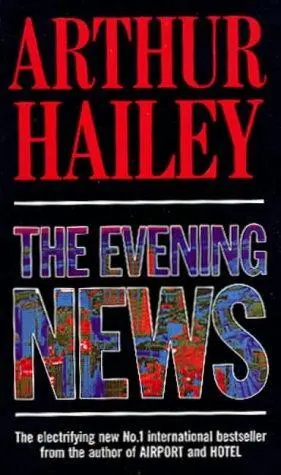
- Название:Evening News
- Автор:
- Жанр:
- Год:неизвестен
- ISBN:нет данных
- Рейтинг книги:3.5 / 5. Голосов: 2
-
Избранное:Добавить в избранное
- Отзывы:
-
Ваша оценка:
Evening News: краткое содержание, описание и аннотация
Предлагаем к чтению аннотацию, описание, краткое содержание или предисловие (зависит от того, что написал сам автор книги «Evening News»). Если вы не нашли необходимую информацию о книге — напишите в комментариях, мы постараемся отыскать её.
Evening News — читать онлайн бесплатно полную книгу (весь текст) целиком
Ниже представлен текст книги, разбитый по страницам. Система сохранения места последней прочитанной страницы, позволяет с удобством читать онлайн бесплатно книгу «Evening News», без необходимости каждый раз заново искать на чём Вы остановились. Поставьте закладку, и сможете в любой момент перейти на страницу, на которой закончили чтение.
Интервал:
Закладка:
He copied the remaining names onto two more forms. Deliberately, he had selected surnames whose initial letters were widely spaced from the "M”of Martin; one began with "B, “the other "Y “That was because, at the Passport Office, different clerks handled different letter groups of applications. The spread ensured that the three applications would be dealt with by separate persons, so any similarity would not be noticed
At all points Miguel was careful not to touch any of theforms on which he wrote. That was why he had picked up five forms, the two outside ones were to protect the others from his fingerprints and he would destroy those later. He had learned since Berkeley that nothing could take away fingerprints totally, not even careful wiping—new high-tech fingerprint tests the Ninhydrin and ion—argon laser, would reveal them.
Next was a short walk to a cashier's window. There he presented the three applications, still managing not to touch any of those he would leave. A male cashier asked him for a fee of five pounds for each certificate, which he paid in cash. He was told the birth certificates would be ready in two days' time.
During those intervening days he arranged to use three accommodation addresses.
From Kelly's London Business Directory he noted several secretarial agencies to whose unembellished street addresses mail could be sent and then collected Going to one of the agencies, he pa id a fee of fifty pounds, again cash. He had a cover story ready —that he was starting a small business but could not yet afford an office or secretary. As it turned out, no questions were asked He repeated the process at two other agencies which were equally incurious. He now had three separate addresses for the trio of passport applications, none of them traceable to himself.
Then, making use of automatic photography machines, he obtained three sets ofpassport photographs, each time varying his appearance. For one picture he applied a neat mustache and beard, in another he was clean-shaven and changed his hair parting, for the third he wore heavy, distinctive glasses.
Next day he collected the three birth certificates from St. Catherine's House. As before, no one was in the least interested as to why he wanted them.
He had already obtained passport applications from a post office, again being careful not to touch them. Now, wearing disposable plastic gloves, he completed the forms. On each, as the applicant's address he used one of the accommodation addresses already arranged.
Two photographs had to accompany each passport application. One photo was required to have on it a statement by a “Professionally qualified person, “such as a doctor, engineer or lawyer, identifying the applicant; also the same person affirmed that he or she had known the applicant for at least two years. Based on advice he had received, Miguel wrote and signed the statements himself, disguising his handwriting and using names and addresses selected at random from a phone book. He had also bought a rubber stamp set which he used to make the names and addresses more convincing.
Despite a warning on the passport form that checks of support signatories were made, in fact they rarely were, and the chance of a false statement's being discovered was extremely remote. There were simply too many applications and too small a staff.
Finally, Miguel dealt with the three "identified”photos those that had writing on them and therefore would not appear in any of the passports he was applying for, but were destined for Passport Office file & Using a soft sponge, he applied a weak solution of Domestos, a household bleach similar to the North American product Clorox. This ensured that within two or three months the photographs on file wouldfade and blur, and thus no picture would exist of Miguel, alias Dudley Martin or the other names.
Now Miguel mailed the three applications, each with a postal order for fifteen pounds, knowing it would take at least four weeks for the passports to be processed and sent back. It was a tedious wait but, for safety's sake, worthwhile.
During this hiatus he mailed several letters to himself at the accommodation addresses. In each instance, after waiting a day or two he telephoned to inquire whether mail was there, and when the answer was 'yes”stated that a messenger would make the collection. He then used unknown youths from the street for the pickups, paying them a few pounds and, before revealing himself afterward, watching carefully to ensure that none was followed. It was Miguel's intention to collect the passports when delivered, in the same way.
All three passports arrived within a few days of each other during the fifth week and were collected without a hitch. When the third was in his hands, Miguel smiled to himself. Excelente! He would use the Dudley Martin passport now, retaining the other twoforfuture use.
One final step remained—to buy a round trip ticket to the United States. Miguel did so that same day.
Before 1988, all holders of British passports required a visa to enter the U.S. Now a visa was not needed, provided the intended visit would not exceed ninety days and the traveler possessed a return ticket. Though Miguel had no intention of using his return portion and later would destroy it, its cost was trifling compared with the risk of another sally through bureaucracy. As to the ninety-day rule, it made no difference to him either way. While he did not expect to stay that long in the U.S., when he left it would be either secretly or with another identity, the Dudley Martin passport having been discarded.
America's rule change about visas had delighted Miguel. Once more those convenient open systems were being helpful to his kind!
The next morning he flew to New York and, at John F Kennedy Airport, was admitted without hindrance.
* * *
After reaching New York, Miguel went immediately to where a sizable Colombian community lived in the borough of Queens and where a safe house had been arranged by a Medellin cartel agent.
"Little Colombia”in Jackson Heights extended from Sixtyninth to Eighty-ninth streets. A thriving narcotics center, it was one of New York's most dangerous high-crime areas where violence was a hiccup and murder commonplace. Uniformed police officers seldom ventured there alone, and even in pairs did not move around on foot at night.
The district's reputation did not bother Miguel at all; in fact, he thought of it as protection while he began his planning, drew on money made secretly available, and assembled the small force he would lead. That force's seven members, including Miguel, had been selected in Bogota.
Julio, at this moment on surveillance duty, and Socorro, the only woman in the group, were Colombians who had been "sleeping agents”of Medellin. Several years ago both were sent to the United States, ostensibly as immigrants, their only instructions to establish themselves and wait until such time as their services were needed for drug-related activity or some other criminal purpose. That time had now arrived.
Julio was a communications specialist. Socorro, during her waiting period, had trained and qualified as a nursing aide.
Socorro had an additional affiliation. Through friends in Peru she had become a sympathizer and part-time U.S. agent for the revolutionary Sendero Luminoso. Among Latin Americans such crossovers between politically motivated and profitmotivated crime were common and now, because of her dual connection, Socorro held a watching role also on Sendero's behalf.
Of the remaining four, three others were Colombians, who had been assigned the code names Rafael, Luis and Carlos. Rafael was a mechanic and general handyman. Luis had been chosen for his driving skills; he was expert at eluding pursuit, especially from crime scenes. Carlos was young, quick-witted and had organized the surveillance of the past four weeks. All three spoke English fluently and had been in the U.S. several times before. On this occasion they had come in unknown to each other and using forged passports with false names. Their instructions were to make themselves known to the same Medellin agent who arranged Miguel's safe house, after which they received orders directly from Miguel.
Читать дальшеИнтервал:
Закладка:
Похожие книги на «Evening News»
Представляем Вашему вниманию похожие книги на «Evening News» списком для выбора. Мы отобрали схожую по названию и смыслу литературу в надежде предоставить читателям больше вариантов отыскать новые, интересные, ещё непрочитанные произведения.
Обсуждение, отзывы о книге «Evening News» и просто собственные мнения читателей. Оставьте ваши комментарии, напишите, что Вы думаете о произведении, его смысле или главных героях. Укажите что конкретно понравилось, а что нет, и почему Вы так считаете.