Howard Jacobson - Kalooki Nights
Здесь есть возможность читать онлайн «Howard Jacobson - Kalooki Nights» весь текст электронной книги совершенно бесплатно (целиком полную версию без сокращений). В некоторых случаях можно слушать аудио, скачать через торрент в формате fb2 и присутствует краткое содержание. Год выпуска: 2007, Издательство: Simon & Schuster, Жанр: Современная проза, на английском языке. Описание произведения, (предисловие) а так же отзывы посетителей доступны на портале библиотеки ЛибКат.
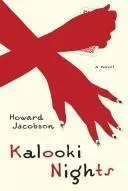
- Название:Kalooki Nights
- Автор:
- Издательство:Simon & Schuster
- Жанр:
- Год:2007
- ISBN:нет данных
- Рейтинг книги:5 / 5. Голосов: 1
-
Избранное:Добавить в избранное
- Отзывы:
-
Ваша оценка:
Kalooki Nights: краткое содержание, описание и аннотация
Предлагаем к чтению аннотацию, описание, краткое содержание или предисловие (зависит от того, что написал сам автор книги «Kalooki Nights»). Если вы не нашли необходимую информацию о книге — напишите в комментариях, мы постараемся отыскать её.
Spanning the decades between World War II and the present day, acclaimed author Howard Jacobson seamlessly weaves together a breath-takingly complex narrative of love, tragedy, redemption, and above all, remarkable humor. Deeply empathetic and audaciously funny, "Kalooki Nights" is a luminous story torn violently between the hope of restoring and rebuilding Jewish life, and the painful burden of memory and loss.
Kalooki Nights — читать онлайн бесплатно полную книгу (весь текст) целиком
Ниже представлен текст книги, разбитый по страницам. Система сохранения места последней прочитанной страницы, позволяет с удобством читать онлайн бесплатно книгу «Kalooki Nights», без необходимости каждый раз заново искать на чём Вы остановились. Поставьте закладку, и сможете в любой момент перейти на страницу, на которой закончили чтение.
Интервал:
Закладка:
Manny was not shocked by this. At one level his brother’s inconsolability pained and angered him. Unforgivable, he still found his parents’ brutal interference in Asher’s happiness. At another level he was relieved that his brother had not, after all, become an unbeliever or a Christian mystic.
The Rambam, in his measured way, had written against intermarriage, but not, Asher argued with fervour, because he believed, as the anti-Semites charge the Jews with believing, that Jews were too sacred to be contaminated by union with anybody else. What the goyim never seemed to understand, Asher explained, as though he had forgotten that his brother had been educated into these things too, was that separation was a condition of holiness, not haughtiness. To give yourself to God, which is the same as giving yourself to seriousness of mind, you must sever your connection with the frivolous and worldly. That was the meaning of God’s half-promise, half-injunction, that his ‘people shall dwell alone, and shall not being reckoned among the nations’. They were to dwell alone, not because they were superior, but because aloneness was the fate for which they were best fitted. In his Guide for the Perplexed , Maimonides never once argued that the Jews were special by virtue of being ‘Chosen’. His interpretation of the chapters of Deuteronomy that forbade marriage to the daughters of the Hittites and the Girgashites, the Amorites and the Canaanites, the Perizzites and the Hivites and the Jebusites, turned upon God’s jealousy. The reason for not lusting after these women was clear: ‘For they will turn away thy son from following me, that they may serve other gods.’ ‘The ridiculous part of it being,’ Asher said, ‘that Dorothy never once tried to turn me away from Hashem, or from anything else Jewish, come to that. She did not want me to serve other Gods. She wanted to serve mine. And it was I who closed the door on that.’
And yet The Rambam had spoken beautifully of Moses’s Torah being for all humanity, and not just the Jews. And went so far as to admonish Jews to love the convert — ‘for a convert is a child of Abraham, and whoever maligns him commits a great sin.’
‘Not,’ Asher went on, ‘that we ever gave her a chance to convert.’
Perverse though it might have been to feel this, given his brother’s bitterness and distraction, Manny believed he had never before been as happy as he was that afternoon, talking to Asher of holy things among the torn books and sun-bleached dereliction of The Rambam’s grave. Several times their conversation was halted by a pilgrim, come to read Maimonides to Maimonides and pray over his thousand-year-old remains. One of them, a pale young man who wore his yarmulke like a tonsure, and actually sang his respects to The Rambam, fluting them like a boy soprano, reminded Manny of himself, that is to say of himself as he could be were he to stay with Asher in Israel and forget that Crumpsall ever existed. Perhaps the part of Asher that craved Dorothy never would be whole again, but these were precious weeks to both the brothers, Manny was convinced, and he imagined them as David and Jonathan, loving each other as they loved their own souls.
And then, KERPOW! Dorothy!
3
Are women as sentimental as men? Do they, too, when they lose the person they love, accept The Rambam’s arguments for the indivisibility and incomparableness of the object of their devotion? The more beloved, like Hashem himself, for never being seen? For dissolving at last from corporeality to idea?
Manny was not the one to tell me. But to generalise from my own experience, the answer is no, they do not. Chloë and Zoë will never have missed me as I have missed them. Of that I am certain. There might be reason for it in my nature. I accept that I might well be an eminently unmissable man. Or it is possible that women are simply less whimsical and self-hurting in their affections, and prefer to love what they can see and touch.
In other words, women are Christians, men are Jews.
In which case we marry out every time we marry.
However you understand it, I deduced from what Manny was able to tell me that Dorothy had kept a corner of her heart forever shrouded in sadness for Asher, a little shrine to his memory which from time to time she tended with a sigh, but otherwise did not repine as he did, did not think of herself as a scar that would never heal. If she had not married, that was not because she could not bear to. Asher was a road she had not taken, that was all. A missed opportunity, an opportunity immeasurably important to her, but not the only opportunity that would ever come her way. She had entered the teaching profession, as she had always intended to, and was succeeding well enough at that. Head of modern languages at Bishops Blackburn, the only woman on the staff — imagine! At the same time she was studying for a PhD on the Elimination of the Blood Sacrifice in Judaism, the degree, were she to get it, to be awarded by the extra-mural studies department of the Hebrew University in Jerusalem. In relation to which she had flown out to Israel not more than a week after Manny.
When Shabettai Zvi proclaimed himself the Messiah he circled the walls of Jersusalem twelve times. Dorothy, who was a student of Jewish history, might well have been reminded of this incident when she noted for the second time the man in the long beard and the white robes pass her where she was taking photographs at Damascus Gate. She would not at first have registered that Asher was not alone. Though they had grown close, the brothers still kept their physical distance from each other. And once Asher had pointed something out to Manny he left him to form his own thoughts, not least because he wanted to be alone with his. Asher wasn’t the only Jesus lookalike in Jersualem. The city swarmed with them. But to Dorothy’s eye he did it better than the rest. His sadness was what struck her. Where the other messiahs were busy garnering attention and looked as though they might try to sell you jewellery if you caught their eye, this one had the authentic disappointed air of a messiah who had been rejected by his people and forsaken by his God. Eli, Eli, lama sabachthani? If Jesus were to come again among us, having failed to get an answer to that question, this surely was how he would look.
Did she see that it was Asher, or did Asher see that it was her? Who got there first?
Manny was not sure. In the confusion he even wondered if he had been the one who did the recognising and was recognised, but he wouldn’t swear to that. It simply happened, that was all he could tell me. One minute he and Asher were walking along, staring up at masonry and turrets, not talking, barely even aware of each other, the next — as though in a dream, or as though they had wakened from a dream and were back in Crumpsall where they belonged, the Crumpsall they had never really left — there was Dorothy!
He thought she was the first to speak. ‘Oh!’ he thought she said. ‘Oh!’ as though she had been caught out in a wrongdoing. Then she covered her mouth with her hands.
Asher too behaved guiltily, raking his hair with his fingers and breaking out into a sweat. ‘Not possible,’ he said. ‘This isn’t possible.’
‘What are you doing here?’ Dorothy asked, as though they were the surprise, as though it was the most normal thing on earth that she should be in the Holy Land, out taking photographs of Old Jerusalem.
‘I live here.’
‘How long have you lived here?’
‘However long it is since I last saw you. A hundred thousand years.’
An expression crossed her face which Manny took great pains to describe, presumably because he believed it partially explained his subsequent behaviour. It was like a cloud darkening her eyes, not with anger but with pleading. She seemed to close her vision down. She compressed her lips, so tightly that grooves appeared in her skin on either side of her mouth, etches of age and suffering. Had she begged Asher to leave her alone, to pass by and pretend they hadn’t met, that they didn’t know each other after all, that they were mistaken in their recognition, she could not have pleaded more eloquently. It was her mouth that upset Manny most. The sad compression and yet at the same time the moistness of her lips. The resolution contending with the longing — everything she had dreaded but also everything which in foolish hours she had hoped for descending on her without a moment’s warning. Manny had no experience of romantic love. It’s likely he had never even read a love story. Love of God he knew about, but love of God marks the face differently. So he had never seen sorrow in the full flower of its voluptuousness. Had Asher forgotten all about her, fallen out of love with her over time, he surely would have succumbed to all his old feelings for her again. But Asher had not fallen out of love with her. Imagine, then, Manny urged me, imagine then the excitement in his heart, seeing her like this — seeing her like this! — palpitating with regret for what Asher had himself regretted every day for a hundred thousand years.
Читать дальшеИнтервал:
Закладка:
Похожие книги на «Kalooki Nights»
Представляем Вашему вниманию похожие книги на «Kalooki Nights» списком для выбора. Мы отобрали схожую по названию и смыслу литературу в надежде предоставить читателям больше вариантов отыскать новые, интересные, ещё непрочитанные произведения.












Обсуждение, отзывы о книге «Kalooki Nights» и просто собственные мнения читателей. Оставьте ваши комментарии, напишите, что Вы думаете о произведении, его смысле или главных героях. Укажите что конкретно понравилось, а что нет, и почему Вы так считаете.