Howard Jacobson - Kalooki Nights
Здесь есть возможность читать онлайн «Howard Jacobson - Kalooki Nights» весь текст электронной книги совершенно бесплатно (целиком полную версию без сокращений). В некоторых случаях можно слушать аудио, скачать через торрент в формате fb2 и присутствует краткое содержание. Год выпуска: 2007, Издательство: Simon & Schuster, Жанр: Современная проза, на английском языке. Описание произведения, (предисловие) а так же отзывы посетителей доступны на портале библиотеки ЛибКат.
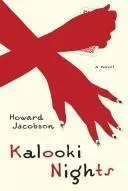
- Название:Kalooki Nights
- Автор:
- Издательство:Simon & Schuster
- Жанр:
- Год:2007
- ISBN:нет данных
- Рейтинг книги:5 / 5. Голосов: 1
-
Избранное:Добавить в избранное
- Отзывы:
-
Ваша оценка:
Kalooki Nights: краткое содержание, описание и аннотация
Предлагаем к чтению аннотацию, описание, краткое содержание или предисловие (зависит от того, что написал сам автор книги «Kalooki Nights»). Если вы не нашли необходимую информацию о книге — напишите в комментариях, мы постараемся отыскать её.
Spanning the decades between World War II and the present day, acclaimed author Howard Jacobson seamlessly weaves together a breath-takingly complex narrative of love, tragedy, redemption, and above all, remarkable humor. Deeply empathetic and audaciously funny, "Kalooki Nights" is a luminous story torn violently between the hope of restoring and rebuilding Jewish life, and the painful burden of memory and loss.
Kalooki Nights — читать онлайн бесплатно полную книгу (весь текст) целиком
Ниже представлен текст книги, разбитый по страницам. Система сохранения места последней прочитанной страницы, позволяет с удобством читать онлайн бесплатно книгу «Kalooki Nights», без необходимости каждый раз заново искать на чём Вы остановились. Поставьте закладку, и сможете в любой момент перейти на страницу, на которой закончили чтение.
Интервал:
Закладка:
It was then, word having got back to the Washinskys that their son was passing himself off as the Messiah, and, worse, was not eating enough, that they sent Manny over to see what was amiss.
Their action might have been concealing another motive. It’s not impossible they felt that Manny too would benefit from a change of air. Get out from under the stone he chose to live beneath. Feel a bit of sun on his skin. Who knows, find himself an Israeli wife.
Then again, that could simply have been my interpretation of what he needed.
It wasn’t kind of me to have looked so astonished at the idea of Manny travelling to Israel, but there was no hiding it — in all the years I hadn’t seen him prior to the gassing of his parents I had kept him safely, like a spider in the corner of my imagination, suspended between Crumpsall and Gateshead. Indeed, that was how I understood the gassing of his parents. He was deranged with the Orthodox uneventfulness — ritual apart — to which his life had been reduced. If it now turned out that he had been a gadabout, a citizen of the world with his own passport and airline tickets tumbling from his pockets — well, I was pleased for him, but he had more to answer for.
The wonderful thing about having the Messiah for a brother, and for Jersualem being his address, is that you walk into him the minute you get off the plane. There is the Temple Mount, there is the Western Wall, there are the observant Jews winding themselves into their cat’s-cradle phylacteries, and there is Asher!
Manny hadn’t seen his brother for many years. They fell into each other’s arms and wept. They were not alone. The Western Wall is a weepy place. Here, with emotion which can be too much to bear, Jews celebrate their unimaginable return. And here the two brothers sobbed over their unimaginable encounter. When they had last talked to each other the Wall was in the hands of the Jordanians. And Jews, as is sometimes forgotten, were not allowed to worship at it. Who could have imagined then, in Crumpsall, that the ancient Jewish hope, ‘Next year in Jersusalem’ — for so long more a velleity than a hope, the feeblest and most unanticipated of anticipations — would be realised in their lifetime and that they would be able to stand here, under the watchful eye of Israeli soldiers, but otherwise unimpeded, together? Crumpsall — was there such a place as Crumpsall? Were there even such people as their parents?
Manny felt the sun on his neck, smelled his brother’s perspiration in his hair, and believed he would never leave.
Asher made up a bed for him in a room no bigger than a hermit’s cell in a building so ancient that Manny believed it was only prayer that held it together. He slept for two whole days, exhausted not so much by the journey as the preparations for the journey, the instructions with which his parents had charged him (and which he had now forgotten), and by the white light which had stung his eyes from the moment he had walked off the plane. On the third day Asher shook him awake. ‘Time to see where you are,’ he said. ‘Time to see your country.’
It seemed to trouble Manny that he could not decide what colour Jerusalem was. Was it yellow, gold, bronze, or just luminous — no colour in nature at all, because it was set apart from nature, exquisite in its separation, like the incontrovertible expression of God’s will? If you tried to imagine the colour of Elohim’s countenance when it shone upon you — what the Jews called the Shechina, the divine refulgence — this was the colour. He also could not decide whether Jerusalem was beautiful or a rubbish tip. Everywhere you looked, stones. Great hewn boulders that might once have been the walls of the Temple, but might just as easily have been the stones rejected at the time of the Temple’s construction. Discarded and left to lie where they fell for the next two thousand years. But each fragment with something to tell you. The whole city was like a whispering gallery, every atom of every stone clamouring for your attention. It made some people ill, Asher told him. It made them run from the city with their hands over their ears. But Manny feasted on the stories. He might as well have been deaf for all Crumpsall ever said to him, but he listened to Jerusalem with the attention of a long-lost friend, gorging on gossip.
‘You’re getting hooked,’ Asher told him. ‘Let’s take a bus.’
From the windows, Asher pointed out the sites of learning and devotion, triumph and resistance, they both knew from the Torah. Manny sat open-mouthed as everything he had ever read about flew by. He was astounded by the variety of Israel’s geography, as though the Almighty had put the best examples of his work in this tiny wedge of land he’d reserved for the people whose seriousness and devotion to study pleased him above all others. One minute they were in the mountains, heading for Safed where the ceilings of all the synagogues were bluer than the clouds, the next they were peering into the sink of the planet, the lowest point on earth, where the very light was crystalline with salt. Asher’s preference was for the silence of the desert; Manny, to his own surprise, loved the lakes and seaside — the sight of Jews frolicking in their own water as unselfconscious as batesemeh at Morecambe Bay so astonishing him that he would stand there for hours at a time, on the beach or by the water’s edge, fully dressed, with his hands in his pockets, shaking his head. Jews running, Jews swimming, Jews fishing, Jews eating what did not to Manny look or taste like Jewish food at all. ‘That’s because you’re used to eating Polish slop,’ Asher told him. ‘This is real Jewish food. It’s got the warmth of the Mediterranean in it. Enjoy!’
At first, Manny had been frightened by the Israeli soldiers who looked like Arabs and comported themselves like warriors, themselves afraid of no one; but he grew used to the blackness of their skin — blacker even than Asher’s — and the fierceness of their eyes and wished at last that he had not been born the colour and the constitution of cream cheese. If he stayed, would he at last look like them?
He had been sent to see how Asher was, perhaps to persuade him to return to Crumpsall, to save him if he needed saving, but within a couple of weeks of being in Israel Manny believed it was he who had been saved.
Once, when he was sitting by Lake Galilee eating falafel and drinking kosher beer with his brother, he noticed that his legs were extended in front of him. For a moment he wasn’t quite sure he recognised them. If those were his legs — and whose else could they have been? — then what were they doing there? Manny always sat with his legs tucked under his chair, his trunk tilted forward, no part of him allowed to wander too far from his control. If he wasn’t mistaken, what he was doing now, in Tiberias, in the shadow of the Golan, in the sunshine, in his brother’s company, was relaxing. Many more weeks of this and he too would be growing his hair long, wearing flowing robes, and — why not? — healing lunatics and walking upon water.
Many more weeks and he might be able to leave Asher’s room without trying every light switch a dozen times, for fear that he would leave on a lamp which would burn down all Jerusalem.
This is not to say he was not concerned for Asher’s mental health. Even when he seemed most to be enjoying showing Manny their brave new world, throwing himself into talk and explication, Asher was somewhere else: preoccupied, no matter how attentive he was to his brother’s curiosity; gaunt, no matter how well they feasted; forlorn, no matter how much they laughed. One warm Tiberias afternoon, as they were walking round the tomb of Maimonides (nicknamed The Rambam after his initials, Rabbi Moses Ben-Maimon), Asher brought up Dorothy, until then a subject strictly not alluded to between them. They were discussing, at Manny’s instigation, The Rambam’s famous demonstration of the Creator’s incorporeality and singleness, his freedom from external influence, his dissimilarity from any other being or concept. If Asher had become a sort of Christ figure who challenged his teachers to prove the existence of Hashem, where, Manny wondered, did he stand on at least the first two of those four divine attributes? But it was not Jesus or Hashem who preyed on Asher’s mind. ‘That expresses exactly how I feel about Dorothy,’ he explained. ‘There is no one else like her. There can be no one else like her. She bears no resemblance to any other being or concept. She is indivisible in that I do not diminish her in my mind by comparing her with other women, and she is incorporeal in that I do not touch or even see her, though I imagine that I see her at least twice every day. So if it is right that we should worship no other God because of His singleness, then it must be right that I should love no woman other than Dorothy because of hers. And don’t tell me that immoderate love for anyone who is not God is idolatrous. I know it is idolatrous.’
Читать дальшеИнтервал:
Закладка:
Похожие книги на «Kalooki Nights»
Представляем Вашему вниманию похожие книги на «Kalooki Nights» списком для выбора. Мы отобрали схожую по названию и смыслу литературу в надежде предоставить читателям больше вариантов отыскать новые, интересные, ещё непрочитанные произведения.












Обсуждение, отзывы о книге «Kalooki Nights» и просто собственные мнения читателей. Оставьте ваши комментарии, напишите, что Вы думаете о произведении, его смысле или главных героях. Укажите что конкретно понравилось, а что нет, и почему Вы так считаете.