Howard Jacobson - Kalooki Nights
Здесь есть возможность читать онлайн «Howard Jacobson - Kalooki Nights» весь текст электронной книги совершенно бесплатно (целиком полную версию без сокращений). В некоторых случаях можно слушать аудио, скачать через торрент в формате fb2 и присутствует краткое содержание. Год выпуска: 2007, Издательство: Simon & Schuster, Жанр: Современная проза, на английском языке. Описание произведения, (предисловие) а так же отзывы посетителей доступны на портале библиотеки ЛибКат.
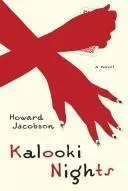
- Название:Kalooki Nights
- Автор:
- Издательство:Simon & Schuster
- Жанр:
- Год:2007
- ISBN:нет данных
- Рейтинг книги:5 / 5. Голосов: 1
-
Избранное:Добавить в избранное
- Отзывы:
-
Ваша оценка:
Kalooki Nights: краткое содержание, описание и аннотация
Предлагаем к чтению аннотацию, описание, краткое содержание или предисловие (зависит от того, что написал сам автор книги «Kalooki Nights»). Если вы не нашли необходимую информацию о книге — напишите в комментариях, мы постараемся отыскать её.
Spanning the decades between World War II and the present day, acclaimed author Howard Jacobson seamlessly weaves together a breath-takingly complex narrative of love, tragedy, redemption, and above all, remarkable humor. Deeply empathetic and audaciously funny, "Kalooki Nights" is a luminous story torn violently between the hope of restoring and rebuilding Jewish life, and the painful burden of memory and loss.
Kalooki Nights — читать онлайн бесплатно полную книгу (весь текст) целиком
Ниже представлен текст книги, разбитый по страницам. Система сохранения места последней прочитанной страницы, позволяет с удобством читать онлайн бесплатно книгу «Kalooki Nights», без необходимости каждый раз заново искать на чём Вы остановились. Поставьте закладку, и сможете в любой момент перейти на страницу, на которой закончили чтение.
Интервал:
Закладка:
Ask me what I could possibly have found to exult about and you have me. But what if that precisely was the monkish function I had allotted Manny from the start — he was the measure compared to which my life was all exultation?
A thought occurred to me. Was that the function Asher had allotted him as well? Did Asher prance before his brother?
‘Who was she then?’
He startled me. I was showing him round the kitchen, thinking my thoughts, wondering if he looked at the world as the world looked at him, or whether by his own lights he didn’t remotely suffer in the comparison with me or Asher as I feared — as I, perhaps, had no right to fear — because he attached small value to acts of love and desperation. Not everyone was a lover. Not everyone was a husband. Some people — I had constantly to remind myself of this — lived an uncompanioned life because they wanted to.
‘Zoë?’ I paused. Here we were again. How could I not upset him with Zoë? What version of Zoë was there that wouldn’t be unhinging to a man who’d spent his life in detention? ‘A woman driven to distraction by Jews,’ I decided to say.
He was counting the knives in the cutlery drawer, as though fearing I would charge him with their theft when he left. ‘What did we do to her?’
’We made her feel disgusted with herself.’
‘For not being Jewish?’
‘You have it in one, Manny.’
‘It’s no more than they do to us.’
‘I agree, it’s no more than they do to us. But that doesn’t make it any better. Indeed it makes it worse, since we know what it’s like.’
He fell quiet, starting on the forks. ‘That argument has got us into a lot of trouble in the past,’ he said.
‘And got me into a lot of trouble with Zoë,’ I agreed. ‘She thought it was another example of Jewish ethical haughtiness. All that Light Unto Other Fucking Nations Bollocks was how she alluded to it.’
‘But she married you.’
‘Yes. She hoped I might change the way she felt.’
‘And you didn’t?’
‘Oh, I did. I made her hate Jews even more virulently than she had before.’
He was still not looking at me, still counting and sorting cutlery. ‘How did you do that?’
‘Long story,’ I said. ‘Look, would you stop with the knives and forks.’
He jumped, startled. Deprived of anything to absorb his attention, he was reduced to facing me. And no sooner did so than he appeared to find me, or something I stood in the way of, interesting. I had the feeling that he was trying to look behind or beyond me. What had I said, I wondered, that he wanted to verify?
‘Why do we do it?’ he asked.
‘Why do we do what, Manny?’
He was still deciding, still verifying. I felt he was interviewing me in some way, testing my worthiness.
‘Why do we make it so hard for them?’
‘You mean our Christian brothers and sisters?’
‘Everybody. Everybody who isn’t us.’
I shrugged. What did I know other than that I was growing uncomfortable with this ‘we’ and ‘us’ business. What had Manny done to our Christian brothers and sisters? Manny’s bag was killing Jews, not Gentiles.
Then I realised that if I shut my mouth and just stared into the vast blue incoherence of his eyes and let him talk, he would tell me at last what I had been employed to hear.
2
Dorothy.
From Zoë, don’t ask me how, Manny had got to Dorothy.
From shikseh to shikseh was the overarching logic, of course — it was the individual moves I hadn’t followed. But here we were, however we had got to her, at Dorothy.
Dorothy and Asher met again. That much Manny had already told me. Not an arranged meeting, an accident. A happy fortuity, allowing that a happy fortuity for one (or two) people can be a catastrophe for others. A chance happening, anyway. Asher shuffling along, hollow of lung, cavernous of cheek, a ruined man, a holy tramp with a broken heart — a hero of the affections to me, even if he had capitulated to sectarianism — when suddenly, coming in the opposite direction, still beautiful, swinging her hair, but with little grey pinpricks of sadness in her alpine eyes, Dorothy!
KERPOW!!
What I didn’t know was that the happy fortuity had taken place in Israel. Crumpsall was where I’d pictured it, and even Crumpsall, in these circumstances, was not lacking any of the romantic associations necessary to send both their hearts skidding from their moorings. Just thinking of their meeting after so many years — ten, twelve, was it? — just imagining that first astonished convergence of their eyebeams, was enough to affect my breathing, however blank in actuality the streets. But Israel! The place where miracles happened. The place where, taking the long view — God’s covenant with the Jews, etc — all Dorothy’s and Asher’s troubles started, and yet where, as the plastic surgeon who wouldn’t work on my nose insisted, the reconciliation of every warring people would at last, in readiness for the final trumpet, be effected. If Asher and Dorothy were to be given a second chance of happiness before the world ended, Israel surely was the land to give it to them in.
Asher, it seemed, had been living in Israel for several years. This was why, after he had parted from Dorothy, no one outside his family had seen or heard of him. As part of his continuing convalescence — because running around Lymm in a vest and gym shorts was not mending his spirits — they had packed him off to Israel. For generations of wealthy Gentiles wanting to extricate their heiress daughters from the influence of penniless ne’er-do-wells, some of whom would doubtless have been Jews (for yes, there were, there are such), the Grand Tour always did the trick: a visit to the Paris opera, the statuary of Florence, a gondola ride in Venice, the ruins and fountains of Rome, and latterly a finishing school in Switzerland, or a sojourn at the court of Herr Hitler. A change of scenery and language, it was believed, a variety of diet, would change and varify their minds. Imagine, for example, what would have happened to any anglo-Yiddler romance the Mitford sisters might have been enjoying in London once they’d strolled out across the Wilhelmplatz to lunch on pig’s knuckle with the Führer. Kaput. All forgotten, you can be sure, all wiped from the memory in one mesmeric smile. Jewish families with a son or daughter to de-Christianise, especially Jewish families with no money, had to make do with Israel. That there was danger associated with this cure never seemed to worry those who resorted to it. As a yeshiva boy, Asher was exempt from conscription, but he volunteered for the Israeli army despite that, only his lungs saving him from combat. He volunteered again at the beginning of the Six Day War, but the conflict was over before they could check his chest a second time. Poor Asher. I saw something Byronic in it myself. Very likely he wanted to be killed in a cause unrelated to his sorrow. But whether he did or he didn’t, one thing was certain — however hard his parents would have taken his death in a desert or at a border crossing, better that, a thousand times, than death by intermarriage. Irrational in the extreme, but then those Gentile heiresses had likewise to take their chances with pirates on the high seas or malaria in Rome. It is not uncommon for parents of all faiths to prefer their offspring dead than wed.
Lonely and directionless, unable to martyr himself in the Zionist cause and unable to forget Dorothy — unable to forget how he felt when he’d been with Dorothy, that was the thing; unable to reconcile himself to feeling any other way — Asher began to turn peculiar, growing his hair, wearing flowing robes, and making a nuisance of himself at the yeshiva where he set himself to doubt every tenet of the Jewish faith, including God. There being nothing that teachers at a yeshiva love more than to argue a Jewish boy out of his erroneousness, he found himself the centre of attention. When he challenged them to prove Hashem’s existence they cleared their throats and started. Time was no consideration. If it took them seven times seven years to prove to Asher that Hashem existed, who worried? Who worried if it took them another seven times that? Proving that Hashem existed was what yeshivas were for. Dressed in a long white gown, with his hair down to his waist, and convinced of the importance of his views — so attentive were his teachers to his arguments — Asher began to wander round Jersualem, for all the world another Jesus Christ, or maybe even the old Jesus Christ come back to have a second crack at redeeming mankind.
Читать дальшеИнтервал:
Закладка:
Похожие книги на «Kalooki Nights»
Представляем Вашему вниманию похожие книги на «Kalooki Nights» списком для выбора. Мы отобрали схожую по названию и смыслу литературу в надежде предоставить читателям больше вариантов отыскать новые, интересные, ещё непрочитанные произведения.









Обсуждение, отзывы о книге «Kalooki Nights» и просто собственные мнения читателей. Оставьте ваши комментарии, напишите, что Вы думаете о произведении, его смысле или главных героях. Укажите что конкретно понравилось, а что нет, и почему Вы так считаете.