Howard Jacobson - Kalooki Nights
Здесь есть возможность читать онлайн «Howard Jacobson - Kalooki Nights» весь текст электронной книги совершенно бесплатно (целиком полную версию без сокращений). В некоторых случаях можно слушать аудио, скачать через торрент в формате fb2 и присутствует краткое содержание. Год выпуска: 2007, Издательство: Simon & Schuster, Жанр: Современная проза, на английском языке. Описание произведения, (предисловие) а так же отзывы посетителей доступны на портале библиотеки ЛибКат.
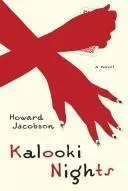
- Название:Kalooki Nights
- Автор:
- Издательство:Simon & Schuster
- Жанр:
- Год:2007
- ISBN:нет данных
- Рейтинг книги:5 / 5. Голосов: 1
-
Избранное:Добавить в избранное
- Отзывы:
-
Ваша оценка:
Kalooki Nights: краткое содержание, описание и аннотация
Предлагаем к чтению аннотацию, описание, краткое содержание или предисловие (зависит от того, что написал сам автор книги «Kalooki Nights»). Если вы не нашли необходимую информацию о книге — напишите в комментариях, мы постараемся отыскать её.
Spanning the decades between World War II and the present day, acclaimed author Howard Jacobson seamlessly weaves together a breath-takingly complex narrative of love, tragedy, redemption, and above all, remarkable humor. Deeply empathetic and audaciously funny, "Kalooki Nights" is a luminous story torn violently between the hope of restoring and rebuilding Jewish life, and the painful burden of memory and loss.
Kalooki Nights — читать онлайн бесплатно полную книгу (весь текст) целиком
Ниже представлен текст книги, разбитый по страницам. Система сохранения места последней прочитанной страницы, позволяет с удобством читать онлайн бесплатно книгу «Kalooki Nights», без необходимости каждый раз заново искать на чём Вы остановились. Поставьте закладку, и сможете в любой момент перейти на страницу, на которой закончили чтение.
Интервал:
Закладка:
‘And you think kalooki’s the way?’
‘Every little helps.’
‘I’ll contribute a comic strip.’
He looked disappointed.
‘Fine. I’ll write you a cheque. But no kalooki. My family plays kalooki, I don’t. Not playing kalooki was how I learned to understand I wasn’t my mother.’
‘What about the kissogram? I bet she plays.’
‘She doesn’t play any games. It’s against her religion. She plays the flute, the harp, the violin, the piano, the cello — all to concert level — but she doesn’t play kalooki.’
‘I’ll teach her.’
‘Errol, we’re not coming. It’s too far. I get lost.’
So he left a message on my answerphone, repeating the invitation. To both of us.
‘Who’s Errol?’ Zoë wanted to know.
‘You know perfectly well who Errol is. We met there.’
‘What do you mean “there”? Is Errol a place? Besides, we met in Oxford Street, waiting for a Chinese to jump off a roof.’
‘We met at a pub next door to Errol’s. You were a kissogram. And he was African.’
‘Errol’s African? Never met him. And I have never been a kissogram. You’ve got the wrong gal, pal.’
‘Palais de drek, Borehamrigid — ring any bells?’
She shook her head. Always pretty when she shook her head. Her nose like a little bell itself.
‘Nope. But are we going?’
‘Nope. You don’t play kalooki.’
‘How do you know I don’t play kalooki? What is it, anyway? A Polynesian stringed instrument?’
‘Well, if it were, you’d play it beautifully. It’s a card game. You don’t play cards.’
‘Only because I was never taught.’
She turned it into a reproach. The things I never taught her! The number of doors these Jews she had the misfortune to get mixed up with slammed upon her genius!
I could have left it at that. She would have forgotten. But something — a little worm of perverse honourableness gnawing at my heart (or was it some other part of me?) — made me tell her what the kalooki evening was in aid of. After which there was no question but that we would go. Wherever she stood at any moment on the Jewish question in general, Zoë was rock solid on the Holocaust. It was Zoë, on our Jew Jew trip to Eastern Europe, who had wept over every killing site, not me. Yes, she had persuaded me to accept the apology of the German people, but she would not have done that had she not believed the German people had something to apologise for. It occurred to me as we filled flasks, packed sandwiches, wrote wills and motored out to Hertfordshire, that the fellowship should go to Zoë. The greatness that had always been in store for her, that special thing she had been appointed to do before she died — was this not it: to strangle with her bare hands every freak found crawling over what was left of Auschwitz with a set square and calculator?
It’s possible the same thought crossed her mind. She was highly excitable when we arrived, murderously elegant in the European introspective mode — Simone Weil, Hannah Arendt, Simone de Beauvoir and Jean-Paul Sartre — in a black polo-neck sweater and plain long black skirt, neither her wrists nor her ankles showing. Zoë funereal, showing respect to the Six Million Dead.
‘How do you do,’ she said to Errol, extending her goodbye hand as though to insist she had never clapped eyes on him before. ‘What a beautiful house you have.’
I made a face at him not to let on he knew her. He wrinkled his nose at me. The devil knows what little fibbers women are, Maxie.
Then he wrinkled his nose at Zoë.
I hadn’t believed a word of Errol’s story about raising money for a Fellowship in Holocaust Denial Denial, and so was surprised to see the make-up of the gathering.
‘Christ, who are these people?’ Zoë whispered to me. ‘They all look the same.’
‘They are the same,’ I told her. ‘They’re all in charity.’
‘How can you tell?’
‘A cartoonist’s trick. You have to scrutinise their faces very closely. The men all look as though they have something to repent — you can see it in the melancholy brackets round their eyes. And the wives have all got their tits out.’
She corrected me — ‘No, all the wives have all got all their tits out. But why?’
‘It’s an unconscious expression of their givingness. Somebody says charity and they think of giving suck.’
‘And this applies to all charity-givers, does it?’
‘Only Jewish ones. The tit part anyway. Jewish women give more tit than Gentile women. It’s their way of saying sorry to their boy children for subjecting them to circumcision. In fact the whole shebang is about saying sorry. The Jews are a highly apologetic people.’
‘Oh, Jew Jew Jew!’
I shrugged my shoulders. It wasn’t my fault that Errol Tobias had assembled half of fucking philanthropic Elstree.
Put the swearing down to Zoë. But also put it down to half of fucking philanthropic Elstree. If Zoë agitated me into near sociopathic philo-Semitism, fucking philanthropic Elstree agitated me, no less nearly, into its opposite. The stain of Crumpsall on me, was it? Something I believed they saw, whether they did or not? My origins in poor-house, atheistical Judaism? Yes, I was paranoid, without a doubt. But I didn’t imagine the men with the bored, sad hoodlum eyes asking me what I did, as though they found it hard to believe from the look of me that I did anything, nor their expressions of the profoundest indifference when I told them ‘cartoonist’, nor their wet-nurse wives thinking that they might just have seen, at some time, somewhere, something or other I might have done. .
The thanks you get for chronicling their Five Thousand Years of Persecution.
As usual, Zoë when they asked her told them she was a concert pianist and opera singer.
‘You’re wasting your time with that stuff here,’ I whispered to her. ‘If you want to impress this bunch tell them you’re in fucking Evita .’
‘I thought Jews were supposed to be cultivated.’
‘Not these Jews. Different Jews.’
‘Oh, Jews Jews Jews!’
Though she understood nothing of the principle of cards, Zoë threw herself into kalooki, won a hand, believed she had a natural genius for the game, lost a hand and left the table.
When I next saw her she was sitting on her own, weeping, in a small anteroom which I remembered Melanie describing, the night she showed me around the house, the night of Errol’s demented proposition, as The Library. Most of the bookshelves were taken up with family photographs in rococo frames — the Tobiases grinning by the Dead Sea, the Tobiases grinning at the Wailing Wall, Errol sniffing Israeli grapes on the Golan — and those shelves that didn’t hold photographs held glass paperweights which Melanie collected for want of anything else to do. But there were a few rows of books in gilt bindings — some in Hebrew, the sorts of books you were given for your bar mitzvah, assuming you were given a bar mitzvah, and a number of popular classics, a brown leatherette set of Dickens, for example, which a national newspaper once distributed to every family in Crumpsall, plus about two dozen Reader’s Digest condensations. I had expected The Library to be given over to Errol’s research interest, Yockey and his chums, and at first took these to be the reason for Zoë’s tears. She had opened Rassinier, I reasoned, come upon (24.8 % + 28.8 %)/1.85 = fuck you, and felt the ground go beneath her. But she did not have Rassinier beside her on the camel-hide and onyx couch, she had a collection of Errol’s porno.
5She hasn’t shot him yet. That’s something.He has seen almost every part of her naked, and so is able to put an image of her together in his head. But she has forbidden him to do this.‘How will you know, Gnädige Frau?’‘I will know. I will see it on you.’‘But how am I to stop myself?’‘That’s for you to work out.’They have not yet discussed what will happen when she has no part of herself left to show him.It occurs to him that she is saving something special for him. The climax. The 1001st night. When, in the moment before she shoots him, he is permitted to see the parts assembled, and to draw what he sees.As always, her vanity makes her coarse. As his degradation makes him subtle. Does she not understand that the parts have become greater than the whole? Mendel’s parents bought him jigsaw puzzles for his birthdays. They would do them together as a family, the three of them standing round the oval walnut dining table, not speaking, leaning across one another for a piece, their faces creased in concentration. The Tyn church. The wild crocuses in Lazienki Park. The Neris river on ice. Mendel remembers the disappointment of finishing. Now what? What’s to be done with a completed jigsaw puzzle? They would leave it there for an hour or so, a disconsolate monument to the futility of human endeavour, then his mother would sweep the pieces back into the box so that she could set the table for dinner. Finding a piece on the carpet or under a chair, Mendel would marvel at the curiosity it rekindled. Where did that piece go again? Was it light on stone? Was it a crocus leaf licking the foot of Szymanowski’s flowing sculpture of Chopin? — the statue Mendel remembered the Germans blowing up not many months after they marched into the city. Why would they blow up a sculpture of a composer? And what did the piece denote? So many questions attaching to such a tiny, foolish shape, endlessly intriguing in its male and female symbolism, on the face of it no different to every other piece, but in fact unique. Once in place, though, once its mystery had been plumbed and the questions as to its function answered, all interest in it faded.The Germans could not abide a statue of a Polish composer to remain standing in a once Polish, now a German park. Was that because they too felt the anticlimax of completion and wanted matter returned to its component parts? Were they doing to humanity what they had done to Chopin?If that were the case then Frau Koch was out of step with her co-iconoclasts. Not knowing that Mendel was more than satisfied to look at her in fragments, she believed he must be waiting to see her recombined. She was building up, she thought, to Mendel’s big day, not knowing that every day that Mendel feasted like a slave on whatever scrap she threw him already was his big day.Perhaps Frau Koch wasn’t out of step in that case, and all Germans felt the same. They were not dismantling humanity for the pure joy of destruction but simply clearing the pedestals for the day when Germany perfected would be put on show. Behold the Godhead.So they were not able even to pursue the logic of their own nihilism.Frau Koch’s unimaginativeness would be a trial to Mendel were it not, by the laws of his own subtlety, a further inducement to abasement in him. There would be nothing rare and strange about submitting himself to the whims of a woman of quality. Men do that every day and call it love and marriage. But to give oneself without modesty or restraint to a woman who possesses no qualities whatsoever — unless you count the coarseness of her intelligence a quality — there is satisfaction beyond words in that!He is enjoying erasing his drawings at the end of every day. It lends purpose to his nights, imagining what he will see, what he will be drawing, what shape he will have to go grubbing for, in the morning. The anticipation of starting again, as though he never was and never more will be, excites him. The transience turns out to be voluptuous. Einmal ist keinmal , the Germans say. What happens only the once might just as well not have happened at all. Which is a clue to the force for repetition and self-commemoration that drives them. Mendel reads einmal differently. Einmal is the yellow of the crocus. Einmal is finding where the jigsaw piece goes. Einmal is seeing his mistress only one part at a time, and never that part again. Einmal is ecstasy. Einmal is art.
Читать дальшеИнтервал:
Закладка:
Похожие книги на «Kalooki Nights»
Представляем Вашему вниманию похожие книги на «Kalooki Nights» списком для выбора. Мы отобрали схожую по названию и смыслу литературу в надежде предоставить читателям больше вариантов отыскать новые, интересные, ещё непрочитанные произведения.









Обсуждение, отзывы о книге «Kalooki Nights» и просто собственные мнения читателей. Оставьте ваши комментарии, напишите, что Вы думаете о произведении, его смысле или главных героях. Укажите что конкретно понравилось, а что нет, и почему Вы так считаете.