Howard Jacobson - Kalooki Nights
Здесь есть возможность читать онлайн «Howard Jacobson - Kalooki Nights» весь текст электронной книги совершенно бесплатно (целиком полную версию без сокращений). В некоторых случаях можно слушать аудио, скачать через торрент в формате fb2 и присутствует краткое содержание. Год выпуска: 2007, Издательство: Simon & Schuster, Жанр: Современная проза, на английском языке. Описание произведения, (предисловие) а так же отзывы посетителей доступны на портале библиотеки ЛибКат.
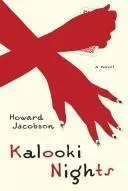
- Название:Kalooki Nights
- Автор:
- Издательство:Simon & Schuster
- Жанр:
- Год:2007
- ISBN:нет данных
- Рейтинг книги:5 / 5. Голосов: 1
-
Избранное:Добавить в избранное
- Отзывы:
-
Ваша оценка:
Kalooki Nights: краткое содержание, описание и аннотация
Предлагаем к чтению аннотацию, описание, краткое содержание или предисловие (зависит от того, что написал сам автор книги «Kalooki Nights»). Если вы не нашли необходимую информацию о книге — напишите в комментариях, мы постараемся отыскать её.
Spanning the decades between World War II and the present day, acclaimed author Howard Jacobson seamlessly weaves together a breath-takingly complex narrative of love, tragedy, redemption, and above all, remarkable humor. Deeply empathetic and audaciously funny, "Kalooki Nights" is a luminous story torn violently between the hope of restoring and rebuilding Jewish life, and the painful burden of memory and loss.
Kalooki Nights — читать онлайн бесплатно полную книгу (весь текст) целиком
Ниже представлен текст книги, разбитый по страницам. Система сохранения места последней прочитанной страницы, позволяет с удобством читать онлайн бесплатно книгу «Kalooki Nights», без необходимости каждый раз заново искать на чём Вы остановились. Поставьте закладку, и сможете в любой момент перейти на страницу, на которой закончили чтение.
Интервал:
Закладка:
Though he never failed, the minute we met, to ask after the kissogram, and I never failed, the minute we parted, to send my love to Melanie, we otherwise avoided home talk. That way I didn’t have to tell him I was getting married or invite him to the wedding, and he didn’t have to involve me in whatever ceremonies of the hearth clicked off the years in Borehamrigid. Mainly we talked the emotional politics of being Jewish as we individually saw it: the philistinism of Hertfordshire and Crumpsall Jews (me), the shrinkage of the Jewish population due to intermarriage and name-change (Errol), the continuing silence of English Jewish intellectuals on Jewish matters (me), the refusal of Jewish readers to take Jewish cartoonists to their hearts (me), and of course Israel, about which there was good and bad to say, though Errol — again bearing remarkable similarities to Tsedraiter Ike who, after the Six Day War, had succeeded in getting half of Crumpsall to boycott the Guardian — never ceased wondering how as a Jew I could submit cartoons to papers which only saw the bad.
Plus we talked the Holocaust that wasn’t.
In this respect, at least, we recaptured something of the feverish excitement of our youth — Errol inducting me into the salacities, not of the Swastika as Scourge this time round, but of the Swastika as Scourgee, were such a word to exist, the Swastika as Bemused and Slandered Bystander, the Swastika as Boon could we only see it, the Swastika as Benediction. The horror clocks might have stopped in Manny’s head, but elsewhere cruelty was evolving nicely. No need for anything so crude as Ilse Koch’s lampshades any more, no sadism so precise and graphic you could not have told it apart from your dreams, or told those dreams apart from fears of dreams to come, no, something far more subtly inhuman was afoot now — the gaze of insolent incredulity, denying even those who’d died the factuality of their death. The jeer of the SS militiamen that even if a single Jew survived, no one would believe him; Primo Levi’s nightmare, the recurring nightmare of all the prisoners he knew, that were they to get home alive, not only would those dearest to them not give credence to their stories, they would refuse to listen, they would turn away from them in silence — these terrifying apprehensions of the limits of human sympathy, wherein, for his offence against metaphysical good manners, the victim becomes the perpetrator, these horrors had become realities.
‘Only partial realities,’ I said, trying to look on the bright side. ‘There are a strictly limited number of these cranks kicking about, surely.’
‘That’s how forgetfulness starts,’ Errol said.
I didn’t know how forgetfulness started. But I accepted that even a single instance of it amounted to such wickedness that Elohim would have been within his rights to put a torch to us once and for all.
I’ll show you fucking forgetfulness, you fuckers! Or however Elohim talks.
Looking back, I’m not sure that many people were then aware that a revisionist movement was gathering momentum. A few people who made it their business to be in the know (like Errol) had noticed that the German academic world was quietly realigning itself away from guilt, but that movement for reimagining German history which became known as the Historikerstreit had not yet publicly declared itself. Its chief architect, Ernst Nolte, was yet to oppose plans to build a memorial in Germany to Jewish victims of the Nazis, and yet to be caricatured by me, giving the Nazi salute (well, why not!) while declaring that ‘To remember completely is just as inhuman as to forget completely’, as though anyone had granted him the right to be exercising the slightest choice in the matter. And as for the now infamous whitewashes by more populist writers, English and American — they were still to come. But Errol was in advance of his times. He knew so much that I sometimes wondered whether he wasn’t in the pay of Mossad or some other secret Jewish agency dedicated to rooting out and hunting down our enemies. Were the wine-buying expeditions a blind? Did he go to Golan four times a year not to taste the grapes but to collect his instructions? I was the beneficiary of his knowledge anyway, that’s if you can call knowing the name of every neo-Nazi slimeball able to find a publisher a benefit. But I too had a job to do. And it rarely happened that I left Errol without another tormentor of the Jews to add to my jest book of hellhounds — Alexander Ratcliffe, leader of the Scottish Protestant Party, early refuter of the Holocaust, and not averse to posing in Nazi regalia; Austin J. App, lover of literature, apologist for the Third Reich, and author of the Eight Incontrovertible Assertions , the most selffulfillingly incontrovertible of which being that the Jews who died in the camps were criminals and subversives; Maurice Bardeche, a French critic with a Monsieur Hulot pipe, creator of the myth that gas was used only as a disinfectant, but blaming Jews for what happened to them anyway because they had supported the Treaty of Versailles; Paul Rassinier, another ruminative Frenchman, debunking the genocide with mathematics, totting them all up, the Yemeni Jews, the Polish Jews, the Turkish Jews — (1.55 + 2.16)/2 = 1.85 — as though algebra could refute witness, moving the figures about the globe until every Jew supposed to have gone missing in Auschwitz turned up in Tel Aviv or Rio; and so on and so on, the roll-call of infernal pedants, each egging on the other, none of them arguing from the impossibility of such cruelty, or belief in the essential goodness of the human heart, only the impossibility of the numbers, the failure of practice to live up to ambition, all of them bent on saving Jews from the gas chambers so that they could kill them again in their minds. .
‘You’ve got to listen to this,’ Errol laughed one afternoon in a quasi-kosher café somewhere north of Muswell Hill. ‘I’ve just been dipping into a book called Imperium . An anti-Semitic rant hundreds of pages long by a man called — and you’re going to love this — Francis Parker Yockey.’
‘Yockey by name. .’
‘. . and Yockey by nature. Dead right. I knew you’d like it.’
‘I don’t believe you, Errol. You’ve run out of revisionists so you’ve newly minted this one.’
‘Newly minted? Him? He’s the fucking father of revisionism! Imperium came out in 1948, and even then he was saying there was no evidence of any gassing, the photographs were frauds, the Jews were a shagged-out people anyway, and blah blah blah.’
‘What I don’t get is why they aren’t delighted it happened. Why, instead of doing the arithmetic of impossibility, they don’t celebrate the mathematics of achievement. So many dead in so little time, hosanna, hosanna, hosanna!’
‘Well, you’d think so with Yockey in particular, since he believes in anti-Semitism as a wholesome organism resisting the disease which is Jewish life.’
‘Meaning that the body of society has a sanative responsibility to destroy Jews?’
‘Exactly.’
‘A bounden duty?’
‘Nothing less.’
‘In which case three cheers for Auschwitz, Buchenwald and Belsen.’
We’d have drunk to that, clashed our glasses of Russian tea, cut our hands open maybe, bled all over each other, chewed our fingers off in the frenzy, had we not remembered in time that we were in the Netanya Falafel Café, Friern Barnet.
4
And then, out of the blue, he suggests a charity kalooki night, his place.
‘In aid of what, Errol?’
’In aid of a Holocaust Denial Fellowship.’
‘You want to give them a fellowship?’
‘Not the deniers, shmuck. We want to fund a lawyer to investigate ways of criminalising them.’
Читать дальшеИнтервал:
Закладка:
Похожие книги на «Kalooki Nights»
Представляем Вашему вниманию похожие книги на «Kalooki Nights» списком для выбора. Мы отобрали схожую по названию и смыслу литературу в надежде предоставить читателям больше вариантов отыскать новые, интересные, ещё непрочитанные произведения.




Обсуждение, отзывы о книге «Kalooki Nights» и просто собственные мнения читателей. Оставьте ваши комментарии, напишите, что Вы думаете о произведении, его смысле или главных героях. Укажите что конкретно понравилось, а что нет, и почему Вы так считаете.