Howard Jacobson - Kalooki Nights
Здесь есть возможность читать онлайн «Howard Jacobson - Kalooki Nights» весь текст электронной книги совершенно бесплатно (целиком полную версию без сокращений). В некоторых случаях можно слушать аудио, скачать через торрент в формате fb2 и присутствует краткое содержание. Год выпуска: 2007, Издательство: Simon & Schuster, Жанр: Современная проза, на английском языке. Описание произведения, (предисловие) а так же отзывы посетителей доступны на портале библиотеки ЛибКат.
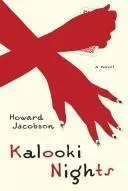
- Название:Kalooki Nights
- Автор:
- Издательство:Simon & Schuster
- Жанр:
- Год:2007
- ISBN:нет данных
- Рейтинг книги:5 / 5. Голосов: 1
-
Избранное:Добавить в избранное
- Отзывы:
-
Ваша оценка:
Kalooki Nights: краткое содержание, описание и аннотация
Предлагаем к чтению аннотацию, описание, краткое содержание или предисловие (зависит от того, что написал сам автор книги «Kalooki Nights»). Если вы не нашли необходимую информацию о книге — напишите в комментариях, мы постараемся отыскать её.
Spanning the decades between World War II and the present day, acclaimed author Howard Jacobson seamlessly weaves together a breath-takingly complex narrative of love, tragedy, redemption, and above all, remarkable humor. Deeply empathetic and audaciously funny, "Kalooki Nights" is a luminous story torn violently between the hope of restoring and rebuilding Jewish life, and the painful burden of memory and loss.
Kalooki Nights — читать онлайн бесплатно полную книгу (весь текст) целиком
Ниже представлен текст книги, разбитый по страницам. Система сохранения места последней прочитанной страницы, позволяет с удобством читать онлайн бесплатно книгу «Kalooki Nights», без необходимости каждый раз заново искать на чём Вы остановились. Поставьте закладку, и сможете в любой момент перейти на страницу, на которой закончили чтение.
Интервал:
Закладка:
But I accept that even when the charge is enticement, the enticed party, like the insulted shikseh, is free to get up and walk into another room. I could have driven us both home, should have driven us both home, however much unholy promise Zoë’s frightened eyes held out to me.
It happened, anyway, as Zoë, without a word, had warned me that it would. I am not going to relate it in any detail. One can do justice to degradation in bare outlines. Kalooki’d-out at midnight, the party broke up. Only Zoë and I remained. Errol poured us brandies and turned down the lights. Zoë, never so much as blinking in my direction, did what she had earlier and insultingly been bid to do, selecting Ilsa: She-Wolf of the SS as most appropriate to the occasion — unsparing depiction of the Third Reich, in whatever form, being as requisite to her view of history as it was to ours. We watched the flickering screen, roused by the silent act of watching rather than by what we watched. The She-Wolf was the disappointment all heroines of pornography turn out to be when they walk out of your imaginations. Not only was she without interesting views on the Jewish question, she didn’t remotely look the part, her sloppy-titted blowsiness bearing more resemblance to the charitable sucklers who had just left us than the louche and lazy-eyed Ilse Koch whose acts of barbarism had scorched the gardens and backyards of Crumpsall all those years ago. I would have said as much to Errol had the opportunity arisen. I would have complained, not least, that there seemed to be no Yiddlers among those whose private parts the She-Wolf was intent on getting rid of. ‘So what gives here, Errol? More revisionism? No Jews among the howling castrati?’ But criticism of the film was moving along a different groove. Zoë’s doing. She had begun by snorting her derision. ‘Don’t tell me this crap turns you on,’ she asked, of me and Errol both. ‘Shut up, Zoë,’ I told her, not because it did turn me on but because I was trying to work out why it didn’t. ‘Sit near me,’ Errol said, ‘if he won’t talk to you.’ ‘You should be ashamed, the pair of you,’ Zoë said, ‘I’d be weeping if I wasn’t laughing.’ But she still went over to the couch on which Errol was sprawled, to punish me, I calculated, for being turned on (which I wasn’t), for not weeping (which in some part of me I was), for not choosing the option of taking her home (which I wished I had) and for being a Jew (which I couldn’t help). That there was no logic in her decision to punish one Jew with another there seemed no point in my arguing. Besides, no sooner did Zoë move to Errol’s corner of the room, than Melanie moved to mine. What Melanie then made happen was interesting to me only in so far as it might have been a mirror image of what Zoë was making happen. I will say no more. I kept my eyes on the screen until there was no torture left for Ilsa to inflict and no character left living for her to inflict it on. The camp was set alight, Ilsa got hers, the credits rolled and that was the Holocaust that was. After which we turned on the lights, rearranged our clothing (unless I imagined that), thanked our hosts and drove home in bitter silence.
So it was Goodbye, Bollocky Bill.
Not in one bite. I find it hard to remember now how we managed to remain married for so many years in spite of that kalooki night. By not referring to it, partly. By neither overtly charging the other with impropriety. But my failure to be the man I’d promised her I’d be was always with us. And we both knew she would finally have to pay me back for that by leaving me.
I hadn’t done what I’d said I’d do. I hadn’t broken the chain of disparagement. I hadn’t hushed the crashing in her head. I hadn’t become the soil in which her genius for genius could flower. I’d stayed Jewish.
She was so distressed when she shook my hand the final time she grew diaphanous. I could see into her nervous system. The Daily Express had a 1930s glass-walled factory in Manchester where you could stand in the street and watch the papers coming off the presses. My father, a transparency fanatic, used to drive us into town to look. Zoë reminded me of that building. In extremis she showed you her workings.
I had done a cartoon of her in that condition for one of her birthdays. The Transparent Woman. She hadn’t been amused. ‘I can’t see why the joke entertains you,’ she said, ‘you being so hidden yourself.’
‘I’m not hidden,’ I protested. ‘I show you everything.’
‘No, you don’t. You are a devious little prick. You show me nothing that you haven’t calculated on showing me. You are entirely hidden. You all are. You have to be. You can’t afford to let us see what you are thinking. That’s my definition of a Jew. A person who won’t ever let you know what he thinks of you, because if you found out you would leave him. That’s how terrible the thing he’s thinking about you is.’
And was she right? Did I keep a monstrous idea of her somewhere about my person?
Put it this way: I should have driven her home.
As for her transparency, well, apparently I had that wrong too. ‘Most of what you think you saw in me you didn’t,’ she told me just before she left. ‘Except of course for the blow job.’
I didn’t rise. ‘Goodbye, Zoë,’ I said.
‘The blow job you thought you saw me giving your vile friend whatever-his-fucking-name-was, in that gross palais de drek in Borehamrigid. .’
‘Leave it, Zoë. Just go.’
‘Well, you were right.’ She gave one of her tinkling little laughless laughs. ‘I did. I can even describe his prick to you. Slender and sulphurous. And scaly, like a serpent’s tail.’
I shook my head, not wanting any of her words to lodge.
‘Just thought you’d be pleased to know that,’ she said.
And was gone.
THIRTEEN
1
‘So who was living here?’ Manny asked in a rare outburst of curiosity. As he’d insisted he needed no more than a couple of hangers for his things — ‘Three, at most’ — I hadn’t thought it necessary to clear out the wardrobe.
‘An ex-wife. She left a few dresses and I haven’t had the heart to get rid of them.’ A reward for his rare outburst of curiosity: a rare outburst of candour.
‘When did she leave?’
‘Seven, eight, nine years ago.’
‘And what number wife was she?’
‘Two.’
‘Two out of how many?’
‘Three.’ I said it sheepishly. Don’t ask me why.
‘And didn’t the third object to these?’
‘To the clothing of the second? No. She never came in here. We weren’t married long enough for her to need the refuge of a granny flat. Though long enough for me to wish she’d moved into it.’
Manny ran the tips of his fingers through his omelette hair and made a clicking sound with his tongue which I took to be an act of judgement.
‘There won’t be any more,’ I said.
‘You don’t have to apologise to me,’ he said.
Didn’t I?
I believed I did. Or if not apologise, at least be careful. You don’t go around advertising the tumult of your marital life to someone who has had no marital life, tumultuous or otherwise. I had behaved badly enough all those years before, flashing him Märike on the library steps. And that was when he was still in with a chance — on paper, if nowhere else — of finding love and happiness. Now that we could definitely say goodbye to any such thing, it behoved me to proceed with even greater circumspection.
In which case I should probably have thought twice before offering him the flat, or failing that removed the last of Zoë’s clothes from the wardrobe. But since I hadn’t, I owed it to both of us to question my motivation. It couldn’t be, could it, that I was somewhere still wanting to exult sexually over Manny?
Читать дальшеИнтервал:
Закладка:
Похожие книги на «Kalooki Nights»
Представляем Вашему вниманию похожие книги на «Kalooki Nights» списком для выбора. Мы отобрали схожую по названию и смыслу литературу в надежде предоставить читателям больше вариантов отыскать новые, интересные, ещё непрочитанные произведения.







Обсуждение, отзывы о книге «Kalooki Nights» и просто собственные мнения читателей. Оставьте ваши комментарии, напишите, что Вы думаете о произведении, его смысле или главных героях. Укажите что конкретно понравилось, а что нет, и почему Вы так считаете.