Howard Jacobson - Kalooki Nights
Здесь есть возможность читать онлайн «Howard Jacobson - Kalooki Nights» весь текст электронной книги совершенно бесплатно (целиком полную версию без сокращений). В некоторых случаях можно слушать аудио, скачать через торрент в формате fb2 и присутствует краткое содержание. Год выпуска: 2007, Издательство: Simon & Schuster, Жанр: Современная проза, на английском языке. Описание произведения, (предисловие) а так же отзывы посетителей доступны на портале библиотеки ЛибКат.
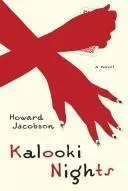
- Название:Kalooki Nights
- Автор:
- Издательство:Simon & Schuster
- Жанр:
- Год:2007
- ISBN:нет данных
- Рейтинг книги:5 / 5. Голосов: 1
-
Избранное:Добавить в избранное
- Отзывы:
-
Ваша оценка:
Kalooki Nights: краткое содержание, описание и аннотация
Предлагаем к чтению аннотацию, описание, краткое содержание или предисловие (зависит от того, что написал сам автор книги «Kalooki Nights»). Если вы не нашли необходимую информацию о книге — напишите в комментариях, мы постараемся отыскать её.
Spanning the decades between World War II and the present day, acclaimed author Howard Jacobson seamlessly weaves together a breath-takingly complex narrative of love, tragedy, redemption, and above all, remarkable humor. Deeply empathetic and audaciously funny, "Kalooki Nights" is a luminous story torn violently between the hope of restoring and rebuilding Jewish life, and the painful burden of memory and loss.
Kalooki Nights — читать онлайн бесплатно полную книгу (весь текст) целиком
Ниже представлен текст книги, разбитый по страницам. Система сохранения места последней прочитанной страницы, позволяет с удобством читать онлайн бесплатно книгу «Kalooki Nights», без необходимости каждый раз заново искать на чём Вы остановились. Поставьте закладку, и сможете в любой момент перейти на страницу, на которой закончили чтение.
Интервал:
Закладка:
Because they couldn’t stand there like this for another eternity, she silently begging him to go away, he white and trembling, they finally proceeded — Manny’s word: proceeded — into each other’s arms.
Manny stood about for a few minutes, not knowing what to do, then resolved to go back to his brother’s hermit cell, collect his belongings and make enquiries about flights home.
4
The fires of romantic love. So fierce they even singed poor loveforgotten Manny.
But then it’s foolish to suppose anyone escapes, no matter how unromantically disposed they appear to be. I should have guessed — we all should have guessed — that when Tsedraiter Ike began to absent himself to visit the houses of the dead, he was on a different errand altogether. By the time my father died, Tsedraiter Ike was disappearing to sit shiva with virtual strangers three or four times a week. It ought to have been obvious to us that there weren’t enough Jews dying at that rate, not in Crumpsall anyway. It’s true that once Mick Kalooki began laying siege to Shani’s affections Tsedraiter Ike had reason to leave the house, but even when they moved out into a love nest of their own he continued with his errands of mercy, taking round chicken soup in plastic containers, or bagels filled with chopped liver and wrapped in greaseproof paper, to families too ravaged by bereavement to make their own food.
In fact everything went to the same person. Dolly Balshemennik. For all those years Tsedraiter Ike had told us he was nipping out to comfort mourners he was actually going to comfort Dolly Balshemennik. Hence the best coat and the homburg. Hence the vigorous brushing to which he subjected his single tooth. Dolly Balshemennik. He would not of course have been able to pronounce more than about two vowels of her name. Maybe that was his excuse. It was easier to say he was sitting shiva for the umpteenth time that week than to say he was visiting Dolly Balshemennik.
Dolly Balshemennik — I’ll say the name for him. She came to his funeral. A twittering little woman with broken veins, almost no hair, and permanent tear stains on her cheeks. She lived round the corner to us. Just two streets away. Her being so close a neighbour amazed even us more than her Ike ’s mistress. Two streets away! We couldn’t get over that. Had we discovered he ’d been catching the early-morning flight to Novoropissik three times a week and flying back in time for supper, we would not have marvelled at his duplicity anything like so much. Two streets away! How do you like it!
There were other things to marvel at in this affair. Dolly Balshemennik had a husband. Sydney Balshemennik. He too came to the funeral. In a wheelchair which Dolly Balshemennik pushed. In a manner of speaking Tsedraiter Ike had after all been visiting a house of the dead. Sydney Balshemennik could no longer be counted among the living. Nothing of him remained in mind or body. More years ago than anyone could remember he had suffered a serious stroke — not the frivolous Selick Washinsky ‘vay iz mir my son has run off with a shikseh’ sort of stroke — the Jewish double-stroke in which one seizure cancels out another — but the full neurological catastrophe, leaving him incapable of doing anything but smile. So much did he appear to enjoy being tended first by his wife, and later by Tsedraiter Ike, that he saw no reason to die any more than he already had. He smiled when Tsedraiter Ike arrived and he smiled when Tsedraiter Ike left and that was the sum total of his interference in their union.
I watched him at the graveside, smiling.
Back at the shiva house his wife fed him kichels as though he were a slot machine. It had been my father’s theory that it was the kichels — those rock-hard little biscuits which Jews like to serve on these occasions with whisky or syrupy sweet red wine — that explained the condition of Tsedraiter Ike’s mouth. One of his very last jokes at Tsedraiter Ike’s expense — ‘If you went to fewer shiva houses, Ike, you’d have more teeth.’
Teeth or no teeth, he would be sorely missed by Dolly Balshemennik who had already wept more than her own body weight in tears, and was weeping copiously still. When she had stuffed what she judged to be a sufficient number of kichels into Sydney Balshemennik’s slot, she held up a little glass of syrupy sweet red wine for him to sip, not looking to see whether he was spilling it or not.
‘Your uncle was a saint,’ she told me.
‘He was always very good to me,’ I said.
‘Good to you! Max, he never stopped talking about you. He lived for you!’ She had what my father used to call ‘the shtetl voice ’, ancient and quavering, full of hurried conspiratorial sorrow, cracked like a rusted bell tolling one more lamentation before the Cossacks rode in. How did she come by that voice? Dolly Balshemennik was born in Crumpsall. By her own admission she had never been near a shtetl in her life. So by what means did the shtetl live on in her larynx? Or in the vocal cords of those thousands of Jews who had never ventured more than a short train ride out of Middlesex or Brooklyn? My theory was that wherever we had been survived in our voices. Just a shame, as my father believed, that we had been to such shitty places.
‘Uncle Ike and I were very close when I was growing up,’ I said.
‘Close wasn’t the word he used. He loved you. You were like a son to him. Such pride he took in you, Max.’
I inclined my head. I was one of the principal mourners so it would not have been suitable for me to laugh. Pride! Ha! He’d hated everything I’d done since I left home. Every idea I’d had. Every woman I’d married. Every mark I’d made on paper.
But then so had I.
She saw what I was thinking and laid a trembling hand on my arm. Her whole body had begun to shake. I took the glass from her other hand. It wasn’t kind on Sydney Balshemennik, however much he smiled, to have him following it about vainly with his lips.
’You’d be wrong, you know,’ she said, ‘to think he wasn’t proud. He didn’t just have all your books, he kept all your cartoons. In cellophane! Such cartoons! Where did you learn to draw like that? A Jewish boy. We have books filled with them. Like wedding albums. Come round and look at them. He always hoped you would. He can come round and look at them, can’t he, Sydney?’
Was she telling the truth? I could think of no reason why she should be lying. But in that case why had Tsedraiter Ike not only kept his opinion of my work from me, but actually persuaded me that he thought the opposite? A nestbeschmutzer , he had called me. ‘I simply ask you to consider,’ he had written ‘who this is likely to help. Us, or them?’ My father, of course, had he lived to see me earning, would have done the same. ‘Why have you got such a chip on your shoulder?’ I hear him saying. ‘What have the goyim ever done to you?’ Pushed, he might have told me he didn’t mind so much the big tocheses.
Why was this? Was it generational? Could men that age not own up to a bit of simple pride or once in a while dole out a bit of simple praise? Or was it Jewish men of any age? ‘You’re such a withholding fucker,’ Zoë used to say to me. ‘Getting a kind or encouraging word out of you is like getting blood out of a stone, you tight-arsed fucking Jewish bastard.’
Chloë the same. ‘What a lovely day,’ her mother would announce, when I perchance wound open the roof of our Völökswägen during a spin through the Cheshire countryside. ‘Wouldn’t you say it is a lovely day, Max, or do you not feel the sun the way we do?’
‘No point asking him, Mummy,’ Chloë would remind her. ‘He’s too brainy to waste his praise on a day. Unless it’s the anniversary of a day on which a few thousand of his people’s enemies were slaughtered.’
Читать дальшеИнтервал:
Закладка:
Похожие книги на «Kalooki Nights»
Представляем Вашему вниманию похожие книги на «Kalooki Nights» списком для выбора. Мы отобрали схожую по названию и смыслу литературу в надежде предоставить читателям больше вариантов отыскать новые, интересные, ещё непрочитанные произведения.










Обсуждение, отзывы о книге «Kalooki Nights» и просто собственные мнения читателей. Оставьте ваши комментарии, напишите, что Вы думаете о произведении, его смысле или главных героях. Укажите что конкретно понравилось, а что нет, и почему Вы так считаете.