Howard Jacobson - Kalooki Nights
Здесь есть возможность читать онлайн «Howard Jacobson - Kalooki Nights» весь текст электронной книги совершенно бесплатно (целиком полную версию без сокращений). В некоторых случаях можно слушать аудио, скачать через торрент в формате fb2 и присутствует краткое содержание. Год выпуска: 2007, Издательство: Simon & Schuster, Жанр: Современная проза, на английском языке. Описание произведения, (предисловие) а так же отзывы посетителей доступны на портале библиотеки ЛибКат.
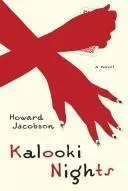
- Название:Kalooki Nights
- Автор:
- Издательство:Simon & Schuster
- Жанр:
- Год:2007
- ISBN:нет данных
- Рейтинг книги:5 / 5. Голосов: 1
-
Избранное:Добавить в избранное
- Отзывы:
-
Ваша оценка:
Kalooki Nights: краткое содержание, описание и аннотация
Предлагаем к чтению аннотацию, описание, краткое содержание или предисловие (зависит от того, что написал сам автор книги «Kalooki Nights»). Если вы не нашли необходимую информацию о книге — напишите в комментариях, мы постараемся отыскать её.
Spanning the decades between World War II and the present day, acclaimed author Howard Jacobson seamlessly weaves together a breath-takingly complex narrative of love, tragedy, redemption, and above all, remarkable humor. Deeply empathetic and audaciously funny, "Kalooki Nights" is a luminous story torn violently between the hope of restoring and rebuilding Jewish life, and the painful burden of memory and loss.
Kalooki Nights — читать онлайн бесплатно полную книгу (весь текст) целиком
Ниже представлен текст книги, разбитый по страницам. Система сохранения места последней прочитанной страницы, позволяет с удобством читать онлайн бесплатно книгу «Kalooki Nights», без необходимости каждый раз заново искать на чём Вы остановились. Поставьте закладку, и сможете в любой момент перейти на страницу, на которой закончили чтение.
Интервал:
Закладка:
‘It’s our calling,’ I told them both. ‘We are put on this earth to be hard to please. We are the high priests of refusal. Only God gets our hosannas.’
And now here I was, servant of the holy flame, hierophant of the sacred fucking mysteries, ready to shed a bucketload of sublunary tears because Tsedraiter Ike, someone whose worth as a human being, let alone a critic of the grotesque arts, I had discounted utterly for forty years, had kept a corner of his heart soft for me after all.
My wives were right. The severity of my morality, like the sternness of my aesthetic, applied only to other people. I won’t accept that meant only to Gentiles, except in so far as a substantial number of those other people were of necessity Gentiles, because it was Gentile company I sought out. But certainly I operated two standards. One for them, one for me. And to me I was a pussy cat.
But then someone had to be.
So I got my desserts. What happened next flowed directly from my sentimentality towards myself.
I reasoned that I owed it to Dolly, while I was up in Manchester for the funeral, and she lived only two streets away, to pop along and share another kichel with her and Mr Balshemennik. She had loved my uncle and I wanted to thank her for it. And if she needed to talk about him, it was the least I could do to listen. But my true motive was to verify her story about Tsedraiter Ike collecting my cartoons. If he had proudly amassed album upon album of my work, I wanted to see them. I wanted to bathe briefly in his devotion. It wouldn’t be like finding your oeuvre in the Library of Congress, but you take what commemorations are on offer.
Visiting Dolly Balshemennik solved the mystery, if nothing else, of why she had a shtetl voice. She had a shtetl voice because she lived in a shtetl. Not the street — the street was only ordinarily ghettoised Crumpsall — but the house was authentic Novoropissik. Barely light enough to see your own hand by, the carpets still smelling of Noah’s flood, cats with the droopy melancholy eyes of Russians, a sideboard, missing only a samovar, displaying photographs of long-gone relatives in Caucasian dirndls and skullcaps that looked like fezes from Tashkent, and a sound of something, a little like crickets, which I thought might have been Sydney Balshemennik’s heart, but that turned out to be the wheezing of an ancient grandfather clock. No wonder Tsedraiter Ike loved it here. I raised the matter of Barnacle Bill from over the sea, but she did not know what I was talking about. Never heard him sing it. Not once in her presence. But then he wasn’t from over the sea when he was here. He was back home.
Thrilling. The hairs rose on the back of my neck at the thought of it. Home is the sailor, home from the sea.
Dolly Balshemennik had a granddaughter who happened to be visiting her when Tsedraiter Ike passed away, and who, out of motives no less altruistic than mine, also decided to stay a little longer. A rather beautiful woman if you were able not to see her resemblance to her grandmother. Though I have to say that on someone her age, and framed by a storm cloud of charcoal hair, that tear-stained shtetl look was mightily appealing. She recalled the thousands of photographs I’d seen of Jewish women being rounded up and bundled on to the Jew Jew train to Auschwitz and all stations east. More particularly, in the hoodedness of her eyes, she reminded me of Malvina Schalkova, the Prague-born artist posthumously famous for the sketches and watercolours she made in Theresienstadt, and whose self-portrait, mirroring an infinity of sorrow, I first became familiar with when I visited Theresienstadt with Zoë. In other moods, when something more fiercely animal took possession of her temper, she resembled Gela Seksztajn, the Warsaw Ghetto artist who perished in Treblinka in 1942, aged thirty-five. ‘I have been condemned to death,’ Gela Seksztajn had written in a diary later found buried with her paintings in the Ringelblum Archives in the Warsaw Ghetto, ‘Adieu my dear friends and companions. Adieu Jewish people! Don’t allow such a catastrophe ever to happen again.’ Words you need, strictly speaking, to read with her blazing self-portrait — if you can only bear to look at it — before you. The burning sarcasm of the eyes, the fleshly hunger of the mouth, adding not poignancy but rage to a farewell we have grown to think of as conventional. ‘Never again’ — but the exhortation bitter and ireful this time. All this, and more, I saw in Dolly Balshemennik’s granddaughter.
And then there was her name. Alÿs.
‘As in Wonderland,’ I said when she first told me.
‘No, not Alice, Alÿs.’ She spelled it out for me in air writing, puncturing space with two fingers where the umlaut went.
‘With an umlaut! Is it a German name?’
‘Celtic.’
Celtic, with an umlaut, and eyes like Malvina Schalkova’s! Was this Tsedraiter Ike’s parting present to me, from the grave — the nice Jewish girl he had always wanted me to have. . Alÿs Balshemennik? From Crumpsall Park?
Alÿs Balshemennik. My Schicksal — meaning fate or destiny — only this one wasn’t a shikseh.
My third wife, going purely numerically. .
My first wife, counting by Jewish law. .
5
And the wife on whom I wish I had never have clapped eyes.
Neat, eh? After going fifteen bruising rounds with those Nazi super-yekeltes Zoë and Chloë, after soaking up the best of their punches and not once throwing in the towel or having to retire with a nosebleed, I go down in the first to a scholarly Crumpsall Jewgirl with a Holocaust face and don’t get up again.
Couldn’t be neater.
But you have to be on your guard against neatness in my business. One of the great misconceptions about cartoonists is that they are unruly. In fact we are a profession methodical to the point of pathology. We tidy up. We order. We regulate our hours and confine our creations in little boxes.
’The style I developed for Mad ,’ Harvey Kurtzman once said, ‘was necessarily thoughtful under a rowdy surface.’
The remark had stayed in my mind because ‘rowdy’ was such a surprising and yet apt word for the activity we shared. We weren’t transgressive, we were merely rowdy. And even then we were only apparently rowdy. The mistake was to confuse rowdy surface with rowdy substance.
You hold your pencil loose, you let the moment take possession of your arm, your line accepts no limitation and does obeisance to no one and to nothing, but you know the little box is always waiting. At first, you are lured by the sprawl of what Alÿs taught me to call ‘sequential art’ — or the graphic novel, as laymen describe it — into believing you’ve found a freer form. No more the confinement of the panel. Things spill and bleed. Words riot, pictures fall off the page, neither time nor order is obeyed. An illusion, all of it. In the end the tyranny of the box asserts itself one way or another, circumscribing speech, restricting character, determining action according to the complexion of your prejudices. Despite our seeming subversiveness, we are no more unconfined, and no more want to be unconfined, than the most strait-laced teller of morality tales.
So I must be careful, when I come to describe my life with Alÿs, not to box it around with over-ordered moral ironies. It makes a neat cartoon, the man who was so hooked on Gentile she-wolves he couldn’t do it with a Jewess. Or the man who was so convinced of the sanctity of Jewish women he could only get it up with shiksehs.
Neat, but wrong. We had no sexual difficulties. I did not close my eyes when I bent over her and see my mother. Nor did I wish I could open them again and see Chloë. We functioned fine. She went soft, like summer fruit, and I gathered her in. It wasn’t the case, either, that I had grown so used to strife that I missed it when it was not forthcoming. You can find other things to fall out over even when you don’t have the Resurrection as a stumbling block between you. No, if my marriage to Alÿs was different to my other marriages (Alÿs herself had not previously been married, so had no such distinctions to make), it was different only in this regard: I couldn’t take the gloomy consciousness of history I’d married her for.
Читать дальшеИнтервал:
Закладка:
Похожие книги на «Kalooki Nights»
Представляем Вашему вниманию похожие книги на «Kalooki Nights» списком для выбора. Мы отобрали схожую по названию и смыслу литературу в надежде предоставить читателям больше вариантов отыскать новые, интересные, ещё непрочитанные произведения.









Обсуждение, отзывы о книге «Kalooki Nights» и просто собственные мнения читателей. Оставьте ваши комментарии, напишите, что Вы думаете о произведении, его смысле или главных героях. Укажите что конкретно понравилось, а что нет, и почему Вы так считаете.