Howard Jacobson - Kalooki Nights
Здесь есть возможность читать онлайн «Howard Jacobson - Kalooki Nights» весь текст электронной книги совершенно бесплатно (целиком полную версию без сокращений). В некоторых случаях можно слушать аудио, скачать через торрент в формате fb2 и присутствует краткое содержание. Год выпуска: 2007, Издательство: Simon & Schuster, Жанр: Современная проза, на английском языке. Описание произведения, (предисловие) а так же отзывы посетителей доступны на портале библиотеки ЛибКат.
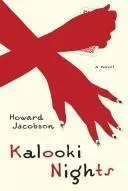
- Название:Kalooki Nights
- Автор:
- Издательство:Simon & Schuster
- Жанр:
- Год:2007
- ISBN:нет данных
- Рейтинг книги:5 / 5. Голосов: 1
-
Избранное:Добавить в избранное
- Отзывы:
-
Ваша оценка:
Kalooki Nights: краткое содержание, описание и аннотация
Предлагаем к чтению аннотацию, описание, краткое содержание или предисловие (зависит от того, что написал сам автор книги «Kalooki Nights»). Если вы не нашли необходимую информацию о книге — напишите в комментариях, мы постараемся отыскать её.
Spanning the decades between World War II and the present day, acclaimed author Howard Jacobson seamlessly weaves together a breath-takingly complex narrative of love, tragedy, redemption, and above all, remarkable humor. Deeply empathetic and audaciously funny, "Kalooki Nights" is a luminous story torn violently between the hope of restoring and rebuilding Jewish life, and the painful burden of memory and loss.
Kalooki Nights — читать онлайн бесплатно полную книгу (весь текст) целиком
Ниже представлен текст книги, разбитый по страницам. Система сохранения места последней прочитанной страницы, позволяет с удобством читать онлайн бесплатно книгу «Kalooki Nights», без необходимости каждый раз заново искать на чём Вы остановились. Поставьте закладку, и сможете в любой момент перейти на страницу, на которой закончили чтение.
Интервал:
Закладка:
She was depressed every day. We have a word for it. Dershlogn. Dershlogn is better than depressed. With depressed you have a chance of coming round. With depressed it’s not necessarily all your fault. Dershlogn is dispirited by nature. Dershlogn implies a deficiency of vital juices. At first I took her to be depressed for me. She knew my work — knew of my work would be nearer the mark — and not only, I was flattered to learn at the time, from the albums of it gathering dust in her grandmother’s house. She taught popular culture at an art college in West London, one of her specialisms being the fantasy comic, a genre to which I could not strictly be said to have made anything but the most marginal contribution, but marginalia were also her specialism, so I figured as a sort of footnote at the far reaches of a discipline that was not much more than a footnote itself. In her view I had not reconciled the artistic impulses at war within me — half wanting to be a prophet of the Jewish people (which was fantastical in itself), and half wanting to stick it up them (which again was fantastical given my belief that enough people had stuck it up them already). This is what I mean when I say I thought I was the cause of her depression. Until I could make sense of these antinomies, as she called them, she didn’t see how my work would make the journey from what was tangential to what was central — a not entirely consistent argument since the tangential was precisely what she taught (‘Centrality is a masculinist concept,’ she told me once), but it seemed that you could be too tangential even for someone who believed in it, and for this reason she was depressed for me.
It was Alÿs who got me to change my style. I don’t mean as a man, I mean as a cartoonist. But you could argue that the one wasn’t possible without the other. Maybe that was why, contemporaneous with her changing my style as a cartoonist, she moved in with me.
She moved in soundlessly, the way a mouse moves in. This was partly to be explained by her decision to keep her own place in W6, a stone’s throw from her college. She didn’t — not all at once, anyway — have to bring in everything she owned. But I am not simply talking objects. She barely brought herself in. It is meant to be traumatic, suddenly ceding space to a new person. Your furniture is rearranged. Your favourite pictures get taken down. Photographs which are dear to you go missing. Even if your bed stays where it was, its contours change. None of this happened with Alÿs. Apart from my mind, she left everything as she found it. Shoes belonging to previous wives which I’d omitted to throw out or send on, knick-knacks whose value was obviously romantico-sentimental, even sketches of Chloë, brought out again post-Zoë, done in the manner of the old masters with a few lewd transliterations of my own thrown in — none of these things, assuming that she noticed them, did she appear to be disconcerted by. And it wasn’t as though she meant to eclipse them by the vitality of her presence. She just dwelt among them, like a visitor, someone in transit, a person passing through.
In flat shoes.
Her shoes should not have mattered to me, but I had grown up among stiletto’d women and both my wives had strode into my life, and then clip-clopped out of it again, on high heels. The heels themselves were not the issue. Had Alÿs simply favoured shoes that were flat I would eventually have accommodated myself to them. But all I ever saw her in were sandals. Cheap, roundtoed buckled sandals of the sort monks and little girls and ideologues wear.
I offered to take the car and pick up the rest of her things — meaning her high heels — from W6. But she kept no high heels in W6. Didn’t own any. Had never owned any.
Nor, even when sitting in an armchair with her feet tucked under her, earnestly watching soaps on television (soaps being another of her specialisms), did she take her sandals off. Tightly buckled was how she liked them — for all occasions. Tightly buckled so that when the call came for her release, she was ready.
‘It’s not as though I am imprisoning you here, is it?’ I remember saying to her once.
She shook her head. She was working at a coffee table, though I had freed a desk for her, and offered to buy her a new one of her own if she preferred. She angled her face to me, her eyelids droopy, her mouth tragic. ‘If it fell to human beings to be happy,’ she said, ‘I’d be happy. But I am content enough, living in my head.’
An old ghetto trick. You shut down all the ingresses to fear and go on with what you’re doing.
Another time I told her she reminded me of a refugee. ‘You look as though you are waiting for a country to let you in,’ I said.
A decent answer to that would have been My darling, you are my country . But such effusiveness was beyond her. At least with me.
Instead, she closed her eyes, as though the better to hear when her name was called.
Dershlogn.
I have said we had no sexual difficulties and I stick by that. But every once in a while she did start from me during lovemaking, actually make to shield her face as if she expected me to hit her. I had told her that my father had been a boxer, so it’s possible she feared boxing was in my genes; but I had never made any movement towards her even remotely suggestive of violence. As a lover I was gentle, possibly even apologetic, to a fault. Could she have wanted me to hit her?
‘Am I being too rough with you?’ I asked, the first time I felt her pull away.
‘You are being just right,’ she said.
‘Am I being too exquisitely tender?’ I asked the second time — meaning, ‘You wouldn’t like it à la façon du shaygets, would you?’ Just in case.
‘I am happy,’ she said.
Happy! I had seen happier faces in photographs of the. . But to have said that would have been to play into her hands.
Why wasn’t she animated by her work? Fantasy comics, for Christ’s sake! Cyborgs, Angel Gangs, Mutants, Swamp Things, Dark Knights, Watchmen, Hellblazers, Sandmen — wouldn’t you have thought, since she’d elected to be their champion, that a bit of their pizzazz might have rubbed off on her? Planets collided, the marshes of the universe yielded up their terrible secrets, crazed scientists reversed the very logic of nature, and Alÿs Balshemennik couldn’t so much as raise a smile. Wasn’t the point of zooming out into the furthest stretches of the human imagination a certain payoff in vitality? It’s meant to turn your mind, isn’t it? There should be fireballs exploding in your eyes. FUN FUN FUN at the Hellfire Club, only Alÿs Balshemennik is staying home with her sandalled toes tucked beneath her, slumped in a depression. If this was what the margins had to offer, wouldn’t she have had a HELLUVA LOT more FUN FUN FUN at the masculinist, patriarchal, Abrahamic centre?
Unless this was precisely the reason she’d been brought so low — the spider at the centre of the centre, the spider imagining he was at the centre of the centre, otherwise known as me. Arachnidman.
I had no choice, since it was almost certainly my fault, but to marry her. If I married her she would not feel a stranger in my house. If I married her I would not go to sleep worrying whether or not she would be there in the morning. If she agreed to marry me, that would prove she believed in a future. Not just our future, but any future. The bells would ring, the gates to all the camps and ghettos of Eastern Europe would fly open, and the Americans would be there with Hershey bars.
And she didn’t turn me down. Yes, she would marry me, but wished, if that was all right with me, to postpone any decision as to when.
I had the feeling she thought there was more work to be done on me before she could become my wife.
Читать дальшеИнтервал:
Закладка:
Похожие книги на «Kalooki Nights»
Представляем Вашему вниманию похожие книги на «Kalooki Nights» списком для выбора. Мы отобрали схожую по названию и смыслу литературу в надежде предоставить читателям больше вариантов отыскать новые, интересные, ещё непрочитанные произведения.












Обсуждение, отзывы о книге «Kalooki Nights» и просто собственные мнения читателей. Оставьте ваши комментарии, напишите, что Вы думаете о произведении, его смысле или главных героях. Укажите что конкретно понравилось, а что нет, и почему Вы так считаете.