Andre Alexis - Pastoral
Здесь есть возможность читать онлайн «Andre Alexis - Pastoral» весь текст электронной книги совершенно бесплатно (целиком полную версию без сокращений). В некоторых случаях можно слушать аудио, скачать через торрент в формате fb2 и присутствует краткое содержание. Год выпуска: 2014, Издательство: Coach House Books, Жанр: Современная проза, на английском языке. Описание произведения, (предисловие) а так же отзывы посетителей доступны на портале библиотеки ЛибКат.
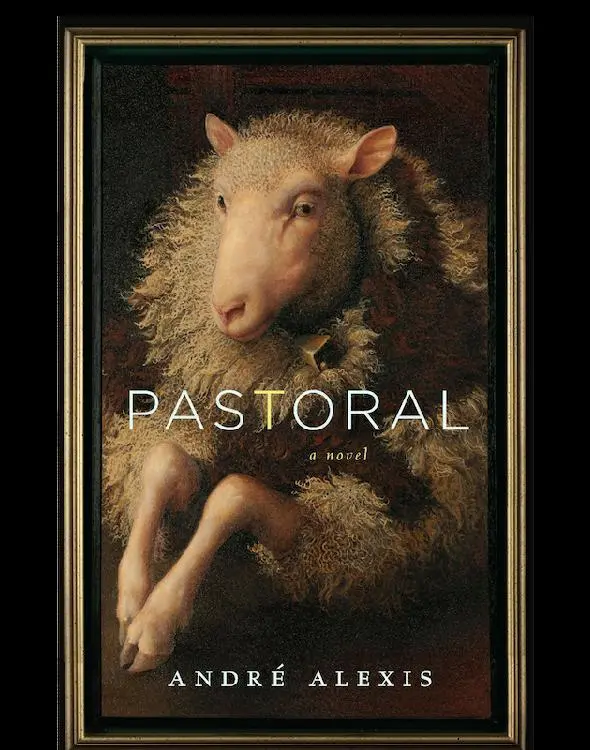
- Название:Pastoral
- Автор:
- Издательство:Coach House Books
- Жанр:
- Год:2014
- ISBN:нет данных
- Рейтинг книги:5 / 5. Голосов: 1
-
Избранное:Добавить в избранное
- Отзывы:
-
Ваша оценка:
Pastoral: краткое содержание, описание и аннотация
Предлагаем к чтению аннотацию, описание, краткое содержание или предисловие (зависит от того, что написал сам автор книги «Pastoral»). Если вы не нашли необходимую информацию о книге — напишите в комментариях, мы постараемся отыскать её.
"Astonishing. . an irresistible, one-of-a-kind work." — "Alexis [has an] astute understanding of the madly shimmering, beautifully weaving patterns created by what we have agreed to call memory." — There were plans for an official welcome. It was to take place the following Sunday. But those who came to the rectory on Father Pennant's second day were the ones who could not resist seeing him sooner. Here was the man to whom they would confess the darkest things. It was important to feel him out. Mrs Young, for instance, after she had seen him eat a piece of her macaroni pie, quietly asked what he thought of adultery. André Alexis brings a modern sensibility and a new liveliness to an age-old genre, the pastoral.
For his very first parish, Father Christopher Pennant is sent to the sleepy town of Barrow. With more sheep than people, it's very bucolic — too much Barrow Brew on Barrow Day is the rowdiest it gets. But things aren't so idyllic for Liz Denny, whose fiancé doesn't want to decide between Liz and his more worldly mistress Jane, and for Father Pennant himself, who greets some miracles of nature — mayors walking on water, talking sheep — with a profound crisis of faith.
André Alexis
Childhood
Asylum
Ingrid and the Wolf
Pastoral — читать онлайн бесплатно полную книгу (весь текст) целиком
Ниже представлен текст книги, разбитый по страницам. Система сохранения места последней прочитанной страницы, позволяет с удобством читать онлайн бесплатно книгу «Pastoral», без необходимости каждый раз заново искать на чём Вы остановились. Поставьте закладку, и сможете в любой момент перейти на страницу, на которой закончили чтение.
Интервал:
Закладка:
— I’ve done it myself, said Lowther. It’s difficult. The tops of the columns are sometimes slippery. You have to pay attention. When he was crossing the gravel pit, Mayor Fox wouldn’t really have seen or heard you.
Father Pennant did not know what to say. He believed what Lowther told him and he felt he should have been comforted to learn that what he’d taken for diabolical was, in fact, a kind of civic duty. And yet, he was not comforted.
— You know, said Lowther, it’s easy to mistake what we see for things we haven’t seen.
Lowther felt contrite for a trauma that was, after all, of his own making. He had meant for Father Pennant to see Mayor Fox cross the gravel pit. He had even hoped Father Pennant would be as stunned as he had been when he first saw the ‘miracle.’ So, in effect, the timing had worked out perfectly, where Lowther was concerned. On the other hand, Lowther had lived in Barrow for so long he found it difficult to think of the mayor’s walk on water as anything that could permanently affect a man. Though he regretted the extent of Father Pennant’s shock, Lowther had learned something important about the priest: Father Pennant was superstitious in just the way Lowther admired. The man believed as fervently in darkness as Lowther himself did. There was now, as far as Lowther was concerned, an unshakeable bond between himself and Christopher Pennant. No more ‘miracles’ were needed, no more crises for the young priest to deal with. When Lowther’s time came, he would be honoured to confess his sins to this man and to leave the world with grace.
But the effect on Father Pennant of this contact with a counterfeit ‘evil’ was indelible, and it changed him. He was no longer the man Lowther imagined him to be.
After his encounter with Mayor Fox, Father Pennant was wary of Barrow Day. He was not as inclined to join the celebration as he was to observe it.
Every year, harsher penalties were instituted, in an effort to limit the worst offences: public drunkenness, public nudity, public fornication. And every year, these things (drunkenness, nudity, etc.) happened just often enough to bring on both Christian regret and a pagan longing for the next year’s celebrations.
Barrow Day began at eleven o’clock with memorial masses said in churches across town. At mass, the townspeople remembered those who had died during the previous year as well as Richmond Barrow himself, long dead but still illustrious. After mass, it was traditional, whatever the denomination, to eat a slice of Barrow bread: a sweet bread (or cake) made with flour, eggs, sugar, coconut, raisins and vanilla. The centre of Barrow bread was where the coconut and raisins (dyed red) were baked in the form of an X above which there was a circle. That is, when one cut a slice of the loaf, it was meant to look as if a red skull and crossbones were in the slice’s centre. Though this required some skill to do well, virtually every woman in Barrow could make Barrow bread and make it very well indeed.
At one o’clock, the parade would begin. There were no more than two miles from one end of town to the other, but the parade usually went on two or even three hours, because half of the population was in the procession. Not that the spectators minded the time it took their family and friends to walk from one end of town to the next. It was during the parade that drinking began in earnest. Officially, drinking was not permitted on the streets, but the men and women watching the parade would all drink (much or little) a concoction of soda, rum and dandelion wine: Barrow brew. A little Barrow brew went a long way. Father Pennant — who politely accepted a mouthful from a pigskin — found it unbearably sweet. But it lifted the spirits of most who drank it, so that the parade was the heart and soul of the day.
The parade was not entirely about drink and good cheer. It was also fitfully, strangely beautiful. This was largely due to the handmade and sometimes breathtaking costumes worn by that half of the town that was on display. The parade was also a competition, with ‘best costume’ elected by a panel of judges. And here, the unusual was prized above all. One year, for instance, first prize was given to Rowland Briggs, a house painter, whose costume made him look like a burning schoolhouse, complete with students and teachers jumping from the upper floors. A year later, the prize was won by John Walker, a garage mechanic, whose costume included an effigy of a school principal hanging from a gallows while flames rose up behind him. Walker’s outfit was considered a witty rejoinder to Briggs’s costume.
After the parade, there was a breather, a few hours during which people could prepare for the banquet and dance that took place in the old fire hall. And finally, at the end of the night, usually around eleven o’clock, almost everyone — adults and such children who were not asleep or a hazard to themselves — ended up at Petersen’s gravel pit where the mayor would walk across the water and so mark the end of the day’s festivities.
Father Pennant’s first Barrow Day passed like a convulsive dream. It began early with Lowther practicing ‘The Song of the Birds,’ a mournful piece that cast a spell on the day: quiet, as the sun rose in the faded blue sky, no clouds, the morning smelling of a warm rhubarb compote Lowther served at breakfast.
At eleven o’clock, the church was filled to capacity, most of the celebrants his own parishioners. He smiled at Robbie Myers and Elizabeth Denny — who, conspicuously, sat side by side — and nodded at George Rubie and George Bigland. For some reason, the brooch worn by Ellin Machell, the librarian, caught his attention: praying hands carved in a light blue stone.
After mass, there were more faces and mingled voices.
— How’re you, Father Pennant?
— Happy Barrow’s Day, Father.
— Father, have you met my cousin Don?
Then they were all eating Barrow bread, a macabre kind of treat, it seemed to Father Pennant, but delicious: the taste of coconut against the sweet raisins. In the end, he sampled the Barrow bread of seven or eight women before returning to the rectory, where Lowther had prepared roast chicken, dill dumplings and, of course, Barrow bread. Lowther’s bread was wonderful, but it was also a slight variant: in the centre of his slices there were no skulls and crossbones but only a simple, puffy red circle.
Father Pennant had been invited to be part of the parade but, wary as he was, he chose to watch the procession from the sidewalk. Men and women he had seen here and there passed by on trucks, on tractors, on the back seats of convertibles. It seemed as if every institution in town had put one of its own on the back of something that moved: Lions Club, Rotary Club, 4-H Club, library, fire station, police station. People he had seen behind counters or out in the street waved, smiled and waved, accompanied by recorded music or followed by men playing bagpipes, which, as ever, sounded like small children being tortured into melody.
Most of the costumes were plain. There were coureurs de bois , frontier ladies, a handful of Laura Secords and a dozen (faux) Native Canadians. But there were also a number of perplexing or curious disguises. Two in particular struck Father Pennant as remarkable. The first made its wearer look as if he or she were a large bear. Out of the bear’s mouth a bald eagle sprang up with a salmon in its beak. The salmon flipped and flopped as if it were alive and, at intervals, spat hard candy into the crowd. The second costume, more grotesque, was worn by a man on stilts. He looked like a gigantic and unpleasant beetle. The man’s white face protruded from the insect’s dark mandible. From the lower parts of the insect, balls of foil-wrapped chocolate dropped. The chocolate was perhaps meant to roll to the children watching the parade, but it was inevitably squashed by the people or vehicles that followed, the warm chocolate oozing or spurting from the foil.
Читать дальшеИнтервал:
Закладка:
Похожие книги на «Pastoral»
Представляем Вашему вниманию похожие книги на «Pastoral» списком для выбора. Мы отобрали схожую по названию и смыслу литературу в надежде предоставить читателям больше вариантов отыскать новые, интересные, ещё непрочитанные произведения.








Обсуждение, отзывы о книге «Pastoral» и просто собственные мнения читателей. Оставьте ваши комментарии, напишите, что Вы думаете о произведении, его смысле или главных героях. Укажите что конкретно понравилось, а что нет, и почему Вы так считаете.