Andre Alexis - Pastoral
Здесь есть возможность читать онлайн «Andre Alexis - Pastoral» весь текст электронной книги совершенно бесплатно (целиком полную версию без сокращений). В некоторых случаях можно слушать аудио, скачать через торрент в формате fb2 и присутствует краткое содержание. Год выпуска: 2014, Издательство: Coach House Books, Жанр: Современная проза, на английском языке. Описание произведения, (предисловие) а так же отзывы посетителей доступны на портале библиотеки ЛибКат.
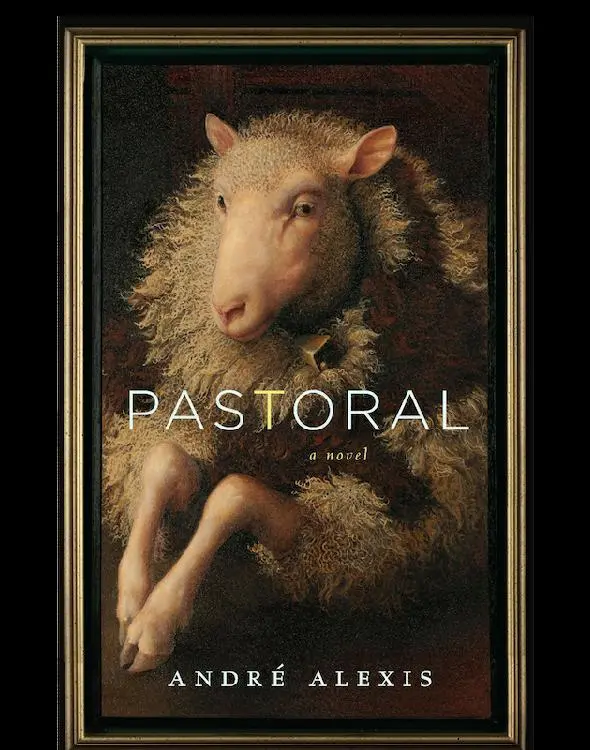
- Название:Pastoral
- Автор:
- Издательство:Coach House Books
- Жанр:
- Год:2014
- ISBN:нет данных
- Рейтинг книги:5 / 5. Голосов: 1
-
Избранное:Добавить в избранное
- Отзывы:
-
Ваша оценка:
Pastoral: краткое содержание, описание и аннотация
Предлагаем к чтению аннотацию, описание, краткое содержание или предисловие (зависит от того, что написал сам автор книги «Pastoral»). Если вы не нашли необходимую информацию о книге — напишите в комментариях, мы постараемся отыскать её.
"Astonishing. . an irresistible, one-of-a-kind work." — "Alexis [has an] astute understanding of the madly shimmering, beautifully weaving patterns created by what we have agreed to call memory." — There were plans for an official welcome. It was to take place the following Sunday. But those who came to the rectory on Father Pennant's second day were the ones who could not resist seeing him sooner. Here was the man to whom they would confess the darkest things. It was important to feel him out. Mrs Young, for instance, after she had seen him eat a piece of her macaroni pie, quietly asked what he thought of adultery. André Alexis brings a modern sensibility and a new liveliness to an age-old genre, the pastoral.
For his very first parish, Father Christopher Pennant is sent to the sleepy town of Barrow. With more sheep than people, it's very bucolic — too much Barrow Brew on Barrow Day is the rowdiest it gets. But things aren't so idyllic for Liz Denny, whose fiancé doesn't want to decide between Liz and his more worldly mistress Jane, and for Father Pennant himself, who greets some miracles of nature — mayors walking on water, talking sheep — with a profound crisis of faith.
André Alexis
Childhood
Asylum
Ingrid and the Wolf
Pastoral — читать онлайн бесплатно полную книгу (весь текст) целиком
Ниже представлен текст книги, разбитый по страницам. Система сохранения места последней прочитанной страницы, позволяет с удобством читать онлайн бесплатно книгу «Pastoral», без необходимости каждый раз заново искать на чём Вы остановились. Поставьте закладку, и сможете в любой момент перейти на страницу, на которой закончили чтение.
Интервал:
Закладка:
The man was almost fully dressed: light-coloured suit jacket, matching pants. But he held his shoes and socks in his hands. Not wishing to disturb the man or frighten him, Father Pennant waited quietly at a polite distance, intending to let him finish what sounded like prayers. But the prayers, which began to sound like a strange song, continued for a while. Then, suddenly, the man stepped into the pit and began to walk on water. Having witnessed the ‘miracle’ of the moths, Father Pennant did not believe what he was seeing. He looked around for something that might explain the lightness of the man or the sturdiness of the water.
There was no one about. The man continued across the water, singing or reciting as he went. The water was rigged, surely. There was almost certainly some solid path just beneath its surface. And smiling at what he imagined to be a wonderful illusion, Father Pennant stepped into the water at or near the very point the man had stepped. It was deep water, though, and he sank. His clothes and shoes weighed him down immediately. Sputtering and panic-struck, he managed to turn himself around and pull himself out of the pit. The water was cold, but he kicked off his shoes, grappled to safety and emerged mud-streaked, soaked and freezing. Turning back to the pit, he was stunned to see that the man was on the opposite side looking at him or seeming to look at him with derision. Poised a moment on the other side, still speaking to himself or to Father Pennant, the man now began his return across the water. If when he had thought it a trick Father Pennant found this water walk charming, he was now frankly frightened by it.
As the man approached, Father Pennant recognized George Fox, the mayor of Barrow. Mr. Fox was not speaking English, nor was he paying the least attention to Father Pennant. He looked only before him, enraptured, speaking in tongues:
— Mose hsaou ne eeaui aoe meu ne loox an matu uie matu og easui …
Hearing these sounds and believing that Fox was possessed, Father Pennant fell to his knees and began to pray. He was in the presence of the diabolical. He knew it. He closed his eyes and said his prayers as loudly as he dared. He was not a timorous man, far from it, but he was terrified to be in the presence of Satan.
He felt a hand on his shoulder and the touch was like fire, despite his wet clothes.
— Father Pennant? Are you all right?
Opening his eyes, Father Pennant saw George Fox looking down at him. Fox had a broad face in which his small, brown eyes were set. His forehead was speckled by freckles. He was mostly bald and his breath was abominable, like sour milk and rotting chicken skin. Above Fox, the sun ignited a small cloud.
— Get thee behind me, Satan, said Father Pennant. I cannot be tempted.
Mr. Fox stood up straight, immediately defensive.
— That’s pretty unfair, he said. I’m a politician, so maybe you’ve heard people say some bad things about me. But I’m as God-fearing as the next man. I may not be Catholic, but that doesn’t give you the right to insult me.
Mayor Fox walked away with all the outrage he could muster — very little, as it happened, because he was a generous and warm-hearted man. Not that Father Pennant noticed the mayor’s attempt at outrage. He was too busy praying, reciting the psalm he loved best ( As the hart panteth after the water brooks, so panteth my soul after thee, O Lord … ) over and over, until he felt calm enough to stand. Only then did he look up and take stock of the situation. He was alone, shoeless, wet, his clothes covered with grit. It seemed to him that he had seen the devil disguised as Mayor Fox. And Satan, unlike the gypsy moths, was a mystery, as miraculous as loaves and fishes, water and wine. Father Pennant had encountered the Lord of the Flies, and his faith, which had wavered of late, was fully restored.
He shivered as he walked the miles back to town, his feet punished by the stones at the side of the road.
That evening Father Pennant was still too upset to do his duties, too shaken to prepare a sermon for the next day or to visit the old people at Maud Chapman’s Home for the Aged. He sat at the dining table, as if turned to lead. Lowther had prepared a lamb roast with roasted potatoes and sweet corn. For dessert he had made a sticky toffee pudding. The pudding had sat out, aromatically blooming in the rectory as soon as it was taken from the oven. Father Pennant, who loved sticky toffee pudding, put his spoon in the pudding, tasted a morsel and dispassionately said
— Thank you, Lowther. It’s good.
before putting his spoon down and looking away.
Lowther was, of course, interested in the priest’s behaviour, but he sat in silence until Father Pennant said
— Do you believe in evil, Lowther?
— I believe men do unspeakable things, Father. I don’t know about evil.
— Evil is the other side of the sacred, said Father Pennant. If there’s no evil, there can’t be anything sacred either. I know that. I know it is God’s will that evil exist, but I wish it were different.
— I can see you’re upset, said Lowther. Do you mind my asking what’s wrong?
— No, I don’t mind, said Father Pennant.
He told Lowther what he had lived through that day: the climb over Petersen’s gate, his first vision of Mayor Fox, Fox’s diabolical traverse of the gravel pit, walking on water and speaking in tongues, and his — that is Father Pennant’s — near drowning and long walk home. When he had heard Father Pennant’s story, Lowther said
— I’m sorry I didn’t go with you, Father. I understand how you could interpret things as you did. And I can see how much you respect and fear Satan, but there wasn’t anything satanic about what you saw. Nothing miraculous either. Mayor Fox should have told you himself, when he saw you so upset. He wasn’t walking on water. If anything, he was walking on plastic. I know it’ll sound strange to an outsider, but Mayor Fox crosses the gravel pit every year. Several times a year, actually.
There was a perfectly logical explanation for what Father Pennant had seen. What he’d seen was a foretaste of Barrow Day. There were, deeply planted in the gravel pit’s floor, tall columns of thick, clear plastic, columns some thirty feet tall, almost entirely invisible to the eye. There were sixty of them. They were beneath the surface for most of the year, but in late summer, the water level fell and you could see them clearly. The tops of the columns were flat and oval, wide enough to accommodate even a large human. The columns were arranged so that a man or woman of average height could walk across the pit with ease. Naturally, when the water was high, as it usually was, you couldn’t see the columns and so it looked as if someone were walking on water, though they were actually stepping on the flat tops of the columns. More than that: the words Mayor Fox recited were not an incantation. He hadn’t been speaking in tongues. The words, gibberish really, had been written to help whoever was walking across the water know when to step. The pillars were not evenly spaced, so if you walked at the right pace and said the words with the right rhythm, at every third word you could step down with confidence. The timing was important. The words and their rhythm varied according to the height of the person crossing the water. That was all there was to tell, in essence.
No, there was more. This walk across the columns was a relatively new aspect of Barrow Day. The columns had been fashioned and then (with great difficulty) planted in the gravel pit by an artist. The artist, a Russian émigré named Anton Mandelshtam, had meant his ‘installation’ to represent the freedom one has in a capitalist society. For instance, the freedom to walk across a gravel pit without getting one’s feet dirty, to walk above the land as if exalted. No one in Barrow understood the ideas behind Mandelshtam’s Freedom , but watching a man walk across the pit on glass pillars was, in and of itself, entertaining. The installation was such a popular work that it was absorbed into Barrow Day’s festivities, and by the late eighties, the crossing of Petersen’s gravel pit came to mark the end of Barrow Day.
Читать дальшеИнтервал:
Закладка:
Похожие книги на «Pastoral»
Представляем Вашему вниманию похожие книги на «Pastoral» списком для выбора. Мы отобрали схожую по названию и смыслу литературу в надежде предоставить читателям больше вариантов отыскать новые, интересные, ещё непрочитанные произведения.









Обсуждение, отзывы о книге «Pastoral» и просто собственные мнения читателей. Оставьте ваши комментарии, напишите, что Вы думаете о произведении, его смысле или главных героях. Укажите что конкретно понравилось, а что нет, и почему Вы так считаете.