Andre Alexis - Pastoral
Здесь есть возможность читать онлайн «Andre Alexis - Pastoral» весь текст электронной книги совершенно бесплатно (целиком полную версию без сокращений). В некоторых случаях можно слушать аудио, скачать через торрент в формате fb2 и присутствует краткое содержание. Год выпуска: 2014, Издательство: Coach House Books, Жанр: Современная проза, на английском языке. Описание произведения, (предисловие) а так же отзывы посетителей доступны на портале библиотеки ЛибКат.
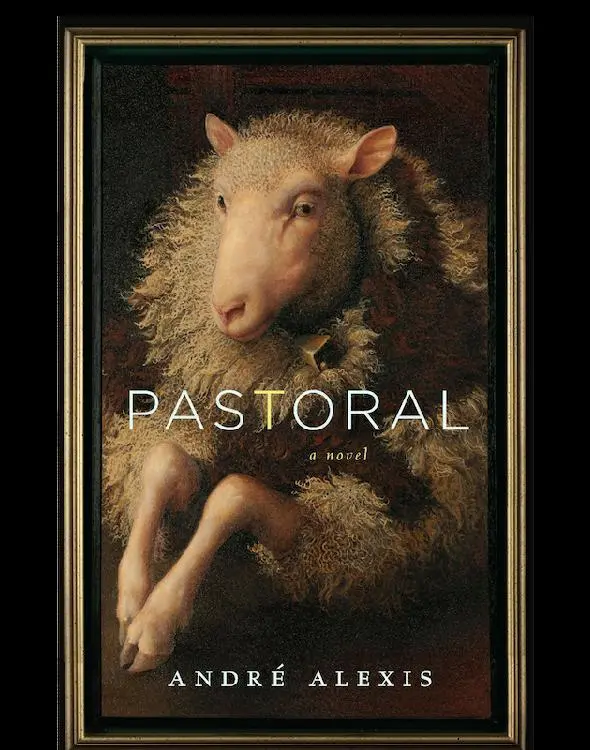
- Название:Pastoral
- Автор:
- Издательство:Coach House Books
- Жанр:
- Год:2014
- ISBN:нет данных
- Рейтинг книги:5 / 5. Голосов: 1
-
Избранное:Добавить в избранное
- Отзывы:
-
Ваша оценка:
Pastoral: краткое содержание, описание и аннотация
Предлагаем к чтению аннотацию, описание, краткое содержание или предисловие (зависит от того, что написал сам автор книги «Pastoral»). Если вы не нашли необходимую информацию о книге — напишите в комментариях, мы постараемся отыскать её.
"Astonishing. . an irresistible, one-of-a-kind work." — "Alexis [has an] astute understanding of the madly shimmering, beautifully weaving patterns created by what we have agreed to call memory." — There were plans for an official welcome. It was to take place the following Sunday. But those who came to the rectory on Father Pennant's second day were the ones who could not resist seeing him sooner. Here was the man to whom they would confess the darkest things. It was important to feel him out. Mrs Young, for instance, after she had seen him eat a piece of her macaroni pie, quietly asked what he thought of adultery. André Alexis brings a modern sensibility and a new liveliness to an age-old genre, the pastoral.
For his very first parish, Father Christopher Pennant is sent to the sleepy town of Barrow. With more sheep than people, it's very bucolic — too much Barrow Brew on Barrow Day is the rowdiest it gets. But things aren't so idyllic for Liz Denny, whose fiancé doesn't want to decide between Liz and his more worldly mistress Jane, and for Father Pennant himself, who greets some miracles of nature — mayors walking on water, talking sheep — with a profound crisis of faith.
André Alexis
Childhood
Asylum
Ingrid and the Wolf
Pastoral — читать онлайн бесплатно полную книгу (весь текст) целиком
Ниже представлен текст книги, разбитый по страницам. Система сохранения места последней прочитанной страницы, позволяет с удобством читать онлайн бесплатно книгу «Pastoral», без необходимости каждый раз заново искать на чём Вы остановились. Поставьте закладку, и сможете в любой момент перейти на страницу, на которой закончили чтение.
Интервал:
Закладка:
— Shucks, it was nothing, said her father, smirking.
— It was too, said her mother. And it’s too bad you weren’t there, Jane. You should come out to Petersen’s tonight. It wouldn’t hurt you to be sociable and maybe meet someone other than Robbie Myers.
— Mom, my private life’s none of your business, said Jane.
— It’s my business when everybody in town is talking about my daughter like she’s a scarlet woman.
— No, said Jane. It’s not your business. And who cares what other people are saying?
— Well, just remember, said her father, don’t go kissin’ by the garden gate. ’Cause love is blind but the neighbours ain’t.
Exasperated by her giggling parents, Jane got up and, with a show of annoyance, flounced from the room. Her mother’s words stayed with her, though.
— It wouldn’t hurt you to be sociable and maybe meet someone other than Robbie Myers.
The words made her want to see Robbie. So, shortly after her parents left for the gravel pit, Jane took a flashlight and went out to Petersen’s on her own.
The sky was clear. There were a trillion stars and it was warm enough that her sweater was too much. She took it off, tied it around her waist and then found she was cold. After a brief battle with herself, she hung the sweater from her shoulders. Once out of town, it was as if she disappeared. The group of people in front of her was jovial and paid her no attention. The group behind was much the same. She was alone without being alone.
The sky, the stars, the night, the trees; the world a collection of simple things, from the smell of pine to the stridulating crickets. She should have found the night consoling, but it was all rustic and empty to her: nothing for anyone but the lovers of nothing.
At Petersen’s gate, Jane turned off her flashlight and followed the revellers. The place smelled of earth and standing water. Above the trees you could see a handful of stars and then, as they came to the clearing, the sky was grand again, filled with suns that warmed countless other worlds. Jane heard voices she recognized but no one she wanted to talk to. From time to time, light from candles or torches lit her, almost inviting her to take part in the celebrations, but she kept to the edge of the crowd, looking away whenever she thought anyone might be looking at her.
Against the odds, what with the faces of her fellow citizens only partially revealed by the shimmering light, she saw Robbie. He was in the second row of spectators on one side of the pit. She recognized him and then imagined she heard his voice as she saw his lips move. Beside him: Elizabeth, the one who belonged. Despite herself, Jane felt betrayed. Though she wanted to leave Barrow, she resented Elizabeth Denny’s acceptance here. An orphan, imagine that, a come-from-away, and yet there was place for Liz Denny and none for her.
There was a hush and then the sound of Mayor Fox reciting gibberish as he walked across the water. Big deal. A cheap, ridiculous trick. And to hear the in-drawn breath of four hundred bumpkins! To think this was Barrow’s idea of ceremony. It was a meaningless end to a meaningless day, meaningless years, meaningless lives. To hell with Barrow, she thought, and left the gravel pit before the mayor had made it halfway across.
Jane walked back home alone, the beam of her flashlight like a ground-sniffing dog before her. How had she failed to convince Robbie? Could it be that Elizabeth Denny actually knew him better than she did? Jane had waited until he was most vulnerable. She had arranged things perfectly. On a night when her parents were away, she had invited him over, fed him his favourite meal (shepherd’s pie) and seduced him.
Afterwards, in her bed, she had asked
— Robbie, how much do you love me?
— I love you as much as I can love anyone, he’d answered.
— What would you do for me?
— Anything you want, except I won’t give Lizzie up.
— But anything but that?
He had cheered up then, the bastard, since he didn’t have to give up his ‘wife.’
— What do you want me to do? he’d asked. Name it.
As if rummaging in her mind for a suitable task, she’d taken a minute before asking
— Would you take your clothes off in public?
as if the thought had just occurred to her.
He’d been lying up in bed, turned toward her, smiling. But the smile had stuck on his face at the question. He hadn’t known what to say. Perhaps thinking it was a joke, he’d answered
— Of course I would.
— I’m serious, she’d said. I want you to show me how much you love me. I want you to walk into Atkinson’s Beauty Parlour naked.
Robbie had stared at her and then laughed.
— Sure, he’d said. I’ll go into Atkinson’s naked. Why not?
— That’s wonderful. Why don’t you do it tomorrow?
She had kissed him and they had spent the night in each other’s arms, though his snoring had kept her up until two in the morning. But when day came and she reminded him of his promise, he had tried to laugh it off. She’d pressed him on it. He’d tried to avoid the subject until, finally, he’d refused outright. He wouldn’t do it in a million years was his new tack. He hadn’t been serious the night before. He simply wouldn’t do it. If she wanted proof of his affection, he’d rather jump to his death.
— But you’ve got nothing to be ashamed of. What are you worried about?
It was true. He had nothing to be ashamed of. The ladies having their hair done would see a well-built man. No one would object on that score. But there was no talking him into it. In fact, though they had planned to spend the day together, he had walked out, angry at her pestering. That had been a surprise. She’d been so certain she could get him to do anything she asked. She hadn’t bothered to think things through or devise another approach. She had failed, and the more she thought about it, the more she felt ridiculous.
As she walked home at the end of Barrow Day, she felt helpless.
Then it occurred to Jane that she’d been cowardly. Yes, cowardly. The stakes were not as high for her as they were for dowdy, four-eyed Elizabeth. Elizabeth stood to lose someone who mattered to her. But she, Jane, was not as attached to Robbie. What then had she really stood to lose? Nothing. For her to truly care if Robbie went into Atkinson’s or not, for her to be persuasive, the stake had to be more significant. So, beneath the stars, Jane resolved that should she fail to convince Robbie to do what she asked, she would leave Barrow for good. She would leave everyone and everything she knew behind. A fleetingly painful thought, because something deep within her wanted to be part of Barrow or, at least, wanted to belong somewhere.
As she was superstitious (a trait she shared with most everyone in Barrow), Jane consulted The Book of Common Prayer as soon as she got home. She had been doing this all her life, whenever she had to make an important decision: opening the prayer book to a page chosen at random, trusting that the first words she encountered would have some bearing on her decision.
She inevitably used the ancient B ook of Common Prayer her parents kept in a locked cabinet in the living room. The book, a first edition from the eighteenth century, was bound in thick brown leather that was cracked and scored. The prayer book’s pages were brittle, its print looking more like handwriting than anything from a printing press. An heirloom, it had once belonged to her grandfather’s grandmother. But Jane was not afraid to touch the book, to use it to guide her. For instance, when she had been wondering if she should go out with Robbie, she had opened the book to a prayer about love and she had taken that to mean that, yes, she and Robbie belonged together. She unlocked the cabinet and took the heavy book from its place. It smelled of Time itself. That is, when Jane thought about Time or History, the thought conjured this smell: dust, dry pages, desiccated leather.
Читать дальшеИнтервал:
Закладка:
Похожие книги на «Pastoral»
Представляем Вашему вниманию похожие книги на «Pastoral» списком для выбора. Мы отобрали схожую по названию и смыслу литературу в надежде предоставить читателям больше вариантов отыскать новые, интересные, ещё непрочитанные произведения.












Обсуждение, отзывы о книге «Pastoral» и просто собственные мнения читателей. Оставьте ваши комментарии, напишите, что Вы думаете о произведении, его смысле или главных героях. Укажите что конкретно понравилось, а что нет, и почему Вы так считаете.