Andre Alexis - Pastoral
Здесь есть возможность читать онлайн «Andre Alexis - Pastoral» весь текст электронной книги совершенно бесплатно (целиком полную версию без сокращений). В некоторых случаях можно слушать аудио, скачать через торрент в формате fb2 и присутствует краткое содержание. Год выпуска: 2014, Издательство: Coach House Books, Жанр: Современная проза, на английском языке. Описание произведения, (предисловие) а так же отзывы посетителей доступны на портале библиотеки ЛибКат.
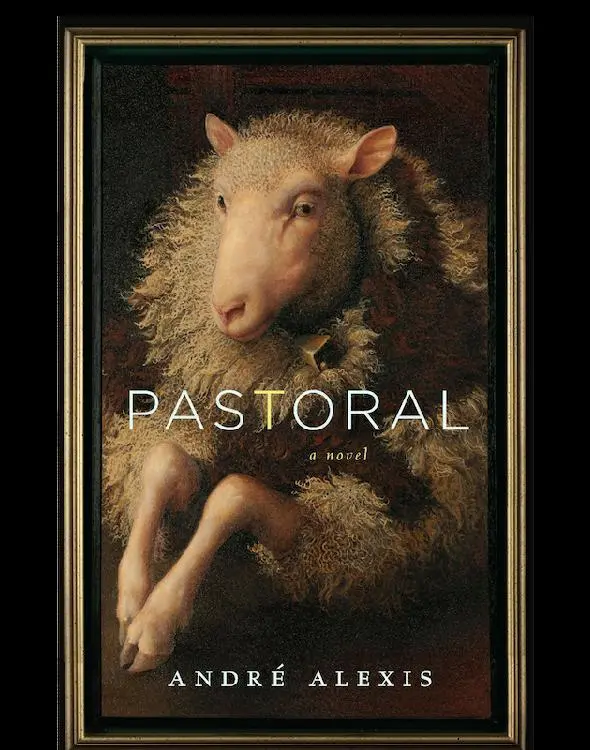
- Название:Pastoral
- Автор:
- Издательство:Coach House Books
- Жанр:
- Год:2014
- ISBN:нет данных
- Рейтинг книги:5 / 5. Голосов: 1
-
Избранное:Добавить в избранное
- Отзывы:
-
Ваша оценка:
Pastoral: краткое содержание, описание и аннотация
Предлагаем к чтению аннотацию, описание, краткое содержание или предисловие (зависит от того, что написал сам автор книги «Pastoral»). Если вы не нашли необходимую информацию о книге — напишите в комментариях, мы постараемся отыскать её.
"Astonishing. . an irresistible, one-of-a-kind work." — "Alexis [has an] astute understanding of the madly shimmering, beautifully weaving patterns created by what we have agreed to call memory." — There were plans for an official welcome. It was to take place the following Sunday. But those who came to the rectory on Father Pennant's second day were the ones who could not resist seeing him sooner. Here was the man to whom they would confess the darkest things. It was important to feel him out. Mrs Young, for instance, after she had seen him eat a piece of her macaroni pie, quietly asked what he thought of adultery. André Alexis brings a modern sensibility and a new liveliness to an age-old genre, the pastoral.
For his very first parish, Father Christopher Pennant is sent to the sleepy town of Barrow. With more sheep than people, it's very bucolic — too much Barrow Brew on Barrow Day is the rowdiest it gets. But things aren't so idyllic for Liz Denny, whose fiancé doesn't want to decide between Liz and his more worldly mistress Jane, and for Father Pennant himself, who greets some miracles of nature — mayors walking on water, talking sheep — with a profound crisis of faith.
André Alexis
Childhood
Asylum
Ingrid and the Wolf
Pastoral — читать онлайн бесплатно полную книгу (весь текст) целиком
Ниже представлен текст книги, разбитый по страницам. Система сохранения места последней прочитанной страницы, позволяет с удобством читать онлайн бесплатно книгу «Pastoral», без необходимости каждый раз заново искать на чём Вы остановились. Поставьте закладку, и сможете в любой момент перейти на страницу, на которой закончили чтение.
Интервал:
Закладка:
Closing her eyes and thinking of a question
— Should I leave Barrow if Robbie won’t do what I ask?
Jane opened the book, put her finger down on a line and, opening her eyes, read
In the Lord I put my trust; how say you to my soul, Flee as a bird to your mountain?
The meaning was obscure, but Jane resisted the urge to see where the words came from. She read the phrase over and over, allowing it to sink into her imagination. Then she closed the prayer book and locked it away again.
In the Lord I put my trust … Flee as a bird to your mountain?
As she got ready for bed, the words nestled in her mind and then, just before she fell asleep, they bloomed. She imagined herself flying, eyes closed, toward a city, a mountain of glass and light. Before the first wave of dreams buried her under a million symbols, she felt certain she’d made the right decision. If Robbie did not do as she asked, she would flee from Barrow. The Book of Common Prayer advised it.
At the end of Barrow Day, after watching Mayor Fox, Father Pennant experienced the curious sensation of falling that had preceded his decision to be a priest.
Christopher Pennant was born in Ottawa, but his family had property in Cumberland. Ottawa had been home, but Cumberland was where they had spent their summers, at a cottage where he could be close to his parents, brothers and sisters without thinking about much or worrying about anything.
Cumberland, with its fields and stones, was where he had his first religious feelings. The very first of these he remembered clearly. It had been a warm day in August, with dark clouds wriggling over the blue sky. He and his brothers and sisters were all inside, where it was humid and smelled of paint. Every once in a while, the screen door to the kitchen clacked, as his father went out to check the meat cooking on the barbecue, and every now and then the smell of burning charcoal and hamburger would pass through the cottage.
He hadn’t been doing much: idly playing with an old deck of cards, by himself because everyone else had tired of crazy eights and old maid. He could recall the cards still: their red backing curled up at the edges to reveal the white pith between the lamination and the surface. He had just arranged the cards for a game of solitaire when he heard his name called:
— Christopher.
— Yes? he’d answered.
But when he looked around to see who had called, there was no one with him. Everyone else had left for other parts of the cottage or gone outside.
In retrospect, it was surprising how little fear he’d felt. The voice had sounded playful. Then he heard his name again. This time it seemed to come from the kitchen, so he got up to see who it was. As he entered the kitchen, time, as they say, stood still. He heard nothing, neither the hum and creak of the cottage, nor the distant voices of his family. He seemed to be alone in the world when, suddenly, his solitude dissolved (or modulated) into the most intense feeling of company. Far from feeling alone, he felt whole, as if he himself were the cottage and the field behind it, the green hill in the distance and the roiling clouds above. For what seemed like hours, his ten-year-old self stared out the window at the sky and the fields as if he were staring at his own face in a mirror. As suddenly as the feeling had come, it dissipated. His father came into the kitchen. The screen door clacked and the world returned to him, like a stream flowing over an obstruction.
Though he was too young to fully understand the implications of a call, ten-year-old Christopher instinctively knew that the voice that had called his name belonged to the Lord. He was certain of it.
Doubt came fifteen years later when he entered the seminary to become a priest. Most of his fellow seminarians experienced similar doubts, but their doubts were generally about their own fitness to serve God. Most of them worried they were not pure enough. Some worried the Church was not pure enough. Still others began to question the nature or even the existence of God. Christopher Pennant was closest to this third group.
While he was a seminarian, his doubt centred on a question that he had not previously conceived of, let alone resolved: who, exactly, had called his name that day in Cumberland? Had he been too quick to accept that the voice belonged to God? If it had not been the voice of God, whose voice had it been? Did his teachers not insist that Satan’s voice is sweet? For a terrible moment at the seminary, it was as if he had been living a lie. (And what could it mean to confuse His voice and the voice of His shadow?)
So, at the threshold of priesthood, he faltered.
But then, influenced by his fellow seminarians, he again came to believe that the voice calling him had been God’s. Satan, they said (as if they had all been acquainted with Satan), would have led him on a different course. He, Christopher Thomas Pennant, would not have chosen the church if Satan had called to him. Gradually, Father Pennant’s doubts were quelled. His crisis passed.
What Lowther could not have known was that Father Pennant’s encounter with ‘evil’ (or, more exactly, with Mayor Fox) would precipitate a return to the uncertainty that had lain unexamined within him since the end of his time at seminary. Watching Mayor Fox walk on water had, metaphorically speaking, plunged him into a tide of questions. Who had called him? Whose voice had he heard? To whom was his vocation dedicated?
At seminary, Christopher had struggled because he had not known if the voice he’d heard belonged to God or Satan. Following Barrow Day, a new thought occurred to him. What if it had been neither God nor Satan? What if it had been the land itself that had called him? What if it had been Cumberland — the hills, the trees, the stony fields — that spoke? If so, could one serve both God and the land? Were they indistinguishable or were they, rather, two jealous masters, only one of whom could be devoutly followed?
These feelings were in themselves enough to shake him up, but they were accompanied by a coldness, a critical eye on God’s habits. Take the matter of miracles, for instance. Looking back on Heath Lambert’s gypsy moths, Father Pennant — though he did not know what Lambert had done to the insects or how he had got them to fly in a circle — suddenly felt the too-muchness of ‘miracles.’ Not that the thing with moths had been miraculous, but it was just the kind of thing God might do: ostentatiously contravene the laws of Nature. The Lord was showy when called upon to prove himself: He made bushes speak, He parted the seas, He restored sight to the blind. Honestly, making moths do His bidding was very like Him.
After Barrow Day, Father Pennant began to reconsider the question that had troubled him at the seminary. He did not feel the same dismay, however. He felt apprehensive, but he was also intrigued. Caught up with his journals and his accounts of the natural history of Barrow, he did not mind the idea that the land had once called to him, or that he was on intimate terms with Nature. As a result, Father Pennant began to spend even more time exploring the fields and streams of Lambton County. He performed his priestly duties and performed them well, but he was now distracted. His sermons grew short and to the point. His visits to the sick were efficiently carried out, and his attendance at spiritual gatherings was thoughtful, not enthusiastic.
Barrow Day done, the town settled into the routines of summer: preparing for vacation and looking forward to weekends up near Goderich.
Robbie Myers, who believed he was in the clear with both of the women he loved, was happily occupied with work on the farm, with his friends, with the question of whether or not he should invite Jane to his wedding. Barrow Day had been good. He’d spent it with Elizabeth who, though she was not her affectionate self, spoke to him without rancour and even, once or twice, held his hand. It was sad that she would not allow him to touch her in any intimate way and that her kisses were perfunctory. But she still wanted to marry him and she treated him — as far as others were concerned — the way you would expect a woman to treat her fiancé. He was convinced that the Elizabeth he loved would return to him once she realized how much he loved her. But for an argument with Jane over some strange idea she’d got in her head — something to do with him committing public indecency — all was right with the world.
Читать дальшеИнтервал:
Закладка:
Похожие книги на «Pastoral»
Представляем Вашему вниманию похожие книги на «Pastoral» списком для выбора. Мы отобрали схожую по названию и смыслу литературу в надежде предоставить читателям больше вариантов отыскать новые, интересные, ещё непрочитанные произведения.








Обсуждение, отзывы о книге «Pastoral» и просто собственные мнения читателей. Оставьте ваши комментарии, напишите, что Вы думаете о произведении, его смысле или главных героях. Укажите что конкретно понравилось, а что нет, и почему Вы так считаете.