Andre Alexis - Pastoral
Здесь есть возможность читать онлайн «Andre Alexis - Pastoral» весь текст электронной книги совершенно бесплатно (целиком полную версию без сокращений). В некоторых случаях можно слушать аудио, скачать через торрент в формате fb2 и присутствует краткое содержание. Год выпуска: 2014, Издательство: Coach House Books, Жанр: Современная проза, на английском языке. Описание произведения, (предисловие) а так же отзывы посетителей доступны на портале библиотеки ЛибКат.
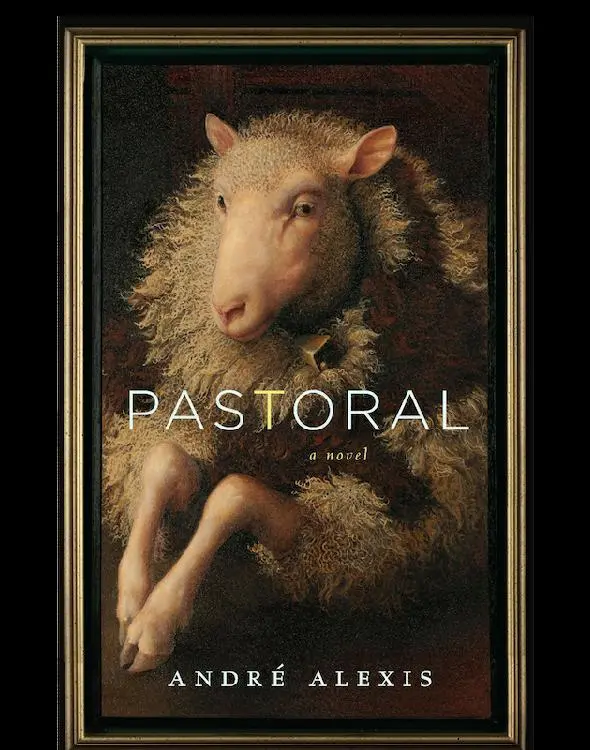
- Название:Pastoral
- Автор:
- Издательство:Coach House Books
- Жанр:
- Год:2014
- ISBN:нет данных
- Рейтинг книги:5 / 5. Голосов: 1
-
Избранное:Добавить в избранное
- Отзывы:
-
Ваша оценка:
Pastoral: краткое содержание, описание и аннотация
Предлагаем к чтению аннотацию, описание, краткое содержание или предисловие (зависит от того, что написал сам автор книги «Pastoral»). Если вы не нашли необходимую информацию о книге — напишите в комментариях, мы постараемся отыскать её.
"Astonishing. . an irresistible, one-of-a-kind work." — "Alexis [has an] astute understanding of the madly shimmering, beautifully weaving patterns created by what we have agreed to call memory." — There were plans for an official welcome. It was to take place the following Sunday. But those who came to the rectory on Father Pennant's second day were the ones who could not resist seeing him sooner. Here was the man to whom they would confess the darkest things. It was important to feel him out. Mrs Young, for instance, after she had seen him eat a piece of her macaroni pie, quietly asked what he thought of adultery. André Alexis brings a modern sensibility and a new liveliness to an age-old genre, the pastoral.
For his very first parish, Father Christopher Pennant is sent to the sleepy town of Barrow. With more sheep than people, it's very bucolic — too much Barrow Brew on Barrow Day is the rowdiest it gets. But things aren't so idyllic for Liz Denny, whose fiancé doesn't want to decide between Liz and his more worldly mistress Jane, and for Father Pennant himself, who greets some miracles of nature — mayors walking on water, talking sheep — with a profound crisis of faith.
André Alexis
Childhood
Asylum
Ingrid and the Wolf
Pastoral — читать онлайн бесплатно полную книгу (весь текст) целиком
Ниже представлен текст книги, разбитый по страницам. Система сохранения места последней прочитанной страницы, позволяет с удобством читать онлайн бесплатно книгу «Pastoral», без необходимости каждый раз заново искать на чём Вы остановились. Поставьте закладку, и сможете в любой момент перейти на страницу, на которой закончили чтение.
Интервал:
Закладка:
He did not want to repeat the experience, it’s true, but he now knew what it was to love someone beyond what he’d thought possible. Though he could not understand why Jane had asked him to walk into Atkinson’s, he would be grateful to her for the rest of his life. Days after his mother had chewed him out for acting foolishly, he felt more willing than ever to follow where Jane led. What a woman she was! He would never leave her.
And, again: was he not marrying the wrong woman?
Wasn’t this feeling, the exhilaration of submission, what marriage was all about?
For generations, the men in Lowther’s family had been dying at the age of sixty-three. Lowther’s father, grandfather, great-grandfather … all the way back to at least seven times great. It was taken by most in his family to be a curse. Lowther’s mother had seen it that way, as had his father. But Lowther took the matter differently. He took it as a promise, God’s word.
He hadn’t always faced his ‘pre-ordained’ death with equanimity. As a younger man, he had been defiant, angry. Knowing he would die at the age of sixty-three gave Lowther, when he was younger, a disregard for his life.
Of course, his early attitude had something to do with the moment he learned that his time on earth was fixed. On Lowther’s twelfth birthday, his father, drunk and lugubrious, had taken him aside and let him in on his fate. Mr. Williams, going through a spiritual crisis, had wept and then apologized for having passed on a death sentence. What had impressed and traumatized the young Lowther was not the age at which he was to die. As for any twelve-year-old, sixty-three seemed ancient verging on unreachable. At twelve, he himself might have chosen a more reasonable age at which to go: thirty-five, say, or fifty at the outside. It was the spectacle of his drunken father and the fact of his father’s certainty (a certainty that proved well-founded), his father’s conviction that this was an injustice handed down to them from God Himself. The Williamses, in other words, were cursed by a God whose attention they had, though they could not put it to good effect.
It was no doubt sad that his days were so specific in number, thought Lowther, but the opposite side of the coin was: he would not die until he was sixty-three. If God’s word was true, Lowther had been given licence to do whatever he liked until then.
His twenties and thirties were filled with a recklessness that would have made most men blanch. He went in search of danger to test his destiny. He did the usual jumping from planes and tall cliffs. He worked in the jungles of South America, handled poisonous snakes as a member of a cult in rural Georgia, and travelled to the most unfriendly parts of the world, in pursuit of death. As a result, he and death were on familiar terms long before his sixty-third birthday. By the age of forty, Lowther had seen men, women and children shot, stabbed, run over, thrown from high windows, set alight. He had seen a severed human hand still holding a cigarette, the head of a woman, eyes open, thrown into a shallow hole in a dirt path and a newborn child nailed to a tree. The death of others meant little to him.
When Lowther was in his forties, his father died of liver cancer. It took a year, a year during which Mr. Williams longed for a death that would not come. Whenever they spoke, his father was either gone on morphine, drifting in and out of consciousness, or lucid enough to feel bitter that the cancer had pounced on him somewhere around his sixty-second birthday, leaving him with a year to suffer. As his sixty-third birthday approached, however, knowing that his death was coming at last, Lowther’s father held his son’s hand and apologized for what he’d passed on. Lowther saw his father off on the morning of May 4th, as a robin sang and a breeze came through an open window. It was the morning of his father’s sixty-third birthday. The inevitable was inevitable, after all.
As father and son had both expected the end to come around the time it did, his father’s death could not be said to have drastically changed Lowther’s view of life. It had been eerie to have the thing arrive so tightly to schedule, but the death that changed him for good came after his father had passed.
While working as a skip tracer, Lowther had tracked down a man who had fallen seriously behind on the payments for an El Dorado. It was Lowther’s duty to get either the money owed or the car. He came to an elegant, red-brick house in Sarnia, not far from the river. A good address in a good neighbourhood, but the front lawn needed mowing, and rose bushes in the garden had withered, their petals scattered on the dirt. Lowther imagined that the man he sought had once been wealthy and, even on the run from debtors, could not do without the trappings of success. Everything about him seemed to confirm it: seedy clothes that had once been fine, good grooming, even a kind of annoyed politeness when Lowther explained his business. In fact, his only words to Lowther were spoken with a hint of largesse.
— Fine, he said, do come in.
Inside the house was a different matter. The living room into which Lowther stepped had only one piece of furniture: a reclining, faux-leather armchair. But the place was in disarray. Old newspapers everywhere, plates stacked on the floor, knives and forks here and there, here and there children’s clothing and countless toys. Lowther had taken the place in and was standing near the alcove when the man came back carrying a five-year-old boy and a revolver. Lowther felt surprise, not panic, not fear. He had been threatened more often than he could remember, but always by a certain type — men or women whose demons were not well-hidden. The man put the child, who was eating an arrowroot cookie, down on the floor. The child looked blankly Lowther’s way before the man, looking at Lowther, shot the boy in the back of the head. He then turned the revolver on himself, shooting himself in the face.
If you had asked Lowther, at that moment, what he felt, he would have said curiosity, the kind of curiosity one feels about a puzzle of some sort or a riddle whose answer was just beyond one’s ken. From his perspective, a predictable sequence of events had been followed by an outcome that made no sense: two bodies on the floor, blood on the walls and on Lowther’s brown shoes. A small, intimate massacre staged for him alone, it seemed. He had witnessed worse, but not with his guard down. He had been defenceless. Curiosity remained his chief emotion as he called the police, waited in the house for them, told them what had happened and then gone to the police station to tell everything again.
On his own, Lowther tried to dig deeper. The man who’d killed himself and his son had lost all his money in some business deal, had been left by his wife, had come to the end of his rope. Why hadn’t he shot Lowther? Why had he killed his son? To punish his wife? To punish himself? To punish Lowther? Impossible to answer any of these questions without resorting to banalities like ‘fate.’ There was something missing, somewhere. Lowther ate, slept, drank, lived on, carried on with his work for weeks, like a man only slightly unhinged.
Then, one day, apropos of nothing, he remembered the look in the man’s eyes. Pure nothingness, an abyss. That look, that abyss, was like a bell in Lowther’s consciousness, its one note endlessly sounding. A month after he’d witnessed the small massacre, Lowther abandoned the life he had been living. He did not simply change jobs. He withdrew from the world he had known. Having found a point beyond which he could not go, having encountered the abyss in another man, Lowther ‘woke up.’ There were still some twenty years before his sixty-third birthday. He decided to spend them studying life, leaving death to its own devices.
Читать дальшеИнтервал:
Закладка:
Похожие книги на «Pastoral»
Представляем Вашему вниманию похожие книги на «Pastoral» списком для выбора. Мы отобрали схожую по названию и смыслу литературу в надежде предоставить читателям больше вариантов отыскать новые, интересные, ещё непрочитанные произведения.












Обсуждение, отзывы о книге «Pastoral» и просто собственные мнения читателей. Оставьте ваши комментарии, напишите, что Вы думаете о произведении, его смысле или главных героях. Укажите что конкретно понравилось, а что нет, и почему Вы так считаете.