Andre Alexis - Pastoral
Здесь есть возможность читать онлайн «Andre Alexis - Pastoral» весь текст электронной книги совершенно бесплатно (целиком полную версию без сокращений). В некоторых случаях можно слушать аудио, скачать через торрент в формате fb2 и присутствует краткое содержание. Год выпуска: 2014, Издательство: Coach House Books, Жанр: Современная проза, на английском языке. Описание произведения, (предисловие) а так же отзывы посетителей доступны на портале библиотеки ЛибКат.
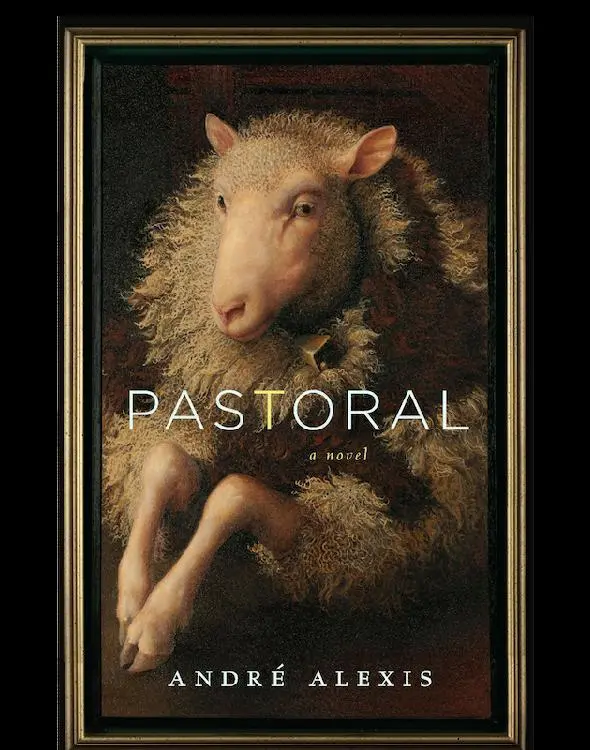
- Название:Pastoral
- Автор:
- Издательство:Coach House Books
- Жанр:
- Год:2014
- ISBN:нет данных
- Рейтинг книги:5 / 5. Голосов: 1
-
Избранное:Добавить в избранное
- Отзывы:
-
Ваша оценка:
Pastoral: краткое содержание, описание и аннотация
Предлагаем к чтению аннотацию, описание, краткое содержание или предисловие (зависит от того, что написал сам автор книги «Pastoral»). Если вы не нашли необходимую информацию о книге — напишите в комментариях, мы постараемся отыскать её.
"Astonishing. . an irresistible, one-of-a-kind work." — "Alexis [has an] astute understanding of the madly shimmering, beautifully weaving patterns created by what we have agreed to call memory." — There were plans for an official welcome. It was to take place the following Sunday. But those who came to the rectory on Father Pennant's second day were the ones who could not resist seeing him sooner. Here was the man to whom they would confess the darkest things. It was important to feel him out. Mrs Young, for instance, after she had seen him eat a piece of her macaroni pie, quietly asked what he thought of adultery. André Alexis brings a modern sensibility and a new liveliness to an age-old genre, the pastoral.
For his very first parish, Father Christopher Pennant is sent to the sleepy town of Barrow. With more sheep than people, it's very bucolic — too much Barrow Brew on Barrow Day is the rowdiest it gets. But things aren't so idyllic for Liz Denny, whose fiancé doesn't want to decide between Liz and his more worldly mistress Jane, and for Father Pennant himself, who greets some miracles of nature — mayors walking on water, talking sheep — with a profound crisis of faith.
André Alexis
Childhood
Asylum
Ingrid and the Wolf
Pastoral — читать онлайн бесплатно полную книгу (весь текст) целиком
Ниже представлен текст книги, разбитый по страницам. Система сохранения места последней прочитанной страницы, позволяет с удобством читать онлайн бесплатно книгу «Pastoral», без необходимости каждый раз заново искать на чём Вы остановились. Поставьте закладку, и сможете в любой момент перейти на страницу, на которой закончили чтение.
Интервал:
Закладка:
In the beginning, it was not easy to tell how best to study life. He read all he could about all manner of things and finally came away with the idea of submission, submission to the world. He resolved to be attentive to things others largely ignored. He studied mycology and entomology. He could walk in the woods and reliably identify which mushrooms were safe to eat. He could name endless species of beetles, flies, ants and spiders. He also knew his trees and birds well. After a while, birdsong became as coherent as the cries, voices, whispers and laughter one hears when humans congregate. For the sheer discipline of it, he taught himself to cook. And he resolved to master the cello when, one day, he heard a passionate woman playing a sonata by Debussy. By the time he met Father Pennant, he had been playing the cello two hours a day for twenty years.
None of his obligations — his time with the cello, his study of small things — was obsessively carried out. He listened and looked and, in the process, kept himself open to the world. His decision to work for Father Fowler was based on happenstance. He’d been walking around Barrow one afternoon when it began to rain. He had thought to take shelter in St. Mary’s church, but it was locked. Lowther had turned away when he noticed two white bowls on the church steps, the water in them clear, dimpled by rainfall. Water so clear it made him thirsty. Having paused to admire the white bowls, he was about to walk away when one of the doors opened and Father Fowler looked out.
— Come in, said the priest. You’ll catch your death out there. Would you mind picking the bowls up? I put out milk for the strays. Poor things.
Over the years, Lowther had got to know Father Fowler well and, as time passed, it seemed to him that Father Fowler was honourable. Having decided the priest was a good man, he was determined to have Father Fowler shepherd him through his — that is Lowther’s — death. So, when Father Fowler died before him, he was saddened to lose his friend as well as his guide.
But what did it matter who gave him extreme unction?
It mattered to Lowther the way correctly playing a piece by Bach or Debussy mattered. Not flawlessly in the sense of getting every note and notation right. That kind of flawless happened rarely, but its occurrence was trivial. In fact, when all the notes and tempi, trills and pizzicati were rightly hit, it usually meant he had been thinking about notes and tempi, trills and pizzicati, not about music. As he slowly discovered over years of listening and playing, music was an affair of spirit and moment. And that was it: he wished his final moments on earth to be musical, an offering from one world to the next. Death would come, no matter what, but he wished to accomplish it with spirit and grace. And these qualities, if they were to be had at all with a priest, called for the right priest, a man without pretension or falseness of spirit.
Father Fowler had been just the man. So, his death had been a setback. But then Father Pennant had come and, with Heath’s help, Lowther had tested him, had devised a ‘miracle’ to see how the man would react. As far as Lowther was concerned, Christopher Pennant was just the shepherd he wanted: modest, thoughtful, curious about the world and, much as Father Fowler had been, a lover of music and a man with a sensibility. With Father Pennant there, Lowther was convinced his death would be a proper duet.
With that settled, he had only his own soul to worry about. He would confess in order to clear his conscience, give away his possessions in order to unburden and prepare himself to face whatever pain there was to be on the day of his death.
So, two weeks before his sixty-third birthday, Lowther dealt with his possessions. He had been successful and thrifty, so there were hundreds of thousands of dollars to disperse. He had no immediate family. He had chosen not to pass on the Williams curse. He wrote a will, bequeathing all his money and his cello to Father Pennant. Lowther owned a house in Petrolia. He left it to the family who had been renting it for the past decade. He had a house in Sarnia. He left this to the mother of the child whose murder he had witnessed. Not because he felt the death had been his fault, but because he wished to do something for a woman whose suffering had influenced the change in his life.
At the end of July, over the space of three evenings, Lowther confessed his sins to Father Pennant. He painstakingly unveiled his life, thinking it crucial that Father Pennant should know him as he had actually been. Everything of which Lowther was ashamed or proud, his sins and good works, all the details of the man who was Lowther Williams, were laid before the priest who, by the end of the third evening, knew Lowther as well as Lowther knew himself. Only after that did Lowther ask for forgiveness.
Now there was only the preparedness for pain. But there was no pain. Not a hint of it. He felt as healthy two days before his sixty-third birthday (on July 31st) as he had ever felt. No, he felt healthier, more at ease than at any other time in his life. Perversely, this made him miserable. He wondered if God had broken His covenant with the Williamses.
Still, the absence of pain was no proof that death was absent. He had often heard of men and women at the peak of health dropping down dead, like puppets whose strings had been cut, all because their times had come. His time would come. He was sure of it. But his sixty-third birthday (August 2nd) came and went, and the worst of it was he did not feel anything but healthy. Seeking some dark diagnosis, he went to a doctor. But the man was entirely optimistic, congratulating him on the state of his health.
— You’ve got the body of a forty-year-old, the doctor said.
Despite himself, Lowther was offended. The last thing he wanted was the body of a forty-year-old, unless the forty-year-old in question was terminally ill.
He left the doctor’s office confused and momentarily rudderless.
The problem, surely, was one of miscalculation. His miscalculation. There were 365 days during which he would be sixty-three. God had plenty of time to take him. But Lowther had planned for a death on his birthday, a death such as his father had had. Every moment that succeeded his sixty-third birthday was like leftovers. He played the cello distractedly, waiting for a heart attack or stroke.
Whereas previously Lowther had had something to look forward to (his appointed death), now there was only the unsettling thought that death would not come when it was due. He needed faith — in God, in God’s inclination to kill him sooner rather than later. In fact, Father Pennant’s initial impression — that there was something not quite Christian about Lowther’s religion — was true. Lowther’s relationship to God had been personal and more than a little pagan. Now that he was forced to wonder if God would keep His end of the compact, Lowther’s feelings were hurt.
Heath and Father Pennant were the ones who bore the brunt of Lowther’s unhappiness.
Where, previously, Lowther had been unflappable and slightly mysterious, a good conversationalist with a wide range of knowledge and an expert’s eye for things in the natural world, he was now close-mouthed, manifestly disappointed and interested in one subject alone: the date of his death. For Heath, this was very strange indeed. He was filled with an almost distressing ambivalence. For his friend’s sake, he wished Lowther dead. For his own sake, he wished him long life. When Lowther was around, Heath was forced to pretend that a being he did not believe in (viz. ‘God’) was behaving childishly. And when Lowther was not with him, he genuinely did not know if he wanted his closest friend alive or not.
Father Pennant was not convinced that death could be as predictable as Lowther thought it, though he’d felt honoured that Lowther had chosen him for his confessor. Now, weeks later, Father Pennant was saddened that the man he admired and whose company he treasured was eclipsed by this neurotic sixty-three-year-old who insisted on accompanying him wherever he went: church, Wyoming, the fields around Barrow. Almost everywhere Father Pennant went, Lowther went with him in case there was need for sudden last rites.
Читать дальшеИнтервал:
Закладка:
Похожие книги на «Pastoral»
Представляем Вашему вниманию похожие книги на «Pastoral» списком для выбора. Мы отобрали схожую по названию и смыслу литературу в надежде предоставить читателям больше вариантов отыскать новые, интересные, ещё непрочитанные произведения.







Обсуждение, отзывы о книге «Pastoral» и просто собственные мнения читателей. Оставьте ваши комментарии, напишите, что Вы думаете о произведении, его смысле или главных героях. Укажите что конкретно понравилось, а что нет, и почему Вы так считаете.