Andre Alexis - Pastoral
Здесь есть возможность читать онлайн «Andre Alexis - Pastoral» весь текст электронной книги совершенно бесплатно (целиком полную версию без сокращений). В некоторых случаях можно слушать аудио, скачать через торрент в формате fb2 и присутствует краткое содержание. Год выпуска: 2014, Издательство: Coach House Books, Жанр: Современная проза, на английском языке. Описание произведения, (предисловие) а так же отзывы посетителей доступны на портале библиотеки ЛибКат.
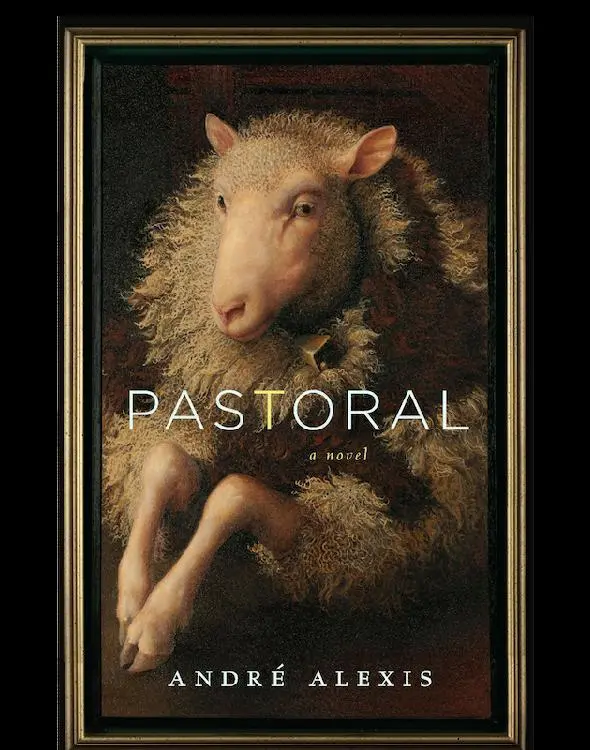
- Название:Pastoral
- Автор:
- Издательство:Coach House Books
- Жанр:
- Год:2014
- ISBN:нет данных
- Рейтинг книги:5 / 5. Голосов: 1
-
Избранное:Добавить в избранное
- Отзывы:
-
Ваша оценка:
Pastoral: краткое содержание, описание и аннотация
Предлагаем к чтению аннотацию, описание, краткое содержание или предисловие (зависит от того, что написал сам автор книги «Pastoral»). Если вы не нашли необходимую информацию о книге — напишите в комментариях, мы постараемся отыскать её.
"Astonishing. . an irresistible, one-of-a-kind work." — "Alexis [has an] astute understanding of the madly shimmering, beautifully weaving patterns created by what we have agreed to call memory." — There were plans for an official welcome. It was to take place the following Sunday. But those who came to the rectory on Father Pennant's second day were the ones who could not resist seeing him sooner. Here was the man to whom they would confess the darkest things. It was important to feel him out. Mrs Young, for instance, after she had seen him eat a piece of her macaroni pie, quietly asked what he thought of adultery. André Alexis brings a modern sensibility and a new liveliness to an age-old genre, the pastoral.
For his very first parish, Father Christopher Pennant is sent to the sleepy town of Barrow. With more sheep than people, it's very bucolic — too much Barrow Brew on Barrow Day is the rowdiest it gets. But things aren't so idyllic for Liz Denny, whose fiancé doesn't want to decide between Liz and his more worldly mistress Jane, and for Father Pennant himself, who greets some miracles of nature — mayors walking on water, talking sheep — with a profound crisis of faith.
André Alexis
Childhood
Asylum
Ingrid and the Wolf
Pastoral — читать онлайн бесплатно полную книгу (весь текст) целиком
Ниже представлен текст книги, разбитый по страницам. Система сохранения места последней прочитанной страницы, позволяет с удобством читать онлайн бесплатно книгу «Pastoral», без необходимости каждый раз заново искать на чём Вы остановились. Поставьте закладку, и сможете в любой момент перейти на страницу, на которой закончили чтение.
Интервал:
Закладка:
— Why don’t we read something together?
— You know I don’t read much, he answered.
— I’ll read. You listen. It’s something we should be doing together if we love each other.
There was nothing you could say to that — her very tone was a warning — so Robbie lay in bed and tried to pay attention. By chance Jane had picked up Breakfast at Tiffany’s . She showed Robbie the cover.
— Truman Kaput? he asked.
— Ka- po -tee, she answered. Haven’t you heard of him?
No, of course he hadn’t. Worse, she didn’t even get to the end of the first section before he fell asleep. The first section? He was snoring by the time she read the words You heard from Holly? which were on the second page! Robbie was tired after a day’s work, no doubt, but that made no difference to her feelings. She almost cried in frustration.
— Robbie!
— What? What is it?
— You fell asleep before I got to page three!
— I’m sorry. You can start again. I remember something about … Holly?
Jane began again: I took a taxi in a downpour of October rain …
This time he was asleep by the end of the next paragraph. She threw the book at his head, waking him.
— It’s good! he cried out. It’s good! I’m liking it!
It was not long after this that their relationship ended.
(On seeing how important Breakfast at Tiffany’s was for Jane, Robbie did his best to read the novel, letting her know that he really did like it, really. He did not mention that he never got further than the first section, never further than It was one of these mailboxes that had first made me aware of Holly Golightly , though he went at the book more than once, starting over each time. Never had he read anything so unmemorable. Here was the best example of what made fiction useless. Who was this ‘I’ that was talking at him and why should he care what ‘I’ was saying? It was asking a man a lot, asking him to stick around while someone who had nothing to say said it in the fanciest way possible. He supposed that women liked this sort of thing because they were used to talking. That was the main problem with women, as far as he was concerned. They never could keep quiet. They talked all the time and their intentions were mysterious. Not mysterious in a good way either, like when Phil Bigland had once mentioned ‘the infinite’ [ a black moth in a black room on a starless, moonless night , he’d called it] and they had all been quiet out of respect for something deep. No, sir. Womanish mystery was the kind that filled you with dread, not reverence.)
In a roundabout way, Elizabeth was responsible for their breakup. Jane had been trying to instill ‘culture’ in Robbie, which was like trying to get ten pounds of rice into a two-pound bag. Then, one afternoon, she happened to be passing Harrington’s — on the opposite side of the street, of course — and saw Elizabeth Denny shaking crumbs onto the street for the birds. Had Elizabeth seen her? Jane did not know, but she would have sworn there was an ironic look on the woman’s face, a look that said
— You only think you won. I’m the one who gets to do what she wants. I’m free. You’re tied to that good-for-nothing dairy farmer who wouldn’t know his ass from his elbow. How stupid do you have to be not to see that this is what I wanted all along?
Jane was incensed at the unfairness of it. She’d been duped. She was sure of it. Duped into abandoning her dreams and aspirations. The humiliation was hard to take. As she watched Elizabeth Denny blithely turn her back and enter the bakery, Jane’s futile efforts to change Robbie seemed to her — to Jane, that is — derisory and worthy of the kind of mockery the Denny bitch was obviously purveying.
— That’s it, she thought. I’m finished with this place.
The following evening, she was to go to Sarnia with Robbie. They had planned to see a production of Oklahoma! , the first play Robbie would see since a class trip to Stratford in Grade 12. Robbie was not keen, but she was looking forward to it and it suddenly occurred to her that she wanted to see the play with someone who could appreciate it. So, she went with William Marshall instead. William, who was not interested in women the way ‘normal’ men are interested in women, was the man you went out with when you couldn’t stand the company of men. This worked well for everyone. For the women, it was wonderful to be out with a man who had good taste. For the men, it was sheer relief to know there was at least one man in town (the sacrificial lamb) who would go to the theatre or the ballet or the opera with their wives or girlfriends but who was no threat to womankind.
(How William himself felt about this, no one had the least interest. It was understood that Marshall was a man who loved men, but life was too short to think about such things unless you absolutely had to.)
Robbie was annoyed. That is, he was relieved to have escaped the theatre, but Jane had not told him what she was up to. He’d called at her parents’ house at the appointed hour and had been told Jane had already left. That was it. He knew he had to be careful about what he said to her, but there had to be, if not respect between them, then at least consideration. He could, he thought, have been forgiven for wondering if she truly loved him.
Two days later, while they were at Jane’s watching television, Robbie ventured a cautious
— I think you should have told me you were going to the play with Marshall.
Just the opening she had hoped for.
— It was none of your business.
— How was it none of my business when we were supposed to be going together and you didn’t tell me?
— I don’t have to tell you everything I do.
— Well, I can see you don’t want to talk about this.
— You don’t know what I want to talk about, you stupid hick.
— Why am I stupid?
Thus ended the polite part of the conversation. From here, things turned feral. Anything Jane could use against him, she used against him: his lack of culture, his insensitivity to her needs, the clumsy way he touched her, the way he took her for granted. Worst of all, she dug into him for the way he had treated Elizabeth Denny. He had betrayed Elizabeth, she said. He was a conniving son of a bitch who didn’t care for anyone but himself. In fact, given the way he’d treated his fiancée, he was bound to betray her too, because he was selfish, stupid, mean, rotten, a prick and — for good measure — a jerk.
Some of what she accused him of being was, to some extent, true. He had been selfish, mean and stupid lately. But at least at the beginning of her attack, Jane did not really believe Robbie was as bad as all that. Her words were said as if with a crooked smile. As the catalogue of his sins grew, however, so did her conviction that he was despicable. (For one thing, it was impressive how many insults did apply to him. It felt as if she could have called him anything short of murderer and meant it.) In the space of half an hour, she had worked herself into a real hatred for Robbie, which became entangled in her hatred for Barrow.
However, Jane’s attack was so unexpected and brutal it overshot its mark. Robbie was not put off or offended. He imagined it was her ‘time of the month’ and, as usual, he didn’t know how to react. Should he laugh, show affection, comfort her, speak French? He opted to speak French and try to comfort her. This was the worst choice possible, in part because Jane was in no mood to be comforted, in even larger part because the only French he knew was ‘Voulez-vous coucher avec moi?’ a phrase he inevitably mangled.
During a break in what was becoming Jane’s screed, a break she took for breath and to think up some more effective line of attack, Robbie smiled timidly and said
Читать дальшеИнтервал:
Закладка:
Похожие книги на «Pastoral»
Представляем Вашему вниманию похожие книги на «Pastoral» списком для выбора. Мы отобрали схожую по названию и смыслу литературу в надежде предоставить читателям больше вариантов отыскать новые, интересные, ещё непрочитанные произведения.










Обсуждение, отзывы о книге «Pastoral» и просто собственные мнения читателей. Оставьте ваши комментарии, напишите, что Вы думаете о произведении, его смысле или главных героях. Укажите что конкретно понравилось, а что нет, и почему Вы так считаете.