Andre Alexis - Pastoral
Здесь есть возможность читать онлайн «Andre Alexis - Pastoral» весь текст электронной книги совершенно бесплатно (целиком полную версию без сокращений). В некоторых случаях можно слушать аудио, скачать через торрент в формате fb2 и присутствует краткое содержание. Год выпуска: 2014, Издательство: Coach House Books, Жанр: Современная проза, на английском языке. Описание произведения, (предисловие) а так же отзывы посетителей доступны на портале библиотеки ЛибКат.
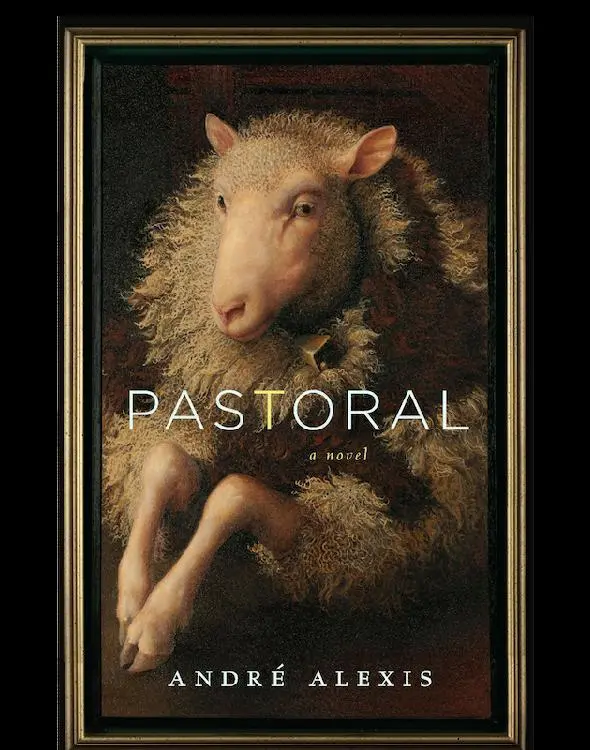
- Название:Pastoral
- Автор:
- Издательство:Coach House Books
- Жанр:
- Год:2014
- ISBN:нет данных
- Рейтинг книги:5 / 5. Голосов: 1
-
Избранное:Добавить в избранное
- Отзывы:
-
Ваша оценка:
Pastoral: краткое содержание, описание и аннотация
Предлагаем к чтению аннотацию, описание, краткое содержание или предисловие (зависит от того, что написал сам автор книги «Pastoral»). Если вы не нашли необходимую информацию о книге — напишите в комментариях, мы постараемся отыскать её.
"Astonishing. . an irresistible, one-of-a-kind work." — "Alexis [has an] astute understanding of the madly shimmering, beautifully weaving patterns created by what we have agreed to call memory." — There were plans for an official welcome. It was to take place the following Sunday. But those who came to the rectory on Father Pennant's second day were the ones who could not resist seeing him sooner. Here was the man to whom they would confess the darkest things. It was important to feel him out. Mrs Young, for instance, after she had seen him eat a piece of her macaroni pie, quietly asked what he thought of adultery. André Alexis brings a modern sensibility and a new liveliness to an age-old genre, the pastoral.
For his very first parish, Father Christopher Pennant is sent to the sleepy town of Barrow. With more sheep than people, it's very bucolic — too much Barrow Brew on Barrow Day is the rowdiest it gets. But things aren't so idyllic for Liz Denny, whose fiancé doesn't want to decide between Liz and his more worldly mistress Jane, and for Father Pennant himself, who greets some miracles of nature — mayors walking on water, talking sheep — with a profound crisis of faith.
André Alexis
Childhood
Asylum
Ingrid and the Wolf
Pastoral — читать онлайн бесплатно полную книгу (весь текст) целиком
Ниже представлен текст книги, разбитый по страницам. Система сохранения места последней прочитанной страницы, позволяет с удобством читать онлайн бесплатно книгу «Pastoral», без необходимости каждый раз заново искать на чём Вы остановились. Поставьте закладку, и сможете в любой момент перейти на страницу, на которой закончили чтение.
Интервал:
Закладка:
— Whether you’re sleeping with him or he’s sleeping with you, it’s the same thing, said Elizabeth. You knew we were engaged.
— I thought you were engaged, but engaged men don’t usually sleep with anyone except their fiancées, do they? So how was I to know what was going on between you two?
The sound of Jane’s voice made her so upset, Elizabeth stopped walking. To cover her emotion, she asked for a cigarette, though she did not smoke, and she was further annoyed when Jane gave her one and then put a hand on hers — to keep it from shaking — as she lit it. Elizabeth drew in the smoke without inhaling. As for Jane: this was now an interesting game, sophisticated even. Here she was talking calmly to Robbie’s fiancée. She allowed herself to wonder what Robbie saw in Elizabeth and then wondered, fleetingly, what it would be like to sleep with Elizabeth, what it would be like for her to sleep with Elizabeth.
— I don’t want to keep walking away from work, said Jane. If you have something to say to me, say it now.
— You know what I want. I want you to leave Robbie alone.
— Why? Why should I stop seeing him? He loves me as much as he loves you.
— No, said Elizabeth, he doesn’t.
— It’s no use arguing. He would’ve left me if he didn’t.
After considering this, Elizabeth said
— Fine. Then you should help me make him choose.
— What, choose me or you? I don’t see why. I don’t mind if he marries you. I think things are going well the way they are. What’s the problem, except everybody in this stupid town expects it to be one man, one woman?
— I don’t want it to go on like this, said Elizabeth. I want my husband to be with me, not some woman he’s addicted to. I’d leave him but I don’t believe he loves you as much as he loves me. You’re just a phase. But he should make a choice now. That’s why I’m talking to you at all. I think if you can get Robbie to do something he wouldn’t do for me, it’ll prove he loves you more. And that’ll be enough for me.
How interesting, thought Jane. Their conversation had gone from something unpleasant and vaguely threatening to something that intrigued her: a wager of some sort. Whatever she felt for Robbie, she was certain of his loyalty and she was even more certain she could convince him to do anything short of poisoning his father’s cows. Of course, the prize, if you could call a man a prize, was Robbie, and she was not certain she wanted Robbie for herself. Perhaps, and the thought crossed her mind as she looked at Elizabeth, she would not find Robbie attractive without Elizabeth there to be his wife. Really, what was there in him, when you thought about all this objectively? What was there that one would want to have exclusively? And yet, the proposition was appealing. Jane said
— And I get to choose what to make him do?
— No, answered Elizabeth. I get to choose the thing. It wouldn’t be fair otherwise.
— All right. Have you decided what it is?
— Yes. I want him to walk naked into Atkinson’s Beauty Parlour and ask Agnes for a haircut.
Elizabeth had thought this through. She knew how shy Robbie was, how much he disliked people seeing his feet, which, she had to admit, were not his best feature. Also, he had a red birthmark beneath his left nipple, like a paint-wet hand had slapped him, then dragged itself around to his back. He did not even like her to touch it. So, it was difficult to believe anyone could get him to walk about naked. On the other hand, if Jane did convince him to go into Atkinson’s without his clothes, the moment would be a lasting humiliation for Robbie, a humiliation very like the humiliation he had put her through. So, either way, she could not really lose.
— Is that all? asked Jane. I wonder if you know Robbie as well as you think you do. I feel like this is too easy. Is there something really difficult you’d like me to get him to do?
Jane Richardson’s confidence — or was it insolence? — was unexpected. If she knew Robbie as deeply as she claimed, she should have understood how difficult it was going to be to convince Robbie to go around naked. Elizabeth could not begin to imagine Robbie unclothed in Atkinson’s.
— I don’t have anything else in mind, she said.
But then, slightly unnerved, she added
— He can’t do Atkinson’s on Barrow Day, you know. That wouldn’t be fair.
— No, getting him to go naked on Barrow Day wouldn’t be hard. But, anyway, Atkinson’s is closed on Barrow Day. So …
Jane looked at her watch.
— I’ve got to go, she said. But it’s a deal.
They had got as far as St. Mary’s church. The afternoon sunlight touched the windows devoted to Zenobius and Zeno. Jane turned away and walked off. Elizabeth stood by herself awhile, looking up at the illuminated blue lake beside which St. Zeno stood. She reminded herself that she had thought things through. She did know Robbie, knew him better than Jane did. (She wondered if Robbie and Jane did the same things she did with Robbie or was Jane ‘better at it’ than she was? The picture of Jane and Robbie in bed together — an image she could not ward off — almost made her sick, it was so upsetting.) Yes, anyone betting on who should know Robbie best would, almost certainly, put their money on her, on Elizabeth. And yet, Jane’s confidence was disconcerting. So much so that Elizabeth began to regret what she’d set in motion.
As she returned to the bakery, Elizabeth considered how far from herself she had been dragged. Though she’d always been thoughtful, she had never been manipulative or underhanded. Jane Richardson had called manipulation and connivance out of her. In fact, Jane, a different kind of woman, was perhaps more gifted at deceiving, more used to deception. In which case, Jane could get Robbie to do whatever she wanted him to do. But then again, no, she had thought things through. Even if it were possible to convince Robbie to expose himself to the women in Atkinson’s, the exposure would humiliate him and, humiliated, he would hold the incident against Jane. All of this seemed to her to be true and irrefutable. Life was unpredictable, yes, but Robbie was not, and she knew him well. She would not have agreed to marry him otherwise, would she?
The afternoon was bright. She heard birdsong. The town of Barrow, which she knew as well as she knew her lover’s body, was vivid in the sunlight, like a bauble of itself.
Though they had arranged to see Petersen’s gravel pit together, somewhere near the last minute Lowther apologized for having forgotten a prior engagement — that is, a lunch with Heath he’d neglected to write in his calendar. He’d left Father Pennant to explore Petersen’s on his own, dropping him off some way from the pit so he could enjoy the afternoon sunlight. That is why, at around the time Barrow was vivid for Elizabeth Denny, Lowther and Heath were at Heath’s kitchen table talking about the distant past. In particular, they were talking of Lowther’s father, a man who’d left his son little save fleeting memories and a defaced book of prayers.
The prayer book was leather-bound. Its endpapers were red and marbled. But the most obvious feature of the book, now, was that all of its two hundred prayers had been blacked out, save one. Old Mr. Williams — that is, Lowther’s father — had been eccentric, and the prayer book, which Heath held in his hand, reminded Heath of the old man himself. Though fervently religious, Mr. Williams had reduced the majority of the prayer book’s pages to black lines, beneath which one could still read the occasional ‘Amen’ or ‘Lord.’ The only prayer left untouched was the final one, a prayer to be said by those whose suffering was unendurable:
Читать дальшеИнтервал:
Закладка:
Похожие книги на «Pastoral»
Представляем Вашему вниманию похожие книги на «Pastoral» списком для выбора. Мы отобрали схожую по названию и смыслу литературу в надежде предоставить читателям больше вариантов отыскать новые, интересные, ещё непрочитанные произведения.








Обсуждение, отзывы о книге «Pastoral» и просто собственные мнения читателей. Оставьте ваши комментарии, напишите, что Вы думаете о произведении, его смысле или главных героях. Укажите что конкретно понравилось, а что нет, и почему Вы так считаете.