Andre Alexis - Pastoral
Здесь есть возможность читать онлайн «Andre Alexis - Pastoral» весь текст электронной книги совершенно бесплатно (целиком полную версию без сокращений). В некоторых случаях можно слушать аудио, скачать через торрент в формате fb2 и присутствует краткое содержание. Год выпуска: 2014, Издательство: Coach House Books, Жанр: Современная проза, на английском языке. Описание произведения, (предисловие) а так же отзывы посетителей доступны на портале библиотеки ЛибКат.
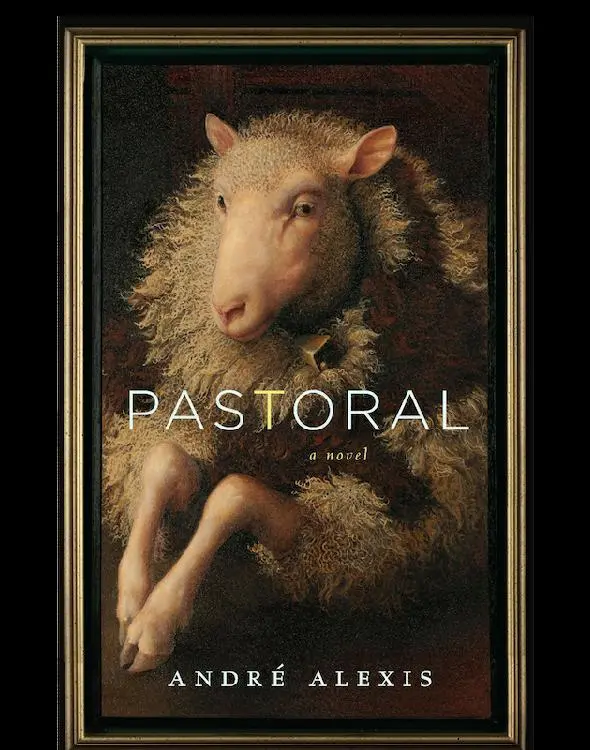
- Название:Pastoral
- Автор:
- Издательство:Coach House Books
- Жанр:
- Год:2014
- ISBN:нет данных
- Рейтинг книги:5 / 5. Голосов: 1
-
Избранное:Добавить в избранное
- Отзывы:
-
Ваша оценка:
Pastoral: краткое содержание, описание и аннотация
Предлагаем к чтению аннотацию, описание, краткое содержание или предисловие (зависит от того, что написал сам автор книги «Pastoral»). Если вы не нашли необходимую информацию о книге — напишите в комментариях, мы постараемся отыскать её.
"Astonishing. . an irresistible, one-of-a-kind work." — "Alexis [has an] astute understanding of the madly shimmering, beautifully weaving patterns created by what we have agreed to call memory." — There were plans for an official welcome. It was to take place the following Sunday. But those who came to the rectory on Father Pennant's second day were the ones who could not resist seeing him sooner. Here was the man to whom they would confess the darkest things. It was important to feel him out. Mrs Young, for instance, after she had seen him eat a piece of her macaroni pie, quietly asked what he thought of adultery. André Alexis brings a modern sensibility and a new liveliness to an age-old genre, the pastoral.
For his very first parish, Father Christopher Pennant is sent to the sleepy town of Barrow. With more sheep than people, it's very bucolic — too much Barrow Brew on Barrow Day is the rowdiest it gets. But things aren't so idyllic for Liz Denny, whose fiancé doesn't want to decide between Liz and his more worldly mistress Jane, and for Father Pennant himself, who greets some miracles of nature — mayors walking on water, talking sheep — with a profound crisis of faith.
André Alexis
Childhood
Asylum
Ingrid and the Wolf
Pastoral — читать онлайн бесплатно полную книгу (весь текст) целиком
Ниже представлен текст книги, разбитый по страницам. Система сохранения места последней прочитанной страницы, позволяет с удобством читать онлайн бесплатно книгу «Pastoral», без необходимости каждый раз заново искать на чём Вы остановились. Поставьте закладку, и сможете в любой момент перейти на страницу, на которой закончили чтение.
Интервал:
Закладка:
Now that she was almost twenty-one, she had to leave. Otherwise she would be, like her sisters and her sisters’ friends, married and stuck with two or three children by the time she was twenty-five. That thought, the thought of herself lumbered with children and trapped in Barrow, made her life almost unbearable.
To state an obvious point that was not obvious to Robbie: Jane Richardson did not love him the way he loved her. She was relieved that, if things went to plan, Robbie would marry another woman. Though it was conceivable Robbie might consider leaving Barrow, Jane believed he was too much of the place. To her, it seemed he belonged to the town she wanted to leave. As far as Jane was concerned, Elizabeth Denny belonged to Barrow as well. Practically speaking, therefore, Robbie belonged to Elizabeth already, and that suited Jane fine.
Now, at about the moment Robbie was speaking to Anne Bigland and playing shepherd, Jane was in Atkinson’s Beauty Parlour getting her hair done. It wasn’t something she did often, preferring to stay away from the older women who were Agnes Atkinson’s clients. But then, every three months or so, while reading Vogue or New York magazine, Jane would see a hairstyle she found irresistible. Old Mrs. Atkinson could not always reproduce them exactly, but she always tried and, more, always came fairly close, however odd the style might be. The two of them, the hairdresser in her sixties and the restless young woman, would go carefully over the picture (or pictures taken from different angles, if they were lucky), discussing how best to recreate such-and-such an effect, what to do at the back when there was no picture of the back of the model’s head and so on. Then Agnes Atkinson would do her best to copy the style in question.
On this day, the hairstyle Jane found in the pages of Vogue was one that made it look as if the model had just stepped out of bed: au naturel , as if a hairdresser hadn’t touched her.
— What will they think of next? said Mrs. Atkinson.
But it gave her pleasure to do this thing that no one but Jane Richardson would ask her to do. ‘Can you do my hair so it looks like you haven’t done it?’: this idea was, for Agnes Atkinson, very close to a metaphysical proposition. It was right up there with the tree falling in the forest and making — or not making — a sound.
Agnes had washed and shampooed Jane’s hair, and she was about to cut it when Elizabeth Denny came into the salon. All talk stopped. The only sound was the sound of the hair dryers. And, of course, no one knew quite where to look. There were seven women in the salon when Elizabeth entered. Three stared at Elizabeth, then turned to Jane. Three looked at Jane, watching for a reaction, and one woman stared at Elizabeth, shocked that she had committed such an obvious faux pas. After a while, all seven looked elsewhere. Those who had been staring at Jane stared at Elizabeth and vice versa, while the three who had been looking from one to the other carried on looking this way and that.
Without looking at Jane, who was (warily) looking at her, Elizabeth sat in a chair by the door. She picked up a magazine that lay on the low table: Maclean’s , a pointless rag that she associated with doctors’ offices and outhouses near Goderich. Without looking up at the others, Elizabeth turned to the back of the magazine, staring at an article by some frothy blowhard before reading the account of a film about vampires and the review of a novel about a dying child.
The tension that had come at Elizabeth’s entrance went (somewhat) underground, lightly torched by the meaningless words that sprang up, like small fires, to distract from this confrontation between a woman and the woman who — everyone knew — was sleeping with her fiancé.
— Are you staying in town for Barrow Day?
— What weather we’re having. My back garden’s so dry I have to water it three times a day or it’ll likely blow away.
— You know, I never have liked boughten salads.
After a while, when it appeared Elizabeth was not looking for trouble, talk turned to more ‘serious’ things, though everyone kept an eye on the young women. Until finally, upset by Elizabeth’s presence, Jane Richardson said
— Liz, are you here to talk to me?
— Not while you’re getting your hair done, said Elizabeth.
— I don’t have much time afterwards.
— I don’t have much to say.
Elizabeth returned to the book review. Jane, unable to move her head freely as Mrs. Atkinson cut her hair, stared at the mirror facing her, wondering if she’d made a mistake with the style she’d chosen. Was it too odd? But then, whenever she had her hair cut, she inevitably had doubts. Once the scissors got going, she would feel an almost irresistible urge to get up from the chair. On this day, however, Liz Denny distracted her somewhat from her doubts.
The other women in the salon were now more alert than ever. Elizabeth had said ‘I don’t have much to say.’ What could that mean? Would she demand Jane leave her fiancé alone? And what if Jane said no? Would things turn, God forbid, physical? These questions, which would be voiced when the young women had gone, were not simple prurience or love of gossip. Most of the women in the salon knew Jane and Elizabeth. A few had known them since they were little girls, so it was strange to see them like this, rivals for a young man they had also known for years. Others, if they did not know them quite so well, knew their relatives or their teachers or their friends. For all intents and purposes, the women in the salon were related to both girls, if not by blood then by whatever the bond is that a place forges among people.
Most of them were on Elizabeth’s side. The one who’d been wronged would have had their sympathy anyway. But Jane, with her American hairstyles, was the kind of person who would do better in some big city, while Elizabeth was one of them. In the struggle between the two women, a communal drama was being played out. It wasn’t like a sporting event or a boxing match; it was a test of right and wrong, of morality. For all save Mrs. Atkinson — who favoured Jane — a ‘victory’ for Jane would represent a terrible wrong. It would deepen their (somewhat hidden) mistrust of Jane’s ‘Sarnia ways’ and turn them even more squarely against her.
In some ways, the best outcome would have been a real set-to, a shouting match such as the one there’d been between Rose Cornwell and Nelly Carr when Nelly, the ‘older woman,’ had seduced Rose’s son: a legendary confrontation that everyone still talked about, though it had taken place ten years previously and Nelly, poor woman, had since died of leukemia. It was good to have these things out in the open, good to argue about right and wrong every so often, but it looked as if Elizabeth and Jane were not going to make their dispute public. Jane sat still as her hair was cut, then she sat beneath the pink beehive that was Mrs. Atkinson’s best dryer. Elizabeth waited patiently. Then, as Jane paid and thanked Mrs. Atkinson, Elizabeth rose, said goodbye to everyone and waited for Jane outside the salon.
When both women had gone, someone said
— Finally! Nice to get rid of the smell of home wrecker.
— Don’t you say anything bad about Jane, said Mrs. Atkinson. I’ve known that girl since she was a baby. Never hurt a fly.
Elizabeth and Jane walked for a block or so, awkward in each other’s presence, before Elizabeth said
— It’s no use being subtle about all this. We both know what’s going on. I want to know why you’re sleeping with my fiancé.
— I’m not sleeping with your fiancé. He’s sleeping with me.
They passed Barrow Park. The statue of Richmond Barrow was pointing to the sky: a light, washed-out blue, the clouds elongated wisps, the wind a persistent breeze that brought a whiff of gasoline, of freshly cut grass and of the dirt that lightly flayed the streets and buildings. Though waves of hatred hit her, Elizabeth kept her temper. Jane lit a cigarette.
Читать дальшеИнтервал:
Закладка:
Похожие книги на «Pastoral»
Представляем Вашему вниманию похожие книги на «Pastoral» списком для выбора. Мы отобрали схожую по названию и смыслу литературу в надежде предоставить читателям больше вариантов отыскать новые, интересные, ещё непрочитанные произведения.








Обсуждение, отзывы о книге «Pastoral» и просто собственные мнения читателей. Оставьте ваши комментарии, напишите, что Вы думаете о произведении, его смысле или главных героях. Укажите что конкретно понравилось, а что нет, и почему Вы так считаете.