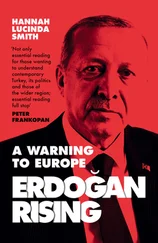
Hannah Smith - Erdogan Rising
Здесь есть возможность читать онлайн «Hannah Smith - Erdogan Rising» — ознакомительный отрывок электронной книги совершенно бесплатно, а после прочтения отрывка купить полную версию. В некоторых случаях можно слушать аудио, скачать через торрент в формате fb2 и присутствует краткое содержание. Жанр: unrecognised, на английском языке. Описание произведения, (предисловие) а так же отзывы посетителей доступны на портале библиотеки ЛибКат.
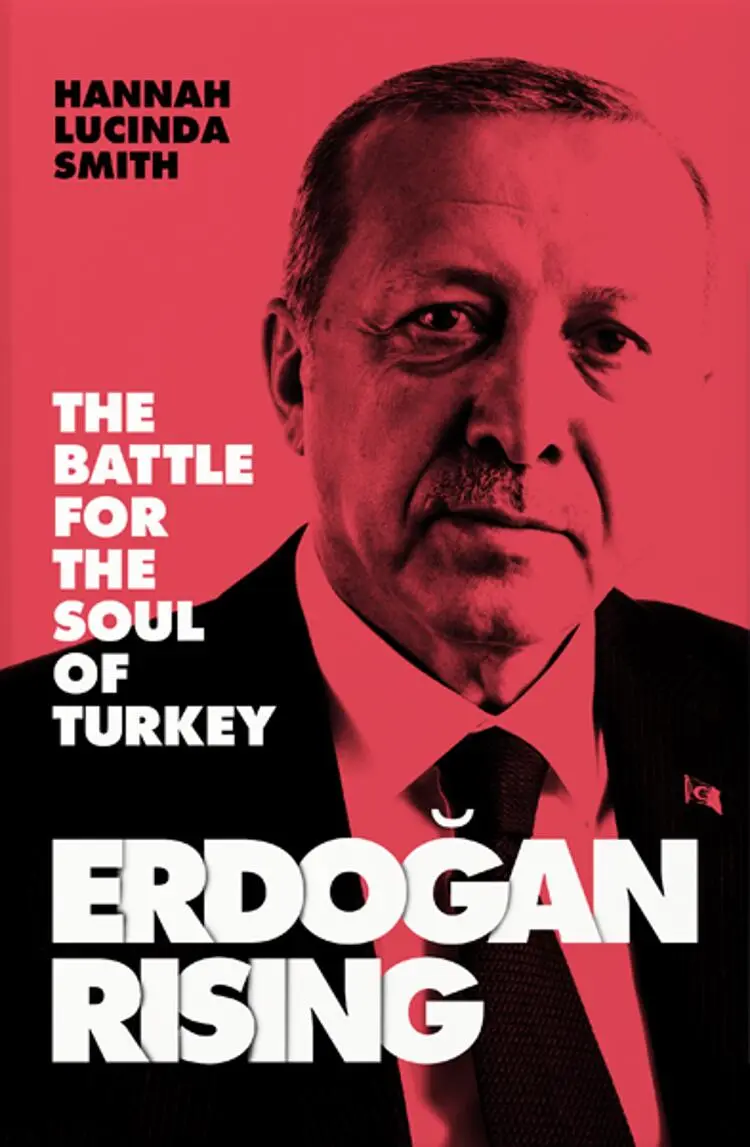
- Название:Erdogan Rising
- Автор:
- Жанр:
- Год:неизвестен
- ISBN:нет данных
- Рейтинг книги:4 / 5. Голосов: 1
-
Избранное:Добавить в избранное
- Отзывы:
-
Ваша оценка:
Erdogan Rising: краткое содержание, описание и аннотация
Предлагаем к чтению аннотацию, описание, краткое содержание или предисловие (зависит от того, что написал сам автор книги «Erdogan Rising»). Если вы не нашли необходимую информацию о книге — напишите в комментариях, мы постараемся отыскать её.
Erdogan Rising — читать онлайн ознакомительный отрывок
Ниже представлен текст книги, разбитый по страницам. Система сохранения места последней прочитанной страницы, позволяет с удобством читать онлайн бесплатно книгу «Erdogan Rising», без необходимости каждый раз заново искать на чём Вы остановились. Поставьте закладку, и сможете в любой момент перейти на страницу, на которой закончили чтение.
Интервал:
Закладка:
Slowly, other Turkish businessmen caught on to the potential and by the time the AKP took power in 2002 there were five halal hotels in Turkey. By 2014 the sector had mushroomed to 152 halal resorts, spas and boutique hotels across the country, including a halal ski resort and a cruise ship. Part of that growth can be explained by the overall rise in wealth in Turkey over the same period, which lifted the poorest – and generally most pious – section of the society from a subsistence-level existence to a level affording them disposable income. The average annual income in Turkey in 1998, two years after the Caprice opened, was $8,567 and the average rent costs in the gecekondu – literally, ‘built in the night’ – districts ate up half of a family’s income. By 2014 the average wage was $19,610 and rent or mortgage repayments now only took up a quarter of their pay. A new middle class has risen, buoyed by a growing class of businessmen from the conservative cities of central Anatolia. And they want in on all the things the elites have been enjoying for decades.
There is also the Erdoğan factor.
‘There is more Islamic political influence now,’ says Seçgin. ‘Muslim people are standing up and saying: “Hang on, I also work hard, I have more money, I want to take part in all these great things that everyone else is doing, the upper ten to fifteen per cent of the society.” The industry was starting to develop before Erdoğan, and until recently there hadn’t been a single policy by the tourism ministry in support of this industry. Nothing. So, you might argue that without Erdoğan the industry would probably have developed anyway. But my fear is that for political and ideological reasons, some people in Turkey may have tried to prevent this sector from thriving. By Erdoğan and the AK Party being in power, their passiveness, they have helped the industry to thrive. They didn’t support us at all, but they also didn’t do anything to prevent or hinder us. And that’s already a good thing, because under different governments, I can imagine some would have tried to stop this industry from going further.’
The Turkish Standards Institute started providing halal hotel certification in June 2014. Until then Turkey had lagged behind in the sector compared to other Islamic countries such as Malaysia and the United Arab Emirates; even the UK’s tourism board, Visit Britain, held halal tourism conferences before Turkey. But without much official help, the sector has taken root and flowered amid the fleshpots of the Aegean and Mediterranean coastlines. Some of the halal resorts are spanking new and purpose-built. Others are older hotels that were once stuffed with hard-drinking Russians and Europeans but which have now been converted – stripped of their bars, fitted with prayer rooms, their swimming pools and beaches divided into men’s and women’s sections.
As the halal tourism market evolved, so too did the business plan of its original entrepreneur, Jet Fadıl Akgündüz. As more mass-market resorts opened, he upgraded the Caprice to a five-star luxury resort and changed the ‘Hotel’ in its name to ‘Palace’.
‘Thank you, Caprice Palace, for providing so much for the ladies!’ gushes the dubbed star of the hotel’s tacky and stilted promotion video, as an unseen male narrator guides her through the seemingly endless facilities. ‘My god! What beauty is this? What spaciousness? What tranquillity? Caprice Palace … I wouldn’t have believed that a palace like this existed in the world!’
Akgündüz was also working on other projects: a second Caprice in Istanbul, a residential complex in Ankara, a football club packed with celebrity players and a plan to manufacture Turkey’s first indigenous cars in the impoverished eastern province of Siirt, his birthplace. None of them came to fruition, and scores of investors were left empty-handed and furious. Akgündüz fled the country in 1998 to avoid criminal charges, but only four years later, after the 2002 elections (in which the AKP took power for the first time), he returned to Turkey after standing for and winning a seat in Siirt as an independent candidate. His political career was short-lived; the high election council immediately cancelled his parliamentary membership, meaning that he was also stripped of the immunity from prosecution that he had briefly enjoyed as an elected deputy. He was sent to the Istanbul courthouse and then to the prison in his private limousine with the number plate 34 JET 25.
A year later Akgündüz was freed, and spent the next decade skipping town before serving another jail term and then hatching another plan. In 2014 he announced that he had bought an island in the Maldives, which he would turn into ‘an island for the Muslims’. He began to dress in robes and turban in the style of an Ottoman dignitary, and claimed to be investing $170 million in his new project. Some of Turkey’s most prominent pious Muslims gave it their backing by issuing a fatwa (an Islamic legal decree) stating that such a project was permissible in the eyes of Allah. When investors in this latest scheme discovered that it was a swindle, too, one of the preachers who had given it his stamp of approval was confronted by a journalist. ‘I didn’t say buy a place. I just said it’s permissible under the fatwa ,’ he insisted. ‘If you didn’t listen and did a stupid thing, so did I. I lost my apartments, too.’
In 2015 a court order was issued for the original Caprice to be confiscated in order to help pay the compensation claims levied against Akgündüz’s still-unfinished Istanbul project. The local police raided the Caprice Palace Didim and began loading the furniture, minibar fridges and computers onto trucks in front of 600 startled guests. At the last minute the hotel’s lawyers managed to cut a deal, and the fittings were returned – but three months later Akgündüz was arrested on embezzlement charges. He served sixteen months, and then immediately began talking about his next project.
‘The east will come to life, Turkey will be developed!’ he proclaimed to journalists waiting at the prison gate on the day of his release in March 2017.
The Gülenists
Akgündüz remains a free man – for now. The original owner of the similarly high-end halal Angels Resort in Marmaris, Turkish businessman and newspaper owner Akın İpek, has not been so lucky.
İpek shot into the stratosphere of the Turkish business elite during the first decade of the millennium – the early AKP era. It was a time when certain connections promised considerable bounty, both political and economic. İpek, like many others, was an open supporter of Fethullah Gülen – the cleric turned cult leader who built his small Turkish congregation into a worldwide movement. Born in 1941 in the eastern province of Erzurum, Gülen trained as an imam and joined the Diyanet, the state’s religious agency, which was set up under the republic’s first constitution in 1924. The Diyanet employs all of Turkey’s clerics and posts them to mosques around the country. Gülen graduated in 1958 and was dispatched to coastal İzmir, where he quickly began working to extend his reach outside the mosque. According to the movement’s biography, he began speaking in tea houses and at town meetings. ‘The subject matter of his speeches, whether formal or informal, was not restricted explicitly to religious questions; he also talked about education, science, Darwinism, about the economy and social justice,’ the biography claims.
Having built his local following, Gülen retired from the Diyanet in 1981 and started preaching freelance both in Turkey and abroad. He also began opening schools and charitable foundations.
In the conservative city of Kayseri, one businessman remembered how a charismatic imam came to town in 1986 and started delivering lectures to huge crowds. ‘His speeches were so good, all the women in Kayseri’s high society soon started wearing the headscarf. We all liked his speeches and meetings so much that we started collecting money for the movement. I gave one cheque to them. There was a doctor, he wasn’t interested in religion but the hoca [teacher] even converted him. After a while I began to see that they are conmen, but lots of people didn’t care. All the state contracts were given to Gülenist businesses when the AKP came to power. One of my friends said to me, “I got rich because of them, they are buying everything from me.” People wanted to believe in what the Gülenists were saying because there was so much state pressure on religion. And here was a Muslim organisation that was working in every area except the political space.’
Читать дальшеИнтервал:
Закладка:
Похожие книги на «Erdogan Rising»
Представляем Вашему вниманию похожие книги на «Erdogan Rising» списком для выбора. Мы отобрали схожую по названию и смыслу литературу в надежде предоставить читателям больше вариантов отыскать новые, интересные, ещё непрочитанные произведения.







Обсуждение, отзывы о книге «Erdogan Rising» и просто собственные мнения читателей. Оставьте ваши комментарии, напишите, что Вы думаете о произведении, его смысле или главных героях. Укажите что конкретно понравилось, а что нет, и почему Вы так считаете.