Hannah Smith - Erdogan Rising
Здесь есть возможность читать онлайн «Hannah Smith - Erdogan Rising» — ознакомительный отрывок электронной книги совершенно бесплатно, а после прочтения отрывка купить полную версию. В некоторых случаях можно слушать аудио, скачать через торрент в формате fb2 и присутствует краткое содержание. Жанр: unrecognised, на английском языке. Описание произведения, (предисловие) а так же отзывы посетителей доступны на портале библиотеки ЛибКат.
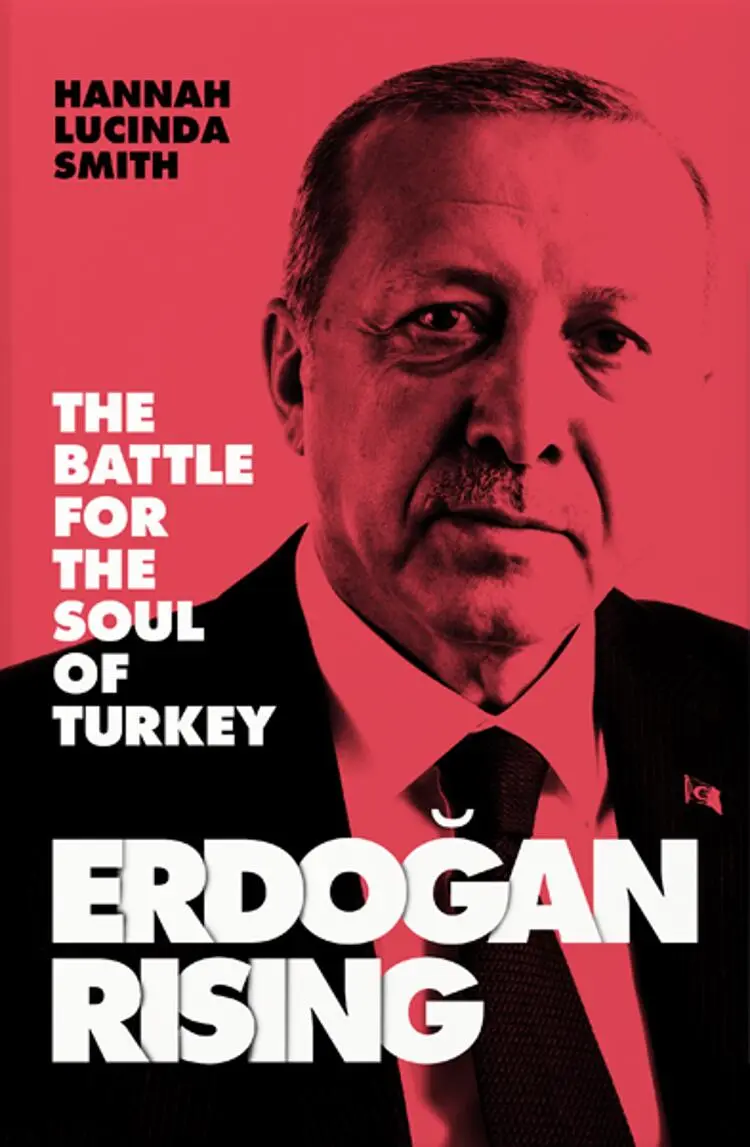
- Название:Erdogan Rising
- Автор:
- Жанр:
- Год:неизвестен
- ISBN:нет данных
- Рейтинг книги:4 / 5. Голосов: 1
-
Избранное:Добавить в избранное
- Отзывы:
-
Ваша оценка:
Erdogan Rising: краткое содержание, описание и аннотация
Предлагаем к чтению аннотацию, описание, краткое содержание или предисловие (зависит от того, что написал сам автор книги «Erdogan Rising»). Если вы не нашли необходимую информацию о книге — напишите в комментариях, мы постараемся отыскать её.
Erdogan Rising — читать онлайн ознакомительный отрывок
Ниже представлен текст книги, разбитый по страницам. Система сохранения места последней прочитанной страницы, позволяет с удобством читать онлайн бесплатно книгу «Erdogan Rising», без необходимости каждый раз заново искать на чём Вы остановились. Поставьте закладку, и сможете в любой момент перейти на страницу, на которой закончили чтение.
Интервал:
Закладка:
‘No one was expecting me to resign, even Tayyip Bey [a Turkish honorific, roughly Mr Tayyip],’ says Gül. ‘Everything was going very well. There was a lot of pressure, but I did not think it would be ethical for me to stay. [Erdoğan] was chairman of the party. It was an ethical matter. I thought it would be better for me to leave [the prime minister’s position].’
By April 2018, when I meet Cevat Olçok, Arter has stuck with the AKP and vice versa for seventeen years, through ten election campaigns and countless other publicity drives – and now the loss of their founder and visionary, Erol Olçok. Under him, they took their AKP formula international, working on political campaigns in northern Cyprus, Iraq, Georgia, Egypt, Malaysia, Albania, Macedonia, Libya, Tunisia and Ukraine. They also take on other work in the commercial sector.
But for Erdoğan, their number one client, Arter has always gone above and beyond the role of spin agency: Erol Olçok even stage-managed the grandiose society weddings of the president’s children. It was he who commissioned the song about Erdoğan for the 2014 presidential elections – and convinced his boss of its merit.
‘The mathematics of our campaign was like this. Our hero was Erdoğan,’ Erol Olçok later said. ‘Then Mr Erdoğan called me to his side. He said, “Is it too late to say this song is very personal and it would not be right to use it?” I said to him: “Mr Prime Minister, this song has nothing to do with you. This song is for the people who wish to express their love for you. This is their statement.”’
Set to the rhythm and tune of the dombra , a pounding Turkic-style war song, the lyrics still echo around the Erdoğan rallies I go to five years on: He is the voice of the oppressed, the lush voice of a silent world! Recep Tayyip Erdoğan …
‘Erdoğan is a genius in regards to political communications and so was Erol,’ says Cevat Olçok. ‘They knew … how to touch people and understand their feelings. They were a match.
‘Erdoğan and his party came to get rid of the old order. They widened Turkey’s perspectives and horizons. He gave us self-confidence. Now we have much bigger dreams. We will build our own electric car. We are building our own fighter jets and tactical helicopters. We are the seventeenth biggest economy in the world. We were the most expanding country in this year’s G20. Erdoğan is realising Turkey’s dreams. This is why he is a great brand.’
4
ERDOĞAN AND FRIENDS
The diaspora
Ufuk Seçgin is a Turk without Turkish citizenship and, at heart, a liberal. In Germany, where he was born, grew up and went to university, he supports the left-leaning Social Democrat Party. In Britain, where he has a second citizenship and runs his business, he is a Remainer. But in Turkey – in his DNA – he is a solid supporter of Erdoğan and the AKP. It is about more than just clever marketing.
‘You should have been in Turkey in the 1990s. Compare that with now, it’s day and night!’ Seçgin tells me in his crisp German-accented English. ‘Going to hospital was high risk, basically. I can remember how we were buying medicine from pharmacies in Germany and sending them because either they were not available in Turkey or they were so expensive they couldn’t buy them. And food banks, water cuts – there was no clean drinking water. Like fuel stations you would have water stations in the city. People would go with their empty containers and fill them, every day. Electricity just a few hours a day. You see that and then you see this, what’s going on now. And you say, well, this was definitely a success of the Ak Party.’
As a child born to Turkish migrant parents in Hamburg in the 1970s, Seçgin could at first only claim Turkish citizenship. His German identity documents listed him as a ‘son of a Gastarbeiter ’, the name for the Turks who flocked to Germany as economic migrants in the post-war boom. They were not allowed to become German nationals. Then, in the election campaign of 1998, the Social Democrat Party pledged to lift the rule that meant only people born of German parents could claim citizenship. Seçgin, a business student with big plans, saw a new spread of opportunities open up with the promise of EU citizenship. But though the SDP won the election they were shunted back on their promise by pressure from the right wing. The amendment to the citizenship law that was eventually passed allowed the children of Turkish migrants to become German citizens – but only if they renounced their Turkish nationality. Migrants from anywhere else were allowed to keep both.
‘That was because they wanted to avoid people running on both cars,’ says Seçgin. ‘It’s black or white. You’re German or you’re Turkish. Where are your priorities, that type of thing.
‘I still remember, I went into one of my local meetings with what was then the head of the foreign commission in the German parliament, a so-called veteran of politics. He had been forty years an MP in our region. I asked him why are you doing it this way, and gave him a list of citizenship rules from other countries. He started to give me stupid answers and I pushed further, and further. And the answer he gave me was: “What if Turkey enters a war against Germany? Who would you fight for?”’
Seçgin took German citizenship, and renounced his Turkish, in 2004. The Turkish government provides German-Turks in the same position as he is with a blue card, which allows them to live and work in Turkey as if they were citizens but without the right to vote. Nonetheless, they are invested. Seçgin was studying for an MBA at Cardiff University when the AKP was first elected in 2002. He was already a keen supporter. His flatmate – another German-Turk who, unlike Seçgin, weaved a booze-filled, Casanova-like path through British university life – joined the party online as he saw the votes coming in.
‘I said: “Anything Erdoğan or the Ak Party says is completely the opposite of what you believe. So why on earth are you joining?” And he said: “I’m going to be a businessman, and the earlier I join AKP the better for me in the future.”’
Both Turkey and Germany have since yanked at Ufuk Seçgin, trying to make him decide whom he loves more, but really all he wants is to be a successful Muslim businessman in a globalised world. Like many Turks he feels fed up with the EU and the endless merry-go-round of Turkey’s attempts to join it. He once supported Turkey’s membership bid, but now feels it would be better outside it. At the same time, in the UK he is facing the impacts of a Brexit he didn’t vote for, and which doesn’t appeal to him. He will no longer be able to hire talent from the continent with the same ease as he hires British workers, or to work across borders so easily.
Now, in the AKP and Erdoğan, Seçgin sees a party and a leader with some problems. He says there are few signs of a succession plan, no new generation of leaders being nurtured, and he feels the arrests of journalists in the wake of the coup attempt have gone too far. He worries that the Turkish economy, once so buoyant, may soon start to shrivel. But in uncertain times across the span of his world, Erdoğan is one of the few certainties Seçgin can cling to. The president has brought wealth, stability and honour to Turks like him – and to those looking in from the outside, Erdoğan’s flamboyance masks many of his flaws.
‘I don’t see, who has got that charisma? Someone like Erdoğan doesn’t come along every ten years. He comes along every thirty years or whatever,’ Seçgin says. ‘Even his opponents say he is really charismatic, knows his stuff. He has put Turkey back on the map.’
The new Muslim middle class
Интервал:
Закладка:
Похожие книги на «Erdogan Rising»
Представляем Вашему вниманию похожие книги на «Erdogan Rising» списком для выбора. Мы отобрали схожую по названию и смыслу литературу в надежде предоставить читателям больше вариантов отыскать новые, интересные, ещё непрочитанные произведения.






Обсуждение, отзывы о книге «Erdogan Rising» и просто собственные мнения читателей. Оставьте ваши комментарии, напишите, что Вы думаете о произведении, его смысле или главных героях. Укажите что конкретно понравилось, а что нет, и почему Вы так считаете.