Hannah Smith - Erdogan Rising
Здесь есть возможность читать онлайн «Hannah Smith - Erdogan Rising» — ознакомительный отрывок электронной книги совершенно бесплатно, а после прочтения отрывка купить полную версию. В некоторых случаях можно слушать аудио, скачать через торрент в формате fb2 и присутствует краткое содержание. Жанр: unrecognised, на английском языке. Описание произведения, (предисловие) а так же отзывы посетителей доступны на портале библиотеки ЛибКат.
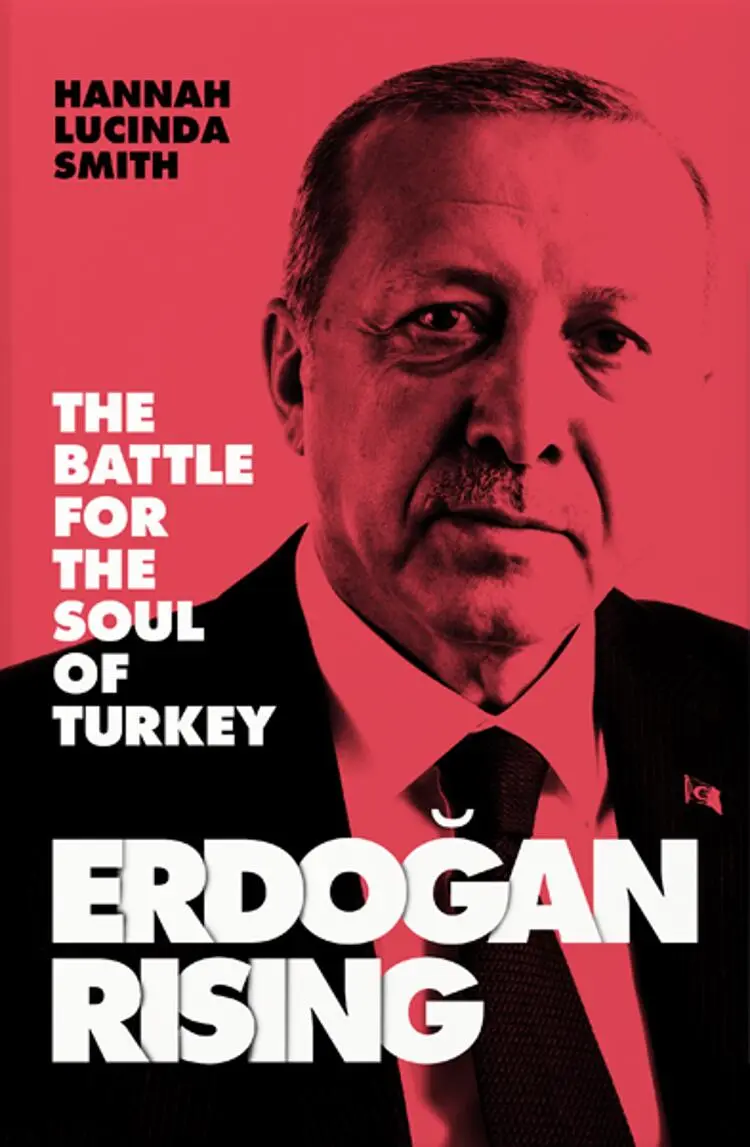
- Название:Erdogan Rising
- Автор:
- Жанр:
- Год:неизвестен
- ISBN:нет данных
- Рейтинг книги:4 / 5. Голосов: 1
-
Избранное:Добавить в избранное
- Отзывы:
-
Ваша оценка:
Erdogan Rising: краткое содержание, описание и аннотация
Предлагаем к чтению аннотацию, описание, краткое содержание или предисловие (зависит от того, что написал сам автор книги «Erdogan Rising»). Если вы не нашли необходимую информацию о книге — напишите в комментариях, мы постараемся отыскать её.
Erdogan Rising — читать онлайн ознакомительный отрывок
Ниже представлен текст книги, разбитый по страницам. Система сохранения места последней прочитанной страницы, позволяет с удобством читать онлайн бесплатно книгу «Erdogan Rising», без необходимости каждый раз заново искать на чём Вы остановились. Поставьте закладку, и сможете в любой момент перейти на страницу, на которой закончили чтение.
Интервал:
Закладка:
The rebels
As Erdoğan was serving his jail term, a separate group of young renegades was calling for change from within the Refah Party. These rebels, like Erdoğan, had grown frustrated with Necmettin Erbakan’s way of doing politics. From cosmopolitan, professional backgrounds, they included Bülent Arınç, a suave lawyer of Cretan heritage, and Abdullah Gül, a former economist at the Islamic Development Bank. Gül stood as candidate for the leadership of Refah in 1997, hoping to reform the party from within. He was narrowly beaten – but a few months later the party was closed down anyway.
‘We had many successes with Refah. But later on, the political landscape changed and we started to make mistakes,’ Gül tells me in the huge drawing room of his Istanbul palace. ‘There was a convention and I became the candidate. I was talking about democracy, I was talking about fundamental rights, about human rights and saying that if the rhetoric is not good in politics we have to adopt the correct policies. The party was very authoritarian at the time. There was no chance for me yet I was about to win. It was a shock. The party was then closed by the constitutional court without justification … I was trying to save the party.’
As had happened so many times over the decades, Refah reformed under a new name, the Saadet Partisi (Felicity Party). But the new guard led by Gül did not join them – instead they split and formed a new grouping. They started their public relations drive with a rally in Kayseri, Gül’s home city, and followed it up with a tour of Turkey. And they had attracted a star – Erdoğan, recently released from prison and with a soaring reputation. Gül had lobbied the European Parliament to oppose Erdoğan’s jail sentence and personally approached him to join his new party once he was released. The soft-spoken technocrat says he had no issue with handing over the top position in the party he had founded to the most charismatic Islamist Turkey had ever produced. The demand for him to do so came, he says, from within the ranks.
‘We all decided to make Erdoğan chairman. His popularity was higher,’ Gül says.
The Arter team came as part of the Erdoğan package – and so they got to work on the new party’s branding.
‘We worked on the name, the logo and corporate identity,’ says Cevat Olçok. ‘Erol was the leader in all these things. We made additions to the party’s manifesto, and we worked on the name. There were many ideas for that: one of them was the Genç Partisi [Young Party]. They did not like it. Then there was Beyaz Partisi [White Party] and from that it became Ak [meaning pure]. It became AK Partisi because Turkey needed a clean page. All the political establishments were tired, and the society was not getting what it wanted. But the people in this party were clean and wise – this is why we proposed AK Partisi.’
As Arter revved up the spin, speechwriter Hüseyin Besli was working out who the Turkish people actually were – and how the newly hatched AK Party might win their votes. Such polls are unremarkable in most developed democracies, but in Turkey the entrenched system had ensured that power always lay in the hands of the secular elite. They would vote one way and the religious masses would vote another and, ultimately, the army and other facets of state would decide how the country should be run. There had seemed little point in any political party trying to effect change. But that’s what Erdoğan’s team did and continues to do – obsessively.
‘We did comparative studies of the Turkish people, and of the dynamics of the previous coups and the reasons why they had happened,’ Besli says. ‘We found out what people’s reactions to the coups were, and then we considered all the information we had gathered. We wanted to avoid anything that might lead to such events in the future. Today, Erdoğan says we are not the ones who founded the AKP – it was the people. Our main motto was to be the voice of the voiceless. We really understood what people wanted.’
Abdullah Gül credits the expanding television coverage of parliament and political debates in the mid-1990s for Refah’s, and then the AKP’s, growing success.
‘Before politics happened in meetings. Politicians were talking with people and then coming here’ – to Istanbul and Ankara – ‘and living and doing things differently,’ Gül says. ‘When TVs started to show parliament, people started to monitor their representatives. In the village they were supporting someone, and then seeing what they were doing in parliament. We were addressing their feelings. We were being live broadcasted. The first live broadcast started in the 1990s. It was one of the contributions to Turkish democracy. Before, political allegiance was just a tradition that was passed on. Now it is more transparent. Refah got rooted in the country in the 1990s. People listened on TV. They saw that we were addressing their feelings. This is how everything was restructured.’
Turkey’s economy was also creaking by the time the AKP launched in 2001; the currency was slipping into hyper-inflation and unemployment rocketing towards 10 per cent. All the existing parties were tarnished with corruption, incompetence or both. The logo Erdoğan and his team eventually plumped for to represent their new party was the light bulb – a symbol of hope in dark times. And to fit with the letters A, K and P, they came up with a full and generic name – the Adalet ve Kalkınma Partisi (Justice and Development Party).
Soon, the AKP was the most talked-about party in Turkey. A secularist newspaper columnist said it should be pronounced as its letters – A-K-P – rather than as ‘Ak Party’, as the marketers had intended. It is still a point of contention today – and a great way of determining a Turk’s feelings about the party. Every time I say ‘A-K-P’, Cevat Olçok pulls me up.
‘Ak Partisi!’ he snaps, without irony.
‘When it started, the goal was to make AK Partisi … a brand in Turkey and the world,’ he continues. ‘This was said at the foundation. AK Partisi: a world party. Seventeen years have passed. You will see AK Parti everywhere in Turkey, and always with a corporate identity.’
In November 2002, only fifteen months after it was officially launched, the AKP won an outright majority of seats in the parliament. The Organisation for Security and Cooperation in Europe (OSCE), one of the major international election monitors, was glowing in its opening assessment of the poll. It wrote in its final report:
The 3 November elections for the Turkish Grand National Assembly (TGNA) demonstrated the vibrancy of Turkey’s democracy. A large number of parties campaigned actively throughout the country, offering the electorate a broad and varied choice. The sweeping victory of opposition parties showed the power of the Turkish electorate to institute governmental change.
But the OSCE also noted some serious flaws in the system. The AKP had won just 34 per cent of the vote but taken almost two-thirds of the seats in parliament. The only other party to take up seats was the CHP – a result of Turkey’s arcane election rules, which state that only parties that tally more than 10 per cent of the vote can enter parliament. The votes of those that fall below the threshold are distributed between those who have reached it.
Erdoğan, though chairman of the victorious party, could not take up one of its seats – his criminal conviction barred him from taking public office. Abdullah Gül became prime minister, but the AKP immediately began gathering cross-party support for the law barring Erdoğan to be changed. Gül served for just five months before stepping aside for Erdoğan in March 2003. Some within the party were unimpressed.
Читать дальшеИнтервал:
Закладка:
Похожие книги на «Erdogan Rising»
Представляем Вашему вниманию похожие книги на «Erdogan Rising» списком для выбора. Мы отобрали схожую по названию и смыслу литературу в надежде предоставить читателям больше вариантов отыскать новые, интересные, ещё непрочитанные произведения.








Обсуждение, отзывы о книге «Erdogan Rising» и просто собственные мнения читателей. Оставьте ваши комментарии, напишите, что Вы думаете о произведении, его смысле или главных героях. Укажите что конкретно понравилось, а что нет, и почему Вы так считаете.