Hannah Smith - Erdogan Rising
Здесь есть возможность читать онлайн «Hannah Smith - Erdogan Rising» — ознакомительный отрывок электронной книги совершенно бесплатно, а после прочтения отрывка купить полную версию. В некоторых случаях можно слушать аудио, скачать через торрент в формате fb2 и присутствует краткое содержание. Жанр: unrecognised, на английском языке. Описание произведения, (предисловие) а так же отзывы посетителей доступны на портале библиотеки ЛибКат.
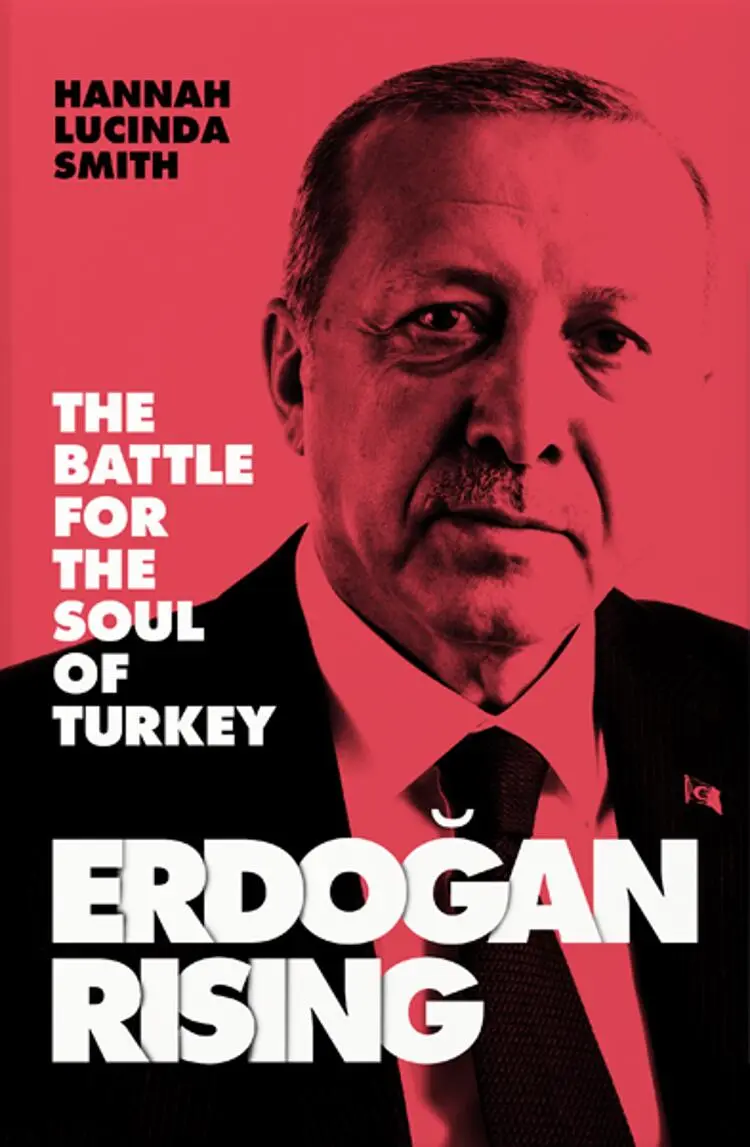
- Название:Erdogan Rising
- Автор:
- Жанр:
- Год:неизвестен
- ISBN:нет данных
- Рейтинг книги:4 / 5. Голосов: 1
-
Избранное:Добавить в избранное
- Отзывы:
-
Ваша оценка:
Erdogan Rising: краткое содержание, описание и аннотация
Предлагаем к чтению аннотацию, описание, краткое содержание или предисловие (зависит от того, что написал сам автор книги «Erdogan Rising»). Если вы не нашли необходимую информацию о книге — напишите в комментариях, мы постараемся отыскать её.
Erdogan Rising — читать онлайн ознакомительный отрывок
Ниже представлен текст книги, разбитый по страницам. Система сохранения места последней прочитанной страницы, позволяет с удобством читать онлайн бесплатно книгу «Erdogan Rising», без необходимости каждый раз заново искать на чём Вы остановились. Поставьте закладку, и сможете в любой момент перейти на страницу, на которой закончили чтение.
Интервал:
Закладка:
The Gezi Park protests, which started when I had been living in Turkey for three months, were the first major news story I took note of. They made small waves down in Antakya, where the local population of Turkish Alawites – members of the same sect of Shia Islam as Bashar al-Assad – held thinly attended protests in the main square. Maybe my views on Gezi at that time were coloured by the Syrians surrounding me: they mostly viewed Erdoğan as their champion – no other world leader was opposing Assad and welcoming refugees so consistently – and they distrusted the Turkish Alawites for their kinship with Assad’s hated regime in Syria. The tear gas used by the Turkish police to put down the demonstrations in Taksim seemed minor compared to the live rounds fired by Syrian security forces on protesters there.
But, after Gezi, I started noticing how Erdoğan was becoming much more than a prime minister. When new football stadiums opened, he would play in the inaugural matches – and always, without fail, score a goal. He appeared on an evening chat show and sang a lilting Turkish song in a tuneless voice, to enthusiastic applause. Barely a day went by when a television channel did not broadcast one of his speeches or visits. After he gave up the job of prime minister and won the presidential elections in 2014, his picture started appearing everywhere. And when the AKP won in parliamentary elections a year later, my Syrian boyfriend’s father phoned from Saudi Arabia, where he was living. He had never even visited Turkey.
‘Erdoğan! Erdoğan! Erdoğan!’ he sang in delight.
That was where my fascination with Erdoğan and the people who idolise him started – the moment when I became obsessed with untangling the appeal of the Turkish president.
3
BUILDING BRAND ERDOĞAN
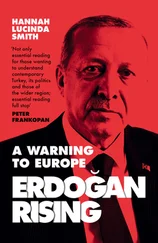
The president likes to wear sunglasses. It is part of a look that, over the years, he has honed to a crossover between Islamist and mafia don.
There is the clipped moustache that has been there from the start – an essential element of any pious man’s image. Back in the 1990s it was a glossy chestnut brown, set off by his bouffant hair. Over the years, as both have got shorter and greyer on their original wearer, the moustache has spread through Erdoğan’s inner circle like a catwalk trend. As the 2017 referendum approached, a Daily Mail journalist totted up that twenty-seven of the thirty cabinet members were sporting the badem biyik – or ‘almond moustache’. Of the three with no moustache, one was a woman.
There are the oversized suit jackets, cross-hatched and most often in a dark powder blue. They originally made an appearance around the time of the presidential elections in August 2014 – when Erdoğan first won the post – and have since become so iconic that when a friend decided to dress up as the president for a raucous post-referendum dinner party all he had to do was don one of these suits and grow a week’s worth of moustache. In 2015, as the fashion spread in Erdoğan’s circle, one of Turkey’s leading designers bestowed it with a name: the ‘prestogal’ jacket.
‘President Erdoğan is the man who brought the checkered fashion to Turkey. Nobody influences our president; he does not follow the world, but rather he creates his own fashion,’ Levon Kordonciyan, the designer, told the state news agency, Anadolu.
And then there are those shades, aviator-style with thin gold rims. Erdoğan dons them at rallies and walkabouts, the lenses so dark that his eyes are inscrutable. When he walks en masse with his entourage, all of them dressed in black and wearing shades to match him, you get the sense that the mob boss has arrived. It’s the same with the screaming convoys the high-level politicians move about in – first police on motorcycles, then the swarm of blacked-out cars travelling in packs half a kilometre long down the highways. They have grown more common everywhere since Erdoğan became president – and his own entourage is by far the biggest – but you see them most often in Ankara. Whole intersections must be slickly closed and reopened to allow the government motorcades to pass through, jamming another stick in the spokes of the capital’s dreadful traffic.
It is impossible to guess to what level such privileges go down. Erdoğan travels like that, for sure, as do the high-ranking members of his cabinet. In August 2016, a month after the coup attempt, prime minister Binali Yıldırım’s press team called me and a couple of dozen other foreign journalists to an Ottoman palace on the Asian bank of the Bosphorus. A jolly Yıldırım ordered us to tuck into the opulent Turkish breakfast, served in the gardens – young cheeses with succulent figs, delicate tea and hot, crunchy pastries – while burly men in black T-shirts, olive-grey combat trousers, shades and earpieces scanned the scene in every direction with assault rifles ready. After a two-hour discussion and a sincere vow from the diminutive, grandfatherly Yıldırım that we should do this more often, we watched as he was whisked away in a helicopter in a flourish of political showmanship.
Other ministers travel in more low-key style. But in September 2016, down in Diyarbakır, de facto capital of the Kurdish south-east, I happened to be in the city’s premier breakfast spot as the city governor, newly appointed from Ankara, came in. The Hasanpaşa Han is an Ottoman-era caravanserai, a two-level eating and shopping centre around an open central courtyard that was built in the sixteenth century. Back then the traders traversing the Silk Route would spend the night inside its black basalt walls, resting their horses in the straw-strewn central space and dining and sleeping in the warren of surrounding rooms.
Today, there are stalls at ground level selling trinkets, colourful silk scarves and rugs printed with images of Kurdish heroes. For a time you might have found PKK leader Abdullah Öcalan’s face among them. Now the rug sellers stick to uncontroversial figures, mostly Kurdish singers and poets; none go so far as to sell any bearing pictures of Erdoğan, as I have seen in other parts of the country. Through tiny arched doorways steep stone steps lead up through the blackness of the han’s thick outer walls like secret warrens in a medieval castle, before they spill out to the mezzanine of the second level. Here, breakfast is served – Diyarbakır style. Endless small plates of cheeses, olive oil, jams, spicy pastes, sliced tomatoes and cucumber, honey, kaymak (a kind of Turkish clotted cream), tahini, fried eggs, spicy sausage sizzling in butter are heaped onto tables along with endless bread and tea, refilled as soon as it is finished.
I was there with my translator and her friend, who had run a café in the grounds of Surp Giragos, the largest Armenian church in Anatolia, until fighting between local PKK militants and the Turkish security forces enveloped it. He closed up and left his café in December 2015 and had not been back in the ten months since, but a colleague who had been able to get into the curfew zone to check on the church had taken photos for him. It was not so much the loss of his business that made his hand tremble with grief and rage, but what had been done to Surp Giragos. He held up his phone to show me photos of the camp kitchen that the soldiers had set up under the soaring gothic arches of the nave and the Atatürk portrait they pinned up in place of the icons.
It was at that moment that a gaggle of close protection guards, the same guys in olive and black who had accompanied Yıldırım, filed in and fanned out on both levels of the han. The bubbling conversation hushed as if someone had turned down the dial, then the governor walked in and took his place at a breakfast table. Slowly the chatter returned, but we stopped talking about the church and the war that had ravaged the districts just behind these thick old walls and stuck to banal small talk for the rest of the morning.
Читать дальшеИнтервал:
Закладка:
Похожие книги на «Erdogan Rising»
Представляем Вашему вниманию похожие книги на «Erdogan Rising» списком для выбора. Мы отобрали схожую по названию и смыслу литературу в надежде предоставить читателям больше вариантов отыскать новые, интересные, ещё непрочитанные произведения.





Обсуждение, отзывы о книге «Erdogan Rising» и просто собственные мнения читателей. Оставьте ваши комментарии, напишите, что Вы думаете о произведении, его смысле или главных героях. Укажите что конкретно понравилось, а что нет, и почему Вы так считаете.