Tapas K. Das - Industrial Environmental Management
Здесь есть возможность читать онлайн «Tapas K. Das - Industrial Environmental Management» — ознакомительный отрывок электронной книги совершенно бесплатно, а после прочтения отрывка купить полную версию. В некоторых случаях можно слушать аудио, скачать через торрент в формате fb2 и присутствует краткое содержание. Жанр: unrecognised, на английском языке. Описание произведения, (предисловие) а так же отзывы посетителей доступны на портале библиотеки ЛибКат.
- Название:Industrial Environmental Management
- Автор:
- Жанр:
- Год:неизвестен
- ISBN:нет данных
- Рейтинг книги:5 / 5. Голосов: 1
-
Избранное:Добавить в избранное
- Отзывы:
-
Ваша оценка:
Industrial Environmental Management: краткое содержание, описание и аннотация
Предлагаем к чтению аннотацию, описание, краткое содержание или предисловие (зависит от того, что написал сам автор книги «Industrial Environmental Management»). Если вы не нашли необходимую информацию о книге — напишите в комментариях, мы постараемся отыскать её.
Industrial Environmental Management: Engineering, Science, and Policy Provides end-of-chapter questions along with a solutions manual for adopting professors Covers a wide range of interdisciplinary areas that makes it suitable for different branches of engineering such as wastewater management and treatment; pollutant sampling; health risk assessment; waste minimization; lean manufacturing; and regulatory information Shows how industrial environmental management is connected to areas like sustainable engineering, sustainable manufacturing, social policy, and more Contains theory, applications, and real-world problems along with their solutions Details waste recovery systems
is an ideal textbook for junior and senior level students in multidisciplinary engineering fields such as chemical, civil, environmental, and petroleum engineering. It will appeal to practicing engineers seeking information about sustainable design principles and methodology.
Industrial Environmental Management — читать онлайн ознакомительный отрывок
Ниже представлен текст книги, разбитый по страницам. Система сохранения места последней прочитанной страницы, позволяет с удобством читать онлайн бесплатно книгу «Industrial Environmental Management», без необходимости каждый раз заново искать на чём Вы остановились. Поставьте закладку, и сможете в любой момент перейти на страницу, на которой закончили чтение.
Интервал:
Закладка:
Also, USEPA recently proposed a system to ensure that more than 35 million T of hazardous wastes produced in the United States each year, including most chemical wastes, are disposed of safely. Hazardous wastes will be controlled from point of generation to their ultimate disposal, and dangerous practices now resulting in serious threats to health and environment will not be allowed.
Although we are taking these aggressive strides to make sure that hazardous waste is safely managed, there remains the question of liability regarding accidents occurring from wastes disposed of previously. This is a missing link. But no doubt this question will be addressed effectively in the future. Regarding the missing link of liability, if health‐related dangers are detected, what are we as a people willing to spend to correct the situation? How much risk are we willing to accept? Who's going to pick up the tab? One of the chief problems we are up against is that ownership of these sites frequently shifts over the years, making liability difficult to determine in cases of an accident. And no secure mechanisms are in effect for determining such liability.
It is within our power to exercise intelligent and effective controls designed to significantly cut such environmental risks. A tragedy, unfortunately, has now called upon us to decide on the overall level of commitment we desire for defusing future Love Canals. And it is not forgotten that no one has paid more dearly already than the residents of Love Canal.
2.6.1.6 Tennessee Valley Authority Kingston Coal Power Plant Toxic Ash Sludge Spill
On 22 December 2008, a retention pond wall collapsed at Tennessee Valley Authority's (TVA) Kingston plant in Harriman, Tennessee, releasing a combination of water and fly ash that flooded 12 homes, spilled into nearby Watts Bar Lake, contaminated the Emory River, and caused a train wreck. Officials said 4–6 ft of material escaped from the pond to cover an estimated 400 acres of adjacent land. A train bringing coal to the plant became stuck when it was unable to stop before reaching the flooded tracks (White 2008). Hundreds of fish were floating dead downstream from the plant. Water tests showed elevated levels of lead and thallium (Knoxville News Sentinel 2008a, b).
Originally, TVA estimated that 1.7 million cubic yards of waste had burst through the storage facility. Company officials said the pond had contained a total of about 2.6 million cubic yards of sludge. However, the company revised its estimates on 26 December, when it released an aerial survey showing that 5.4 million cubic yards (1.09 billion gal) of fly ash was released from the storage facility (Knoxville News Sentinel 2008a). Several days later, the estimate was increased to over 1 billion gal spilled (CNN 2008). The size of the spill was larger than the amount TVA claimed to have been in the pond before the accident, a discrepancy that TVA was unable to explain (New York Times 2008). The TVA spill was 100 times larger than the Exxon Valdez spill in Alaska, which released 10.9 million gal of crude oil (Encyclopedia of the Earth 2018), and it was expected to take weeks and cost tens of millions of dollars to clean it (Knoxville News Sentinel 2008c). According to the TVA, rain totaling 6 in. in 10 days and 12 °F temperatures were factors that contributed to the failure of the earthen embankment (Valley Precipitation 2008).
The 40‐acre pond was used to contain ash created by the coal‐burning plant (White 2008). The water and ash that were released in the accident were filled with toxic substances. Each year coal preparation creates waste containing an estimated 13 T of mercury, 3236 T of arsenic, 189 T of beryllium, 251 T of cadmium, and 2754 T of nickel, and 1098 T of selenium (Associated Press 2008; Valley Precipitation 2008).
2.6.1.7 Cuyahoga River Fire
The Cuyahoga River is in the United States, located in Northeast Ohio, that feeds into Lake Erie. The river is famous for having been so polluted that it “caught fire” in 1969 ( Figure 2.3). It was the disaster that ignited an environmental revolution. On that day, 22 June 1969, the Cuyahoga River burst into flames in Cleveland when sparks from a passing train set fire to oil‐soaked debris floating on the water's surface. By 1969, the Cuyahoga River was not a unique experience in the United States. A river flowing into Baltimore, Maryland, caught fire on 8 June 1906 (CPD 1926). In Philadelphia, the Schuykill burned in the 1950s (Kernan 1958). The Buffalo River in upper New York state burned in the 1960s (UPI 1984). The Rouge River in Dearborn, Michigan, repeatedly burned (US 1974).
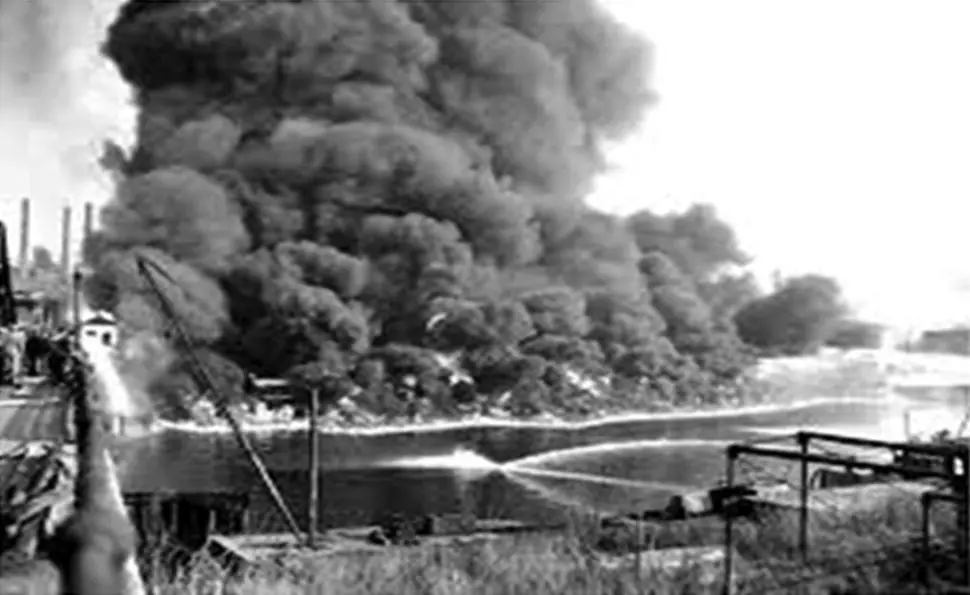
Figure 2.3 Cuyahoga River caught fire.
So, why is the Cuyahoga River fire a seminal event in the history of water pollution control in the United States? Because it was a catalyst for change in federal government's role in water pollution control. Although the federal government had powerful tools to control water pollution, for example, the River and Harbors Act of 1899 and the Water Quality Act of 1965. States and cities were left to fend for themselves. The flaming Cuyahoga became a figurehead for America's mounting environmental issues and sparked wide‐ranging reforms, including the passage of the Clean Water Act (CWA) (1972) and the creation of federal and state environmental protection agencies.
But the episode itself did not quite live up to its billing. It was not the first fire, or even the worst, on the Cuyahoga, which had lit up at least a dozen other times before. And industrial dumping was already improving by the time of the 1969 blaze. The reality is that the 1969 Cuyahoga fire was not a symbol of how bad conditions on the nation's rivers could become, but how bad they had once been. The 1969 fire was not the first time an industrial river in the United States had caught on fire, but the last. The event helped to spur the environmental movement in the United States (Adler 2003).
2.6.1.8 The Great Smog of London
Great Smog of 1952 was a severe air‐pollution event that affected the British capital of London in early December 1952. A period of cold weather, combined with an anticyclone and windless conditions, collected airborne pollutants – mostly arising from the use of coal – to form a thick layer of smog over the city. It lasted from Friday, 5 December to Tuesday, 9 December 1952 and then dispersed quickly when the weather changed.
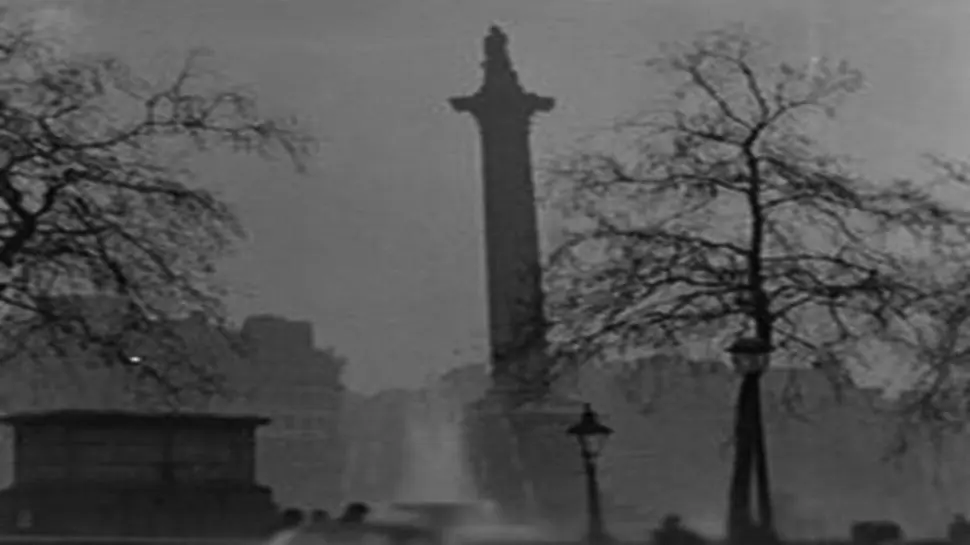
Figure 2.4 Nelson Tower showing the poor visibility.

Figure 2.5 Source of pollution from Battersea Coal Power Plant, London.
It caused major disruption by reducing visibility and even penetrating indoor areas, far more severe than previous smog events experienced in the past, called “pea‐soupers.” Government medical reports in the following weeks, however, estimated that up until 8 December, 4 000 people had died as a direct result of the smog and 100 000 more were made ill by the smog's effects on the human respiratory tract. More recent research suggests that the total number of fatalities was considerably greater, about 12 000 ( Figures 2.4and 2.5) (The Great Smog of 1952 2014).
The Prime Minister at that time, Winston Churchill, was adamant that it would pass, simply dismissing it as a “weather event.” London had suffered since the thirteenth century from poor air quality (Brimblecombe 1976), which worsened in the 1600s (The Observer 2002), but the Great Smog is known to be the worst air‐pollution event in the history of the United Kingdom, and the most significant in terms of its effect on environmental research, government regulation, and public awareness of the relationship between air quality and health (Bell et al. 2004; The Observer 2002). It led to several changes in practices and regulations, including the Clean Air Act 1956.
Читать дальшеИнтервал:
Закладка:
Похожие книги на «Industrial Environmental Management»
Представляем Вашему вниманию похожие книги на «Industrial Environmental Management» списком для выбора. Мы отобрали схожую по названию и смыслу литературу в надежде предоставить читателям больше вариантов отыскать новые, интересные, ещё непрочитанные произведения.






Обсуждение, отзывы о книге «Industrial Environmental Management» и просто собственные мнения читателей. Оставьте ваши комментарии, напишите, что Вы думаете о произведении, его смысле или главных героях. Укажите что конкретно понравилось, а что нет, и почему Вы так считаете.