Robert Bartoszynski - Probability and Statistical Inference
Здесь есть возможность читать онлайн «Robert Bartoszynski - Probability and Statistical Inference» — ознакомительный отрывок электронной книги совершенно бесплатно, а после прочтения отрывка купить полную версию. В некоторых случаях можно слушать аудио, скачать через торрент в формате fb2 и присутствует краткое содержание. Жанр: unrecognised, на английском языке. Описание произведения, (предисловие) а так же отзывы посетителей доступны на портале библиотеки ЛибКат.
- Название:Probability and Statistical Inference
- Автор:
- Жанр:
- Год:неизвестен
- ISBN:нет данных
- Рейтинг книги:4 / 5. Голосов: 1
-
Избранное:Добавить в избранное
- Отзывы:
-
Ваша оценка:
Probability and Statistical Inference: краткое содержание, описание и аннотация
Предлагаем к чтению аннотацию, описание, краткое содержание или предисловие (зависит от того, что написал сам автор книги «Probability and Statistical Inference»). Если вы не нашли необходимую информацию о книге — напишите в комментариях, мы постараемся отыскать её.
Probability and Statistical Inference, Third Edition
Probability and Statistical Inference
Probability and Statistical Inference — читать онлайн ознакомительный отрывок
Ниже представлен текст книги, разбитый по страницам. Система сохранения места последней прочитанной страницы, позволяет с удобством читать онлайн бесплатно книгу «Probability and Statistical Inference», без необходимости каждый раз заново искать на чём Вы остановились. Поставьте закладку, и сможете в любой момент перейти на страницу, на которой закончили чтение.
Интервал:
Закладка:
The last in this series of concepts is that of the minimal field (or  ‐field, or monotone class) containing a given set or collection of sets. We begin with some examples.
Example 1.20
Let  be any set. On one extreme, the class consisting of two sets,
  and
and  , is closed under any operation so that
 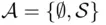 is a field, a
  ‐field, and a monotone class. On the other extreme, the class of all subsets of
  is also closed under any operations, finite or not, and hence is a field, a
  ‐field, and a monotone class. These two classes of subsets of
  form the smallest and the largest fields (
  ‐field, monotone class).
For any event  , it is easy to check that the class
  , consisting of the four events
 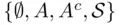 , is closed under any operations: unions, intersections, and complements of members of
  are again members of
  . This class is an example of a field (
  ‐field, monotone class) that contains the events
  and
and  , and it is the smallest such field (
  ‐field, monotone class).
On the other hand, the class  , consisting of events
  , is a monotone class, but neither a field nor
  ‐field. If
  and
and  are two events, then the smallest field
  containing
  and
and  must contain also the sets
  , the intersections
  , as well as their unions
  and
and  . The closure property implies that unions such as
  , must also belong to
  .
.
We are now ready to present the final step.
Theorem 1.4.3 For any nonempty class  of subsets of
  , there exists a unique smallest field (
  ‐field, monotone class) containing all sets in
  . It is called the field (
  ‐field, monotone class) generated by
  .
.
Proof We will prove the assertion for fields. Observe first that if  and
and  are fields, then their intersection
  (i.e., the class of sets that belong to both
  and
and  ) is also a field. For instance, if
  (
(  , then
  because each
  is a field, and consequently
  . A similar argument holds for intersections and complements.
Интервал:
Закладка:
Похожие книги на «Probability and Statistical Inference»
Представляем Вашему вниманию похожие книги на «Probability and Statistical Inference» списком для выбора. Мы отобрали схожую по названию и смыслу литературу в надежде предоставить читателям больше вариантов отыскать новые, интересные, ещё непрочитанные произведения.







Обсуждение, отзывы о книге «Probability and Statistical Inference» и просто собственные мнения читателей. Оставьте ваши комментарии, напишите, что Вы думаете о произведении, его смысле или главных героях. Укажите что конкретно понравилось, а что нет, и почему Вы так считаете.