Computational Statistics in Data Science
Здесь есть возможность читать онлайн «Computational Statistics in Data Science» — ознакомительный отрывок электронной книги совершенно бесплатно, а после прочтения отрывка купить полную версию. В некоторых случаях можно слушать аудио, скачать через торрент в формате fb2 и присутствует краткое содержание. Жанр: unrecognised, на английском языке. Описание произведения, (предисловие) а так же отзывы посетителей доступны на портале библиотеки ЛибКат.
- Название:Computational Statistics in Data Science
- Автор:
- Жанр:
- Год:неизвестен
- ISBN:нет данных
- Рейтинг книги:4 / 5. Голосов: 1
-
Избранное:Добавить в избранное
- Отзывы:
-
Ваша оценка:
Computational Statistics in Data Science: краткое содержание, описание и аннотация
Предлагаем к чтению аннотацию, описание, краткое содержание или предисловие (зависит от того, что написал сам автор книги «Computational Statistics in Data Science»). Если вы не нашли необходимую информацию о книге — напишите в комментариях, мы постараемся отыскать её.
Computational Statistics in Data Science
Computational Statistics in Data Science
Wiley StatsRef: Statistics Reference Online
Computational Statistics in Data Science
Computational Statistics in Data Science — читать онлайн ознакомительный отрывок
Ниже представлен текст книги, разбитый по страницам. Система сохранения места последней прочитанной страницы, позволяет с удобством читать онлайн бесплатно книгу «Computational Statistics in Data Science», без необходимости каждый раз заново искать на чём Вы остановились. Поставьте закладку, и сможете в любой момент перейти на страницу, на которой закончили чтение.
Интервал:
Закладка:

Let  denote the determinant. The volume of this ellipsoidal confidence region, which depends on
  ,
,  , and
, and  , is given by
(2) 
Sometimes a joint sampling distribution may be difficult to obtain, or the limiting variance–covariance matrix may be too complicated to estimate. In such cases, one can consider hyperrectangular confidence regions. Let  be a quantile of a standard normal distribution possibly chosen to correct for simultaneous inference. Recall that
  , let
, let  denote the
  th component of
  . Further, let
  denote the
  th diagonal of
  . Then

The volume of this hyperrectangular confidence region is
(3) 
As more samples are obtained,  and
and  converge to 0 so that the variability in the estimator
  disappears. Sequential stopping rules in Section 5will utilize this feature to terminate simulation.
4 Estimating 
To construct confidence regions, the asymptotic variance requires estimation. For IID sampling,  is estimated by the sample covariance matrix, as discussed in Section 2.3. For MCMC sampling, a rich literature of estimators of
  is available including spectral variance [14, 15], regeneration‐based [16, 17], and initial sequence estimators [5]18–20]. Considering the size of modern simulation output, we recommend the computationally efficient batch means estimators.
The multivariate batch means estimator considers nonoverlapping batches and constructs a sample covariance matrix from the sample mean vectors of each batch. More formally, let  , where
  is the number of batches, and
  is the batch sizes. For
  , define
  . The batch means estimator of
  is
is
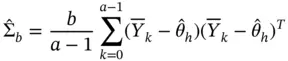
Univariate and multivariate batch means estimators have been studied in MCMC and operations research literature [21–26]. Although the batch means estimator has desirable asymptotic properties, it suffers from underestimation in finite samples, particularly for slowly mixing Markov chains. Specifically, let
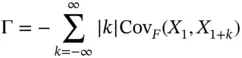
Then, Vats and Flegal [27] show (ignoring smaller order terms)
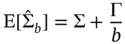
When the autocorrelation in the Markov chain is large, or  is small, there is significant underestimation in
  . To combat this issue, Vats and Flegal [27] propose lugsail batch means estimators formed by a linear combination of two batch means estimators with different batch sizes. For
  and
and  , the lugsail batch means estimator is
Интервал:
Закладка:
Похожие книги на «Computational Statistics in Data Science»
Представляем Вашему вниманию похожие книги на «Computational Statistics in Data Science» списком для выбора. Мы отобрали схожую по названию и смыслу литературу в надежде предоставить читателям больше вариантов отыскать новые, интересные, ещё непрочитанные произведения.
![Роман Зыков - Роман с Data Science. Как монетизировать большие данные [litres]](/books/438007/roman-zykov-roman-s-data-science-kak-monetizirova-thumb.webp)



Обсуждение, отзывы о книге «Computational Statistics in Data Science» и просто собственные мнения читателей. Оставьте ваши комментарии, напишите, что Вы думаете о произведении, его смысле или главных героях. Укажите что конкретно понравилось, а что нет, и почему Вы так считаете.