Robert Reed - Marrow
Здесь есть возможность читать онлайн «Robert Reed - Marrow» весь текст электронной книги совершенно бесплатно (целиком полную версию без сокращений). В некоторых случаях можно слушать аудио, скачать через торрент в формате fb2 и присутствует краткое содержание. Год выпуска: 2000, ISBN: 2000, Издательство: Tor Books, Жанр: Фантастика и фэнтези, на английском языке. Описание произведения, (предисловие) а так же отзывы посетителей доступны на портале библиотеки ЛибКат.
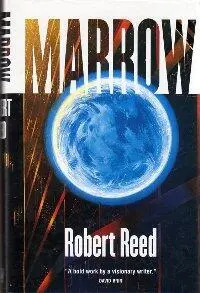
- Название:Marrow
- Автор:
- Издательство:Tor Books
- Жанр:
- Год:2000
- ISBN:0-312-86801-4
- Рейтинг книги:5 / 5. Голосов: 1
-
Избранное:Добавить в избранное
- Отзывы:
-
Ваша оценка:
Marrow: краткое содержание, описание и аннотация
Предлагаем к чтению аннотацию, описание, краткое содержание или предисловие (зависит от того, что написал сам автор книги «Marrow»). Если вы не нашли необходимую информацию о книге — напишите в комментариях, мы постараемся отыскать её.
Marrow — читать онлайн бесплатно полную книгу (весь текст) целиком
Ниже представлен текст книги, разбитый по страницам. Система сохранения места последней прочитанной страницы, позволяет с удобством читать онлайн бесплатно книгу «Marrow», без необходимости каждый раз заново искать на чём Вы остановились. Поставьте закладку, и сможете в любой момент перейти на страницу, на которой закончили чтение.
Интервал:
Закладка:
There was a pause, and not just because the Master was thousands of kilometers removed from them. It was a lengthy, unnerving silence. Then the captain’s captain looked off into the illusionary distance, asking, “Considerations? Any?”
It would be a disruption.
The other Submasters agreed with Miocene. To accomplish that work in ten days, with confidence, would require every captain’s help. That included those with the support teams. The base camp might have to be abandoned, or nearly so. Which was an acceptable risk, perhaps. But those mild, conciliatory words were obscured by clenched hands and distant, unsettled gazes.
The Master absorbed the criticisms without comment.
Then she turned to her future Submaster, saying, “Washen,” with a certain razored tone. “Do you have any considerations to add here, darling?”
Washen hesitated as long as she dared.
“Perhaps Marrow was a flywheel* she finally allowed. Ignoring every puzzled face, she nodded and said, “Madam.”
“Is this a joke?” the Master responded, her voice devoid of amusement. “Aren’t we discussing your timetable?”
“But if this was a flywheel,” Washen continued, “and if these magical buttresses ever weakened, even for an instant, Marrow would have thrown itself to pieces. A catastrophic failure. The hyperfiber blanket wouldn’t have absorbed the angular momentum, and it would have shattered, and the molten iron would have struck the chamber wall, and the shock waves would have passed up through the ship.” She offered a series of simple, coarse calculations. Then avoiding Aasleen’s glare, she added, “Maybe this was an elaborate flywheel. But it also might have made an effective self-destruct mechanism. We just don’t know, madam. We don’t know the builders’ intentions. We can’t even guess if they had enemies, real or imagined. But if there are answers, I can’t think of a better place to look.”
The Masters face was unreadable, impenetrable. Giant brown eyes closed, and finally, slowly, she shook her head, smiling in a pained fashion. “Since my first moment on board this glorious vessel,” she proclaimed, “I have nourished one guiding principle: the builders, the architects, whoever they were, would never have endangered their marvelous creation.”
Washen wished for the same confidence.
Then that apparition of light and sound rose to her feet, leaning across the golden busts and the bright pearl-wood, and she said, “You need a change of duty, Washen. You and your team will take the lead. Help us explore the far hemisphere. If it’s there, find your telltale clue. Then once your surveys are finished, everyone comes home.
“Agreed?”
“As you wish, madam,” said Washen. Said everyone.
Then Washen noticed Miocene’s surreptitious glance, something in her narrowed eyes saying, “Nice try darling.” And with that look came the faintest hint of respect.
Eleven
On three distinct occasions, flocks of pterosaur drones had intensively mapped this region. Yet as Washen retraced the machines’ path, she realized that even the most recent survey, completed eight days ago, was too old to be useful. Battered by quakes, a once-flat landscape had been heaved skyward, then split open. Torrents of molten iron ran down the new slopes. Over the hushed murmur of the engine, she could hear the iron’s voice, deep and steady, and massive, and fantastically angry. Washen flew parallel to the fierce river, and where three maps showed a great oxbow lake, the iron pooled, consuming the last of the water and the mud. Columns of filthy steam and hydrogen gas rose skyward, then twisted to the east. As an experiment, Washen flew into the steam. Samples were ingested by the car’s airscoops, then passed through filters and a hundred sensors and even a simple microscope, and peering into the scope, Diu started to giggle, saying, “Wouldn’t you know? Life.”
Riding inside the steam were spores and eggs and half-born insects, encased in tough bio ceramics and indifferent to the blistering heat. Inside the tip of one needle flask, too small to be seen with the naked eye, were enough pond weeds and finned beetles to conquer a dozen new lakes.
Catastrophe was the driving force on Marrow.
That insight struck Washen every day, every hour, and it always arrived with a larger principle in tow:
In one form or another, disaster had always ruled the universe.
The steam could disperse abruptly, giving way to the sky’s blue light, the chamber wall hanging far overhead, and beneath, stretching as far as Washen could see, lay the stark black bones of a jungle.
Fumes and fire had incinerated every tree.
Every scrambling bug.
The carnage must have been horrific. Yet the blaze had passed days ago, and new growth was already pushing up from the gnarled trunks and fresh crevices, thousands of glossy black umbrellalike leaves shining in the superheated air.
Diu said something in passing. Broq leaned over Washen s shoulder, repeating the question. “Should we stop? And have a look, maybe?”
In another fifty kilometers, they would be as far from the bridge as possible. The proverbial end of the world. Chilled champagne and some stronger pleasures waited for that symbolic moment. They would have to wait patiently, Washen decided, and through an implanted subsystem, she asked the car to find a level cool piece of ground where six captains could enjoy a little stroll.
The car hovered for a thoughtful instant, then dropped and settled.
The outside air was cool enough to breathe, if only in quick little sips. Following the mission’s protocol, everyone took samples of the burnt soil and likely rocks, and they cut away pieces of things alive and dead. But mostly this was an excuse to experience this hard landscape, once strange and now, after weeks of work, utterly familiar.
Promise and Dream were examining a broad white tree stump.
“Asbestos,” Promise observed, fingers rubbing against the powdery bark. “Pulled from the ground or out of the air, or maybe just cooked up fresh. Then laid around the roots, see? Like a blanket.”
“The trunk and branches were probably lipid rich,” her brother added. “A living candle, practically”
“Meant to burn.”
“Happy to burn.”
“Born to burn.”
“Out of love.”
Then they giggled to themselves, enjoying their little song.
Washen didn’t ask what the words meant. These ditties were ancient and impenetrable; even the siblings didn’t seem sure where they came from.
Kneeling beside Dream, she saw dozens of flat-faced shoots erupting from the ravaged trunk. On Marrow, blessed with so much energy and so little peace, vegetation didn’t store energy as sugars. Fats and oils and potent, highly compressed waxes were the norm. Some species had reinvented batteries, stockpiling electrical energies inside their intricate tissues. How much time would it take for chance and caprice to do this elaborate work? Five billion years? At the very least, she guessed. There weren’t any fossils to ask, but the genetic surveys showed a fantastic diversity, implying a truly ancient beginning. They were in a garden that could be, perhaps, ten or fifteen billions years old. With that latter estimate verging on the preposterous.
Whatever was true, leaving Marrow was wrong.
Washen couldn’t stop thinking it, in secret.
To the siblings, she said, “I’m curious. Judging by their genes, what two species are the two most dissimilar?”
Promise and Dream grew serious, unwinding their deep, efficient memories. But before either could offer a guess, there was a hard jolt followed by a string of deep shudders, and Washen found herself unceremoniously thrown back on her rear end.
Читать дальшеИнтервал:
Закладка:
Похожие книги на «Marrow»
Представляем Вашему вниманию похожие книги на «Marrow» списком для выбора. Мы отобрали схожую по названию и смыслу литературу в надежде предоставить читателям больше вариантов отыскать новые, интересные, ещё непрочитанные произведения.
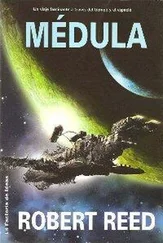





Обсуждение, отзывы о книге «Marrow» и просто собственные мнения читателей. Оставьте ваши комментарии, напишите, что Вы думаете о произведении, его смысле или главных героях. Укажите что конкретно понравилось, а что нет, и почему Вы так считаете.