Robert Reed - Marrow
Здесь есть возможность читать онлайн «Robert Reed - Marrow» весь текст электронной книги совершенно бесплатно (целиком полную версию без сокращений). В некоторых случаях можно слушать аудио, скачать через торрент в формате fb2 и присутствует краткое содержание. Год выпуска: 2000, ISBN: 2000, Издательство: Tor Books, Жанр: Фантастика и фэнтези, на английском языке. Описание произведения, (предисловие) а так же отзывы посетителей доступны на портале библиотеки ЛибКат.
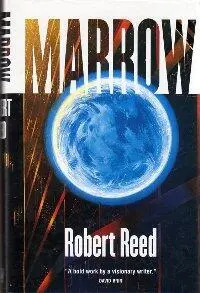
- Название:Marrow
- Автор:
- Издательство:Tor Books
- Жанр:
- Год:2000
- ISBN:0-312-86801-4
- Рейтинг книги:5 / 5. Голосов: 1
-
Избранное:Добавить в избранное
- Отзывы:
-
Ваша оценка:
Marrow: краткое содержание, описание и аннотация
Предлагаем к чтению аннотацию, описание, краткое содержание или предисловие (зависит от того, что написал сам автор книги «Marrow»). Если вы не нашли необходимую информацию о книге — напишите в комментариях, мы постараемся отыскать её.
Marrow — читать онлайн бесплатно полную книгу (весь текст) целиком
Ниже представлен текст книги, разбитый по страницам. Система сохранения места последней прочитанной страницы, позволяет с удобством читать онлайн бесплатно книгу «Marrow», без необходимости каждый раз заново искать на чём Вы остановились. Поставьте закладку, и сможете в любой момент перейти на страницу, на которой закончили чтение.
Интервал:
Закладка:
But the time they reached the’ river bottom, everyone was breathless.
The path bled into a wider, well-worn trail, but they had to slow again, panting as they jogged, coming around every bend with a jittery sense of anticipation.
In the end, they were the ones with surprised faces.
The six captains were trotting in the bright shadows. Some trick of the light hid the woman standing before them. The light and her mirrored uniform kept Washen from seeing her until the familiar face seemed to pop into existence. Miocene’s face, unchanged at first glance. She looked regal and well chilled. “It took you long enough,” the Submaster deadpanned. And only then was there a smile and an odd tilt to the face, and she added, “It’s good to see you. All of you. Honestly, I’d given up all hope.”
Washen swallowed her anger along with her questions.
Her companions asked the obvious question for her. Who else was here? they wondered. How were they making do? Did any machinery work? Had the Master been in contact with them? Then before any answers could be offered, Diu inquired, “What sort of relief mission is coming for us?”
“It’s a cautious mission,” Miocene replied. “So cautious that it fools you. It makes you believe that it doesn’t even exist.”
Her own anger was rich and strong, and well practiced.
The Submaster beckoned them to follow, and as they walked in the bright shade, she explained the essentials. Aasleen and others had cobbled together several telescopes, and at least one captain was always watching the base camp overhead. From what they could see, the diamond blister was intact. Every building was intact. But the drones and beacons were dead, and the reactor was off-line. A three-kilometer stub of the bridge was next to the blister, and it would make the perfect foundation for a new structure. But Miocene shook her head, quietly admitting that there wasn’t any trace of captains, or anyone else, trying to mount any sort of rescue attempt.
“Maybe they think we’re dead,” said Diu, desperate to be charitable.
“I don’t think we’re dead,” Miocene countered. “And even if we were, someone should be a little more interested in our bones, and in answers.”
Washen didn’t say one word. After three years of hard work, lousy food, and forced hopefulness, she suddenly felt sick and desperately sad.
The Submaster slowed her pace, working her way back through the questions.
“Every machine was ruined by the Event,” she explained. “That’s our little name for that very big phenomenon.The Event. From what we’ve pieced together, the buttresses merged. Those beneath us, and those above us. And when it happened, our cars and drones, sensors and AIs, were left as so much fancy trash.”
“Can’t you fix them?” asked Promise.
“We can’t even be sure how they were broken,” Miocene replied.
People nodded, and waited.
She offered a distracted smile, admitting, “We are surviving, however. Wooden shelters. Some iron tools. Pendulum clocks. Steam power when we go to the trouble. And enough homemade equipment, like the telescopes, that lets us do some toddler-type science.”
The trail made a slow turn.
The jungle’s understory had been cut down and beaten back, leaving the mature trees to give precious shade. The new encampment stretched out on all sides. Like anything built by determined captains, the community was orderly. Each house was square and strong, built from the gray trunks of the same kind of tree, iron axes squaring them up and notching them and the little gaps patched with a ruddy mortar. The paths were lined with smaller logs, and someone had given each path its own name. Center. Main. Left-behind. Rightbehind. Golden. And every captain was in uniform, and smiling, standing together in careful lines, trying to hide the weariness in their eyes and their sudden voices.
More than two hundred captains shouted, “Hello!”
In a practiced chorus, they shouted, “Welcome back!”
Washen could smell their sweet perspiration as well as an assortment of home-brewed perfumes. Then the wind gusted, bringing her the rich, very familiar odor of bug flesh broiling over a low fire.
A feast was being prepared, in their honor.
She spoke, finally. “How did you know we were coming?”
“Your bootprints were noticed,” Miocene reported. “Up by the bridge.”
“I saw them,” said Aasleen. She stepped forward, glad to take credit. “Counted them, measured them. Knew it was you, and came home to report.”
“There’s a quicker route than the one you found,” Miocene cautioned.
“Quicker than three years?* Diu joked.
Am embarrassed laughter blossomed, then fell away. Then Aasleen felt like telling them, “It’s been closer to four.”
She had a clever quick face, skin black as band iron, and among her peers, she seemed the only happy soul -this one-time engineer who had gradually become a captain, and who now had the responsibility of reinventing everything that humans had ever accomplished. Starting from scratch, with minimal resources… and she couldn’t have looked more contented…
“You didn’t have clocks,” she warned them. “You were living by how you felt, and humans, left without markers, fall into thirty- or thirty-two-hours days.”
Which wasn’t a surprise to anyone, of course.
Yet Saluki exclaimed, “Four years,” and marched into the brightest patch of light, glancing up through a gap in the canopy, perhaps trying to find the abandoned base camp. “Four long years…!”
If only a single captain had stayed behind at the base camp. One warm body could have called for help, or at least made the long climb to the fuel tank and leech habitat, then to the Master’s quarters… assuming, of course, that there was someone up there to find…
Thinking the worst, Washen recoiled. And finally, with her most careful voice, she forced herself to ask, “Who isn’t here?”
Miocene recited a dozen names.
Eleven of them had been Washen’s friends and associates. The last name was Hazz—a Submaster and a voyage-long colleague of Miocene’s. “He was the last to die,” she explained. “Two months ago, a fissure opened, and the molten iron caught him.”
A silence fell over the little village.
“I watched him die,” Miocene admitted, her eyes distant, and damp. And furious.
“I’ve got one goal now,” the Submaster warned. Speaking in a grim, hateful voice, she said, “I want the means to return to the world above. Then I will go to the Master myself and I’ll ask her why she sent us here. Was it to explore this place? Or was this just the best awful way to be rid of us…?”
Thirteen
Bitterness served the woman well.
Miocene despised her fate, and with a searing rage, she blamed those unconscionable acts that had abandoned her on this horrible, horrible world. Every disaster, and there were many of them, helped feed her emotions and fierce energies. Every death was a tragedy erasing an ocean of life and experience. And each rare success was each a minuscule step toward making right what was plainly and enormously wrong.
The Submaster rarely slept, and when her eyes dipped shut, she would descend into vivid, confused nightmares that eventually shook her awake, then lingered, left in the mind like some sophisticated neurological toxin.
Her immortal’s constitution kept her alive.
Ancestral humans would have perished here. Exhaustion or burst vessels or even madness would have been the natural outcome of so little sleep and so much undiluted anger. But no natural incarnation of humanity could have lived a single day in this environment, subsisting on harsh foods and ingesting every sort of heavy metal with each breath and sip and bite. Once it was obvious that the Master wasn’t pulling her fat carcass down the tunnel to rescue them, it also become plain that if Miocene were to escape, it would take time. Deep reaches of time. And persistence. And genius. And luck, naturally. Plus everyone else’s immortal constitution, too.
Читать дальшеИнтервал:
Закладка:
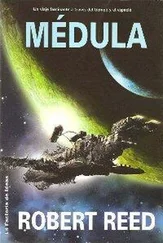
Похожие книги на «Marrow»
Представляем Вашему вниманию похожие книги на «Marrow» списком для выбора. Мы отобрали схожую по названию и смыслу литературу в надежде предоставить читателям больше вариантов отыскать новые, интересные, ещё непрочитанные произведения.






Обсуждение, отзывы о книге «Marrow» и просто собственные мнения читателей. Оставьте ваши комментарии, напишите, что Вы думаете о произведении, его смысле или главных героях. Укажите что конкретно понравилось, а что нет, и почему Вы так считаете.