Robert Kaplan - Imperial Grunts
Здесь есть возможность читать онлайн «Robert Kaplan - Imperial Grunts» весь текст электронной книги совершенно бесплатно (целиком полную версию без сокращений). В некоторых случаях можно слушать аудио, скачать через торрент в формате fb2 и присутствует краткое содержание. Город: New York, Год выпуска: 2005, ISBN: 2005, Издательство: Random House, Жанр: Публицистика, nonf_military, на английском языке. Описание произведения, (предисловие) а так же отзывы посетителей доступны на портале библиотеки ЛибКат.
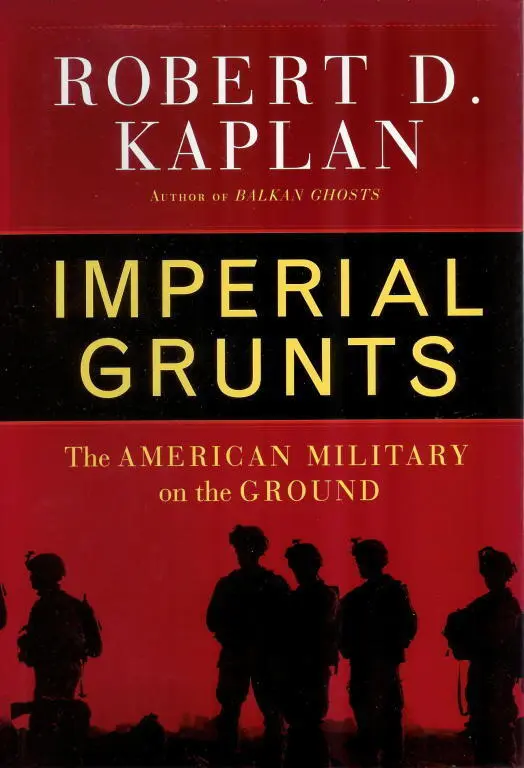
- Название:Imperial Grunts
- Автор:
- Издательство:Random House
- Жанр:
- Год:2005
- Город:New York
- ISBN:978-0-307-27850-0
- Рейтинг книги:5 / 5. Голосов: 1
-
Избранное:Добавить в избранное
- Отзывы:
-
Ваша оценка:
Imperial Grunts: краткое содержание, описание и аннотация
Предлагаем к чтению аннотацию, описание, краткое содержание или предисловие (зависит от того, что написал сам автор книги «Imperial Grunts»). Если вы не нашли необходимую информацию о книге — напишите в комментариях, мы постараемся отыскать её.
Imperial Grunts — читать онлайн бесплатно полную книгу (весь текст) целиком
Ниже представлен текст книги, разбитый по страницам. Система сохранения места последней прочитанной страницы, позволяет с удобством читать онлайн бесплатно книгу «Imperial Grunts», без необходимости каждый раз заново искать на чём Вы остановились. Поставьте закладку, и сможете в любой момент перейти на страницу, на которой закончили чтение.
Интервал:
Закладка:
“Yeah, I’m small compared to the other guys,” he went on. “My grandfather, a Vietnam vet, is even smaller than I am. He told me, ‘No grandson of mine is going to be pushed around in the schoolyard. Anyone hits you, hit ’em back and I’ll square it with your mother.’ There were tears in my grandfather’s eyes when I graduated from boot camp at Parris Island. After the ceremony we walked around together and he told me about his experiences there. I signed up for six years and I’ve seen combat in Iraq. I have as much time in the fleet as Lt. Wagner. If I make staff sergeant, I’ll reenlist. But I have no desire to be an officer.”
Wrinkle had a large tattoo over his heart: the Marine insignia of the eagle, globe, and anchor, and a large cross. “I’m no Bible-thumper,” he told me, referring to the cross. “But I am a believer.”
The sun came out after lunch and the beach looked pretty for a moment. Each of the marines drifted off alone, as Wrinkle had done. One corporal whose birthday had been two days earlier lit a Honduran cigar. Another inspected a camel. Another took pictures of us all. The waves lapped. It was a luxury for them just to get off the base.
In coming days I got out and about Djibouti. The capital, Djibouti Town, was sleepy and battered, with gracefully arched white buildings in need of a paint job. It had a charming placelessness. I might have been in Hodeida, Yemen; Cotonou, Benin; or Port-au-Prince, Haiti. The port and airport were being managed by the United Arab Emirates. The Chinese were investing in telecommunications, making loans to the port, and doing all of the major construction. Otherwise, while no one would put it this way, the French were selling Djibouti and the Americans were buying it. The future competition here, as in Mongolia and the Philippines, would be between the U.S. and China.
Like many third world countries that looked small on the map but had rugged landscapes and bad roads, Djibouti was immense. Beyond the capital I found a fantastic landscape of steep canyons and a massive salt lake. Lake Assal was the lowest point in Africa. From a distance its greenish surface looked caked with ice. I had a picnic lunch of MREs at the lake en route back from a MEDCAP that had taken place at Tadjoura, at the top end of a gulf that divides Djibouti’s Afar north from its Issa south. Tadjoura was once a busy port before the French built up Djibouti Town in the nineteenth century. Having receded into oblivion, it had a sorry collection of dusty streets and distempered houses by the water that reminded me of photos of Aqaba in 1917, when the Bedouin troops of Lawrence of Arabia captured it from the Ottoman Turks.
Watching the MEDCAP I realized that the U.S. would have an easy time in Djibouti compared to other places. Unlike in the states of the Maghreb, close to France itself, the French had made comparatively little effort to develop this territory of 750,000 people. Because the American military was already covering all of Djibouti with regular MEDCAPS, DENTCAPS, and VETCAPS, it was fair to say that it had already provided more help to the local inhabitants than the French had in a century and a half of direct and indirect rule. The Americans would not face the problem of rising expectations of the kind that I had sensed in Basilan, following the conclusion of Operation Enduring Freedom—Philippines. Beyond Djibouti Town, the population was composed of pastoral nomads who mainly wanted to be left alone.
In fact, the Americans were more ambitious than the local population. “Could we develop this place?” a Marine staff sergeant asked me as we walked through Tadjoura’s destitute streets. “Could we make it a real democracy? Why did the French fail?”
The French hadn’t really tried, I told him. I thought to myself that the Americans might only ruin things if they became too ambitious. As Levine writes in Wax and Gold: “The experience of history has demonstrated the futility of attempting the revolutionary implementation of a clear and distinct ideal in human society. No matter how bold and sweeping the program, traditional patterns persist tenaciously.” 8
I got back from Tadjoura just as Staff Sgt. Dickinson was beginning a meeting. He was seated in a chair, with marines sprawled around him on their racks in the close, sour air of the tent. The fluorescent lights were on. The generator was droning. He wasn’t angry. It was a morale talk.
“I’m not running a bunch of mindless drones,” he began. “I value your opinion. Guys have been bitching to me about the training schedule: that it’s an insult to those who have fought in Iraq. There’s a reason why we have to go over basic fire drills. It’s called brain dump. Our brains keep filling with new stuff, so if we don’t keep relearning the basics they get dumped. Because we’re standing eight-hour posts, our schedules are tight, so the decision was made to use the available training time to keep our rifle skills sharp.
“Ask yourselves, especially the guys who are not reenlisting and are turning fire teams over to others, how would you feel if you learned that your buddy was killed in the next war because you hadn’t mentored him enough on the basics? You’d feel like shit, eh? That’s why the team leaders need to mentor their riflemen and grenadiers over and over. If only one person out of twenty-nine is not expert on fire and movement, then we fail as a platoon.
“I’m not the one who closes,” he continued. “I’m not the one who takes the objective; the ones here who’ve been to Iraq know that. You guys take the objective: the team leaders and the squad leaders. So if any of you see someone who’s not keeping up, who needs help with his fire skills, fucking help him. I don’t give a fuck if you’re a private first class. If you’ve got knowledge to impart, you’re a leader. That’s the Marine way.”
“Roger that,” everyone responded.
The next morning I was gone, soon to join other marines in Iraq.
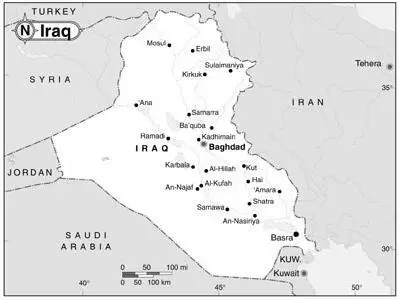
CHAPTER EIGHT
CENTCOM
IRAQ, SPRING 2004
WITH NOTES ON NICARAGUA AND VIETNAM
“I looked around in broad daylight to see the roofscape of Al-Fallujah covered with thousands upon thousands of old mufflers and tailpipes, guarded by U.S. Marines, standing atop the city with fixed bayonets…. Yet the American Empire depended upon a tissue of intangibles that was threatened, rather than invigorated, by the naked exercise of power.”
The road to Iraq began less in Washington than at Camp Pendleton, California, which along with Camp Lejeune, North Carolina, represented the main nodes of Marine strength in the United States. A naval force relatively small in size, the Marines were not spread out over a constellation of bases in the interior continent like the Army. They clustered in only a few places, on the West and East Coasts.
Except for the swaying palm trees and clean Pacific breezes, parts of Oceanside, California, next door to Camp Pendleton, seemed a replay of Jacksonville, North Carolina: pawnshops, tattoo parlors, military surplus stores, late-night convenience hangouts, and greasy spoon joints. I had been home from the Horn of Africa two days before I flew out here from New England.
As in Jacksonville and Fayetteville, I got up at the Comfort Suites, the best hotel in town, and went into the lobby for a breakfast of bad coffee and pre-packaged muffins. The other guests were men in BDUs or off-the-rack suits, the latter government workers or private contractors, usually ex-military. In its own small and sterile way, the morning ritual underscored how far removed the policy nomenklatura in Washington and New York—in its cocoon of fine restaurants and theoretical discussions—was from the frugal necessities of those who actually manned and maintained the Empire.
Читать дальшеИнтервал:
Закладка:
Похожие книги на «Imperial Grunts»
Представляем Вашему вниманию похожие книги на «Imperial Grunts» списком для выбора. Мы отобрали схожую по названию и смыслу литературу в надежде предоставить читателям больше вариантов отыскать новые, интересные, ещё непрочитанные произведения.







Обсуждение, отзывы о книге «Imperial Grunts» и просто собственные мнения читателей. Оставьте ваши комментарии, напишите, что Вы думаете о произведении, его смысле или главных героях. Укажите что конкретно понравилось, а что нет, и почему Вы так считаете.