Roberto Saviano - ZeroZeroZero
Здесь есть возможность читать онлайн «Roberto Saviano - ZeroZeroZero» весь текст электронной книги совершенно бесплатно (целиком полную версию без сокращений). В некоторых случаях можно слушать аудио, скачать через торрент в формате fb2 и присутствует краткое содержание. Год выпуска: 2015, Издательство: Penguin Publishing Group, Жанр: Публицистика, Криминальный детектив, на английском языке. Описание произведения, (предисловие) а так же отзывы посетителей доступны на портале библиотеки ЛибКат.
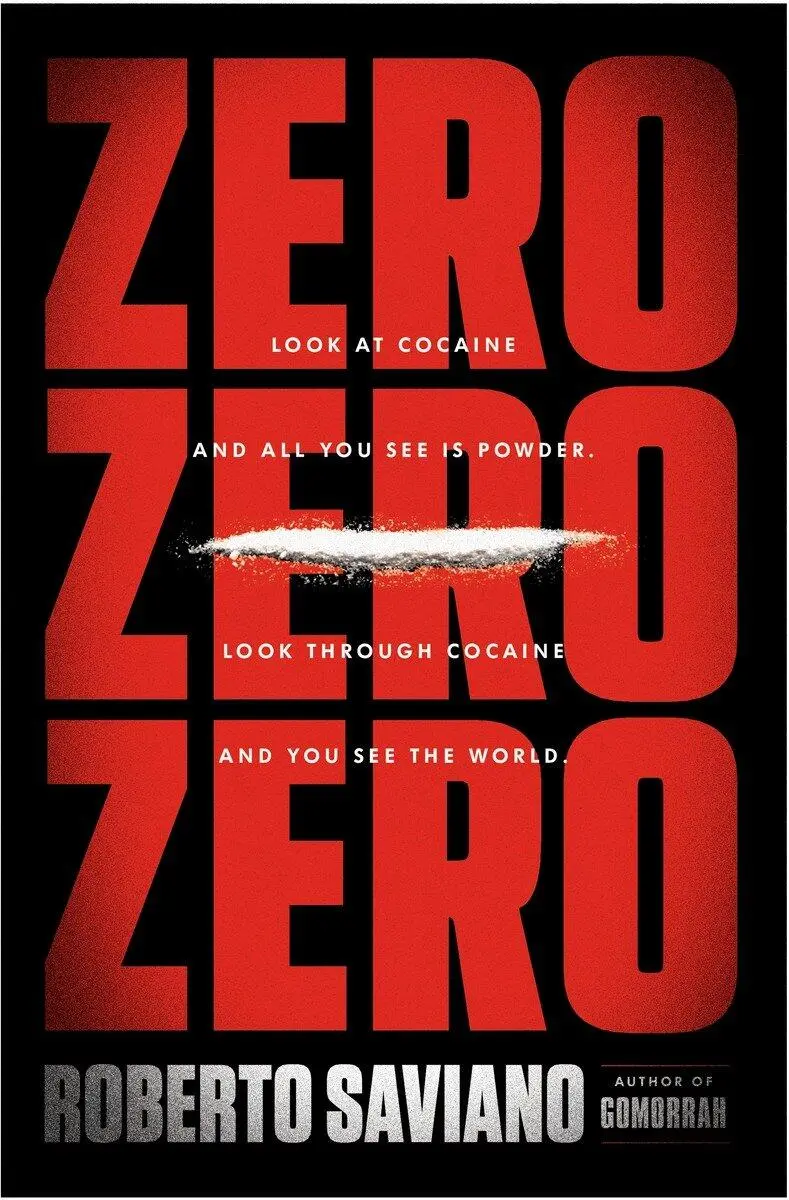
- Название:ZeroZeroZero
- Автор:
- Издательство:Penguin Publishing Group
- Жанр:
- Год:2015
- ISBN:нет данных
- Рейтинг книги:5 / 5. Голосов: 1
-
Избранное:Добавить в избранное
- Отзывы:
-
Ваша оценка:
ZeroZeroZero: краткое содержание, описание и аннотация
Предлагаем к чтению аннотацию, описание, краткое содержание или предисловие (зависит от того, что написал сам автор книги «ZeroZeroZero»). Если вы не нашли необходимую информацию о книге — напишите в комментариях, мы постараемся отыскать её.
Saviano’s
, his explosive account of the Neapolitan mob, the Camorra, was a worldwide publishing sensation. It struck such a nerve with the Camorra that Saviano has lived with twenty-four hour police protection in the shadow of death threats for more than seven years. During this time he has become intimate with law enforcement agencies around the world. Saviano has broadened his perspective to take in the entire global corporate” entity that is the drug trade in cooperation with law enforcement officials, who have fed him information and sources and used him to guide their own thinking and tactics. Saviano has used this extraordinary access to feed his own groundbreaking reportage.
The result is a truly amazing and harrowing synthesis of intimate literary narrative and geopolitical analysis of one of the most powerful dark forces in the global economy. In
, Saviano tracks the shift in the cocaine trade’s axis of power, from Colombia to Mexico, and relates how the Latin American cartels and gangs have forged alliances, first with the Italian crime syndicates, then with the Russians, Africans, and others. On the one hand, he charts an astonishing increase in sophistication and diversification as these criminal entities diversify into many other products and markets. On the other, he reveals the threat of violence to protect and extend power and how the nature of the violence has grown steadily more appalling.
Saviano is a journalist of rare courage and a thinker of impressive intellectual depth and moral imagination, able to see the connections between far-flung phenomena and bind them into a single epic story. Most drug-war narratives feel safely removed from our own lives; Saviano offers no such comfort. As heart racing as it is heady,
is a fusion of a variety of disparate genres into a brilliant new form that can only be called
.
ZeroZeroZero — читать онлайн бесплатно полную книгу (весь текст) целиком
Ниже представлен текст книги, разбитый по страницам. Система сохранения места последней прочитанной страницы, позволяет с удобством читать онлайн бесплатно книгу «ZeroZeroZero», без необходимости каждый раз заново искать на чём Вы остановились. Поставьте закладку, и сможете в любой момент перейти на страницу, на которой закончили чтение.
Интервал:
Закладка:
This is something drug traffickers know.
But Bebè’s freedom doesn’t last long. On July 5, 2013, he is arrested in a shopping center in Bogotá. In his pocket is a fake Venezuelan ID card, with the name Silvano Martino, which he shows to the police, denying that he is the narco-trafficker they’re looking for. But the mug shots from the Italian authorities don’t leave room for doubt. On the Colombian news that evening his face appears behind the journalists, who announce the arrest of “one of the most wanted drug lords in Europe.” He had four arrest orders for drug trafficking and “mafia association” hanging over his head. Interpol had classified him as a “red alert.” After the ritual photos, in which the Colombian agents show him off like a trophy, Pannunzi is put on a plane for Rome, via Madrid. He’s not the only VIP on board: Raffaella Carrà is on the flight too, Italian television’s most famous showgirl, who, like all the other passengers, is oblivious to the boss’s presence. The photos of his arrival at Fiumicino airport show him wearing the same long-sleeved white polo shirt he’d had on in the video of his arrest in Colombia, the last shirt he put on as a free man. Pannunzi now has to serve twelve years, five months, and twenty-six days in jail. During his criminal career various epithets have been pinned on him— “prince of drug trafficking”; “the most wanted broker in Europe”; “the Italian Pablo Escobar”; “king of evasions”—but I prefer to call him “the Copernicus of cocaine,” because he was the first to understand that it’s not the world of cocaine that must orbit around the markets but the markets that must rotate around cocaine.
His arrest required the collaboration of the Italian security forces, the American DEA, and the Colombian police, as well as about two years of investigations coordinated by the public prosecutor’s office in Reggio Calabria. Perhaps it’s not a coincidence that only two days before his arrest, “il Principe,” Prince Massimiliano Avesani, Bebè’s contact in Spain, was arrested in Rome. He too had a fake ID in his pocket, a driver’s license registered to a Giovanni Battista — who had a clean record — but after he was taken to police headquarters he had to admit his real identity. Avesani, who was considered the pivot between the Calabrian clans and the Roman criminal organizations, had been arrested in Montecarlo in 2011, but he went into hiding in order to avoid a fifteen-year sentence for international drug trafficking. He didn’t go very far though: His hideout was an elegant apartment in the Torrino neighborhood in the south of Rome, where the police found other blank IDs that would have come in handy for his life as a fugitive. Apparently he congratulated the police officers who arrested him: “Bingo” he allegedly said. In truth, they were still one number shy of bingo, but it arrives two days later with the arrest of Bebè Pannunzi on the other side of the planet. Who knows, maybe it was Avesani himself who extracted the winning number from the tumbler. Pannunzi may have lost his protection once Avesani fell.
Some day I’d like to meet Roberto Pannunzi. To look him in the eye, but without asking him anything, because he wouldn’t tell me anything other than empty chatter fit for a journalist who writes insubstantial fluff. There’s something I’d really like to know, though: Where does he get his inner serenity? You can see he doesn’t look tormented. He doesn’t kill. He doesn’t destroy people’s lives. Like a good drug broker, all he does is move capital and cocaine around, without ever touching the latter. Just as others do with oil or plastic. Don’t they cause car accidents, irreversible pollution all around the world, even wars that go on for decades? Do oil companyexecutives lose sleep over such things? Do plastic manufacturers? Or the heads of multinational IT companies, who surely know how their products are built, or that cornering the coltan market is the root of ongoing massacres in the Congo? I’m sure that’s how Pannunzi rationalizes things. But I’d like to hear what sort of justifications he’d offer, one by one. What does he tell himself in order to say: “I’m just a broker. You give me the money and I’ll give you the goods. Like everyone else.” That’s all. No better or worse.
11. OPERATION MONEY LAUNDERING
How do you feel when, to enter your bank, you have to go through a security door that only lets one person in at a time? What runs through your head while you’re waiting in line to make a money transfer, deposit a check, get some coins and small bills so you can make change for your customers at your bar or shop? When your father, who has a regular salary, has to sign in order for you to get a mortgage on a house, because both you and your wife make do with temp work? What concepts have you learned to associate with words like spread or rating, liquidity or deficit crises? Which of these terms are you familiar with: hedge fund, subprime, credit crunch, swap, blind trust? Can you explain what they mean? Are you too convinced that you belong to the 99 percent whose combined wealth does not even match that of the remaining 1 percent? That financial capitalism is primarily to blame for your increasingly difficult struggle to make ends meet? And do you too believe that the banks, which manage to get billions from the state — from you, in other words — and yet won’t renew your credit, are a giant Moloch controlled by an invisible and untouchable clique of speculators and high-level executives? You’re wrong, at least in part. There’s no secret power trying to crush you, no specter with degrees from the best universities, dressed in expensive but understated outfits, and displaying calm, sober manners.
Banks and banking power are made up of people, just like everything else. If that power has proved to be deeply destructive, the fault lies not just with greedy cokehead brokers or that one corruptible employee, but with everyone: from the trader licensed to make high-risk deals, to the team of specialists that buys stocks on the global market that will flow into funds offered by the same bank, to the employee who suggests someone to manage your savings, right down to the teller at the window. All together they carry out the bank’s directives, and almost all of them are honest. Honest not merely as in not doing anything illegal, but also in believing they’re acting for the good of the bank without, however, acting for the ill of its clientele. Maybe a little less honest at times, but not because they decide on their own to look after their interests, but because they’re doing what they’ve always done: carrying out tacit directives that are always in the bank’s best interest. And this happens at all levels, high and low, and it forms a system. Which is how we arrive at that global mechanism that might seem to you like some kind of conspiracy but that really works much more along the lines of what has been called “the banality of evil.”
But if the mechanism is made up of many loyal and banal individuals, a little grit can cause the gears to jam. For example, the man who, if it hadn’t been for September 11, would have been kept waiting forever in a damp room at a London police station. The Twin Towers have just fallen and the United States is starting to recover. George W. Bush has introduced the PATRIOT Act, which among other things is supposed to identify and pursue international money laundering and funding for terrorism. The law establishes a series of special measures that U.S. banks are required to adopt when dealing with jurisdictions, institutions, or accounts they suspect are laundering dirty money; it provides greater transparency in financial activities and accountability, limitations on interbank operations, and tougher penalties for transgressors.
Читать дальшеИнтервал:
Закладка:
Похожие книги на «ZeroZeroZero»
Представляем Вашему вниманию похожие книги на «ZeroZeroZero» списком для выбора. Мы отобрали схожую по названию и смыслу литературу в надежде предоставить читателям больше вариантов отыскать новые, интересные, ещё непрочитанные произведения.

Обсуждение, отзывы о книге «ZeroZeroZero» и просто собственные мнения читателей. Оставьте ваши комментарии, напишите, что Вы думаете о произведении, его смысле или главных героях. Укажите что конкретно понравилось, а что нет, и почему Вы так считаете.