Roberto Saviano - ZeroZeroZero
Здесь есть возможность читать онлайн «Roberto Saviano - ZeroZeroZero» весь текст электронной книги совершенно бесплатно (целиком полную версию без сокращений). В некоторых случаях можно слушать аудио, скачать через торрент в формате fb2 и присутствует краткое содержание. Год выпуска: 2015, Издательство: Penguin Publishing Group, Жанр: Публицистика, Криминальный детектив, на английском языке. Описание произведения, (предисловие) а так же отзывы посетителей доступны на портале библиотеки ЛибКат.
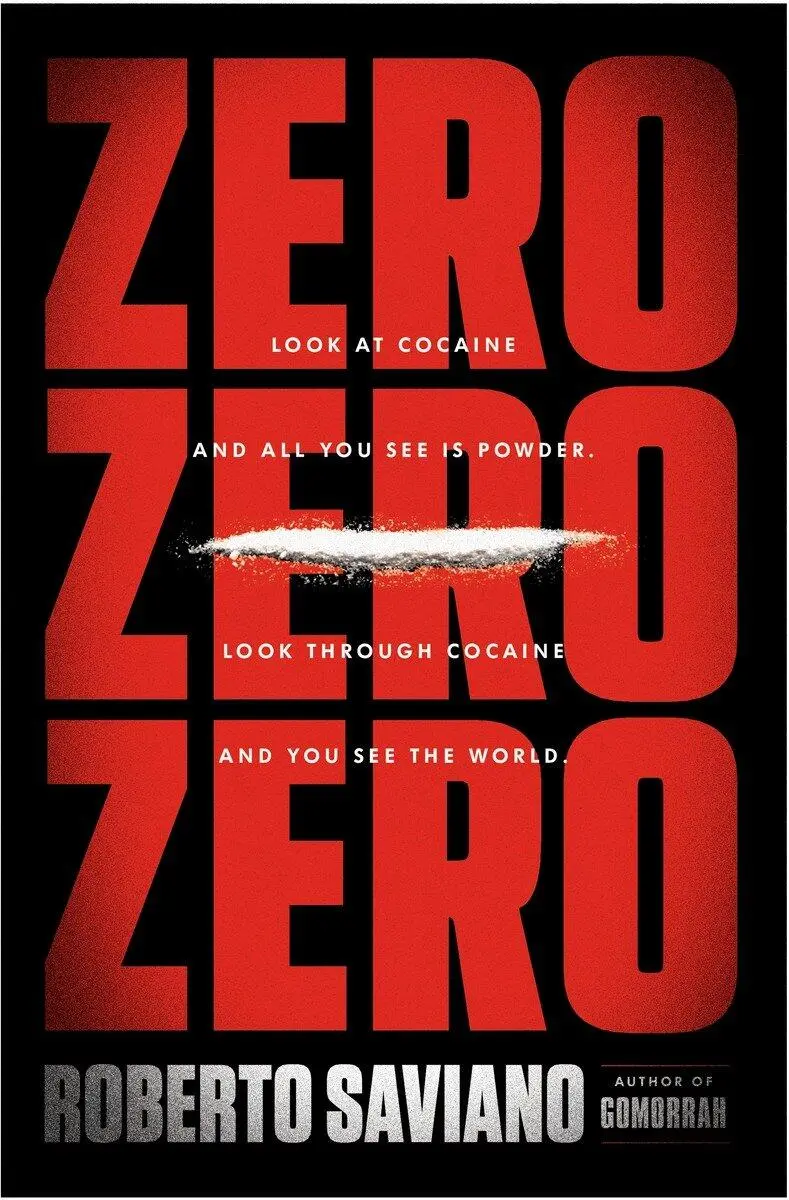
- Название:ZeroZeroZero
- Автор:
- Издательство:Penguin Publishing Group
- Жанр:
- Год:2015
- ISBN:нет данных
- Рейтинг книги:5 / 5. Голосов: 1
-
Избранное:Добавить в избранное
- Отзывы:
-
Ваша оценка:
ZeroZeroZero: краткое содержание, описание и аннотация
Предлагаем к чтению аннотацию, описание, краткое содержание или предисловие (зависит от того, что написал сам автор книги «ZeroZeroZero»). Если вы не нашли необходимую информацию о книге — напишите в комментариях, мы постараемся отыскать её.
Saviano’s
, his explosive account of the Neapolitan mob, the Camorra, was a worldwide publishing sensation. It struck such a nerve with the Camorra that Saviano has lived with twenty-four hour police protection in the shadow of death threats for more than seven years. During this time he has become intimate with law enforcement agencies around the world. Saviano has broadened his perspective to take in the entire global corporate” entity that is the drug trade in cooperation with law enforcement officials, who have fed him information and sources and used him to guide their own thinking and tactics. Saviano has used this extraordinary access to feed his own groundbreaking reportage.
The result is a truly amazing and harrowing synthesis of intimate literary narrative and geopolitical analysis of one of the most powerful dark forces in the global economy. In
, Saviano tracks the shift in the cocaine trade’s axis of power, from Colombia to Mexico, and relates how the Latin American cartels and gangs have forged alliances, first with the Italian crime syndicates, then with the Russians, Africans, and others. On the one hand, he charts an astonishing increase in sophistication and diversification as these criminal entities diversify into many other products and markets. On the other, he reveals the threat of violence to protect and extend power and how the nature of the violence has grown steadily more appalling.
Saviano is a journalist of rare courage and a thinker of impressive intellectual depth and moral imagination, able to see the connections between far-flung phenomena and bind them into a single epic story. Most drug-war narratives feel safely removed from our own lives; Saviano offers no such comfort. As heart racing as it is heady,
is a fusion of a variety of disparate genres into a brilliant new form that can only be called
.
ZeroZeroZero — читать онлайн бесплатно полную книгу (весь текст) целиком
Ниже представлен текст книги, разбитый по страницам. Система сохранения места последней прочитанной страницы, позволяет с удобством читать онлайн бесплатно книгу «ZeroZeroZero», без необходимости каждый раз заново искать на чём Вы остановились. Поставьте закладку, и сможете в любой момент перейти на страницу, на которой закончили чтение.
Интервал:
Закладка:
Meanwhile, the Catanzaro Finance Guard agents have discovered another possible pretext. Although phone communication between Italy and Colombia has been maniacally prudent, they’ve traced a number of calls to one particular landline. But it’s a Holland number. It turns out to belong to an Amsterdam law firm, that of Leon Van Kleef. He and his partners are so well known, they were featured in the popular weekly magazine Nieuwe Revu . As usual, the link is Pannunzi, who builds his credibility through mutual acquaintances, not to mention his own savoir faire as a successful and worldly businessman. And so, in an elegant quarter of Amsterdam, in offices lined with contemporary art, a bunch of mafiosi, ’ndranghetas, and Colombian narcos come together to talk serenely about their business. In the investigation, reference is made to a shipment of 600 kilos or so of cocaine, which, according to Pannunzi is of a quality that’s “never been seen before, something you dream about.” They dub the enterprise the Flower Deal in homage to Holland’s most famous export. If Bebè was the one to make up the name, he might have chosen it for the added pleasure of alluding to the tulip fever that swept across Holland in the seventeenth century, the first speculative bubble in history. Cocaine had become the same sort of exponential money multiplier that tulip bulbs had been back then, and it seems fitting that the place of negotiation is the same. Paolo Sergi and the Sicilian Giuseppe Palermo commute between Italy and Amsterdam to carry on the increasingly difficult negotiations. The lot is reduced to 200 kilos, but Alessandro Pannunzi phones his father, worried that they may not be able to cover the entire purchase with the cash they have on hand, and so may need to reduce the lot again by half. In the end, the Flower Deal crumbles, thanks to a banal hitch. Even though they have the money, the Marandos can’t change it into dollars quickly enough. The Dutch won’t accept any other currency, and since there’s no shortage of interested buyers for such high-quality merchandise, they sell it to someone else.
The Italian antimafia unit investigated Leon Van Kleef but to no avail; he insisted that a lawyer with an international clientele can’t be expected to know what the people waiting outside his office might be discussing. He has his name to defend, as well as the twenty-year reputation of a law firm that the Dutch magazine describes as “the choice of many leading criminals.” On their elegant Web site the firm’s lawyers let it be known that they specialize in homicide, manslaughter, extortion, fraud, and money laundering, and that they are not prepared to represent informers or whistle-blowers. Van Kleef, who specializes in Spanish speakers, decided to stand by his client to the end. And Dutch law has no provisions for such crimes as external support of a criminal organization. Even the DDA of Reggio Calabria finally decided not to press charges against him.
• • •
After the unfortunate dinner at the Adriano Restaurant in Madrid, Pasquale Ciola continued to live peacefully in his house in Ostuni for seventeen years, contesting sentence after sentence and trusting in the slowness of the Italian judicial machine. The Supreme Court doesn’t hand down a definitive sentence until February 2011: seven years and two months. Ciola, who was then nearly eighty years old, packed his suitcase and was escorted to the regional jail.
Mario from Madrid, on the other hand, survives for years behind bars, like an old-school mafia boss. From Spain he goes to Grasse, to the same prison he’d escaped from almost a decade earlier. The French are far more attentive this time, but in 2004 they have to extradite him to Naples for one of his many trials. And in Italy the Supreme Court orders him to be released. Mario doesn’t waste a minute before disappearing again into the “land of bulls.” He’s arrested in Spain in 2006 with a passport and credit card belonging to a Slovenian citizen and €77,000 in cash. The Spanish judges decide to release him on a technicality. Two months later he is arrested again, this time while passing himself off as a Bulgarian, but once again he is released on a technicality.
Locatelli always seems to find a way to pick himself up when he stumbles. His two sons, who stayed in Italy, are grown men now, capable of running a sizable, dynamic enterprise. The best thing for them to do — their best cover — is to keep making dirty money, lots of it, while officially making clean money. The Locatelli family owns LOPAV S.p.A., a flooring company in Ponte San Pietro, a few miles from Brembate di Sopra. Their company has excellent credentials and has expanded significantly, thanks to its competitiveness and competence, and it contributes notably to the wealth of the territory. It’s not their fault if their father, who left when they were young, turned out to be a rogue; they rolled up their sleeves and provided honest jobs to lots of people. That’s how the locals, both ordinary and important folks, think of them. They don’t ask where the financing came from to build the business to the point of dominating the industry nationally in less than ten years. Those Locatelli boys are enterprising; they’re good, that’s all. Everybody’s good opinion of them is confirmed when LOPAV is awarded a five hundred thousand euro contract to build the undercoating and exterior floors for earthquake-proof housing in L’Aquila, as well as the flooring for a new shopping center in Mapello. Brembate and Ponte San Pietro have reason to be proud when the company’s official Web site boasts that “the earthquake victims of L’Aquila will walk on ‘Bergamasque ground.’”
But just as work in Abruzzo is about to begin, the Naples DDA issues an international arrest warrant for Pasquale Locatelli, once again accused of association with international drug trafficking. The link this time is the Mazzarella clan, Locatelli’s clients in Campania, who get their cocaine and hashish through him. A joint operation coordinated by the Naples Finance Guard and involving Interpol and the Spanish police leads to his arrest at the Madrid airport in May 2010, after authorities trailed his son, who was on his way to Spain to see him. But people are even more bewildered when Patrizio and Massimiliano are also jailed five months later; wiretaps led to their being accused of playing a very active role in both money-laundering activities and the astronomical fees paid to drug traffickers. Pasquale Locatelli had built a mechanism that worked perfectly, even when he was in hiding or in prison. As much as they can try to stop him, he is the Galileo of cocaine. They can condemn him — and yet cocaine moves.
• • •
It seems impossible by this point, but on April 5, 2004, the Italian police flush out Roberto Pannunzi in an elegant Madrid neighborhood, along with his son Alessandro and his son-in-law Francesco Bumbaca. Once again he is sent to jail in Italy. And here he pulls off one of his typical magic tricks. For health reasons, on February 21, 2009, he’s transferred to the Parma prison clinic, where he’s kept under special surveillance. Then a heart ailment gets him house arrest for a year. The court indicates the Tor Vergata General Hospital for his treatment. But Pannunzi, after spending a few months at a clinic in Nemi, in the province of Rome, chooses Villa Sandra, a private clinic in the city. The media doesn’t have its eye on him, public opinion doesn’t know about him, so he’s not considered a threat. Italian politics is distracted by completely different concerns. And thus, a couple of months before his house arrest is to end, Pannunzi escapes from a clinic a second time, leaving no trace. But what’s even more incredible is that they only notice by chance that he’s gone. On March 15, 2010, the Carabinieri make their usual rounds: Pannunzi’s not there. His room wasn’t guarded, and no one is sure exactly when he made his excape: He was supposed to be serving a sixteen-and-a-half-year sentence, and a first-level court had already sentenced him to an additional eighteen years. A man condemned to hard time but who wasn’t even being guarded, who escapes easily, who buys himself silence and intercontinental plane tickets. The Italian state should not allow men with the unlimited financial resources of a Pannunzi to convalesce in private clinics. As Nicola Gratteri, the magistrate who has been following him for years, says: Roberto Pannunzi “is part of that class of people who don’t count their money; they weigh it.”
Читать дальшеИнтервал:
Закладка:
Похожие книги на «ZeroZeroZero»
Представляем Вашему вниманию похожие книги на «ZeroZeroZero» списком для выбора. Мы отобрали схожую по названию и смыслу литературу в надежде предоставить читателям больше вариантов отыскать новые, интересные, ещё непрочитанные произведения.



Обсуждение, отзывы о книге «ZeroZeroZero» и просто собственные мнения читателей. Оставьте ваши комментарии, напишите, что Вы думаете о произведении, его смысле или главных героях. Укажите что конкретно понравилось, а что нет, и почему Вы так считаете.