Roberto Saviano - ZeroZeroZero
Здесь есть возможность читать онлайн «Roberto Saviano - ZeroZeroZero» весь текст электронной книги совершенно бесплатно (целиком полную версию без сокращений). В некоторых случаях можно слушать аудио, скачать через торрент в формате fb2 и присутствует краткое содержание. Год выпуска: 2015, Издательство: Penguin Publishing Group, Жанр: Публицистика, Криминальный детектив, на английском языке. Описание произведения, (предисловие) а так же отзывы посетителей доступны на портале библиотеки ЛибКат.
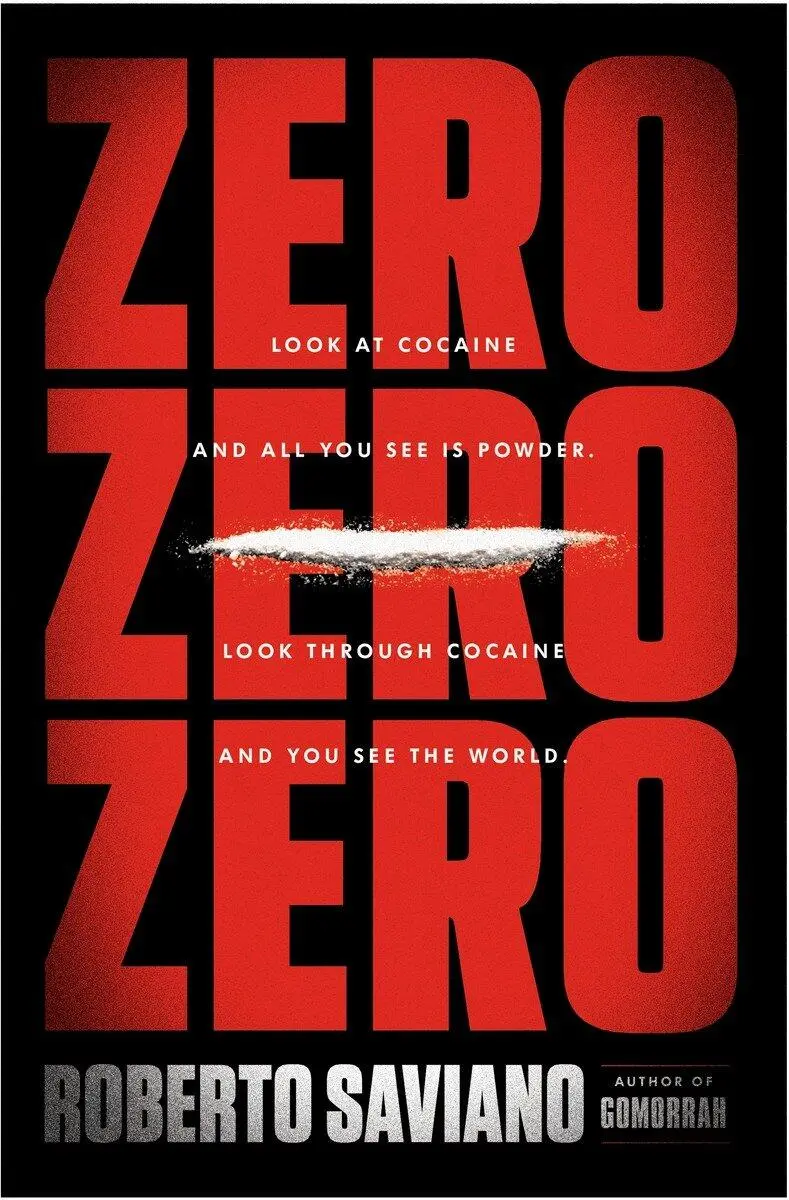
- Название:ZeroZeroZero
- Автор:
- Издательство:Penguin Publishing Group
- Жанр:
- Год:2015
- ISBN:нет данных
- Рейтинг книги:5 / 5. Голосов: 1
-
Избранное:Добавить в избранное
- Отзывы:
-
Ваша оценка:
ZeroZeroZero: краткое содержание, описание и аннотация
Предлагаем к чтению аннотацию, описание, краткое содержание или предисловие (зависит от того, что написал сам автор книги «ZeroZeroZero»). Если вы не нашли необходимую информацию о книге — напишите в комментариях, мы постараемся отыскать её.
Saviano’s
, his explosive account of the Neapolitan mob, the Camorra, was a worldwide publishing sensation. It struck such a nerve with the Camorra that Saviano has lived with twenty-four hour police protection in the shadow of death threats for more than seven years. During this time he has become intimate with law enforcement agencies around the world. Saviano has broadened his perspective to take in the entire global corporate” entity that is the drug trade in cooperation with law enforcement officials, who have fed him information and sources and used him to guide their own thinking and tactics. Saviano has used this extraordinary access to feed his own groundbreaking reportage.
The result is a truly amazing and harrowing synthesis of intimate literary narrative and geopolitical analysis of one of the most powerful dark forces in the global economy. In
, Saviano tracks the shift in the cocaine trade’s axis of power, from Colombia to Mexico, and relates how the Latin American cartels and gangs have forged alliances, first with the Italian crime syndicates, then with the Russians, Africans, and others. On the one hand, he charts an astonishing increase in sophistication and diversification as these criminal entities diversify into many other products and markets. On the other, he reveals the threat of violence to protect and extend power and how the nature of the violence has grown steadily more appalling.
Saviano is a journalist of rare courage and a thinker of impressive intellectual depth and moral imagination, able to see the connections between far-flung phenomena and bind them into a single epic story. Most drug-war narratives feel safely removed from our own lives; Saviano offers no such comfort. As heart racing as it is heady,
is a fusion of a variety of disparate genres into a brilliant new form that can only be called
.
ZeroZeroZero — читать онлайн бесплатно полную книгу (весь текст) целиком
Ниже представлен текст книги, разбитый по страницам. Система сохранения места последней прочитанной страницы, позволяет с удобством читать онлайн бесплатно книгу «ZeroZeroZero», без необходимости каждый раз заново искать на чём Вы остановились. Поставьте закладку, и сможете в любой момент перейти на страницу, на которой закончили чтение.
Интервал:
Закладка:
• • •
Once again, Locatelli’s and Pannunzi’s lives mirror each other’s. By a strange twist of fate, both men manage to elude Italian jail, the most rigorous penal system in all of Europe for mafiosi and drug dealers. Bebè, after being transferred to Italy, ends up being released: The legal limit for the duration of his pretrial custody had expired. In 1999 he’s arrested again for “mafia association,” and while under house arrest, granted for health reasons, he does what Diabolik did ten years earlier: He escapes from a Roman clinic without even the help of an armed commando unit. Like Mario, he chooses Spain for his hiding place: Spain, which at the time is in the midst of a huge real estate boom, the ideal place for drug traffickers to gather, and to buy.
In Italy Bebè maintains a tight network that in Rome centers around Stefano De Pascale, who in the past was linked to the Banda della Magliana, as was Locatelli’s Roman contact. I think of him every time I’m on Via Nazionale, because right here, at the Top Rate Change agency, an accomplice would exchange into dollars and other currencies the hundreds of millions of lire that De Pascale managed for Pannunzi. As Pannunzi’s consigliere, De Pascale didn’t simply carry out orders, he also offered suggestions and opinions, in addition to keeping accounts and handling relations between clients and suppliers. The man I knew primarily as Spaghetto was Bebè’s longa manus in Rome, the one to whom the Calabrian clans doing business with Pannunzi could always turn.
In January 2001, Bebè, hounded by an international arrest warrant, returns to Colombia, where he buys a grand villa. He contacts some narco-traffickers and ventures out into the countryside where coca grows, to visit the refineries. He never lets his guard down and selects his collaborators with utmost care. He knows from experience that it’s a small world, and there’s nowhere left where he can allow himself even the slightest imprudence.
Pannunzi’s strength lies in the absolute impenetrability of his system. His entire criminal network maintains a level of stealth that make investigators bang their heads against the wall. As one official Italian inquest put it, Bebè “never makes a mistake, never a ‘wrong move,’ never a real name, an address, a meeting place in any comprehensible way over the course of countless conversations; it’s all wordplay, metaphors, similes, and code names to refer to friends, times, meetings. The utmost prudence and attention, above all in the back and forth of phone numbers that are essential for maintaining contact: Those under investigation thought up secret codes with private keys — never a cell phone number stated openly, always a string of apparently meaningless ciphers.”
In order to get to know who Roberto Pannunzi is you first have to immerse yourself in the inextricable tangle of his language. His men’s names are always fake nicknames: the Youngster, the Blond, the Bookkeeper, the Nephew, Lupin, Longlegs, the Clockmaker, the Little Old Man, the Puppydog, the Dyer, Big Hat, the Mouse, Uncle, Uncle’s Relative, the Parent’s Brother, Auntie, the Halfwit, the Godfather, Blood, Alberto Sordi, the Girl, the Roly-poly Brothers, the Kid, Miguel, Pal, Throat, the Gentleman, Shorty, the Surveyor. Small mirrors that reflect slices of a distorted reality. He knows his phone is tapped, so he gives names, addresses, and phone numbers in the most cryptic way possible.
“21.14—8.22.81.33–73.7.15. They’re initials, three initials, got it?”
“New line, dash: 18.11.33.—K 8.22.22.16—7.22.42.81.22. K.11.9.14.22.23.—: 18.81.33.9.22.8.23.25,14.11.11.25—(+6) (+6) is the number.”
“Then 11.21.23.25.22.14.9.11.21.11 again. That’s the city.”
“New line, the office number: +1, -2 (I don’t know if you need the zero or not) -3, -7, =, -7, +6, -3, +5, +3, +4.”
Such extreme prudence makes it difficult at times for even his associates to understand the messages. But it’s a necessary precaution. A total of six fugitives are part of the network: Roberto Pannunzi; his son, Alessandro; Pasquale Marando; Stefano “lo Spaghetto” De Pascale; Tonino Montalto, and Salvatore Miceli, the Trapani accomplice.
Phone numbers are communicated through prearranged alphanumeric sequences, and calls are made from phone booths or with a different phone card every time. They never go to a meeting in a car that’s registered in their name. Cocaine is referred to as “bank documents,” “checks,” “invoices,” “loans,” “furniture,” “the lion in the cage.” And to find out how many kilos were ordered? Just talk about the “hours of work.” Pannunzi’s secret, shadowy world is boundless. A whirlpool it’s easy to get sucked into. There’s nothing to grab on to, and the few handholds that do seem to surface crumble immediately, replaced by even more cryptic ones. Only some anomalous disturbance can give shape to the shapeless, some error that lets you dispel the fog just long enough to glimpse a handhold. Once you’ve grabbed it, cling to it, don’t let go.
The disturbance that arrives is named Shorty: His real name is Paolo Sergi, a prominent figure in the Platì ’ndrine. Shorty makes a thoughtless mistake: He uses his own cell phone, which the investigators intercept. A fatal carelessness, because it’s what allows the Counter-Narcotics Group of the Catanzaro Finance Guard to break into the network. Paolo Sergi becomes the skeleton key, and he’s the one who gives the Italian antimafia investigation its name: “Igres” is simply “Sergi” spelled backward.
Thanks to Shorty’s carelessness the fog lifts to reveal a logical system. The blind alleyways and smoke screens the investigators had stumbled through could now be seen for what they were: smoke in their eyes. Distorted fragments begin to recompose into coherent images. What emerges is a gigantic economic force. From the wiretappings, investigators can trace the entire picture: a complex organization divided into two main branches, one in Calabria, the other in Sicily. Pannunzi, whom the investigators characterize as “charismatic and never to be contradicted,” takes care of everything from acquisition to distribution, and he procures enormous quantities of cocaine for Italy. His principal supplier in Colombia is the narco-trafficker known as Barba, or Beard. Beard and Pannunzi have a gentlemen’s agreement, which seems incredible given that it’s standard practice to ask for flesh and blood as well as financial guarantees. But Pannunzi is admired and respected in Bogotá, and the ’ndrina he works for is itelf a guarantee: The Marando-Trimboli families’ resources are so huge that at times Pannunzi himself is amazed at the sums the Calabrian bosses keep coming up with to finance their business.
Roberto gives orders to his son, Alessandro, from Colombia. Salvatore Miceli and the Mariano Agate clan organize transport from South America and the transfer of goods off the coast of the Aegadian Islands, where boats from the Sicilian town of Mazara del Vallo, which have the advantage of being able to blend in with the rest of the fishing fleet, are ready to take delivery. The Sicilians’ presence means there will be local mafia backing when the drugs are unloaded along the Trapani coast, which they control.
Rosario Marando and Rocco Trimboli handle distribution to the Rome and Milan drug markets. They call the buyers and establish the terms of purchase using a language rich in soccer metaphors. On the phone the two Platì bosses ask their interlocutors if they want to “reserve a field for the game.” Sometimes the buyer says he’d like to “play,” but “the rest of the team is away from Rome,” meaning that his usual purchasing partners are out of town at the moment. So he asks if they can move the “soccer game” to the following Monday.
Читать дальшеИнтервал:
Закладка:
Похожие книги на «ZeroZeroZero»
Представляем Вашему вниманию похожие книги на «ZeroZeroZero» списком для выбора. Мы отобрали схожую по названию и смыслу литературу в надежде предоставить читателям больше вариантов отыскать новые, интересные, ещё непрочитанные произведения.

Обсуждение, отзывы о книге «ZeroZeroZero» и просто собственные мнения читателей. Оставьте ваши комментарии, напишите, что Вы думаете о произведении, его смысле или главных героях. Укажите что конкретно понравилось, а что нет, и почему Вы так считаете.