Roberto Saviano - ZeroZeroZero
Здесь есть возможность читать онлайн «Roberto Saviano - ZeroZeroZero» весь текст электронной книги совершенно бесплатно (целиком полную версию без сокращений). В некоторых случаях можно слушать аудио, скачать через торрент в формате fb2 и присутствует краткое содержание. Год выпуска: 2015, Издательство: Penguin Publishing Group, Жанр: Публицистика, Криминальный детектив, на английском языке. Описание произведения, (предисловие) а так же отзывы посетителей доступны на портале библиотеки ЛибКат.
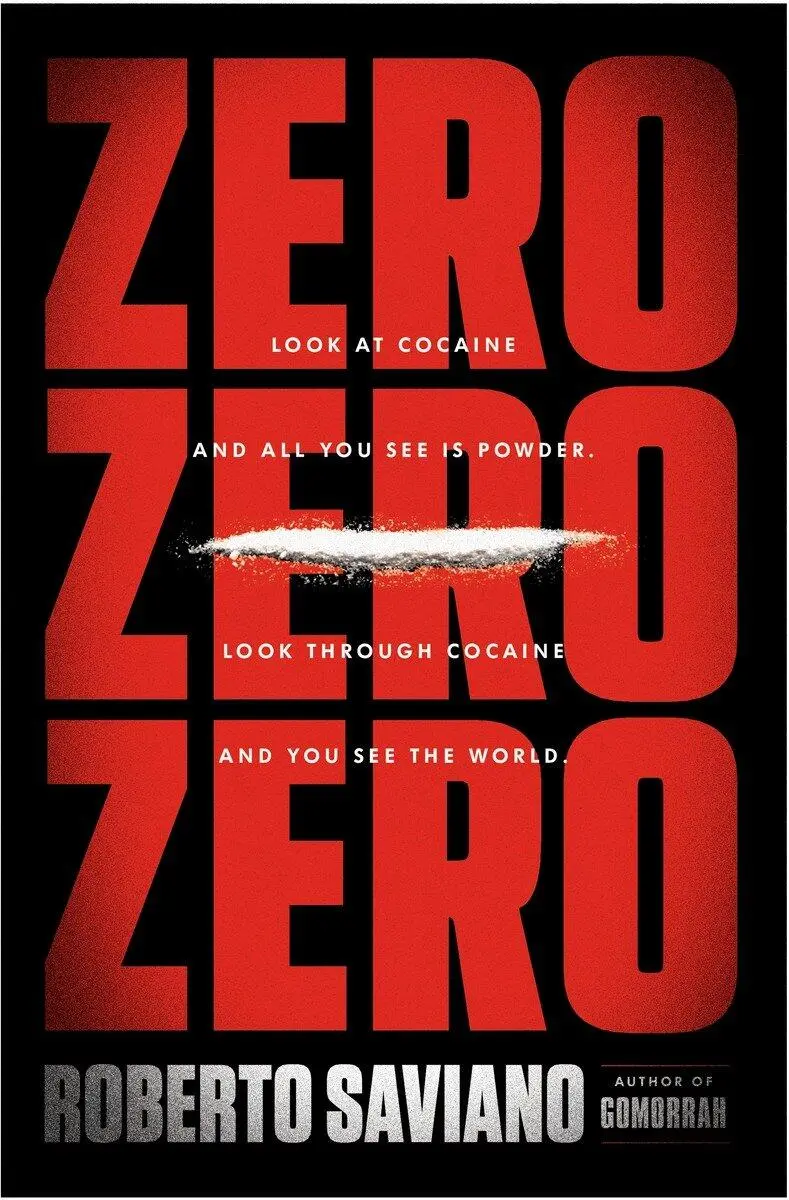
- Название:ZeroZeroZero
- Автор:
- Издательство:Penguin Publishing Group
- Жанр:
- Год:2015
- ISBN:нет данных
- Рейтинг книги:5 / 5. Голосов: 1
-
Избранное:Добавить в избранное
- Отзывы:
-
Ваша оценка:
ZeroZeroZero: краткое содержание, описание и аннотация
Предлагаем к чтению аннотацию, описание, краткое содержание или предисловие (зависит от того, что написал сам автор книги «ZeroZeroZero»). Если вы не нашли необходимую информацию о книге — напишите в комментариях, мы постараемся отыскать её.
Saviano’s
, his explosive account of the Neapolitan mob, the Camorra, was a worldwide publishing sensation. It struck such a nerve with the Camorra that Saviano has lived with twenty-four hour police protection in the shadow of death threats for more than seven years. During this time he has become intimate with law enforcement agencies around the world. Saviano has broadened his perspective to take in the entire global corporate” entity that is the drug trade in cooperation with law enforcement officials, who have fed him information and sources and used him to guide their own thinking and tactics. Saviano has used this extraordinary access to feed his own groundbreaking reportage.
The result is a truly amazing and harrowing synthesis of intimate literary narrative and geopolitical analysis of one of the most powerful dark forces in the global economy. In
, Saviano tracks the shift in the cocaine trade’s axis of power, from Colombia to Mexico, and relates how the Latin American cartels and gangs have forged alliances, first with the Italian crime syndicates, then with the Russians, Africans, and others. On the one hand, he charts an astonishing increase in sophistication and diversification as these criminal entities diversify into many other products and markets. On the other, he reveals the threat of violence to protect and extend power and how the nature of the violence has grown steadily more appalling.
Saviano is a journalist of rare courage and a thinker of impressive intellectual depth and moral imagination, able to see the connections between far-flung phenomena and bind them into a single epic story. Most drug-war narratives feel safely removed from our own lives; Saviano offers no such comfort. As heart racing as it is heady,
is a fusion of a variety of disparate genres into a brilliant new form that can only be called
.
ZeroZeroZero — читать онлайн бесплатно полную книгу (весь текст) целиком
Ниже представлен текст книги, разбитый по страницам. Система сохранения места последней прочитанной страницы, позволяет с удобством читать онлайн бесплатно книгу «ZeroZeroZero», без необходимости каждый раз заново искать на чём Вы остановились. Поставьте закладку, и сможете в любой момент перейти на страницу, на которой закончили чтение.
Интервал:
Закладка:
Mejía too owns a stable of prized Paso Fino horses, as well as an art collection, which he seems less attached to. He decides to entrust the bank’s intermediaries with three paintings: a Picasso, a Rubens, and a Reynolds. Experts estimated their value at $15 million. But money laundering is the real business for the bank. Mejía starts with almost $2.5 million, from narco-trafficking in Italy, to be reinvested, money that arrives through a trusted colleague of Mejía’s Italian partner who operates in Spain and Italy.
Which is how the DEA agents suddenly and unexpectedly find themselves on the trail of Pasquale Locatelli. Their plan had been to hit the strongest narco-trafficking organization in the world at that time, the Cali cartel. Mario from Madrid appears practically out of nowhere. He and his organization turn out to be incredibly difficult to get their hooks into. Never a call from a traceable phone. Money-laundering schemes so swift that no one can keep up with the transfers. Precisely because of the Italian partner, the investigation comes to a dead end. The team decides to put an undercover agent on him, a very special agent. An inspector in the anti-crime unit of the Italian police whose financial expertise has been honed by years of investigations but who has never done an undercover mission. Young, not even twenty-seven years old, but very presentable, an impeccable presence. Fluent in several languages and familiar with sophisticated money-laundering methods. And a woman.
It seems like another plot twist in a Hollywood action movie. Out there in the real world beautiful young women who are also capable of taking on a new identity without the least slipup rarely exist. The Americans are skeptical, and even the Italians have their doubts, but in the end everyone is convinced of the advantages she offers as an undercover agent. And so, after some accelerated personalized training by the DEA, Maria Monti is born: an expert in international finance who exudes a vivacious femininity and an ambition as ravenous as it is innocent. Like many young women, she’s more talented than the men and extremely eager to prove herself. Everyone who comes in contact with her finds that working with her is a pleasure.
Maria is catapulted into a whirlwind of business-class flights, taxis and limousines, hotels and restaurants for the happy few. The unreality of it all calms her anxiety. There’s the risk of enjoying it too much, of letting her guard down, of growing distracted by all the novelty and luxury. But that doesn’t happen. She handles it all as if she is used to such things. The infiltrator doesn’t forget for a second that she’s merely the vanguard of a team following her signal via the GPS hidden in her overnight bag, standing by and ready to come to her rescue if necessary. The risk she’s taking is quite real, however. The first people she has to establish contact with are the narcos.
Miami’s port is immense; it’s called the cruise capital of the world. Moored in the shadow of Carnival and Royal Caribbean ships seven stories high are yachts that only seem small compared to the vast tonnage of those floating monsters. Maria was supposed to wrap up the deal in a more crowded place, but her South American clients don’t show. So someone takes her to the port, has her board a yacht, and hoists anchor. She ends up in the middle of the ocean. The agent waiting for her on the wharf can’t help her now; she has only herself to rely on. Well, this is all fantastic, she says, but I came here for business, not for fun; apologies if I’m not in the mood.
Mario from Madrid also brings Maria aboard a yacht the first time he meets her, off the Costa del Sol near Marbella, where he was living with Loredana. Locatelli wants to carefully study this girl who has made her way into his Colombian partners’ good graces. Maria realizes what he’s up to, and for a moment she feels naked, but then she summons up all her coolness. She talks about taxes and interest rates, stocks, investment funds. She discusses the risks and potential of betting on the new economy and suggests a couple of profitable transactions involving currency exchange. It works. The boss believes she’s the real thing; the flow of money to the Antilles bank can continue.
And yet the moments of terror are hardly over. The day Maria receives a briefcase containing $2 million she realizes that she’s being followed. She can’t run the risk of being robbed, or — worse yet — recognized, as she gets into her colleague’s car, as planned. She has no idea if the man behind her is some mysterious mugger or a shadow sent to check on her. She flags down a taxi and drives around the city for hours, from one end to the other.
Paradoxically, it’s in Italy that she’s most afraid. In Rome the meetings are always arranged in busy places: the Jolly Hotel, the Palombini Bar in the EUR neighborhood. What if someone recognizes her, calls out to her, uses her real name? They’d trained her for that too: act as if it’s a mistake. A quick hard look, a second of perplexity, nothing more. But Maria isn’t sure she can keep her cool. At times a more subtle anxiety writhes inside her: She can’t rule out the possibility that one of her contacts might leak some information about her. She has to negotiate with Roberto Severa, Locatelli’s right-hand man in Rome, a prominent figure in the criminal organization known as the Banda della Magliana, to whom Locatelli has entrusted massive reinvestments in a supermarket chain and other activities in the capital city. He’s the one who floods Maria with money to be laundered as quickly as possible in the Caribbean: £671.8 million plus $50,000, and then another two chunks of £398.350 million and £369.450 million lire, all within a month and a half.
Yet the really pivotal figure in Locatelli’s business in Italy is Pasquale Ciola, who has the reassuring look of a country lawyer. Like Bebè Pannunzi, Mario from Madrid at some point also rediscovers his maternal roots and their advantages. Thanks to Ciola, who is on the board of directors, he can make use of an entire bank, the Cassa Rurale e Artigiana in Ostuni. And given his growing interest in the Balkans, he’s also finalizing the purchase of a bank in Zagreb, the ACP, through his Brindisi lawyer. Puglia is the region of Italy closest to the other shore of the Adriatic. Pasquale Ciola has learned to do everything with utmost prudence. To get to Spain to see Locatelli, he turns the trip into an innocent family vacation. He piles his son and ex-wife into his Mercedes, and staying in the best hotels along the way, they cross the Iberian Peninsula hitting one tourist spot after another: Málaga, the Costa del Sol, Alicante. Only after four days of touring does he take the highway for Madrid, arriving in time for dinner at the Adriano restaurant.
This is where Maria’s mission ends. This is the moment they’ve been waiting for after trailing him for so long. Locatelli himself arrives, carrying a suitcase containing £130 million in cash. The bust goes down, but once the day they’re all hailed as heroes on every newscast has past, as soon as their adrenaline rush yields to exhaustion and they return to normal, the Italian police officers begin asking themselves just how decisive a blow they’ve really dealt Locatelli. They know he still owns at least five large ships in Croatia, Gibraltar, and Cyprus, property that turned out to be untouchable. His total wealth remains incalculable. From prison in Madrid he continues to telephone right and left, quietly managing his business affairs and exemplifying what Camorra boss Maurizio Prestieri quipped about another Spanish jail: “It was like a Valtur vacation village” (Valtur is a chain of Italian vacation resorts). The only thing that might cause his empire to crumble is an imprisonment system where he would truly be cut off from the world.
Читать дальшеИнтервал:
Закладка:
Похожие книги на «ZeroZeroZero»
Представляем Вашему вниманию похожие книги на «ZeroZeroZero» списком для выбора. Мы отобрали схожую по названию и смыслу литературу в надежде предоставить читателям больше вариантов отыскать новые, интересные, ещё непрочитанные произведения.


Обсуждение, отзывы о книге «ZeroZeroZero» и просто собственные мнения читателей. Оставьте ваши комментарии, напишите, что Вы думаете о произведении, его смысле или главных героях. Укажите что конкретно понравилось, а что нет, и почему Вы так считаете.