Roberto Saviano - ZeroZeroZero
Здесь есть возможность читать онлайн «Roberto Saviano - ZeroZeroZero» весь текст электронной книги совершенно бесплатно (целиком полную версию без сокращений). В некоторых случаях можно слушать аудио, скачать через торрент в формате fb2 и присутствует краткое содержание. Год выпуска: 2015, Издательство: Penguin Publishing Group, Жанр: Публицистика, Криминальный детектив, на английском языке. Описание произведения, (предисловие) а так же отзывы посетителей доступны на портале библиотеки ЛибКат.
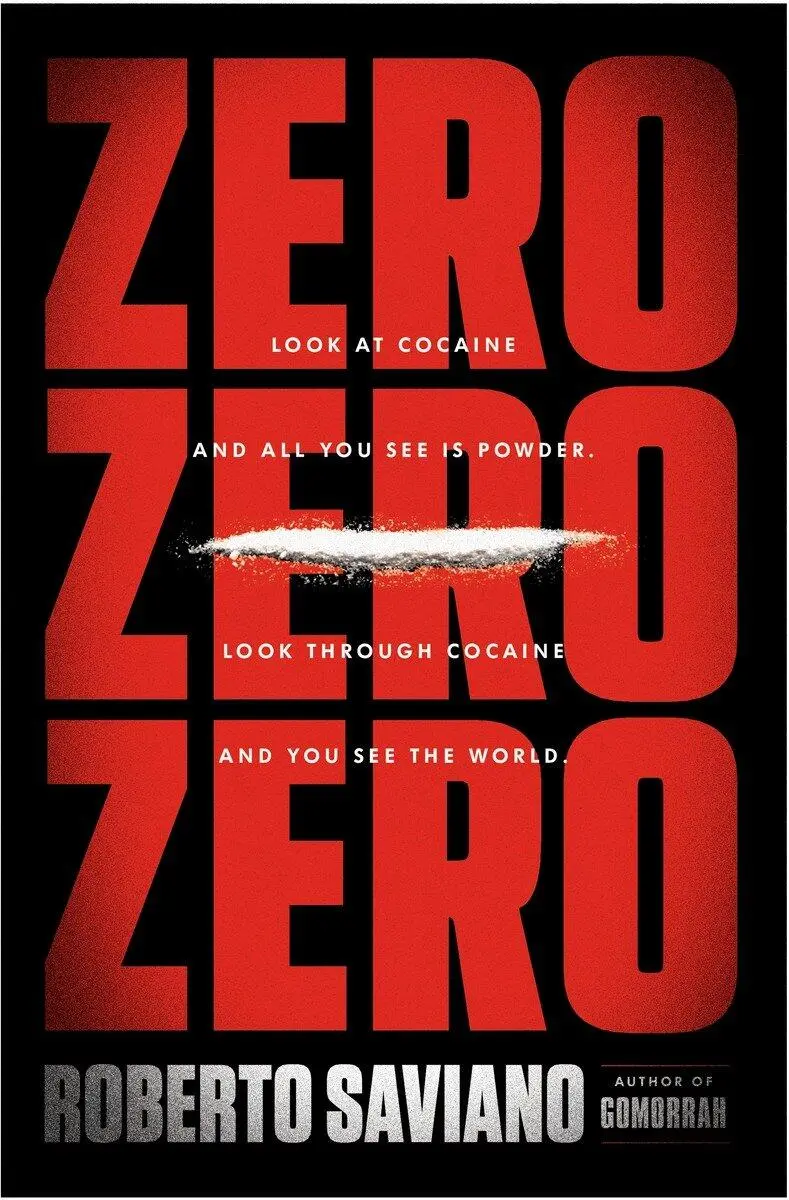
- Название:ZeroZeroZero
- Автор:
- Издательство:Penguin Publishing Group
- Жанр:
- Год:2015
- ISBN:нет данных
- Рейтинг книги:5 / 5. Голосов: 1
-
Избранное:Добавить в избранное
- Отзывы:
-
Ваша оценка:
ZeroZeroZero: краткое содержание, описание и аннотация
Предлагаем к чтению аннотацию, описание, краткое содержание или предисловие (зависит от того, что написал сам автор книги «ZeroZeroZero»). Если вы не нашли необходимую информацию о книге — напишите в комментариях, мы постараемся отыскать её.
Saviano’s
, his explosive account of the Neapolitan mob, the Camorra, was a worldwide publishing sensation. It struck such a nerve with the Camorra that Saviano has lived with twenty-four hour police protection in the shadow of death threats for more than seven years. During this time he has become intimate with law enforcement agencies around the world. Saviano has broadened his perspective to take in the entire global corporate” entity that is the drug trade in cooperation with law enforcement officials, who have fed him information and sources and used him to guide their own thinking and tactics. Saviano has used this extraordinary access to feed his own groundbreaking reportage.
The result is a truly amazing and harrowing synthesis of intimate literary narrative and geopolitical analysis of one of the most powerful dark forces in the global economy. In
, Saviano tracks the shift in the cocaine trade’s axis of power, from Colombia to Mexico, and relates how the Latin American cartels and gangs have forged alliances, first with the Italian crime syndicates, then with the Russians, Africans, and others. On the one hand, he charts an astonishing increase in sophistication and diversification as these criminal entities diversify into many other products and markets. On the other, he reveals the threat of violence to protect and extend power and how the nature of the violence has grown steadily more appalling.
Saviano is a journalist of rare courage and a thinker of impressive intellectual depth and moral imagination, able to see the connections between far-flung phenomena and bind them into a single epic story. Most drug-war narratives feel safely removed from our own lives; Saviano offers no such comfort. As heart racing as it is heady,
is a fusion of a variety of disparate genres into a brilliant new form that can only be called
.
ZeroZeroZero — читать онлайн бесплатно полную книгу (весь текст) целиком
Ниже представлен текст книги, разбитый по страницам. Система сохранения места последней прочитанной страницы, позволяет с удобством читать онлайн бесплатно книгу «ZeroZeroZero», без необходимости каждый раз заново искать на чём Вы остановились. Поставьте закладку, и сможете в любой момент перейти на страницу, на которой закончили чтение.
Интервал:
Закладка:
Every ten days Rocco Trimboli organizes a car trip to his sales point, a “home delivery” of sorts. The cocaine, usually about 10 kilos each time, is divided into blocks and hidden in the false bottom of his car. Francesco and Giuseppe Piromalli, the so-called Roly-poly brothers who act as representatives in Rome, are so powerful that they’re allowed to return the merchandise if it doesn’t meet their expectations. One time Francesco Piromalli complained to Rosario Marando that “there was too much sauce on the pasta,” “too much oil in the pickles”—in other words, the coke had been cut too much. When Piromalli returned the merchandise he couldn’t refrain from remarking scornfully: “If I’d wanted Neapolitan crap, I could have bought it right next door, instead of going all the way to Calabria.” Neapolitan crap is what you find in the area known as Scampia, the coke the Camorra cartels import to the biggest open-air drug market in Europe. But it’s inferior to what the Calabrians sell. In Scampia they cut it with the idea of selling wholesale amounts; it’s the only place where this happens without needing a go-between. You show up and place your order, and you can come away with even a kilo of reasonable quality coke at a good price. Direct sale. Anywhere else, for anything over single doses, or maybe a bit more, you need a contact high up in the trafficking structure, if not in the criminal leadership itself.
Aside from these minor drawbacks, the organization for acquiring, transporting, repackaging, and distributing coke is a well-oiled machine, rigid in its hierarchy but flexible when it comes to adapting to the unexpected.
Like in the adventure of Mirage II. A ship is needed to carry a load of Colombian cocaine across the ocean. A ship owner is needed. They find one, a Greek master mariner named Antonios Gofas, nicknamed the Gentleman. Back in the 1980s he transported heroin to Sicily to be refined, but the Gentleman has now switched to cocaine. He owns a merchant vessel, the Muzak. It costs too much for the Sicilians, but the Calabrians don’t think twice about shelling out £2.5 billion. Now they have the vessel they need. But they change its name: The Muzak becomes Mirage II, which sounds more melodious to Italian ears. Gofas is good, and he has a reliable crew.
The Mirage II has to drop anchor in Colombia, take on the cocaine, circumnavigate the South American continent so as to avoid rigorous inspections at the Panama Canal, and then set sail for Sicily, where the shipment would then be loaded onto fishing boats off the coast of Trapani. A huge vessel that plows the ocean waves, ports that await containers: It was all decided on March 2, 2001, in a hotel in Fiumicino, near Rome, the Hotel Roma. Details are worked out: the route to take from Colombia; the precise strip of sea where the merchandise will be picked up; the modes of transfer from the mother ship to the Mazara fishing boats; the code names and the radio frequencies to be used. After almost a year and a half of negotiations and preparations, the Mirage II can finally hoist anchor.
Before it gets to Colombia, however, the ship has engine trouble and goes down off the coast of Peru, near Paita. The captain describes the tragedy, goes crazy over the engine failure, doesn’t know what to do. Pannunzi, who has been following the whole operation from afar, immediately smells a rat: Did the Greek Gentleman deliberately sink the ship? Pannunzi doesn’t believe in fate. For him chance can’t do much when there’s commitment and money involved. Chance is something you confront.
The problem is that the Gentleman, true to his nickname, sent the suppliers one of his own men as a guarantee. Now he’s the drug traffickers’ hostage. What’s more, the ship sank before its precious cargo was loaded into the hold. These factors, which would seem to suggest a blameless accident, only increase Pannunzi’s doubts. He suspects that the captain calculated with cynical cunning the risk of cheating his fearsome associates in order to pocket the insurance on the Mirage II . For the money he would make, the hostage in Colombia could be sacrificed. If that’s the case, Pannunzi is sure he’ll be able to verify it. Which, for a shipowner in the cocaine business, would mean the end of his career and probable death.
But for the moment he has to put a good face on things so that he can get the insurance money to his investors while simultaneously arranging another voyage. The Sicilians, represented by Miceli, hire the Turkish Paul Eduard Waridel, known as the Turk, who had a history of getting Turkish heroin into Sicily. Waridel has good contacts in Greece too, and knows who can arrange sea transport for any kind of merchandise. Now, as gangsters say, “It’s a three-way job”: Three containers set out from Barranquilla to Athens, with a port of call in Venezuela. About 900 kilos are concealed among the cover cargo of sacks of rice: enough to amortize the loss of the Mirage II and guarantee a considerable profit.
But the Greek police intercept one of the three containers as soon as it arrives in Piraeus and seize 220 kilos of pure cocaine hidden among the rice. Mysteriously, they don’t notice the other two containers, which remain in port, waiting to clear customs. The Colombian suppliers once again find themselves without a cent, because the drugs are usually paid for when they’re delivered to the Calabrians. Holding Gofas’s right-hand man hostage isn’t enough; they realize his life might not be worth anything. So they kidnap Salvatore Miceli, the Cosa Nostra representative responsible for the transport and final distribution to the ’ndrine.
Cosa Nostra is in trouble. The most watched criminal organization in the world, the one most talked about, seems incapable of handling the situation. The Trapani clan doesn’t have the money. The Turkish wheeler-dealer had let them know it would take four hundred thousand dollars to get the two containers through customs and the goods to Italy. Pannunzi intervenes. He moves swiftly to save his accomplice and get the ball rolling again. He sends two representatives from his group to Lugano to hand deliver the money to Waridel, who in turn is supposed to take it to Athens. But the Turk, like the Greek shipowner before him, is playing dirty. Maybe he wants to get his hands on the cocaine as well, or maybe he just wants to keep the money that’s supposed to be for getting the container through customs. After pocketing the cash he says that the remaining cocaine has disappeared from Piraeus and is now in an unspecified location in Africa, where a trustworthy fellow countryman is holding it. On the phone he uses an unintentionally poetic expression to refer to Africa: “on the other side of the bulls”; in other words, facing Spain.
The Calabrians and the Sicilians realize that Waridel is swindling them. But revenge has to wait — business first. They organize yet another trip, this time from Namibia to Sicily. In late September 2002, the ship carrying the cocaine is off the coast of the Aegadian Islands, but there’s no sign of the Sicilian fishing boats that are supposed to do the pickup. A whole day goes by without the commander getting a reply signal. A second night, but all’s still quiet. The commander waits until the third night. He tries to make contact, following the established procedures, but still nothing. In the end it turns out that the fishing boats from Trapani were using a different radio frequency. Incredible. They had misunderstood. Pannunzi can’t check on every step. He’s merely a broker, not a mafia boss: And when he makes a mistake, it’s because someone else made a mistake in carrying out his orders.
Salavatore Miceli is scared. The Colombians no longer trust him. The excuses the Italians offer are worth less than nothing. When Pannunzi says he’ll vouch for the deal, Miceli is finally freed. But Bebè is disappointed in his friend, who risked his reputation too. The ’ndrangheta bosses are even more furious. They hold the Sicilian partly responsible for the mess that threatens to blow the entire operation sky-high, the mess they’ve had to pay millions of dollars to extricate him from. At this point the Sicilians are excluded. Cosa Nostra is out. Pannunzi takes full control of the situation and decides that the shipment should be delivered to Spain. No problem: He’s got connections there; for example Massimiliano Avesani, known as the Prince. The Prince is a wealthy Roman with ties to Pannunzi and the Calabrian ’ndrine. For several years he’s been the respected owner of a shipyard in Málaga. Pannunzi knows that police forces around the world have managed to identify his shipment and are trying to trace its route. But this time the Calabrians and their accomplices don’t make mistakes: They use extremely cryptic language and change phone numbers frequently. The investigators lose the scent. On October 15, 2002, the ship arrives in Spain and the cocaine’s troubled voyage ends in Avesani’s sure hands.
Читать дальшеИнтервал:
Закладка:
Похожие книги на «ZeroZeroZero»
Представляем Вашему вниманию похожие книги на «ZeroZeroZero» списком для выбора. Мы отобрали схожую по названию и смыслу литературу в надежде предоставить читателям больше вариантов отыскать новые, интересные, ещё непрочитанные произведения.


Обсуждение, отзывы о книге «ZeroZeroZero» и просто собственные мнения читателей. Оставьте ваши комментарии, напишите, что Вы думаете о произведении, его смысле или главных героях. Укажите что конкретно понравилось, а что нет, и почему Вы так считаете.