Roberto Saviano - ZeroZeroZero
Здесь есть возможность читать онлайн «Roberto Saviano - ZeroZeroZero» весь текст электронной книги совершенно бесплатно (целиком полную версию без сокращений). В некоторых случаях можно слушать аудио, скачать через торрент в формате fb2 и присутствует краткое содержание. Год выпуска: 2015, Издательство: Penguin Publishing Group, Жанр: Публицистика, Криминальный детектив, на английском языке. Описание произведения, (предисловие) а так же отзывы посетителей доступны на портале библиотеки ЛибКат.
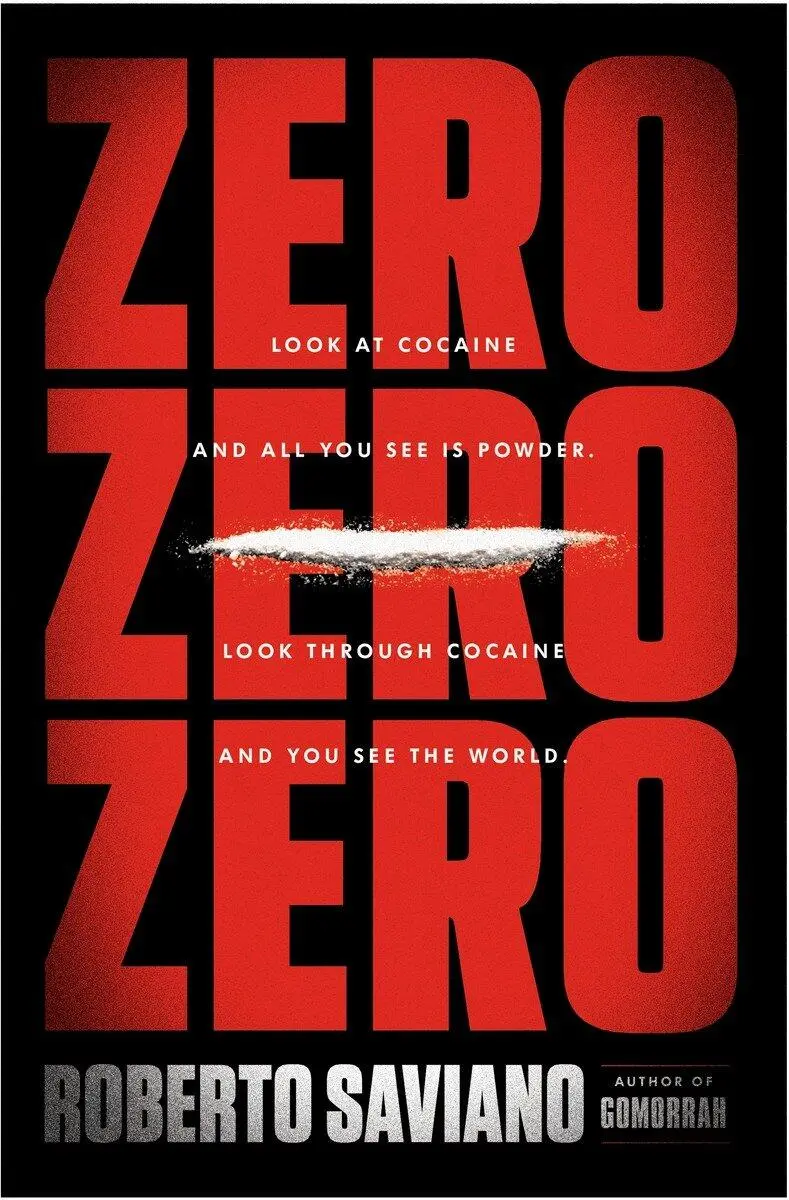
- Название:ZeroZeroZero
- Автор:
- Издательство:Penguin Publishing Group
- Жанр:
- Год:2015
- ISBN:нет данных
- Рейтинг книги:5 / 5. Голосов: 1
-
Избранное:Добавить в избранное
- Отзывы:
-
Ваша оценка:
ZeroZeroZero: краткое содержание, описание и аннотация
Предлагаем к чтению аннотацию, описание, краткое содержание или предисловие (зависит от того, что написал сам автор книги «ZeroZeroZero»). Если вы не нашли необходимую информацию о книге — напишите в комментариях, мы постараемся отыскать её.
Saviano’s
, his explosive account of the Neapolitan mob, the Camorra, was a worldwide publishing sensation. It struck such a nerve with the Camorra that Saviano has lived with twenty-four hour police protection in the shadow of death threats for more than seven years. During this time he has become intimate with law enforcement agencies around the world. Saviano has broadened his perspective to take in the entire global corporate” entity that is the drug trade in cooperation with law enforcement officials, who have fed him information and sources and used him to guide their own thinking and tactics. Saviano has used this extraordinary access to feed his own groundbreaking reportage.
The result is a truly amazing and harrowing synthesis of intimate literary narrative and geopolitical analysis of one of the most powerful dark forces in the global economy. In
, Saviano tracks the shift in the cocaine trade’s axis of power, from Colombia to Mexico, and relates how the Latin American cartels and gangs have forged alliances, first with the Italian crime syndicates, then with the Russians, Africans, and others. On the one hand, he charts an astonishing increase in sophistication and diversification as these criminal entities diversify into many other products and markets. On the other, he reveals the threat of violence to protect and extend power and how the nature of the violence has grown steadily more appalling.
Saviano is a journalist of rare courage and a thinker of impressive intellectual depth and moral imagination, able to see the connections between far-flung phenomena and bind them into a single epic story. Most drug-war narratives feel safely removed from our own lives; Saviano offers no such comfort. As heart racing as it is heady,
is a fusion of a variety of disparate genres into a brilliant new form that can only be called
.
ZeroZeroZero — читать онлайн бесплатно полную книгу (весь текст) целиком
Ниже представлен текст книги, разбитый по страницам. Система сохранения места последней прочитанной страницы, позволяет с удобством читать онлайн бесплатно книгу «ZeroZeroZero», без необходимости каждый раз заново искать на чём Вы остановились. Поставьте закладку, и сможете в любой момент перейти на страницу, на которой закончили чтение.
Интервал:
Закладка:
Four years later an Englishman with impertinent blond hair crosses the threshold of Wachovia Bank, one of the giants of the American credit system: a man named Martin Woods. He’s just been hired as a senior money-laundering reporting officer in the bank’s London office. Punctilious and precise, maniacal about order. Just the right person for a bank aiming to adhere scrupulously to the new money-laundering protocols. But Martin isn’t merely a zealous employee who is good with numbers and loves double-entry bookkeeping. He is a former agent of the National Crime Squad. This gives him a huge advantage over his banking peers around the world: Martin understands people. He knows how to talk with them, how to read their gestures, how to weigh the nuances of their moods. Money is just one of the many variables, just one of the many color gradations, on his personal grid for evaluating people.
There are already three actors onstage in this drama: a wounded country that’s reacting to attack; a measure that aims to stifle threats by fighting them on the financial front; and a man who wants to do his job. What’s needed now is a fourth, a key character: a DC-9. The airplane lands in Ciudad del Carmen, in the state of Campeche; awaiting it are Mexican soldiers, who find onboard 128 black suitcases containing 5.5 tons of cocaine, worth about a $100 million. A phenomenal bust, a punch in the face of the narcotics trade. But the investigators’ jaws really drop when they discover that the DC-9, which belongs to the Sinaloa cartel, was purchased with money laundered through one of the largest banks in the United States: Wachovia.
While investigators dig through the past of the DC-9 that landed in Mexico, Martin is already picking scrupulously through Wachovia’s clients’ records. That’s what investigators and money-laundering reporting officers do. Stick their noses into piles of papers, poison themselves with numbers and dates, then put it all together and see if there are any discrepancies. Martin discovers that there’s something not quite right about a bunch of traveler’s checks issued in Mexico. A tourist couldn’t possibly need that much money. Then his eyes fall on the numbers, which are strangely sequential. And the various signatures, why do they all look so much alike? He reports his suspicions to his superiors; many of the checks involve casas de cambio, Mexican currency exchange agencies. Martin spends hours on the phone, he sends e-mails, requests meetings to discuss the reports he keeps sending with stubborn determination. He smells a rat, and the news from Mexico and the United States only confirms his suspicion. The American authorities’ constant scrutiny of the bank’s activity pushes Wachovia to sever relations with some casas de cambio, and the ones that survive the cut decide to take a step back. Under fire from the outside, the banking giant vacillates at first, but then responds with a cleanup operation. Inside the bank, however, all is quiet. Silence and isolation are the most effective forms of “mobbing” (workplace bullying). Martin goes on writing new suspicious activity reports. When people point out that he’ll never get a reply, and that he’ll get himself in trouble if he keeps it up, he responds in his usual manner: He lowers his eyes and smiles. After his umpteenth report falls on deaf ears he receives an office communication: His most recent write-up was irregular, because his authorized range of action does not extend as far as the United States and Mexico. It’s the beginning of the end for Martin’s work: The spokes in his wheels multiply, office life is awful, he no longer has access to important files. The silent treatment his coworkers give him isn’t enough: Wachovia is staging a counterattack; it has to do something to shut up this incorrigible busybody.
On the other side of the Atlantic the investigators looking into the DC-9 discover that since 2004 several billion dollars have moved from the Sinaloa cartel “cash box” to Wachovia bank accounts. It emerges that for three years the bank did not respect money-laundering protocols when transferring $378.4 billion. Of this at least $110 million were from drug trafficking, which had entered international banking circuits in this way. That’s how it worked. The money entered through the casas de cambio. The world’s richest cartel was sending money as if it were an army of mamacitas with their savings stitched into the lining of their clothes or of old men selling off a plot of land to help out their grandchildren in the United States. Those same exchange agencies then opened accounts at a Miami branch of Wachovia Bank. Millions of dollars in cash were deposited in Mexico and then wired to Wachovia accounts in the United States to buy stocks or property. On numerous occasions the drug cartels themselves were the ones making the deposits. For example, about $13 million were deposited and transferred to Wachovia accounts to purchase airplanes for drug trafficking. More than twenty tons of cocaine were seized from these planes.
In English there’s a lovely word for denouncing or exposing wrongdoing: whistle-blowing. Martin blew his whistle with all his might, and at a certain point Wachovia realized that if they wanted to silence the piper they’d have to muzzle him. The freeze-out at the office intensifies. Martin, close to a nervous breakdown, goes to see a psychiatrist. He’s out of the game, but with his remaining strength he makes one last attempt. He finds out that there will be a meeting at Scotland Yard, where he hopes to find some colleagues open-minded enough to listen to him. He’s sat at the same table with a representative from the American DEA, a jovial type with a curious gaze. Martin doesn’t think twice before pouring out his story to him. Putting all his trust in a total stranger, he pushes a rock down the escarpment in hopes of starting an avalanche. And the rock rolls. It rolls until March 16, 2010, when the vice president of Wachovia Bank signs a plea bargain in which the bank admits it provided banking services to twenty-two casas de cambio in Mexico, from which it accepted money in the form of wire transfers and traveler’s checks.
More or less what Martin Woods had reported four years earlier, much to his detriment. Woods filed suit against the bank for retaliating against a whistle-blower. That lawsuit was finally settled by Woods’ leaving the bank in exchange for an undisclosed sum and an agreement to keep the terms of the settlement confidential.A sad epilogue, at least until March 2010, a few days after Wachovia signed the plea bargain, when Martin at last gets some recognition. He receives a letter from John Dugan, comptroller of the currency of the United States, who handles bank monitoring for the U.S. Treasury Department: “Not only did the information that you provided facilitate our investigation, but you demonstrated great personal courage and integrity by speaking up. Without the efforts of individuals like you, actions such as the ones taken against Wachovia would not be possible.”
The authorities grant Wachovia Bank a deferred prosecution; that is, the charge is delayed till the end of a probation period: If the bank adheres to the law for a year and meets all its plea bargain obligations, the charges will be dropped. The authorities probably think they are acting responsibly. In such a delicate moment, with the country struggling to recover from the most serious financial crisis since 1929, they can’t risk another big bank collapsing and disaster striking again. The probation period ends in March 2011: From that moment Wachovia is clean, everything’s okay. They had to pay the government a $110 million forfeiture for accepting transactions linked to drug trafficking, and thus violating anti-money-laundering norms, plus a $50 million fine. An enormous sum but ridiculous compared to the earnings of a bank like Wachovia, which in 2009 were about $12.3 billion. Money laundering pays. Not one bank employee or director had to see the inside of a jail cell, even for a single day. No one is guilty; no one is responsible. Merely a scandal, which quickly sinks into oblivion.
Читать дальшеИнтервал:
Закладка:
Похожие книги на «ZeroZeroZero»
Представляем Вашему вниманию похожие книги на «ZeroZeroZero» списком для выбора. Мы отобрали схожую по названию и смыслу литературу в надежде предоставить читателям больше вариантов отыскать новые, интересные, ещё непрочитанные произведения.



Обсуждение, отзывы о книге «ZeroZeroZero» и просто собственные мнения читателей. Оставьте ваши комментарии, напишите, что Вы думаете о произведении, его смысле или главных героях. Укажите что конкретно понравилось, а что нет, и почему Вы так считаете.