Roberto Saviano - ZeroZeroZero
Здесь есть возможность читать онлайн «Roberto Saviano - ZeroZeroZero» весь текст электронной книги совершенно бесплатно (целиком полную версию без сокращений). В некоторых случаях можно слушать аудио, скачать через торрент в формате fb2 и присутствует краткое содержание. Год выпуска: 2015, Издательство: Penguin Publishing Group, Жанр: Публицистика, Криминальный детектив, на английском языке. Описание произведения, (предисловие) а так же отзывы посетителей доступны на портале библиотеки ЛибКат.
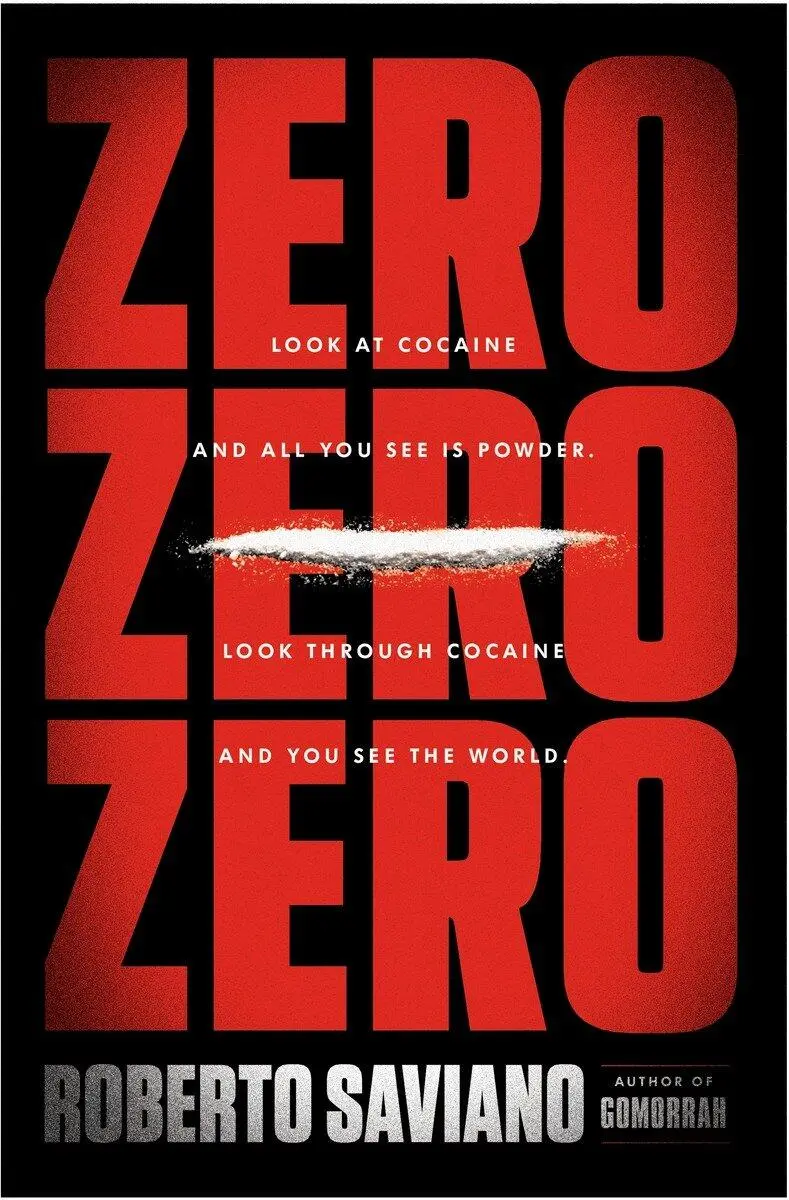
- Название:ZeroZeroZero
- Автор:
- Издательство:Penguin Publishing Group
- Жанр:
- Год:2015
- ISBN:нет данных
- Рейтинг книги:5 / 5. Голосов: 1
-
Избранное:Добавить в избранное
- Отзывы:
-
Ваша оценка:
ZeroZeroZero: краткое содержание, описание и аннотация
Предлагаем к чтению аннотацию, описание, краткое содержание или предисловие (зависит от того, что написал сам автор книги «ZeroZeroZero»). Если вы не нашли необходимую информацию о книге — напишите в комментариях, мы постараемся отыскать её.
Saviano’s
, his explosive account of the Neapolitan mob, the Camorra, was a worldwide publishing sensation. It struck such a nerve with the Camorra that Saviano has lived with twenty-four hour police protection in the shadow of death threats for more than seven years. During this time he has become intimate with law enforcement agencies around the world. Saviano has broadened his perspective to take in the entire global corporate” entity that is the drug trade in cooperation with law enforcement officials, who have fed him information and sources and used him to guide their own thinking and tactics. Saviano has used this extraordinary access to feed his own groundbreaking reportage.
The result is a truly amazing and harrowing synthesis of intimate literary narrative and geopolitical analysis of one of the most powerful dark forces in the global economy. In
, Saviano tracks the shift in the cocaine trade’s axis of power, from Colombia to Mexico, and relates how the Latin American cartels and gangs have forged alliances, first with the Italian crime syndicates, then with the Russians, Africans, and others. On the one hand, he charts an astonishing increase in sophistication and diversification as these criminal entities diversify into many other products and markets. On the other, he reveals the threat of violence to protect and extend power and how the nature of the violence has grown steadily more appalling.
Saviano is a journalist of rare courage and a thinker of impressive intellectual depth and moral imagination, able to see the connections between far-flung phenomena and bind them into a single epic story. Most drug-war narratives feel safely removed from our own lives; Saviano offers no such comfort. As heart racing as it is heady,
is a fusion of a variety of disparate genres into a brilliant new form that can only be called
.
ZeroZeroZero — читать онлайн бесплатно полную книгу (весь текст) целиком
Ниже представлен текст книги, разбитый по страницам. Система сохранения места последней прочитанной страницы, позволяет с удобством читать онлайн бесплатно книгу «ZeroZeroZero», без необходимости каждый раз заново искать на чём Вы остановились. Поставьте закладку, и сможете в любой момент перейти на страницу, на которой закончили чтение.
Интервал:
Закладка:
• • •
Lucy Edwards is a brilliant career woman. She is vice president of London’s Bank of New York and is married to Peter Berlin, director of the British company Benex Worldwide. Lucy is invited to a two-day conference on financial services for Scandinavian, Eastern European, and Russian clients. She’s perfect, because she, like her husband, was born in the former Soviet Union before becoming a naturalized Brit. She has no doubts about her speech, which she calls “Money Laundering: Latest Developments and Regulations .” While Lucy is speaking to a rapt audience, the English authorities, who have been investigating Russian crime organizations for years, are informing their American cohorts that Benex is using a Bank of New York account to channel enormous sums of money. And Benex is linked to YBM Magnex, a front company belonging to one of the most powerful Russian mafia bosses, Semën Mogilevic.
The FBI discovers that Mogilevic washes billions of dirty dollars through the Bank of New York. A constant, quick flow of money in and out. This doesn’t seem to trouble the bank much; it merely files a suspicious activity report. A river of money that also comes in handy to water some political campaigns in Russia. The New York district attorney’s office realizes that the money-laundering operation involved the illicit transfer of $7 billion from Russia to American bank accounts and then to other accounts around the globe, through a series of cover companies.
In the Bank of New York case the only person who ends up in jail — for two weeks — is Svetlana Kudriavceva, a bank employee who lied to an FBI agent about being paid five hundred dollars a month by Peter Berlin and his wife. The bank gets off with a $38 million fine and a promise to respect money-laundering laws in the future.
The technique Mogilevic and his associates use is easily replicated in other contexts: Italy, for example. It’s 1999, and the public prosecutor’s office in Rimini is monitoring the accounts of two Ukrainians and a Russian who were, as the investigation records state, at the head of “a criminal organization that works to guarantee its control of the Emilia Romagna and Marche territories.” Benex International — Bank of New York — Banca di Roma — Banca di credito cooperativo di Ospedaletto in Emilia Romagna. More than a million dollars pass through these accounts. A million crisp dollar bills, ready to be used by the Russian mafia in Italy.
Lucy Edwards knows how to make even a boring topic like anti — money-laundering techniques fascinating. She’s an excellent speaker, conveying just the right combination of confidence and seriousness. She even gets a laugh from her audience on more than one occasion. Lucy has just finished speaking. After the applause, lots of people, including the Bank of New York’s most important clients, wait for her to step off the stage. They want to shake her hand and compliment her. She’d given a great talk.
Lucy Edwards had two months left before her bank has to fire her. She and her husband, Peter Berlin, helped recycle tons of money. She too would get off with a simple fine of $20,000 and six months of house arrest after being found guilty of money laundering, fraud, and other grave federal crimes. The woman who traveled the world explaining how to thwart money laundering had been doing it herself. I’ve often asked myself how she must have felt at the end of every speech she gave, and, once she’d been found out, if she tried to justify herself, to find some sense to her double game.
Who knows if Lucy still lectures on how to prevent money laundering, because she’d have lots of stories to tell. The control systems are leaking all over the place. In the distracted summer of 2012, when the Bank of Scotland slammed its doors in Martin’s face, several leading American and European banks in the United States were being targeted, and one in particular, Bank of America, which, according to the FBI, the Zetas were using to launder their narco-dollars. On June 12, 2012, federal agents arrest seven people, including the big shot José Treviño Morales, the brother of Miguel, at that time the most prominent boss of Mexico’s fiercest cartel. But in the United States he’s known as a businessman devoted to an activity dear to the American South: He breeds winning racehorses. That’s how he hides and reinvests dirty money. In order to arrive at such a remunerative and gratifying form of recycling, estimated to have been at a level of around $1 million a month, he first needs to get the money into an American bank account. Bank of America is willing to cooperate with the investigators and is not accused of any illegal activity. Up until now nothing has happened to it.
It’s extremely difficult to expose money-laundering cases, or even to ascertain the scale and the degree of negligence. It’s almost always like trying to squeeze sand in your fist: The grains just slip through your fingers. And if a few stay in your hand, it’s more chance than will. Which is how it went for one shortsighted swindler, Barton Adams, officially a West Virginia doctor who specialized in pain therapy. He is found out while shifting hundreds of thousands of dollars — from systematic health-care fraud and tax evasion — between HSBC accounts in the United States and its branches in Canada, Hong Kong, and the Philippines. HSBC is a colossus: the fifth largest bank in the world in terms of market value, with branches in every village in the UK, and present in eighty-five foreign countries. Like Martin in the Wachovia affair, Barton rolls a stone downhill. But he does it unintentionally. On July 16, 2012, the U.S. Senate’s Permanent Subcommittee on Investigations confirms rumors that had been circulating for months: HSBC and its American branch, HBUS, have exposed the American financial system to a wide range of risks of money laundering, drug trade financing, and terrorism. According to the subcommittee’s report, HSBC used HBUS to link its branches around the world to the United States, thereby providing its clients services in dollars, movement of capital, currency exchange, and other monetary tools without fully respecting U.S. banking laws. Because of insufficient controls, HBUS allegedly allowed terrorist and Mexican drug money into American territory. Considering that HBUS provides twelve hundred accounts to other banks, including more than eighty HSBC branches, it’s easy to see that without adequate anti — money-laundering policies, these services can become a superhighway for illegal capital to enter the United States.
The Senate subcommittee’s investigation revealed that HBUS had offered correspondent banking services to HSBC Mexico, treating it as a low-risk client despite its being in a country with huge money-laundering and drug-trafficking problems. Between 2007 and 2008 the Mexican branch transferred $7 billion in cash to HBUS, exceeding all other Mexican banks and sparking suspicions that part of this money might be from drug sales in the United States. At the end of 2012, HBUS declared that it was very sorry for what had happened and agreed to pay a fine of almost $2 billion — less than a third of what they’d taken in from Mexico alone.
It’s not just the banks on Wall Street or in the City of London that maintain privileged relations with drug lords. Banks that launder money are scattered all across the globe, sometimes in rather disquieting places. Lebanon, for example, through which, according to the Catanzaro magistrates, the Australian Nicola Ciconte allegedly transferred Vibo Valentia clan money. One of the biggest banks is the Lebanese Canadian Bank of Beirut: branches spread throughout Lebanon; a liaison office in Montreal; more than six hundred employees. It offers a wide range of financial services and correspondent accounts in banks all over the world. On February 17, 2011, the U.S. Treasury Department declared that it had valid reason to consider the Lebanese Canadian Bank involved in money-laundering activities on behalf of the Shiite group Hezbollah, and therefore subject to restrictive measures prescribed by the PATRIOT Act. According to the Treasury Department the Lebanese bank, through insufficient controls and institutional complicity, allegedly facilitated the money laundering of a criminal network trafficking drugs from South America through West Africa to Europe and the Middle East, recycling $200 million a month through Lebanese Canadian Bank accounts. Several conniving managers who carried out the operations were identified. According to the Manhattan district attorney’s office and the DEA, the Lebanese Canadian Bank allegedly took part in a scheme that transferred at least $248 million to the United States between January 2007 and the beginning of 2011. The money came from the drug trafficking and other criminal activities of the Lebanon-based group led by the drug kingpin Ayman Joumaa and was used to purchase used cars in America. The cars were subsequently sold in western Africa, the declared revenue from which was greatly inflated so as to mask the amount of dirty money from Colombian and Mexican cartels that was added to the proceeds from the car sales. All this money was channeled toward exchange offices in Beirut, and from there to Lebanese Canadian Bank accounts, and also in part to accounts belonging to Hezbollah, which the United States considers a terrorist organization, one with increasing involvement in the drug trade.
Читать дальшеИнтервал:
Закладка:
Похожие книги на «ZeroZeroZero»
Представляем Вашему вниманию похожие книги на «ZeroZeroZero» списком для выбора. Мы отобрали схожую по названию и смыслу литературу в надежде предоставить читателям больше вариантов отыскать новые, интересные, ещё непрочитанные произведения.

Обсуждение, отзывы о книге «ZeroZeroZero» и просто собственные мнения читателей. Оставьте ваши комментарии, напишите, что Вы думаете о произведении, его смысле или главных героях. Укажите что конкретно понравилось, а что нет, и почему Вы так считаете.