Roberto Saviano - ZeroZeroZero
Здесь есть возможность читать онлайн «Roberto Saviano - ZeroZeroZero» весь текст электронной книги совершенно бесплатно (целиком полную версию без сокращений). В некоторых случаях можно слушать аудио, скачать через торрент в формате fb2 и присутствует краткое содержание. Год выпуска: 2015, Издательство: Penguin Publishing Group, Жанр: Публицистика, Криминальный детектив, на английском языке. Описание произведения, (предисловие) а так же отзывы посетителей доступны на портале библиотеки ЛибКат.
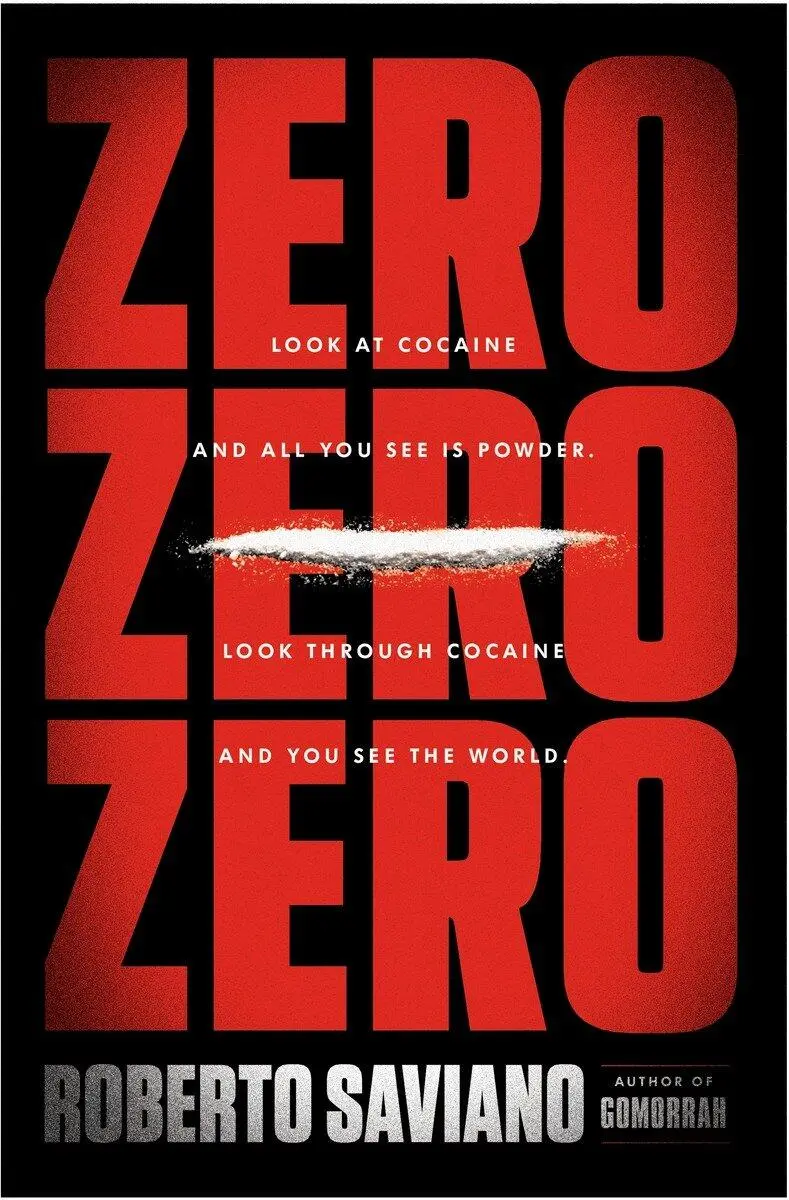
- Название:ZeroZeroZero
- Автор:
- Издательство:Penguin Publishing Group
- Жанр:
- Год:2015
- ISBN:нет данных
- Рейтинг книги:5 / 5. Голосов: 1
-
Избранное:Добавить в избранное
- Отзывы:
-
Ваша оценка:
ZeroZeroZero: краткое содержание, описание и аннотация
Предлагаем к чтению аннотацию, описание, краткое содержание или предисловие (зависит от того, что написал сам автор книги «ZeroZeroZero»). Если вы не нашли необходимую информацию о книге — напишите в комментариях, мы постараемся отыскать её.
Saviano’s
, his explosive account of the Neapolitan mob, the Camorra, was a worldwide publishing sensation. It struck such a nerve with the Camorra that Saviano has lived with twenty-four hour police protection in the shadow of death threats for more than seven years. During this time he has become intimate with law enforcement agencies around the world. Saviano has broadened his perspective to take in the entire global corporate” entity that is the drug trade in cooperation with law enforcement officials, who have fed him information and sources and used him to guide their own thinking and tactics. Saviano has used this extraordinary access to feed his own groundbreaking reportage.
The result is a truly amazing and harrowing synthesis of intimate literary narrative and geopolitical analysis of one of the most powerful dark forces in the global economy. In
, Saviano tracks the shift in the cocaine trade’s axis of power, from Colombia to Mexico, and relates how the Latin American cartels and gangs have forged alliances, first with the Italian crime syndicates, then with the Russians, Africans, and others. On the one hand, he charts an astonishing increase in sophistication and diversification as these criminal entities diversify into many other products and markets. On the other, he reveals the threat of violence to protect and extend power and how the nature of the violence has grown steadily more appalling.
Saviano is a journalist of rare courage and a thinker of impressive intellectual depth and moral imagination, able to see the connections between far-flung phenomena and bind them into a single epic story. Most drug-war narratives feel safely removed from our own lives; Saviano offers no such comfort. As heart racing as it is heady,
is a fusion of a variety of disparate genres into a brilliant new form that can only be called
.
ZeroZeroZero — читать онлайн бесплатно полную книгу (весь текст) целиком
Ниже представлен текст книги, разбитый по страницам. Система сохранения места последней прочитанной страницы, позволяет с удобством читать онлайн бесплатно книгу «ZeroZeroZero», без необходимости каждый раз заново искать на чём Вы остановились. Поставьте закладку, и сможете в любой момент перейти на страницу, на которой закончили чтение.
Интервал:
Закладка:
But their core business is protection, which in the 1990s takes on proportions that are nothing like Italy’s idea of payoffs. According to the FBI, the Austrian shopping chain Julius Meinl has to pay fifty thousand dollars a month in order to manage its supermarkets in Russia. Coca-Cola announces that it is not its policy to give in to blackmail, and the next day its new factory near Moscow gets a visit from a machine gun and a grenade launcher — two security guards are seriously wounded. The company reported the assault to the Russian authorities, but the case remains unsolved. According to Interpol, other multinationals targeted are IBM, Philip Morris, and, curiously, Cadbury, Mars, and Hershey, as if there were some special sweetness in earnings extorted from chocolate factories.
The Russian Mafija came into being thanks to men who knew how to exploit new opportunities, but also because it draws on a history of structures and rules for how to dominate amid the great disorder. In my years of navigating the world’s criminal sewers I’ve noted that mafias always flourish under such circumstances: a power void, weakness, something rotten in the state in comparison to an organization that offers and represents order. The resemblances between the most far-flung mafias are often striking. The Russian organizations were toughened up by Stalinist repression, which amassed thousands of delinquents and political dissidents in the gulags. That’s where the Vory v zakone group was born, a society that within a few years was running every gulag in the USSR. An origin, therefore, that has nothing in common with Italian organizations, yet the principal characteristic that has allowed them to survive and prosper is the same: rules. Rules have many shades; they are made explicit through rituals and myths and made concrete through precepts that one must follow to the letter in order to be considered a worthy affiliate, that establish how to join and become part of the organization. Everything is codified and everything lives within the rules. What unites the camorrista and the vor are honor and loyalty, as well as the sacredness of certain gestures and the meting out of justice within the group. Even their rituals are similar. What grounds the ritual — the passage from one state to another — is common to both, since both share the desire to create an alternate reality, with different codes but equally coherent: Camorrista and vor are both baptized, punished if they step out of line, and rewarded if they obtain results. If in the past a vor was an ascetic who was averse to all earthly pleasure and every imposition, to the point of having his knees tattooed to signify that he would never bow down before authority, today luxury and ostentation are allowed. It’s no longer a sin to live on the Côte d’Azur.
Russian bosses are swathed in designer gear, from their underwear to their luggage; they have political protection, control who gets appointed to public office, and throw megaparties without any police interference. The groups are becoming more and more organized: Every clan has an obšcak, a kitty where a percentage of profits from crimes such as extortion and robbery are deposited, in order to cover the expenses of vory who end up in jail, or to pay off police and politicians. Soldiers, armies of lawyers, and highly skilled brokers are all on their payroll.
During the communist era the vory worked side by side with the Soviet elite, influencing every corner of the state apparatus. Under Brežnev they took advantage of the heavy stagnation of the communist economy and created an impressive black market: the Mafija could satisfy any desire as long as you could afford it. Shop and restaurants managers, heads of state agencies, government functionaries and politicians: They were all dealing in something. Every imaginable good was traded on the black market, from food to medicine. The vory tracked down whatever filthy capitalist goods the populace was forbidden in the name of socialism and introduced them into the homes of Party officials, thus forging an alliance between the nomenklatura and crime that was to have enormous consequences.
The fall of communism created an economic, moral, and social abyss that the Mafija was ready to fill. Generations of people out of work, penniless, often quite literally starving: The Russian organizations enrolled legions of unskilled workers. Police, soldiers, Afghan war veterans offered their services unreservedly. Former KGB members and Soviet officials placed their bank accounts and contacts in the service of organized criminal activities, including drug and arms trafficking. The transition to capitalism was armed with neither laws nor adequate infrastructure. The brotherhoods, on the other hand, had money, predatory swiftness, and intimidation tactics: Who could possibly oppose them? The so-called new Russians — those who were getting rich at dizzying speeds with the new market openings — found it was convenient to pay a “tax” that guaranteed protection from other groups as well as helped resolve problems with slow-paying customers or competitors. The small fish had no choice but to bow their heads: There was one extortionist who went around with a pair of scissors and a severed finger: “Pay up, or I’ll cut yours off too.” The West only caught the occasional echo of exaggerated violence; for the most part it was distracted and deluded. Even the funds the United States and European countries donated to reinforce post-Soviet civil society contributed indirectly to fattening the Mafija. NGOs were the preferred recipients, for fear that the money would be pocketed by ex-communists and used to reanimate the old regime and its old bureaucrats. But much of the aid was intercepted by criminal groups and never reached its destination.
With the intoduction of new banking laws, banks began to sprout up like mushrooms. Mafiosi no longer needed to corrupt the old institutions’ executives. With their abundant cash flow and a few straw men, they could open a bank and staff it with friends and relatives, including some freshly out of jail. Then came the great plan for privatization, which was supposed to give all citizens a stake in Soviet enterprises, from colossal new energy companies to Moscow hotels. The value of the distributed stocks was low for those who already had money and power but huge for those who had trouble making ends meet. Poor people sold their shares, even below face value, to those who had the means to stockpile them, thus reinforcing the elite ranks of former Soviet managers and bureaucrats and mafiosi. The relationship between the Mafija and the government was symbiotic and long lasting, and it worked: Those envelopes stuffed with cash were handy for everyone, because everyone needed money to survive. The Mafija was everywhere. The Mafija had become the state.
In 1993, in Moscow alone there were fourteen hundred homicides linked to organized crime, as well as a shocking rise in kidnappings and explosions. Moscow was compared to Chicago in the 1920s. Businessmen, journalists, gang family members — no one was safe. People fought over the control of factories, mines, territory. Businesses and corporations were forced either to reach an agreement with the gangs or be eliminated. According to former FBI agent Robert Levinson, who also dealt with Italian American, Sicilian, and Colombian mafias, the Russian mafia is the most violent he’s ever known. But there’s something new here: Often the Russians have college degrees, speak several languages, and introduce themselves as engineers, economists, scientists, white-collar workers. When people abroad finally begin to realize that they’re educated barbarians, it’s too late. The Mafija didn’t simply fill the power void in Russia. Its most formidable members are already operating far beyond Russia’s borders, fashioning a new world according to their own ideas.
Читать дальшеИнтервал:
Закладка:
Похожие книги на «ZeroZeroZero»
Представляем Вашему вниманию похожие книги на «ZeroZeroZero» списком для выбора. Мы отобрали схожую по названию и смыслу литературу в надежде предоставить читателям больше вариантов отыскать новые, интересные, ещё непрочитанные произведения.


Обсуждение, отзывы о книге «ZeroZeroZero» и просто собственные мнения читателей. Оставьте ваши комментарии, напишите, что Вы думаете о произведении, его смысле или главных героях. Укажите что конкретно понравилось, а что нет, и почему Вы так считаете.