Roberto Saviano - ZeroZeroZero
Здесь есть возможность читать онлайн «Roberto Saviano - ZeroZeroZero» весь текст электронной книги совершенно бесплатно (целиком полную версию без сокращений). В некоторых случаях можно слушать аудио, скачать через торрент в формате fb2 и присутствует краткое содержание. Год выпуска: 2015, Издательство: Penguin Publishing Group, Жанр: Публицистика, Криминальный детектив, на английском языке. Описание произведения, (предисловие) а так же отзывы посетителей доступны на портале библиотеки ЛибКат.
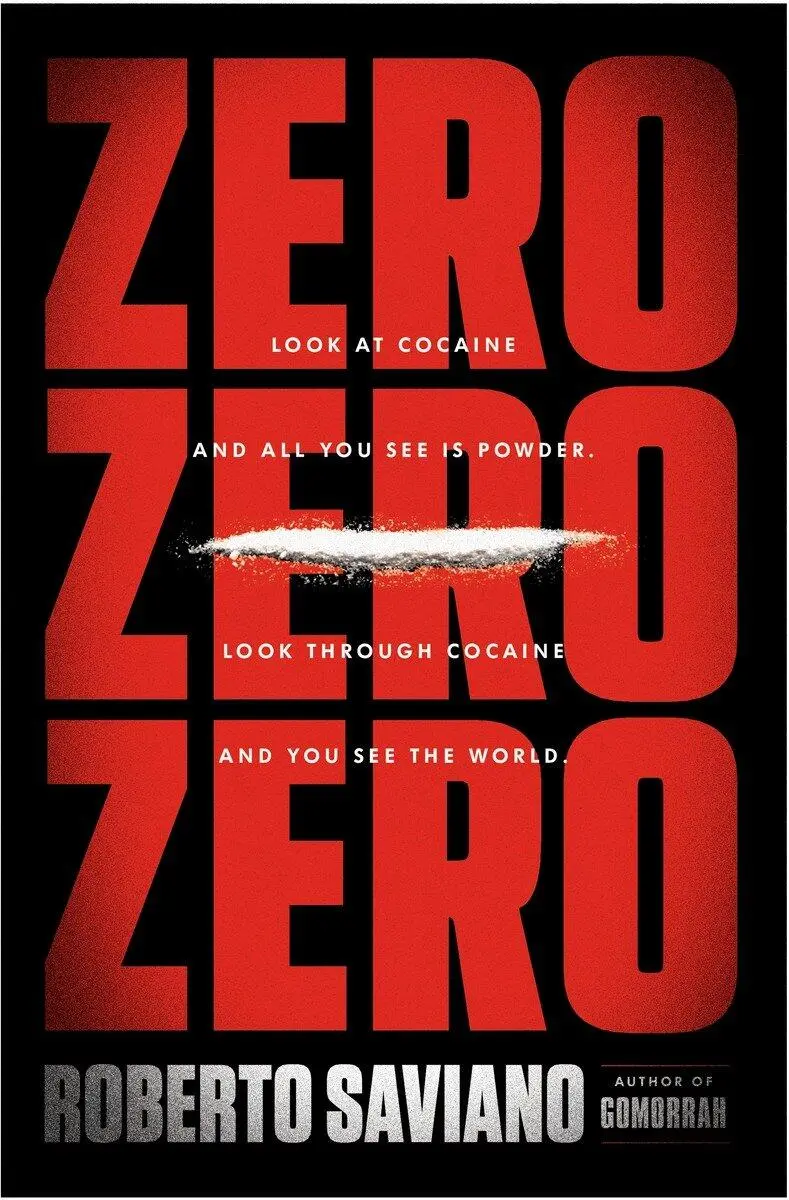
- Название:ZeroZeroZero
- Автор:
- Издательство:Penguin Publishing Group
- Жанр:
- Год:2015
- ISBN:нет данных
- Рейтинг книги:5 / 5. Голосов: 1
-
Избранное:Добавить в избранное
- Отзывы:
-
Ваша оценка:
ZeroZeroZero: краткое содержание, описание и аннотация
Предлагаем к чтению аннотацию, описание, краткое содержание или предисловие (зависит от того, что написал сам автор книги «ZeroZeroZero»). Если вы не нашли необходимую информацию о книге — напишите в комментариях, мы постараемся отыскать её.
Saviano’s
, his explosive account of the Neapolitan mob, the Camorra, was a worldwide publishing sensation. It struck such a nerve with the Camorra that Saviano has lived with twenty-four hour police protection in the shadow of death threats for more than seven years. During this time he has become intimate with law enforcement agencies around the world. Saviano has broadened his perspective to take in the entire global corporate” entity that is the drug trade in cooperation with law enforcement officials, who have fed him information and sources and used him to guide their own thinking and tactics. Saviano has used this extraordinary access to feed his own groundbreaking reportage.
The result is a truly amazing and harrowing synthesis of intimate literary narrative and geopolitical analysis of one of the most powerful dark forces in the global economy. In
, Saviano tracks the shift in the cocaine trade’s axis of power, from Colombia to Mexico, and relates how the Latin American cartels and gangs have forged alliances, first with the Italian crime syndicates, then with the Russians, Africans, and others. On the one hand, he charts an astonishing increase in sophistication and diversification as these criminal entities diversify into many other products and markets. On the other, he reveals the threat of violence to protect and extend power and how the nature of the violence has grown steadily more appalling.
Saviano is a journalist of rare courage and a thinker of impressive intellectual depth and moral imagination, able to see the connections between far-flung phenomena and bind them into a single epic story. Most drug-war narratives feel safely removed from our own lives; Saviano offers no such comfort. As heart racing as it is heady,
is a fusion of a variety of disparate genres into a brilliant new form that can only be called
.
ZeroZeroZero — читать онлайн бесплатно полную книгу (весь текст) целиком
Ниже представлен текст книги, разбитый по страницам. Система сохранения места последней прочитанной страницы, позволяет с удобством читать онлайн бесплатно книгу «ZeroZeroZero», без необходимости каждый раз заново искать на чём Вы остановились. Поставьте закладку, и сможете в любой момент перейти на страницу, на которой закончили чтение.
Интервал:
Закладка:
Reconstructing his life story is a way to understand how the most violent crimes — extortion, murder, arms and drug trafficking, and prostitution rackets relate to the crimes committed by businessmen, politicians, and financiers. Tracing the rise of Don Semën, or Don Seva, as he’s also known, lets me photograph a world in which borders have fallen and criminal energies are interwoven, converging on a goal of maximum profit.
Mogilevic was born in Kiev on June 30, 1946, to a Jewish Ukrainian family that was probably quite typical for the Soviet era: not religious, broadly speaking middle-class. He got a degree in economics at Lviv University, one of the oldest in Eastern Europe, then moved from Ukraine to Moscow, where he arranged funerals. Funerals are a winning business. People never stop dying, and mafias worldwide have their hands in the funeral trade. They’re an excellent money-laundering tool and a fine cornerstone for building a fortune. Mafias never renounce concreteness. Tangible things. Earth, water, cement, hospitals, the dead. In the 1970s, Mogilevic joins a criminal group that deals in counterfeiting, petty fraud, and minor thefts. Small-time stuff compared to what he’ll do later, but the street provides essential training in how to command, survive, build self-confidence. He spends his time in airports and train stations, exchanging rubles for dollars, hustling perfume and handbags to ladies who want to look Western, and selling “black” vodka to their husbands, who remain true to Russian traditions. Shortly thereafter he’s arrested for one of the most common crimes: illegal currency exchange. He ends up in jail twice, for a total of seven years. Which turns out to be his lucky break. In prison he befriends some powerful Russian criminals, friendships that will last his whole life. The turning point in his criminal career comes when the Soviet government allows more than 150,000 Soviet Jews to emigrate to Israel. It’s a race against the clock for these families. They can leave, but they have to go right away: Their precious relics, their earrings and necklaces passed down from generation to generation, have to be left behind. Mogilevic realizes that an occasion like this won’t come around again. He’ll take care of selling the emigrating Jews’ possessions, then send the cash to them at their new address. Many believe him and entrust their possessions to him. But the money never reaches the legitimate owners: The fortune he accumulates will form the financial base of his criminal career.
Second page of the photo album, another famous photo. A man in three-quarter pose stares defiantly at the camera. He’s bare-chested and looks surprised: his mouth slightly open; his nearly invisible eyebrows raised; his eyes like two crushed almonds. Vaguely Asiatic features; deep furrows across his forehead, from one temple to the other. But what’s most striking are two identical tattoos at his collarbones. Two eight-pointed stars, with an eye at the center. The symbol of authority, of power. The photo is of Vjaceslav Kirillovic Ivan’kov, also known as Japoncik, or Little Jap. He was born in Georgia in 1940, but his Russian parents soon decide to move to Moscow. In 1982 he’s arrested for illegal firearms possession, robbery, and drug trafficking and is condemned to fourteen years imprisonment in Siberia. Years in which he rises to the rank of vor, just as the regime that marked their beginning is about to collapse. Vor is short for vor v zakone, literally “thief in law,” in other words, a criminal who has earned himself the right to command according to the rules. He was supposed to remain behind bars until 1995, but the tentacles of the Mafija are long and reach everywhere, from politics to sports, from institutions to entertainment. In 1990 two popular figures, one a singer — the Russian Frank Sinatra, and with a similar collection of dangerous acquaintances — the other a former Greco-Roman wrestling champion who is using an association of retired athletes as a screen for Mafija interests, mount a campaign supported by numerous political, cultural, and sports celebrities: Ivan’kov has sufficiently expiated his guilt; it’s time he is freed. Eventually even Semën Mogilevic offers a heavy helping hand: He generously pays off the judge on the case and involves a high-ranking Soviet functionary. The Little Jap goes free in 1991.
The Iron Curtain has fallen. The Soviet Union is crumbling. Russia is changing, its capital city is changing too. Feuds break out: Russians against Chechens. There’s no end to the blood, but it flows more from business interests than ethnic hatred. Ivan’kov is an old-fashioned vor —he doesn’t delegate, nor does he shy away from getting his own hands dirty. He starts eliminating Chechens and their business friends one by one. But it’s an elementary rule that the more people you kill, the more likely it is that someone will return the favor. And that’s not all. All that death and tumult leading up to it are starting to annoy the Mafija higher-ups, who decide to send Ivan’kov to the United States. Two birds with one stone: relative tranquillity at home and a business to build in the States. It’s easy now that the borders are open. All you have to do is ask the American embassy in Moscow for a two-week visa. Vjaceslav Ivan’kov travels as a cinematographic consultant for a movie company headed by a Russian magnate who’s lived in New York for years. Ivan’kov uses his real passport — just over a year after being released from jail in the USSR, which has only recently officially become part of the free world again. The Soviet Union had dissolved barely two and a half months earlier.
Ivan’kov arrives in New York, where everything’s already been set up for him. Starting with money, which the Little Jap immediately invests to begin his new life. For a mere fifteen thousand dollars Ivan’kov buys a fake marriage with a Russian singer who is a U.S. resident. He settles in Brooklyn’s Brighton Beach, where so many Soviet Jews had been coming since the 1970s that it’s nicknamed Little Odessa. There’s the ocean and beaches, but if you’re thinking melting pot with fiddles and balalaikas, you’ve got the wrong idea. The most typical thing these immigrants brought with them to the trash-strewn brick tenements is the mafia, the Mafija with a j .
The third photo in the family album is of another neighborhood. Whoever snapped it was really good; he managed to soften the squalor with a play of chromatic reflections between the incendiary sunset and the chilly lake that laps at its shore. But not even the most gifted artist could do anything about the violent eruption of barracklike structures on the horizon. They pop up unexpectedly along Moscow’s western periphery, in the middle of an immense park sliced brutally in half by four lanes of traffic. Seen from a distance they look like a bunch of rabbit hutches for giants, anonymous, stained by smog, and pathetic in their attempt to seem like a business district. This is Solncevo, a working-class neighborhood the Soviet authorities built in 1938. They had a sense of humor, those authorities. Solnce in Russian means “sun,” but in Solncevo whatever light there is crashes into the buildings, so shadows reign unopposed. This is where Solncevskaja Bratva, the Solncevo Brotherhood, was born.
Sweat, bodies colliding: the very lymphatic fluid of Solncevskaja Bratva. The founder, Sergej Michajlov, also known as Michas, was born there. His youth was spent between odd jobs and petty swindles, for which he had a brush with jail. In the 1980s Michas makes the most of his love of fighting and gathers together all those who share this passion. Is this the beginning of a sports club? Or the nucleus of what will become an army?
Michas is arrested twice: once for extortion and once for murdering a casino owner. But he is never sentenced: insufficient proof. Meanwhile, the Solncevskaja Bratva, as Michas’s handful of followers is now called, is expanding. Sweat and struggle. Violence and strength. The organization attracts other like-minded individuals: street fighters, hooligans, men ready for anything. They need to unite to defend themselves against other gangs, to pump up their muscles if they want to survive. They merge with other organizations, such as the Orechovskaja group, and within a few years Solncevskaja Bratva is powerful enough to extend its influence beyond the neighborhood, and to get involved in finance and business.
Читать дальшеИнтервал:
Закладка:
Похожие книги на «ZeroZeroZero»
Представляем Вашему вниманию похожие книги на «ZeroZeroZero» списком для выбора. Мы отобрали схожую по названию и смыслу литературу в надежде предоставить читателям больше вариантов отыскать новые, интересные, ещё непрочитанные произведения.

Обсуждение, отзывы о книге «ZeroZeroZero» и просто собственные мнения читателей. Оставьте ваши комментарии, напишите, что Вы думаете о произведении, его смысле или главных героях. Укажите что конкретно понравилось, а что нет, и почему Вы так считаете.