Roberto Saviano - ZeroZeroZero
Здесь есть возможность читать онлайн «Roberto Saviano - ZeroZeroZero» весь текст электронной книги совершенно бесплатно (целиком полную версию без сокращений). В некоторых случаях можно слушать аудио, скачать через торрент в формате fb2 и присутствует краткое содержание. Год выпуска: 2015, Издательство: Penguin Publishing Group, Жанр: Публицистика, Криминальный детектив, на английском языке. Описание произведения, (предисловие) а так же отзывы посетителей доступны на портале библиотеки ЛибКат.
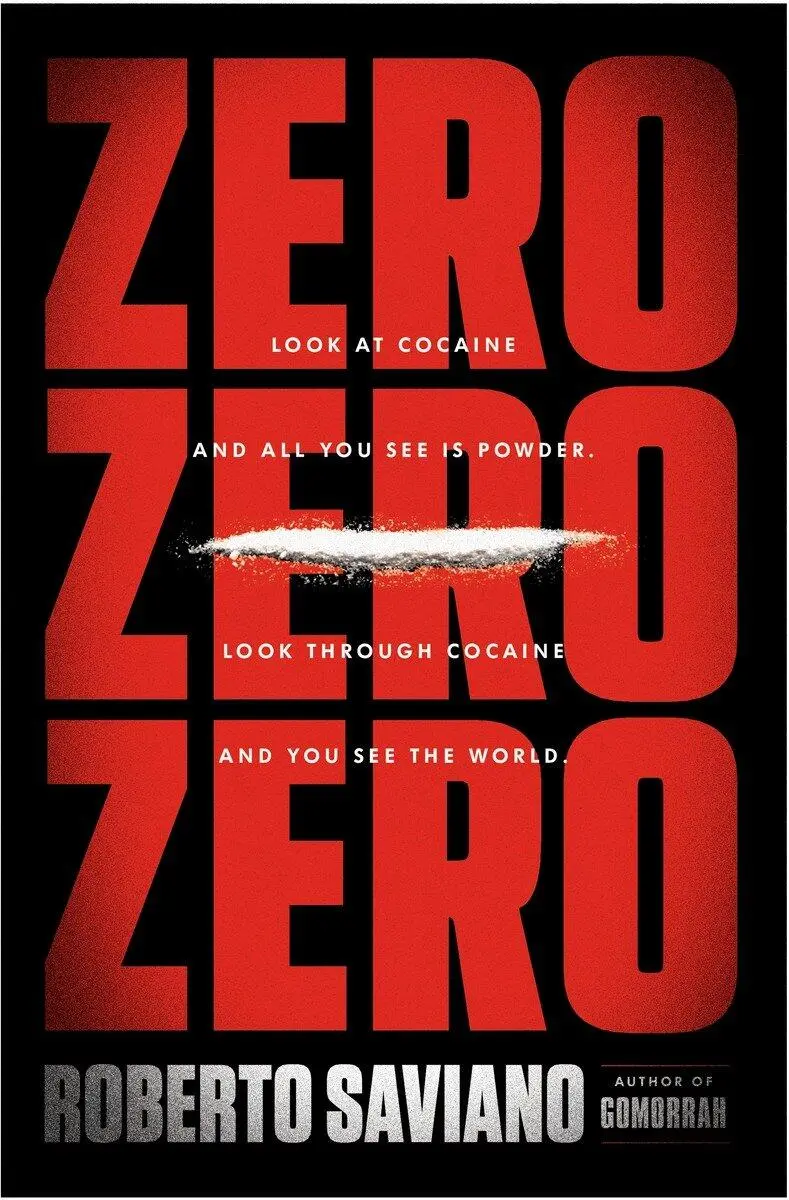
- Название:ZeroZeroZero
- Автор:
- Издательство:Penguin Publishing Group
- Жанр:
- Год:2015
- ISBN:нет данных
- Рейтинг книги:5 / 5. Голосов: 1
-
Избранное:Добавить в избранное
- Отзывы:
-
Ваша оценка:
ZeroZeroZero: краткое содержание, описание и аннотация
Предлагаем к чтению аннотацию, описание, краткое содержание или предисловие (зависит от того, что написал сам автор книги «ZeroZeroZero»). Если вы не нашли необходимую информацию о книге — напишите в комментариях, мы постараемся отыскать её.
Saviano’s
, his explosive account of the Neapolitan mob, the Camorra, was a worldwide publishing sensation. It struck such a nerve with the Camorra that Saviano has lived with twenty-four hour police protection in the shadow of death threats for more than seven years. During this time he has become intimate with law enforcement agencies around the world. Saviano has broadened his perspective to take in the entire global corporate” entity that is the drug trade in cooperation with law enforcement officials, who have fed him information and sources and used him to guide their own thinking and tactics. Saviano has used this extraordinary access to feed his own groundbreaking reportage.
The result is a truly amazing and harrowing synthesis of intimate literary narrative and geopolitical analysis of one of the most powerful dark forces in the global economy. In
, Saviano tracks the shift in the cocaine trade’s axis of power, from Colombia to Mexico, and relates how the Latin American cartels and gangs have forged alliances, first with the Italian crime syndicates, then with the Russians, Africans, and others. On the one hand, he charts an astonishing increase in sophistication and diversification as these criminal entities diversify into many other products and markets. On the other, he reveals the threat of violence to protect and extend power and how the nature of the violence has grown steadily more appalling.
Saviano is a journalist of rare courage and a thinker of impressive intellectual depth and moral imagination, able to see the connections between far-flung phenomena and bind them into a single epic story. Most drug-war narratives feel safely removed from our own lives; Saviano offers no such comfort. As heart racing as it is heady,
is a fusion of a variety of disparate genres into a brilliant new form that can only be called
.
ZeroZeroZero — читать онлайн бесплатно полную книгу (весь текст) целиком
Ниже представлен текст книги, разбитый по страницам. Система сохранения места последней прочитанной страницы, позволяет с удобством читать онлайн бесплатно книгу «ZeroZeroZero», без необходимости каждый раз заново искать на чём Вы остановились. Поставьте закладку, и сможете в любой момент перейти на страницу, на которой закончили чтение.
Интервал:
Закладка:
We need to read between the lines, however, and go back to the story of Martin, who with his courageous stubbornness managed to obtain much more than what the sentence contains. The reticence of the authorities shows that there is a very tight link between the banks and the tens of thousands of deaths in the Mexican drug war. But that’s not all. Martin stirred up troubled waters, he dirtied his hands with numbers in order to reactivate the American banking system’s protections. A single lightning bolt in a cloudless sky. But there are thunder and lightning on the horizon. Controls grew very rigid after September 11, but with the financial crisis that exploded in the midst of Martin’s investigation, the climate changed. Hence the verdicts that send the megaswindler Bernie Madoff to prison for 150 years, and the French trader Jérôme Kerviel for 5, along with repaying Société Générale nearly €5 billion, the amount he’d burned through. These men, who often describe themselves as sacrificial lambs of the system, nevertheless caused enormous harm to individuals, companies, and society as a whole. But the narco-dollars that flow into coffers don’t seem to cause any damage; in fact, they provide that life-giving oxygen known as liquidity. So much so that in December 2009 Antonio Maria Costa, then head of the United Nations Office on Drugs and Crime, made a shocking statement: He had been able to ascertain that criminal organizations’ earnings were the only liquid investment capital some banks had to keep from failing. The International Monetary Fund’s data is grim: From January 2007 to September 2009 the total of toxic stocks and bad loans in the United States and Europe reached $1 trillion. And alongside these losses were the failures and temporary receiverships of credit institutions. By the second half of 2008 cash flow had become the banking system’s principal problem. As Antonio Maria Costa emphasized, “That was the moment when the system was basically paralyzed because of the unwillingness of banks to lend money to one another.” Only criminal organizations seemed to have enormous quantities of cash to invest, to launder.
No doubt by this point some of you are starting to think that I’m obsessed. The problem, you might say, isn’t so much mafia money as it is the financial system. Money expands like gas. If that bubble bursts, the nebula will vanish so quickly that incoming narco-dollars will pale in comparison. Which is what happened on September 15, 2008, with the avalanche the Lehman Brothers bankruptcy set in motion, an avalanche that only billions in public funds managed to stop. But the mess I’m talking about — born amid the skyscrapers of Wall Street, and thus, to all appearances, far from simple Calabrian villages, the Colombian jungle, and even the perennially crumbling, blood-soaked towns along the Mexican border — in truth isn’t a mess at all. It is well known that Lehman Brothers had invested vast sums in subprime mortgages, which were nothing other than a stroke of genius, a way of reselling mortgages that many signers could not possibly pay, as profitable investments. Profit derived from debt. When the rope snapped and the game ended, lots of people who bought homes this way ended up in the street. And above all, that time, it was decided that the bank bloated with hot air could fail too. No sooner were the catastrophic consequences of this decision unleashed than all the other banks and insurance companies that had more or less behaved like Lehman Brothers had to be saved. Yet U.S. government aid was only an emergency stopgap for a system based on those dynamics. The crux of the matter is that banks need to ingest a sufficient amount of solid food in order to produce the immense wealth that swells their bellies, which they have to be able to rid themselves of as soon as someone asks them for money, in whatever form. That is the problem with liquidity. The alchemy of contemporary finance is based on the transubstantiation of money from a solid to a liquid and gaseous state. But that solid/liquid mix proves systematically never to be enough. In the advanced West they’ve closed the factories, and consumption is nourished through forms of debt such as credit cards, leasing, installment payments, and financing. Who, on the other hand, earns the biggest profits from merchandise that must be paid for in full right away? Narco-traffickers. Real mafia money can make the difference to the survival of the financial system. That’s the danger.
A recent study by Alejandro Gaviria and Daniel Mejía, two economists at the University of Bogotá, revealed that 97.4 percent of the revenue from narco-trafficking in Colombia is regularly laundered through banking circuits in the United States and Europe by means of a complex series of financial operations. Hundreds of billions of dollars. The laundering occurs through a shareholding system, like Chinese nesting boxes, in which cash is transformed into electronic stocks and transferred from one country to another. When it arrives on another continent the money’s practically clean and — best of all — untraceable. So interbank loans have been systematically financed with funds from drug trafficking and other illicit activities. Some banks survived only because of this money. A huge portion of the estimated 352 billion narco-dollars was absorbed by the legal economic system, successfully recycled.
Three hundred and fifty-two billion dollars: narco-trafficking profits equal more than a third of the entire banking system’s losses in 2009, according to the International Monetary Fund, and that’s only the deducible tip of the iceberg we’re sailing toward. The banks, which now own many people’s existences and are capable of influencing the governments of even the richest and most democratic states, now find that they too risk being held ransom. Once again, the problem is no longer far away, in wretched countries such as Mexico and Colombia, or down in Sicily, Campania, and Calabria, a southern Italy that is both accomplice and victim of its ruin. I want to scream this loud enough so that people will know, so that they prepare themselves for the consequences.
As Martin, the Wachovia whistle-blower, did, even though the praise he earned from the American authorities did not simplify his life in the financial world. He had to go into business for himself, opening two consulting companies specializing in anti-money laundering: Woods M5 Associates, and then Hermes Forensic Solutions. But he wanted to work for an important credit institution again. He contacted the Royal Bank of Scotland, one of the ten largest banks in the world and the second in the UK — until the financial crisis of 2008, that is, when it became one of those banks to be saved at any cost. The British government temporarily held almost 70 percent, so the Scottish bank needed to do everything possible to regain investor confidence. Even, one might think, hiring a man like Martin Woods to show their intention to rigorously respect all the rules of fair play. And yet in July 2012 the Royal Bank of Scotland suddenly broke the contract they had entered into with him. No explanation. Had they learned of Martin’s accusations against Wachovia? And just a few days later the LIBOR scandal broke, revealing that some leading banks, including the Royal Bank of Scotland, had for years been manipulating the London Interbank Offered Rate, the European reference rate for interbank loans.
Martin refused to give up; he sued them. He lost. The British judge agreed with the bank that an employer-employee relationship had not yet been established, and therefore Woods had no right to demand redress to an employment tribunal. In the meantime Martin began consulting about financial crime for the information giant Thomson Reuters. As of yet, no bank has been willing to hire him.
Today New York and London are the world’s largest laundries for dirty money. No longer those fiscal paradises of the Cayman Islands or the Isle of Man, now it’s Wall Street and the City of London. In the words of Jennifer Shasky Calvery, at that time chief of the Asset Forfeiture and Money Laundering Section of the Department of Justice, during a testimony before the American Congress on February 8, 2012: “Disguised in the trillions of dollars that is transferred between banks each day, banks in the U.S. are used to funnel massive amounts of illicit funds.” The centers of world financial power have stayed afloat thanks to cocaine money. Calvery also noted, “As evidence of transnational organized crime’s (TOC) global economic might, one need only consider the most recent estimates of the amount of money laundered in the global financial system—$1.6 trillion, of which an estimated $580 billion is related to drug trafficking and other TOC activities, according to the United Nations Office on Drugs and Crime’s Research Report published in 2011. These staggering amounts of money in the hands of the worst criminal elements create a terrifyingly vicious cycle — money enables TOC to corrupt the economic and political systems in which they operate, thereby allowing them to consolidate and expand their power and influence, which gives rise to more opportunity to commit crime and generate revenue.”
Читать дальшеИнтервал:
Закладка:
Похожие книги на «ZeroZeroZero»
Представляем Вашему вниманию похожие книги на «ZeroZeroZero» списком для выбора. Мы отобрали схожую по названию и смыслу литературу в надежде предоставить читателям больше вариантов отыскать новые, интересные, ещё непрочитанные произведения.



Обсуждение, отзывы о книге «ZeroZeroZero» и просто собственные мнения читателей. Оставьте ваши комментарии, напишите, что Вы думаете о произведении, его смысле или главных героях. Укажите что конкретно понравилось, а что нет, и почему Вы так считаете.