Roberto Saviano - ZeroZeroZero
Здесь есть возможность читать онлайн «Roberto Saviano - ZeroZeroZero» весь текст электронной книги совершенно бесплатно (целиком полную версию без сокращений). В некоторых случаях можно слушать аудио, скачать через торрент в формате fb2 и присутствует краткое содержание. Год выпуска: 2015, Издательство: Penguin Publishing Group, Жанр: Публицистика, Криминальный детектив, на английском языке. Описание произведения, (предисловие) а так же отзывы посетителей доступны на портале библиотеки ЛибКат.
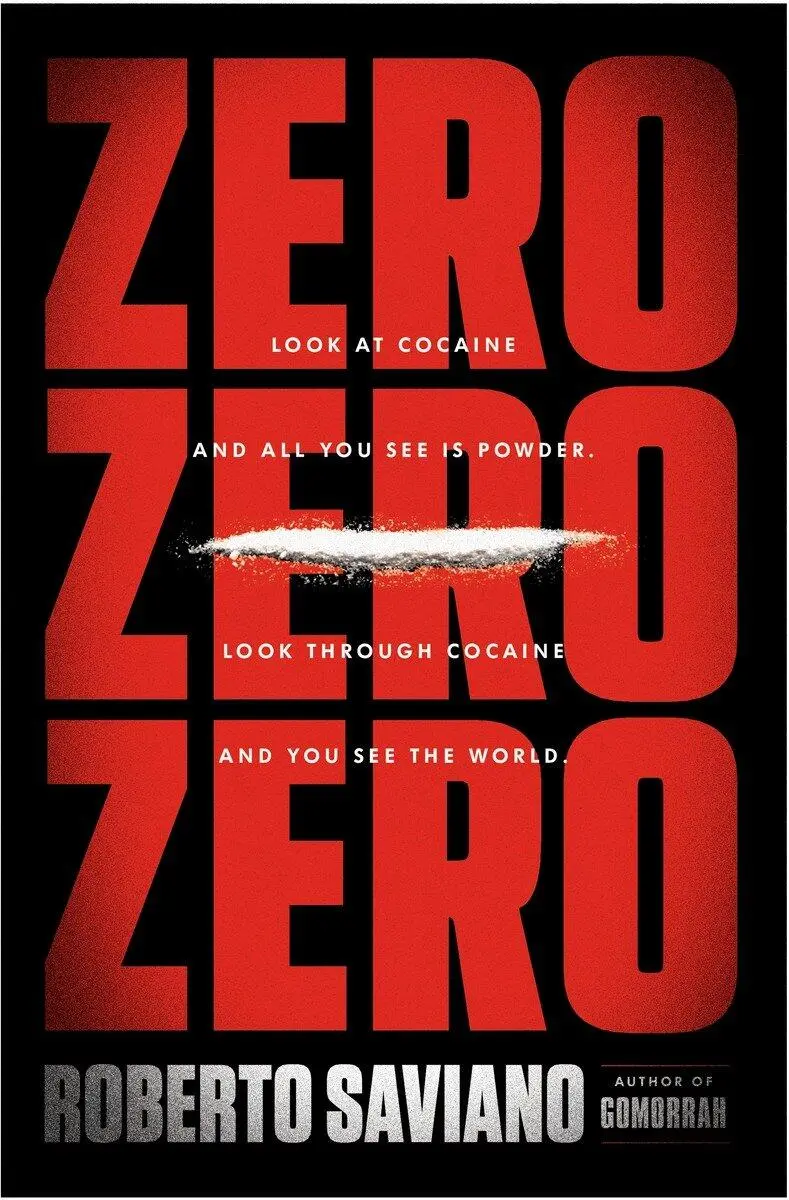
- Название:ZeroZeroZero
- Автор:
- Издательство:Penguin Publishing Group
- Жанр:
- Год:2015
- ISBN:нет данных
- Рейтинг книги:5 / 5. Голосов: 1
-
Избранное:Добавить в избранное
- Отзывы:
-
Ваша оценка:
ZeroZeroZero: краткое содержание, описание и аннотация
Предлагаем к чтению аннотацию, описание, краткое содержание или предисловие (зависит от того, что написал сам автор книги «ZeroZeroZero»). Если вы не нашли необходимую информацию о книге — напишите в комментариях, мы постараемся отыскать её.
Saviano’s
, his explosive account of the Neapolitan mob, the Camorra, was a worldwide publishing sensation. It struck such a nerve with the Camorra that Saviano has lived with twenty-four hour police protection in the shadow of death threats for more than seven years. During this time he has become intimate with law enforcement agencies around the world. Saviano has broadened his perspective to take in the entire global corporate” entity that is the drug trade in cooperation with law enforcement officials, who have fed him information and sources and used him to guide their own thinking and tactics. Saviano has used this extraordinary access to feed his own groundbreaking reportage.
The result is a truly amazing and harrowing synthesis of intimate literary narrative and geopolitical analysis of one of the most powerful dark forces in the global economy. In
, Saviano tracks the shift in the cocaine trade’s axis of power, from Colombia to Mexico, and relates how the Latin American cartels and gangs have forged alliances, first with the Italian crime syndicates, then with the Russians, Africans, and others. On the one hand, he charts an astonishing increase in sophistication and diversification as these criminal entities diversify into many other products and markets. On the other, he reveals the threat of violence to protect and extend power and how the nature of the violence has grown steadily more appalling.
Saviano is a journalist of rare courage and a thinker of impressive intellectual depth and moral imagination, able to see the connections between far-flung phenomena and bind them into a single epic story. Most drug-war narratives feel safely removed from our own lives; Saviano offers no such comfort. As heart racing as it is heady,
is a fusion of a variety of disparate genres into a brilliant new form that can only be called
.
ZeroZeroZero — читать онлайн бесплатно полную книгу (весь текст) целиком
Ниже представлен текст книги, разбитый по страницам. Система сохранения места последней прочитанной страницы, позволяет с удобством читать онлайн бесплатно книгу «ZeroZeroZero», без необходимости каждый раз заново искать на чём Вы остановились. Поставьте закладку, и сможете в любой момент перейти на страницу, на которой закончили чтение.
Интервал:
Закладка:
The man from Bergamo structures his business like a family firm, allowing himself only a few trusted collaborators. Close relations and people in his pay who are kept constantly under pressure and controlled, rigid hierarchies, a conspiracy of silence. Despite not having any historical ties to the mafia, the Bergamo enterprise absorbs more and more of its characteristics, thereby acquiring its winning impermeability as well. But the mafias’ operational model is nothing other than a distinctive inflection of Italy’s dominant business model. The intertwining of affection and business risks becoming an Achilles’s heel, just as it does for real mafiosi. In 1991 the Carabinieri discover that when Locatelli is in Italy, he lives with his girlfriend, Loredana Ferraro, in Nigoline di Corte Franca, a village near Brescia. They’re just about to spring the trap when Diabolik gets in a car and speeds away, eluding capture and turning the Franciacorta vineyards into a new version of a Hollywood high-speed chase scene. He and Loredana stay together and she, like their two sons, shares his interests and his fate: Ten years later she too will be arrested in Spain, the last of Mario’s network to be brought to justice.
Men like Bebè and Mario, but also those bosses who drank the ancestral family rules with their mothers’ milk, often turn out to be vulnerable because of a relationship with a woman. It’s not the ones they buy for a night who put them at risk, women who to them are no different from other expensive luxury goods. It’s the women they bond with, with whom they form a relationship of trust. The pawn who seems at one point to point to Pannunzi is named Caterina. She’s not just any girl, susceptible to the charms and power of an older businessman, nor would Bebè have wanted to really share the actual substance of his life had she not been able to offer all the necessary guarantees to become his true accomplice. Caterina Palermo has a reassuring pedigree: She’s the sister of a mafioso from the same clan as Miceli. The investigators find out that she has booked a flight from Madrid to Caracas, so they trail her. After landing in the Venezuelan capital Caterina heads to a town on the Colombian border, where her companion is then living. They’d agreed to an amorous appointment there, but Pannunzi, tipped off by some unknown informer, doesn’t show. The woman and the policemen return to Italy, for once sharing the same feeling: disappointment.
• • •
The broker from the North and the broker from the South are the Copernicus and Galileo of the cocaine business. With them the model changes. Before it was cocaine that rotated around money. Now it’s money that has entered cocaine’s orbit, sucked into its gravitational field. When I follow their trails I feel as though I’m leafing through a textbook on how to be a successful broker: First of all, vast available funds — the prerequisite for being able to dictate the terms of a deal. Formidable organizational skills. A broad vision combined with precision in defining every detail. They excel at mediation and have learned how to solve problems. They guarantee provisions to anyone who gets in their good graces and can pay. They know it’s better to keep their distance from politics, and from violence. All they want to do is move the white stuff, and to do that, all they need is money and good connections. Criminal groups, even rivals, allow them this freedom, because thanks to Mario and Bebè, they make money.
Last, they have intuition, a quality you can’t buy and can’t learn; it is priceless. It’s something you’re born with, and they were both born with far greater than average doses. Intuition is above all empathy, knowing how to put yourself in someone else’s shoes, sniffing out his habits, his weak points, his resistance. For Bebè and Mario, a client is an open book. They know how to get to him, how to convince him. They know that if he hesitates, that’s the moment to insist; if he seems too sure of himself, that’s the time to make him understand who holds the purse strings. They switch easily from one language to another, from one culture to another; they know how to be sponges, how to transform themselves, to belong to whatever part of the world they happen to be in. They know how to appear as humble intermediaries and when to unleash their authority, sympathy, charm. That’s what intuition is: knowing human nature and knowing how to manipulate it.
But intuition is also foresight. If financial brokers had learned from cocaine brokers, they probably wouldn’t have crashed into the cement wall of economic crises. Pannunzi and Locatelli intuited that the mass market for heroin was coming to an end. They understood this even while the world continued to consume heroin by the ton and while the Italian mafias were still investing everything in it. Cocaine was about to invade the world, and it would prove more pervasive, and more difficult to check. And Pannunzi and Locatelli were there early.
The police nab them a couple of times, but the two brokers always find a way to resolve the problem. They don’t order any killings. They have a lot of money; they know how to defend themselves, how not to leave clues. They don’t draw media attention; very few journalists have heard of them; only a tight group of people in the know are aware of how important they are. When they get out of jail, there’s no public uproar.
The year 1994 might have been their annus horribilis, but the cyclone that strikes them isn’t strong enough to uproot them. In January Pannunzi is arrested in Medellín, where he’s been living for four years. And the million dollars he offers the police to let him go isn’t enough. Shockingly, they won’t play along. Pannunzi remains locked in a Colombian prison, awaiting extradition to Italy, where he’s transferred in December.
Meanwhile, the final phase of a maxi-operation, subtly named Operation Dinero, which international police forces and the DEA and FBI have coordinated, is coming to a head. According to the DEA, the two-year investigation led to 116 arrests in Italy, Spain, the United States, and Canada. All in all, including two continents, around $90 million in cash and a huge quantity of cocaine — nine tons — were seized. On September 6, 1994, Locatelli is having dinner at Adriano, a well-known restaurant in Madrid, surrounded by his inner circle: his Swiss secretary, Heidi, who, like him, travels with fake documents; and his right-hand man in Italy, the Pugliese lawyer Pasquale Ciola. Domenico Catenacci, the deputy public prosecutor of Brindisi, is also there. Recently he’d thought of running for public office, but at the last minute he changed his mind and moved to Como. Later Catenacci is accused of having ties to organized crime and is suspended, but when put on trial he is able prove that he had no idea who Pasquale Locatelli was, and is acquitted. Mario is arrested and sent to jail in Madrid. He loses four of his ships in addition to his liberty, which were already loaded with drugs and weapons and ready to sail for Croatia, as well as many other pieces of his empire.
Operation Dinero is a huge success, and the head of the DEA and the Italian interior minister boast about it in press conferences on their respective sides of the ocean. Two years of investigations and top-secret operations. Infiltrators on two continents, and then the big bait: a bank opened in Anguilla for laundering narco-dollars. A real bank, duly registered, with elegant offices and highly qualified and extremely competent employees who welcome clients in various languages. Yet the whole thing is controlled by the DEA. The RHM Trust Bank offers dream interest rates, especially to wealthy clients. The Colombians grow greedy. One of the DEA’s financial consultants manages to establish a rapport with Carlos Alberto Mejía, alias Pipe, a narco-trafficker linked to the Cali cartel who organizes shipments to the United States and Europe, by showing him the RHM Trust Bank’s credentials. The bank is located in a British fiscal paradise and guarantees seriousness, ease of access, and extremely advantageous rates. The narcos are used to a life of luxury and money that comes and goes like a tropical rainstorm. Mejía loves to spend money on one of his country’s abiding passions: horses. Paso Fino horses are native to Colombia, dating back to the arrival of Spanish conquistadores astride mysterious, gigantic beasts that the terrified indios thought were gods. During the era of the cocaine kings the handsomest and most famous horse is Terremoto de Manizales, a sorrel belonging to Pablo Escobar’s brother. But just at the time that the DEA infiltrator was getting close to Carlos Alberto Mejía an enemy group kidnapped Terremoto, killing his jockey. They abandoned the horse a few days later on a Medellín street, castrated. They knew that this mutilation would hurt more than killing many men and would be a serious blow to the Escobar family’s image. There’s a legend in Colombia that Terremoto was used to produce an identical horse sixteen years after his castration, cloned by a specialist firm in the United States.
Читать дальшеИнтервал:
Закладка:
Похожие книги на «ZeroZeroZero»
Представляем Вашему вниманию похожие книги на «ZeroZeroZero» списком для выбора. Мы отобрали схожую по названию и смыслу литературу в надежде предоставить читателям больше вариантов отыскать новые, интересные, ещё непрочитанные произведения.

Обсуждение, отзывы о книге «ZeroZeroZero» и просто собственные мнения читателей. Оставьте ваши комментарии, напишите, что Вы думаете о произведении, его смысле или главных героях. Укажите что конкретно понравилось, а что нет, и почему Вы так считаете.