Roberto Saviano - ZeroZeroZero
Здесь есть возможность читать онлайн «Roberto Saviano - ZeroZeroZero» весь текст электронной книги совершенно бесплатно (целиком полную версию без сокращений). В некоторых случаях можно слушать аудио, скачать через торрент в формате fb2 и присутствует краткое содержание. Год выпуска: 2015, Издательство: Penguin Publishing Group, Жанр: Публицистика, Криминальный детектив, на английском языке. Описание произведения, (предисловие) а так же отзывы посетителей доступны на портале библиотеки ЛибКат.
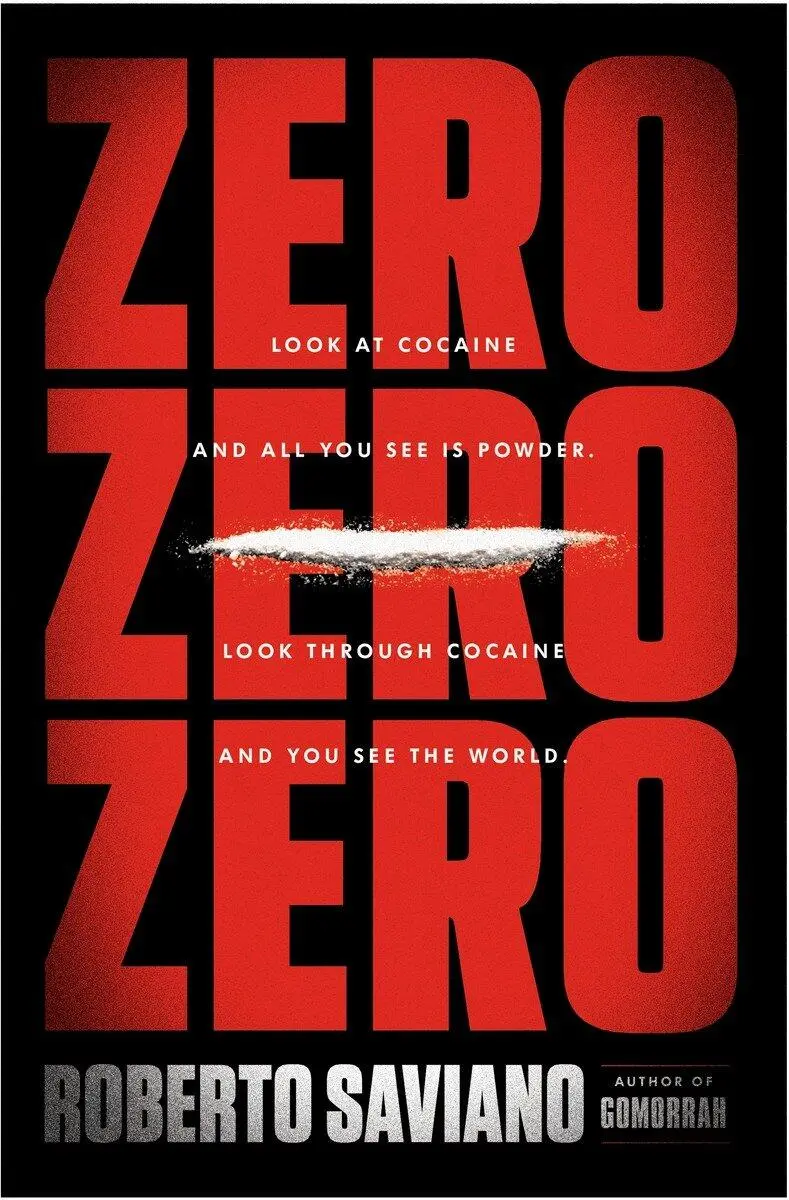
- Название:ZeroZeroZero
- Автор:
- Издательство:Penguin Publishing Group
- Жанр:
- Год:2015
- ISBN:нет данных
- Рейтинг книги:5 / 5. Голосов: 1
-
Избранное:Добавить в избранное
- Отзывы:
-
Ваша оценка:
ZeroZeroZero: краткое содержание, описание и аннотация
Предлагаем к чтению аннотацию, описание, краткое содержание или предисловие (зависит от того, что написал сам автор книги «ZeroZeroZero»). Если вы не нашли необходимую информацию о книге — напишите в комментариях, мы постараемся отыскать её.
Saviano’s
, his explosive account of the Neapolitan mob, the Camorra, was a worldwide publishing sensation. It struck such a nerve with the Camorra that Saviano has lived with twenty-four hour police protection in the shadow of death threats for more than seven years. During this time he has become intimate with law enforcement agencies around the world. Saviano has broadened his perspective to take in the entire global corporate” entity that is the drug trade in cooperation with law enforcement officials, who have fed him information and sources and used him to guide their own thinking and tactics. Saviano has used this extraordinary access to feed his own groundbreaking reportage.
The result is a truly amazing and harrowing synthesis of intimate literary narrative and geopolitical analysis of one of the most powerful dark forces in the global economy. In
, Saviano tracks the shift in the cocaine trade’s axis of power, from Colombia to Mexico, and relates how the Latin American cartels and gangs have forged alliances, first with the Italian crime syndicates, then with the Russians, Africans, and others. On the one hand, he charts an astonishing increase in sophistication and diversification as these criminal entities diversify into many other products and markets. On the other, he reveals the threat of violence to protect and extend power and how the nature of the violence has grown steadily more appalling.
Saviano is a journalist of rare courage and a thinker of impressive intellectual depth and moral imagination, able to see the connections between far-flung phenomena and bind them into a single epic story. Most drug-war narratives feel safely removed from our own lives; Saviano offers no such comfort. As heart racing as it is heady,
is a fusion of a variety of disparate genres into a brilliant new form that can only be called
.
ZeroZeroZero — читать онлайн бесплатно полную книгу (весь текст) целиком
Ниже представлен текст книги, разбитый по страницам. Система сохранения места последней прочитанной страницы, позволяет с удобством читать онлайн бесплатно книгу «ZeroZeroZero», без необходимости каждый раз заново искать на чём Вы остановились. Поставьте закладку, и сможете в любой момент перейти на страницу, на которой закончили чтение.
Интервал:
Закладка:
The man from the North conveys first of all solidity and determination; the man from the South seems more vivacious and worldly, but both come across as middle-aged and middle-class gentlemen. This is clear even from their nicknames, which are banal, even slightly ridiculous. Who would ever suspect Bebè and Mario?
The younger one was born sixty-three years ago, in Almenno San Bartolomeo, a village in Lombardy. Bergamo’s not too far away, but it takes even less time to cross the Brembo River and head into the Val Brembana, the valley that even for Lombards is the epitomy of provincial backwardness. He’s named Pasquale — probably in memory of his grandfather from Brindisi — Claudio, so he has a more modern name too. His last name is Locatelli, like just about everyone else around there. He becomes Mario later, again like everyone else.
Pasquale Claudio Locatelli is twenty when he starts making forays into the wealthy part of Lombardy, between Milan and Verona, to steal cars with powerful engines. He works with guys from Milan who grew up in the ligéra, the old criminal underworld still celebrated in popular songs in the local dialect, although the Bar del Giambellino and the Palo della Banda dell’Ortica described in those ballads now belong to a more innocent past. Milan has become a war zone: Political subversion is mistaken for and at times intertwined with common criminality, and the number of armed robberies and kidnappings is rising precipitously. Homicides average a 150 a year. Those criminals who don’t become stars, such as Renato Vallanzasca, Francis “Angel Face” Turatello, and his former second in command, Angelo Epaminonda, those who aren’t serving a life sentence for murder or other serious crimes, can carry on tranquilly.
Locatelli understands this; he understands that the crime that pays is not that of the fanatics of the 1970s. He goes from car theft to supplying all the services that a seller of stolen cars needs; he forms a network of contacts from Austria to France, studies foreign languages, eventually mastering four of them. He’s already thinking like an international-level entrepreneur. Illegal business is a business just like any other: What matters are reliability and foresight. A deceptive peace is settling over Milan, something that is both bubbly and creamy, like the food and drink that are so in fashion. The man who goes by the name of Mario but will also be called “Diabolik” understands that wherever there’s more money and a desire to have fun, that’s where new markets spring up. Fashion and design, private TV channels, young entrepreneurs, and lots of daddy’s boys and girls walking around, swinging their hips. Here in Italy’s richest city and region more people can indulge in the vice of cocaine than elsewhere. Locatelli throws himself decisively into the business. He’s under house arrest for a past offense, and it’s this restriction on his movements that leads him to go into hiding. He tries to better his luck in a place where he knows he can easily find new clients, the Côte d’Azur. He moves into a villa in Saint-Raphaël, which is more sedate than nearby Saint-Tropez. People there, who know him as Italo Salomone, mind their own business, as wealthy homeowners usually do. They don’t know that the French police have been hunting him ever since they seized a false-bottomed suitcase from Colombia stuffed with cocaine at the Nice airport. Pasquale Locatelli has already been convicted twice for drug trafficking, in two French courts, and has been sentenced to twenty and ten years in absentia. Italo Salomone seems to be an ordinary Italian, enjoying the mild climate and carefree life. Till the day when, after three years of searching, the flics arrest him in his villa, where they find a stash of Colombian cocaine—41 kilos.
It’s 1989.
During this same period Bebè is restoring an old farmhouse in Valsecca, at the foot of the Bergamo Alps, half an hour from Brembate di Sopra, Locatelli’s last Italian residence. Bebè didn’t choose that spot for the peacefulness or the mountain air. He chose it in order to turn it into a refinery for white heroin — the rarest, most prized kind — for which there is still a niche market in the United States, so as to be able to trade it with the Colombian drug lords. According to police informer Saverio Morabito, the notorious former boss of the Milan ’ndrangheta, at the end of the 1980s the Colombians were trading 25 kilos of the purest Colombian cocaine for 1 kilo of white Bergamo heroin.
Bebè is Roberto Pannunzi, a Roman with a Calabrian mother, a former Alitalia employee now past sixty-five who emigrated to Canada when he was young, as many southerners did back then. The Calabrians there worked hard: construction, transportation, trash removal, restaurants. But the massive presence of Italian immigrants was exploited, not just by Canadian employers, but by the lords of Siderno. U Zi, or “Uncle” Antonio Macrì, had quickly gained control of drug trafficking in Canada and also established excellent relations with the American Cosa Nostra. His murder in Calabria in 1975 set off the first ’ndrangheta war, but the entrepreneurial empire he’d constructed overseas remained untouched. Macrì had created or bought all sorts of commercial activities, in particular export-import businesses, which helped him establish excellent contacts in the most important ports. In the 1980s the Canadian police considered the organization he left his heirs to be the most powerful ’ndrangheta presence in all of Canada. In Toronto, Roberto Pannunzi rediscovers his maternal roots, thanks to Antonio Macrì. Zi’ ’Ntoni likes this kid with thick black hair, a round face, and a proud gaze. Roberto is respectful, and — more important — he’s loyal. Roberto sticks close to Macrì and learns. He’s ambitious and obedient — not like a servant, but because he’s convinced he can learn by obeying. He keeps his mouth shut and his head down, because when he grows up he wants to command. About the same time he meets Salvatore Miceli in Toronto: a Sicilian, and the point man for Cosa Nostra’s drug trade. The two become friends, and then accomplices.
Through Miceli, Pannunzi receives from Cosa Nostra heroin refined in Palermo; he has it transported to Siderno, where it is then shipped to Toronto, hidden among ceramic tiles, and picked up by Vincenzo and Salvatore Macrì, Zi’ ’Ntoni’s nephews.
Pannunzi is getting good. He’s not happy with the stuff his first contacts pass off on him. He wants the best price-quality ratio, and he gets it, that’s why people like him. Through Macrì’s friends he meets the major suppliers, who trust him precisely because of his connection with Macrì. By himself he never would have been able to get anywhere near the leading figures of the heroin trade, but he learns how to use Macrì’s contacts in ports around the globe. If a group can’t find a contact, Roberto comes up with one. He makes himself available to everyone, organizes shipments, even to parts of the world where heroin had never reached before. And when groups ask him for better quality stuff at a lower price, he gets in touch with specialists who know how to solve the problem. He’s the one who arranges a meeting between the Sicilian Alberti and the Marseilles clans, who send one of their chemists to Palermo to set up a heroin lab.
And when Platì boss Pasquale Marando, in charge of drug trafficking in northern Italy, has to go into hiding, Pannunzi offers to mediate between the families of Marina di Gioiosa Jonica and Platì, in the heart of the ’ndrangheta region in the Aspromonte. Pannunzi unites rather than divides. That is his aim.
To bond even more with his financiers, when Bebè returns to Italy he marries Adriana Diano, who belongs to one of the most prominent families in Siderno. Even though they separate soon afterward, marriage and the mingling of blood are always more binding than a mere contract. Officially Roberto manages a clothing store in Rome. He also has a sense of irony and calls the shop Il Papavero or Poppy, in homage to his collaboration with the most important traffickers of Turkish heroin. In reality, he’s at the Calabrian clans’ disposal. The money the ’ndrangheta used to make from kidnappings must now be raised through drug trafficking. Roberto is ready. He knows where it’s best to invest.
Читать дальшеИнтервал:
Закладка:
Похожие книги на «ZeroZeroZero»
Представляем Вашему вниманию похожие книги на «ZeroZeroZero» списком для выбора. Мы отобрали схожую по названию и смыслу литературу в надежде предоставить читателям больше вариантов отыскать новые, интересные, ещё непрочитанные произведения.

Обсуждение, отзывы о книге «ZeroZeroZero» и просто собственные мнения читателей. Оставьте ваши комментарии, напишите, что Вы думаете о произведении, его смысле или главных героях. Укажите что конкретно понравилось, а что нет, и почему Вы так считаете.