David Rosenberg - Inside Pine Gap
Здесь есть возможность читать онлайн «David Rosenberg - Inside Pine Gap» весь текст электронной книги совершенно бесплатно (целиком полную версию без сокращений). В некоторых случаях можно слушать аудио, скачать через торрент в формате fb2 и присутствует краткое содержание. Город: Melbourne, Год выпуска: 2011, ISBN: 2011, Издательство: Hardie Grant Books, Жанр: Биографии и Мемуары, Политика, на английском языке. Описание произведения, (предисловие) а так же отзывы посетителей доступны на портале библиотеки ЛибКат.
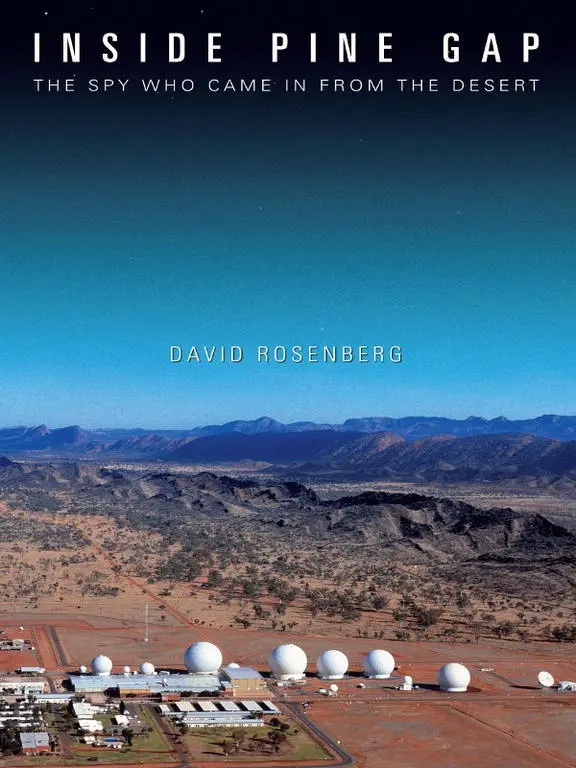
- Название:Inside Pine Gap
- Автор:
- Издательство:Hardie Grant Books
- Жанр:
- Год:2011
- Город:Melbourne
- ISBN:978-1-742-70173-8
- Рейтинг книги:4 / 5. Голосов: 1
-
Избранное:Добавить в избранное
- Отзывы:
-
Ваша оценка:
Inside Pine Gap: краткое содержание, описание и аннотация
Предлагаем к чтению аннотацию, описание, краткое содержание или предисловие (зависит от того, что написал сам автор книги «Inside Pine Gap»). Если вы не нашли необходимую информацию о книге — напишите в комментариях, мы постараемся отыскать её.
Author David Rosenberg details his career with an American intelligence agency during a tumultuous period in history that covered the terms of three American Presidents, four Australian Prime Ministers, the end of the Cold War, a peace treaty between Israel and Jordan, two wars in Iraq, genocide in Rwanda, as well as the ‘War against Terror’ and the emergence of North Korea as a nuclear-armed nation. This is a fascinating glimpse inside the top-secret world of military surveillance.
[This book contain a table.]
Inside Pine Gap — читать онлайн бесплатно полную книгу (весь текст) целиком
Ниже представлен текст книги, разбитый по страницам. Система сохранения места последней прочитанной страницы, позволяет с удобством читать онлайн бесплатно книгу «Inside Pine Gap», без необходимости каждый раз заново искать на чём Вы остановились. Поставьте закладку, и сможете в любой момент перейти на страницу, на которой закончили чтение.
Интервал:
Закладка:
In 1999 China had an apparent deal with Israel to purchase the Israeli Phalcon AWACS and had even flown a plane to Israel where the radar was installed. [29] http://www.mail-archive.com/isn@attrition.org/msg05827.html
The transfer of such an advanced system (along with United States–financed technology) to China caused a political firestorm, with the White House exerting pressure on Israel to cancel the deal, which it reluctantly did, but not before Chinese technicians had learned some basic operational characteristics of the Phalcon radar. [30] ibid.
This theoretically allowed the Chinese to assemble a radar based on the Israeli design, but development of the Chinese AWACS stalled in 2006 when an IL-76 AWACS crashed, tragically killing all forty technicians and crew members. [31] http://www.nytimes.com/2006/06/07/world/asia/07iht-crash.1905131.html
Development continued after technicians were able to examine the cause of the crash.
There was much discussion in the media as to whether some form of technology transfer had occurred, and these thoughts were of course discussed within the intelligence community, with technical analysis providing key insights. ██████████████████████████████████████████████████████████████████████████████████████████████████████████████████
This topic was discussed at a conference I attended in the United States where I presented a briefing on this subject, but while I was speaking, two individuals in the room mentioned that it would not be good, politically , if there was a connection between our findings and the possible transfer of technology. They were concerned our assertions would only inflame the issue. Manipulating data to fit political goals is called propaganda; I was there to present our best estimate and hope that policy planners used our data as presented to help them make difficult decisions. I stood there considering what I was going to say in response to this non-technical assessment—while our data didn’t prove that a technology transfer had occurred, I was absolutely confident in our analysis results . I was tempted to say, ‘I’ll bet you $1000 that our analysis results are correct,’ which would have been the highlight of the conference, but given this was relatively soon after the ‘first night’s rights’ incident, and in the interest of building better working relationships across the community, I decided not to place my sucker’s bet. Fortunately a contractor from CACI was in attendance who was the acknowledged technical ‘guru’ on the topic and he interjected, ‘Even a junior analyst can see that this ███████████████’ (a signal characteristic). I didn’t need to say anything else and left the conference vindicated, our assertions confirmed.
One of the greatest security concerns during the Bush administration was the rapid pace of advanced weapons testing performed by North Korea, as this rogue nation has developed highly effective weapons to include land attack and anti-ship cruise missiles as well as ballistic missiles. North Korea was also suspected of developing a nuclear weapons capability, and fears of this were realised on 3 October 2006 when North Korea announced its intention to conduct a nuclear test. Six days later, North Korea detonated a nuclear device near Kilchu in the country’s northeast, [32] http://en.wikipedia.org/wiki/2006_North_Korean_nuclear_test
becoming the ninth nation to join the list of nuclear-armed countries. [33] http://en.wikipedia.org/wiki/List_of_states_with_nuclear_weapons#Undeclared_nuclear_states
The test was assessed by the United States to have been only partially successful due to the estimated low yield of less than 1 kiloton of TNT. [34] http://en.wikipedia.org/wiki/2006_North_Korean_nuclear_test
By comparison, the bomb dropped on Hiroshima yielded approximately 13 to 18 kilotons. [35] http://en.wikipedia.org/wiki/Little_Boy
North Korea conducted a second, announced nuclear test on 25 May 2009 that was assessed to have been slightly more powerful than the first. [36] http://en.wikipedia.org/wiki/2009_North_Korean_nuclear_test
North Korea continues to develop, test and sell its weapons to countries including Pakistan, Iran, Yemen and Syria, providing its weapons expertise to these nations as well. With numerous weapons testing facilities around the country, it is no secret that North Korea remains very high on the list of countries monitored by the intelligence community.
President Bush effectively rallied the United States and many allies to help America battle Al-Qaeda and the Taliban after the 9/11 attacks, and the number of young men and women enlisting in the US military to fight terrorism and defend their country was extraordinary. America was grateful for the ensuing assistance in Afghanistan, but in Iraq some American soldiers were involved in the degradation of prisoners, most notably at Abu Ghraib prison. [37] http://en.wikipedia.org/wiki/Abu_Ghraib_torture_and_prisoner_abuse
This disregard by a small percentage of American soldiers for traditional American values and international standards (most notably the Fourth Geneva Convention [38] http://en.wikipedia.org/wiki/Geneva_conventions
) relating to the treatment of protected persons ultimately resulted in a backlash against President Bush and the United States.
America had changed under President Bush, and this was succinctly expressed by a popular columnist who reported this fundamental shift of American traditional policy shortly after the start of the Iraq War:
For better or for worse, a new nation will be born here. And it will be different from the one it supersedes. For the first time in its history, the United States has claimed for itself a doctrine of preemption, the right to hit first any nation we suspect of hostile intent… But the new nation being born here is not just a product of the Bush Doctrine. It’s also the product of Washington’s recent taste for unilateral action. As the old order passes, it evidently takes with it any inclination on America’s part to embrace a role of constructive leadership as part of the community of nations… we stand on the edge of a change that feels fundamental, profound and permanent. We are a giant that is no longer inclined to watch its step. Less involved with or concerned by the world around us. We are becoming a go-it-alone nation, a don’t-give-a-damn-what-anybody-else-says nation. And ultimately, because of that, a frightening nation… But beneath the veneer of normalcy we watch and wait and pray that Washington knows what it is doing. We need for George Bush to be right and those of us who are doubtful to be wrong… Time will tell. In the meantime, bombs fall. Missiles fly. And in the thunder of their explosions, the old America passes. [39] Pitts Jr. Leonard, Daily Press , Hampton Roads, Virginia, 22 March 2003, p. 17.
‘We need for George Bush to be right’ indeed. The United Nations’ failure to support the United States when President Bush called for the removal of Saddam Hussein based on inconclusive evidence further degraded both the credibility and influence of the United States among long-established allies. The US leadership had truly lost its footing and traditional American values. The ‘cowboy diplomacy’ [40] http://en.wikipedia.org/wiki/Cowboy_diplomacy
that so well characterised President Bush’s eight years in office—‘You’re either with us or you’re with the terrorists’—was a simple man’s outlook on a very complex issue that alienated the United States from many traditional allies who may otherwise have been persuaded to support the United States in the bid to oust Saddam Hussein. I personally felt offended that President Bush was telling me that if I disagreed with his policies, I supported the terrorists. This was patently untrue. One inalienable right that made the United States a great nation was the freedom to disagree peacefully with the government, but President Bush had just told me I was not allowed to disagree with his policies. If I did, I was ‘with the terrorists’. This was no longer my United States.
Интервал:
Закладка:
Похожие книги на «Inside Pine Gap»
Представляем Вашему вниманию похожие книги на «Inside Pine Gap» списком для выбора. Мы отобрали схожую по названию и смыслу литературу в надежде предоставить читателям больше вариантов отыскать новые, интересные, ещё непрочитанные произведения.










Обсуждение, отзывы о книге «Inside Pine Gap» и просто собственные мнения читателей. Оставьте ваши комментарии, напишите, что Вы думаете о произведении, его смысле или главных героях. Укажите что конкретно понравилось, а что нет, и почему Вы так считаете.